Crickets are well-known as positive figures in folklore, fairy tales, and folklore. Therefore, people often treat them with indulgence and even kindness. However, the housing issue can ruin their relationship. As soon as an insect takes up residence next to a person, their attitude toward them changes. This is understandable, as not everyone appreciates the endless trilling at night, which can cause insomnia. Insects can also cause considerable damage in a garden. But there are ways to get rid of these unpleasant neighbors.
Content
How to recognize a cricket at first sight and sound
House crickets resemble other unwelcome house guests—cockroaches. This is natural, as they are related and belong to the same family, Orthoptera. Grasshoppers and locusts are also considered related.
There are nearly 4,000 species of crickets worldwide. Most prefer hot, humid climates. Only 40 species are found in the CIS. Of these, the most well-known and frequently seen are:
- field cricket, which lives in fields, meadows and deciduous forests;
- a brownie that chooses to be close to a person, getting into the home and adjacent buildings.
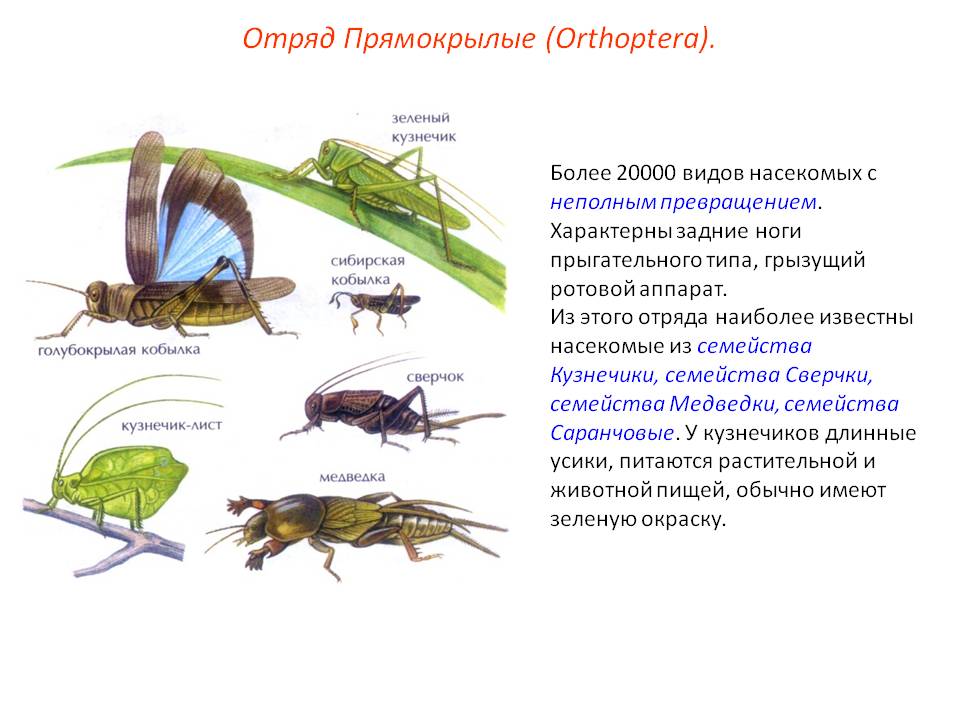
The cricket is a representative of the order Orthoptera
In the natural environment, crickets often live in close proximity to people. They prefer dilapidated buildings with high humidity and numerous cracks to live in. House crickets love:
- warm basements;
- warehouse and industrial premises;
- heating plants.
During the cold season, insects move to more comfortable (warmer) conditions.
A cricket's diet depends on its habitat. In the wild, it eats plant matter, but indoors, it may feast on human table scraps.
Portrait of an insect
The cricket's body is small, slightly flattened, and covered with a hard, straw-colored shell. Darker colors with a distinctive pattern of speckles, spots, and streaks are also found. The head is egg-shaped, with eyes located on the sides. The main distinguishing features of the insect's appearance are its long antennae, which are often longer than the cricket itself.
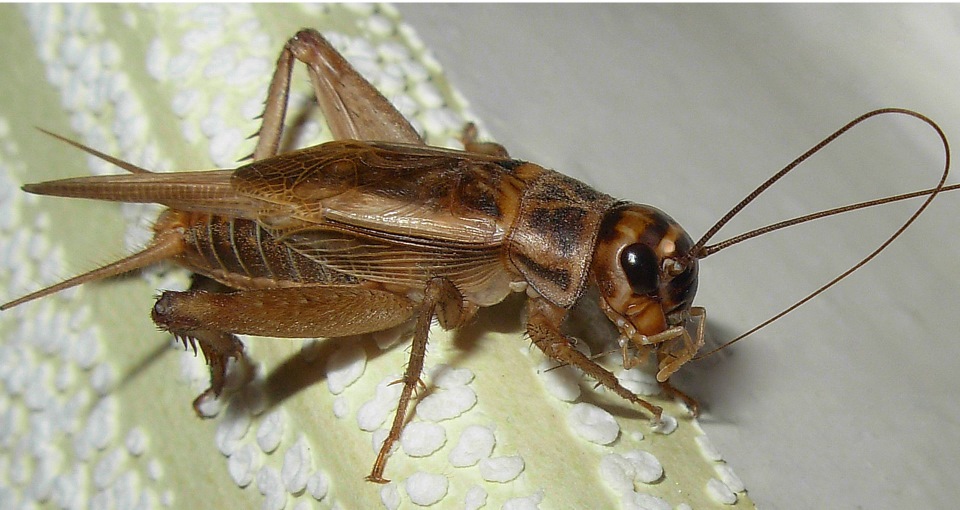
A cricket looks like a grasshopper, but they differ in the way their wings fold.
To enable active movement, crickets have three pairs of legs and well-developed wings. In fact, the structure of these wings is responsible for these insects' exceptional musical abilities.
How and why do crickets sing?
Chirping sounds are produced exclusively by males to attract mates during the mating season, as well as to mark boundaries and intimidate opponents. The mechanism behind the "song" is linked to the structure of the wings, specifically the presence of veins and folds that produce the characteristic sound. When the wings touch, vibrations occur, resulting in a chirping sound. The principle is very similar to the interaction between a bow and the strings of a violin.
The cricket's "musical instrument" is more complex than that of the grasshopper. Therefore, its trill is more varied in terms of melody and tonality.
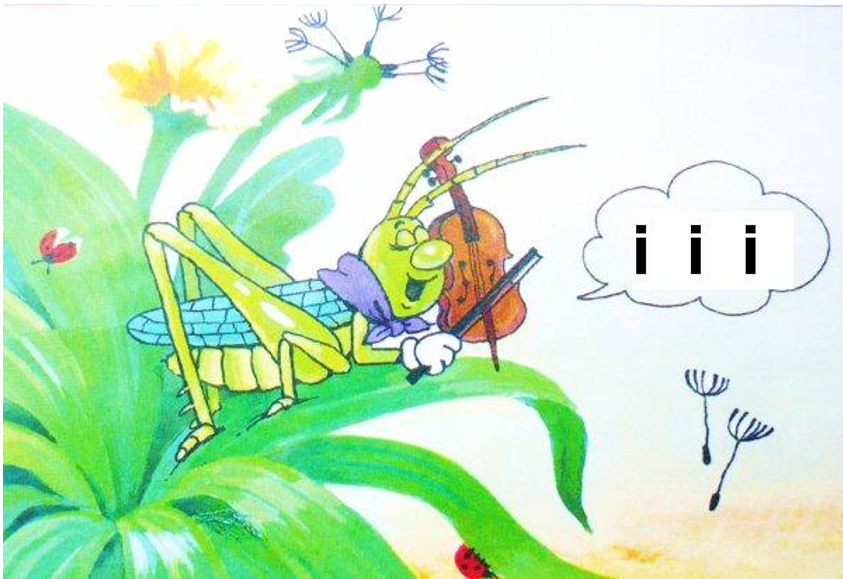
The principle of "reproducing" music with wings is very similar to the interaction of the bow and strings of a violin
Video: What does a cricket sound like?
How a cricket becomes a human neighbor
A cricket can settle in an apartment, a house and in adjacent areas.
Methods of entering a home
Interestingly, crickets can even be found on the upper floors of new buildings. There are several ways to introduce them into a living space:
- "Reconnaissance." If one of the residents, for whatever reason, breeds "night musicians," the insects may visit their neighbors, leaving their home.
- "Moving." Crickets can enter an apartment along with food and other belongings from their previous residence.
- "Expanding their territory." If these insects have already taken up residence in the garden, there's nothing stopping them from making their way into the house.
To establish a permanent home in a person's home, a cricket, like any other living organism, requires a constant food source. This is simple: insects are omnivores. Of course, in the natural environment they eat mainly plant food, but sometimes they can also be predators, foraging for other insects.
When entering a human home, crickets don't face any food shortages. They always enjoy table scraps. Fruit and vegetable slices, bread crumbs, and liquid drops make excellent food. If there are insect pests in the apartment, such as cockroaches or moths, crickets will also eat them.
Field cricket in the garden
Field crickets are a favorite visitor to summer cottages and gardens: this is natural, as the insect lives in the wild and, in an attempt to get closer to a food source, moves closer and closer to vegetable and fruit crops, including entering greenhouses, where the humid climate is most favorable for it.
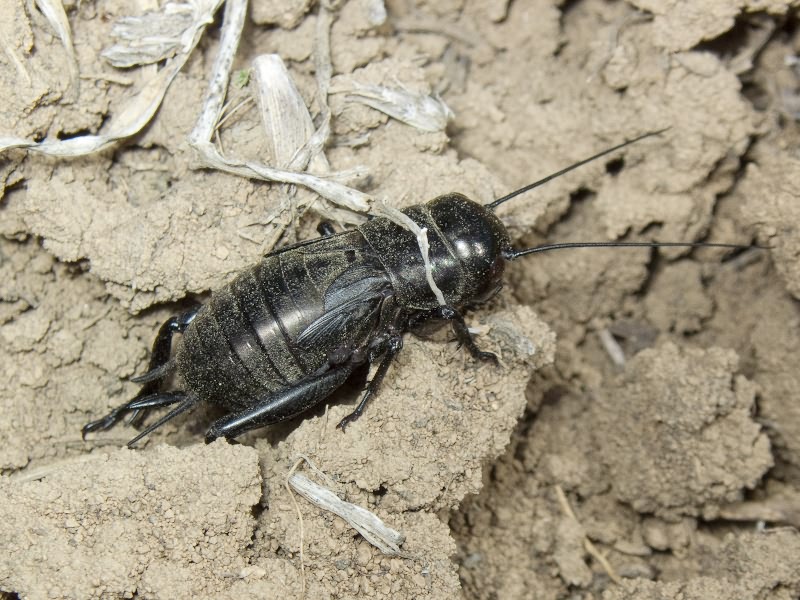
The field cricket is the most common species of the cricket family.
This plant-eating insect can cause considerable damage to crops, especially if there's a large group of them. Thanks to their voracious appetite, these insects can easily damage a wide variety of plants. They'll enjoy:
- strawberry;
- cereal crops;
- corn;
- beans;
- tobacco;
- beet;
- carrot;
- onion;
- cabbage;
- potato.
Crickets can burrow into plant stems at the very roots or severely damage leaves. This can lead to the death of the plantings.
How to get rid of a cricket - an uninvited guest
When a "night musician" appears in the apartment, many people may experience sleepless nights. Crickets are also no good for the garden. Therefore, people try to get rid of them as quickly as possible, before they breed. After all, the singing that alerts us to the arrival of a guest serves precisely to attract females.
The following methods are usually used to breed crickets:
- mechanical;
- folk;
- chemical.
Before using specific cricket control methods, try simply ventilating and thoroughly drying the room first. In a dry climate, the insects won't survive long: they'll either die or flee. This method is the simplest and safest.
Tasty trap feeders
To set up a trap, you'll need a deep bowl. Fill it with a special treat—a mixture of water and molasses. Insects fall into the sticky mass, seeking a snack. A more complex mechanism is used in a so-called pit trap. The design is based on a container with two levels. It's placed on top of the bowl. The bait is placed in the lower container. For example, you could prepare a "breakfast" of sweet cornflakes with milk. Alcohol is poured into the upper container. The smell of the food will attract the insects, and the alcohol vapor will kill them.
You can also use store-bought sticky traps. They also typically have an attractive sweet aroma.
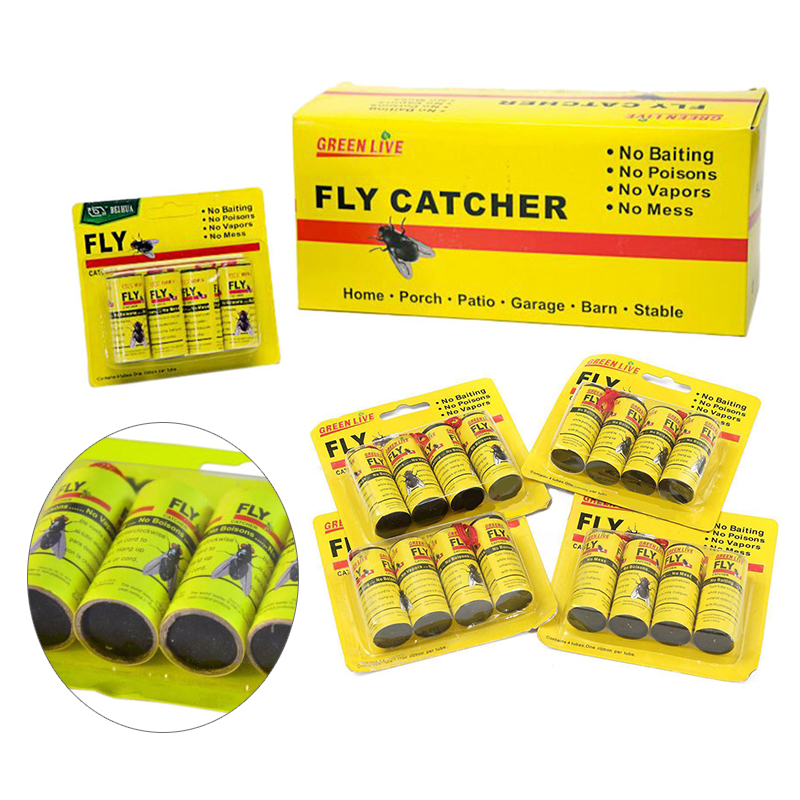
Sticky tape is hung where uninvited guests have been noticed.
Grandma's recipes
Crickets can also be removed using folk methods:
- A popular way to combat crickets is to treat the room with a wormwood decoction:
- 2 large spoons of chopped herbs are poured into a liter of water;
- the mixture is boiled for 5 minutes, covered with a lid, removed from heat and left to infuse for 2 hours;
- the product is filtered and poured into a container with a spray bottle;
- The composition is sprayed on all surfaces, including baseboards and window frames.
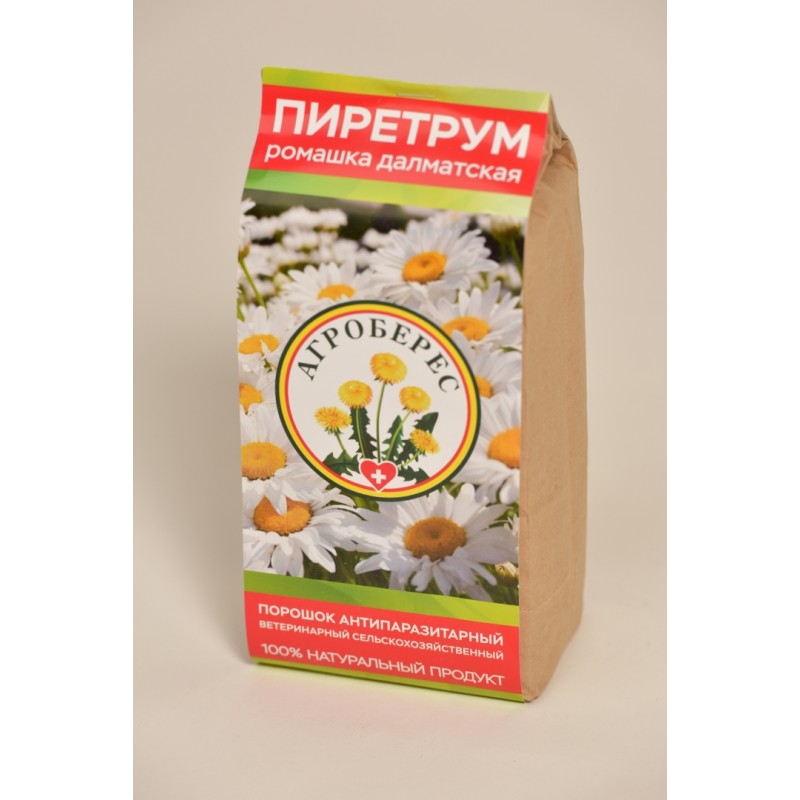
- Pyrethrum powder is an effective remedy. It repels crickets. Application is simple: sprinkle a small amount in places where the insects hide.

Pyrethrum powder is a natural product and can be purchased at any pharmacy.
- Fumigating a room with sealing wax will help against crickets. The resinous smell of the smoke will repel the insects. Sealing wax is now available as a candle with a wick. Simply light it and walk through the rooms.
One colored wax candle made in Italy costs about 150 rubles.

Is it easy to catch a cricket?
Using mechanical methods to control crickets is difficult and laborious. The insects are most active at night, so hunting must be done at night. After turning on the light, you need to quickly catch the insect using a fly swatter. You can also locate their habitats in advance by relying on sounds.
Crickets are never idle. Thanks to their keen hearing and quick reactions, they rarely allow humans to approach within a few meters. To catch them, people prepare aromatic baits from food and destroy the insects while they're feeding.
In a private home, you can pour boiling water over hiding places (cracks).
Pets are excellent cricket hunters. Cats and dogs readily catch and eat the insects. And for exotic animals, such as lizards, crickets are a real delicacy.
Chemicals
If crickets in your apartment have become numerous and their numbers continue to grow, you should consider using chemicals. The same products used to kill cockroaches will work. For example, gel baits are used against adult insects. For example, the popular product "Domovoy" is available in a special syringe dispenser. The solution is applied in dotted lines to areas where crickets are likely to be found. Usually, a simple application along the baseboards is sufficient.
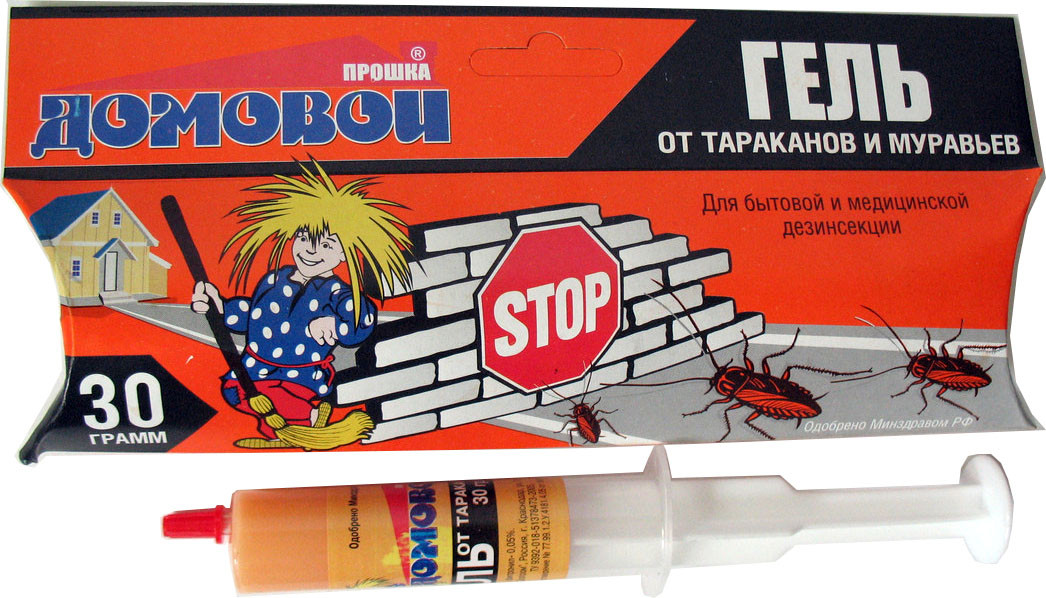
One package of Domovaya powder is enough to treat 50 square meters.
Dichlorvos-based preparations in aerosol form are effective, for example, Neo, KRA-DEO, Varan.
When carrying out insecticidal treatment, it is essential to observe safety precautions:
- Put on a protective suit, plastic goggles, and a respirator. Gloves are used to protect your hands.
- Doors and windows are closed, and people and animals are evacuated. Even the fish tank is removed.
- Shake the chemical canister several times and begin spraying. Treat all areas where crickets have been spotted. Be sure to spray the solution on all surfaces, including corners. Ideally, spray from a distance of 25–30 centimeters. Hold the canister away from your face to prevent contact with the toxic fumes.
- The premises are vacated after completion of disinfestation for 6 hours.
- After the specified time has passed, open the windows and ventilate the home for at least half an hour. Remove the dead insects with a vacuum cleaner, working around corners and baseboards. Be sure to dispose of the filter away from the house.
- Afterwards, wet cleaning is done.
- Repeat treatment is carried out after 40–70 days.
To kill crickets, insecticides in powder form are used, for example, Tarax. The drug has its own features of use:
- It is diluted with water in the ratio recommended in the instructions and the room is treated.
- The insecticide forms a film when it dries. Insects that come into contact with it die.
- During the treatment of the premises, the occupants will have to leave it.
- Sunlight and fat negatively affect the effectiveness of the drug.
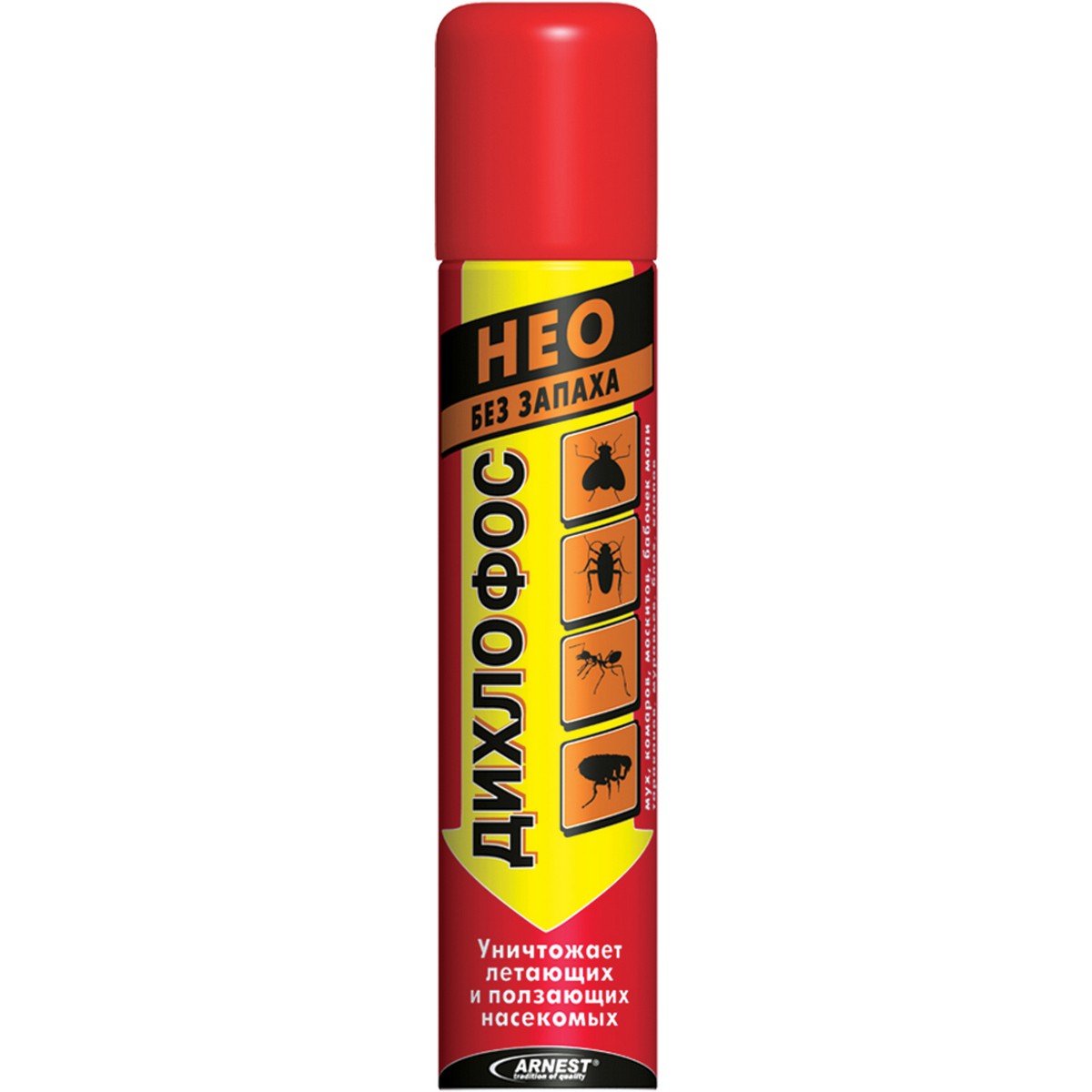
Any broad-spectrum insecticide is suitable for controlling crickets.
In addition to killing adult crickets, it's also necessary to destroy their eggs. Eggs are typically found in carpet pile. It's advisable to vacuum the area with a special filter that can capture even the smallest particles.
Advantages and disadvantages of different cricket control methods - table
| Way | Advantages | Flaws |
| Sealing wax |
|
|
| Wormwood infusion |
| Cooking takes time. |
| Pyrethrum |
|
|
| Sticky tape | There is no need to catch insects. | The tapes stick to your hair and skin, leaving unpleasant marks. |
| Hunting with improvised means | There is no harm to health. | An ineffective remedy if there is more than one cricket in the house. |
| Chemicals |
|
|
| Ventilation, reduction of humidity |
|
|
If, after trying all the methods, you still can't solve the cricket problem in your home, you should seek professional help and order pest control. This is a time-consuming procedure, as you'll have to temporarily vacate your home and then spend a long time cleaning everything: airing it out, cleaning furniture and interior textiles.
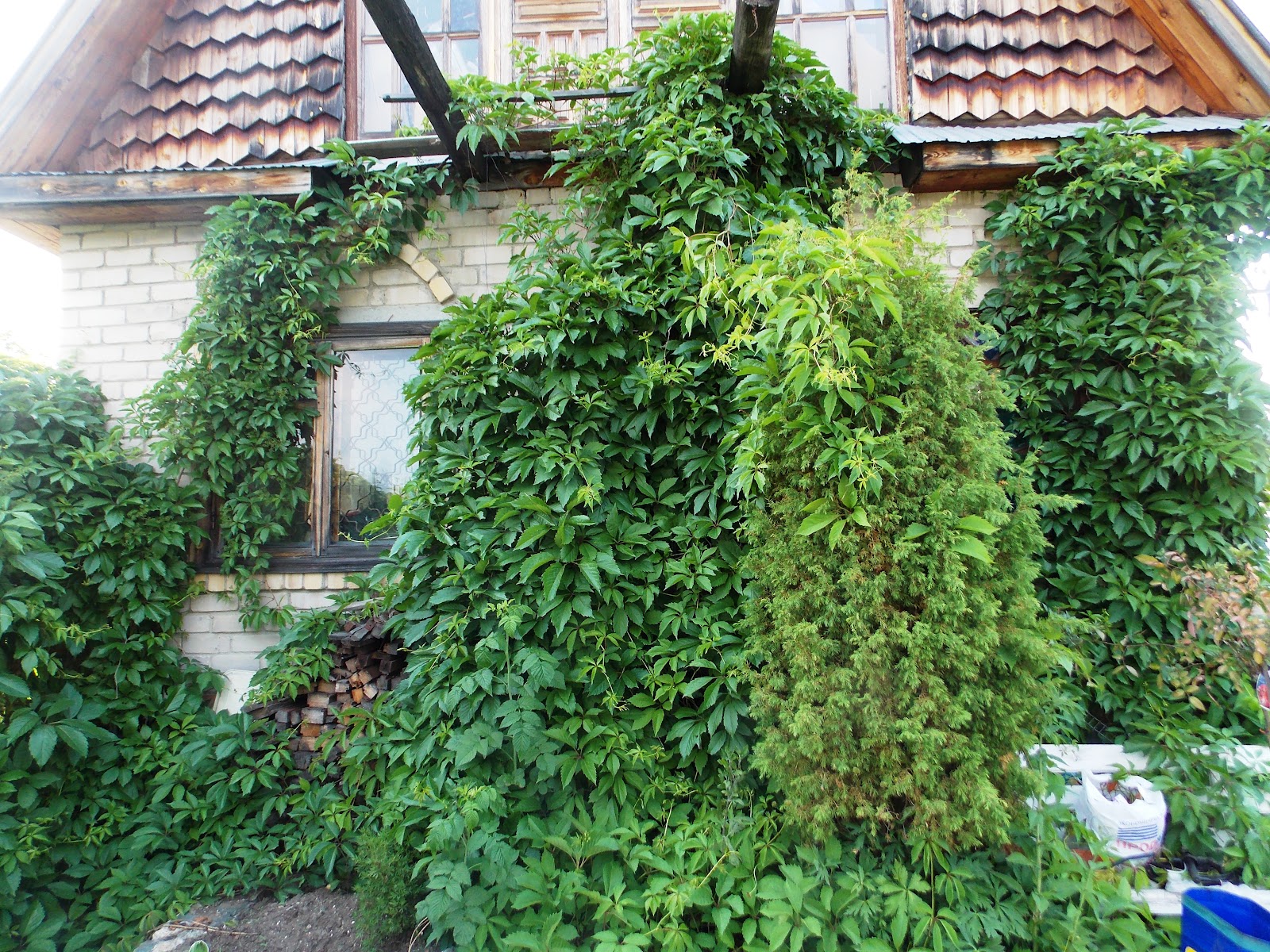
Crickets can enter your home from nearby plants.
Prevention
To prevent crickets from reappearing, preventative measures should be taken:
- Seal all cracks and crevices through which crickets can enter the house.
- Install mosquito nets to prevent insects from entering your home.
- The trash can must be tightly closed to prevent the smell from acting as a lure.
- It is important not to leave crumbs on the table and to immediately remove any food remains.
- Dampness in the premises is unacceptable. It is imperative to notify the management company or sanitary services about any water accumulation in the basements.
- Residents of lower floors or private homes require special attention. In the evenings, close curtains and lower blinds to avoid attracting uninvited insect guests with bright light.
- For yard lighting, it is recommended to use medium-power lamps, preferably yellow light.
- Ventilation grilles should be covered with fine mesh.
- Greenery near the home is trimmed regularly; it is not recommended to plant climbing plants close to the home.
How to protect your garden from crickets
To combat crickets in your garden, you can use biocontrol methods, mechanical methods, and chemicals.
Biosecurity is the control of insect populations, since crickets only become crop pests when they gather in large numbers. There are two ways to influence the number of individuals in a site:
- Use specialized products such as Nemabact and Entonem-F. Spray the soil with them to kill the larvae. These products are environmentally friendly and safe for humans and animals.
- Birds provide natural control. Install bird feeders and nesting boxes, and the birds will become reliable helpers in the fight against crickets.
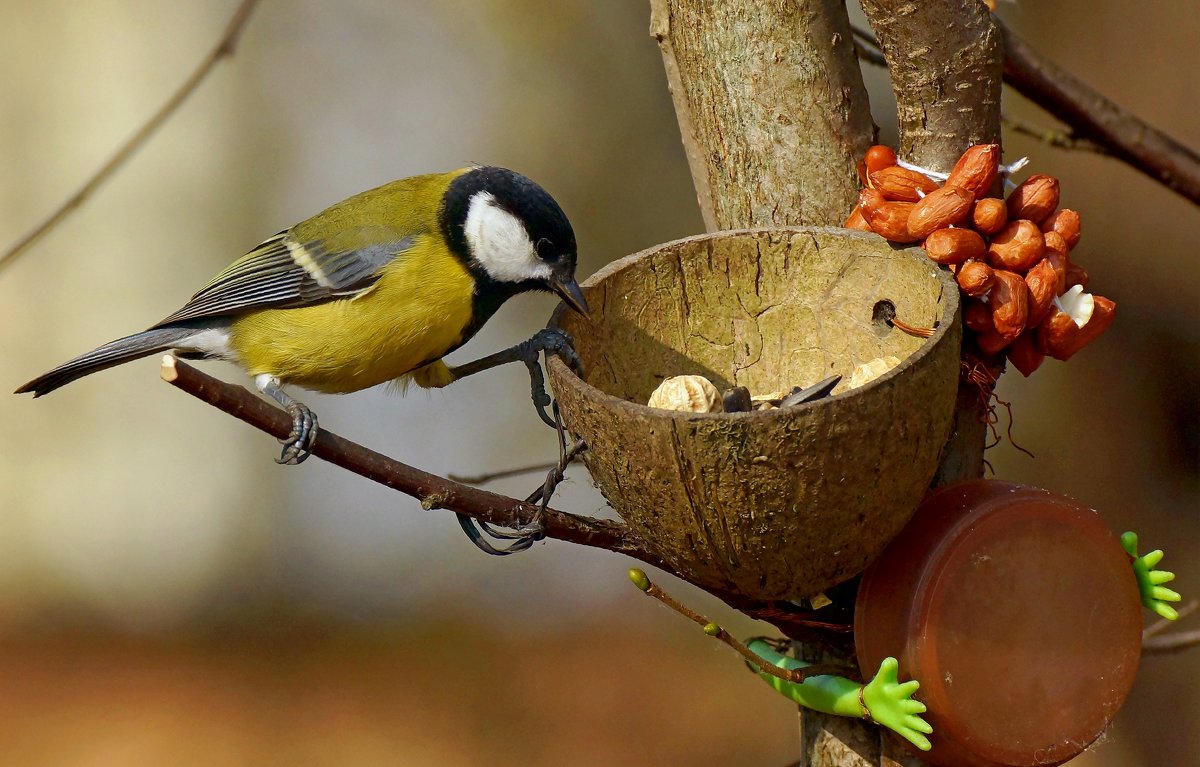
Just a few tits can help clear your garden of crickets.
Mechanical methods of cricket control include loosening the soil in the fall and summer, as well as removing construction debris from the area.
If a large number of crickets do infest your garden, you'll need to choose a more potent pest control product, as these insects are very resilient. The following products are used for spraying:
- Decis solution - 3 ml of the product is diluted in 10 liters of water;
- Karbofos - dissolve 6-12 g of the product in 10 liters of water.
The use of chemicals is justified only if there are a lot of insects.
Reviews
I kill 4-6 crickets in my apartment every day. Hairspray works great for getting them out of hard-to-reach places, and then I finish them off with slippers. Using dichlorvos is useless; they reappear the next day in huge numbers.
We've been living in a house for a while now. As soon as summer ended and it started getting cold, we suddenly had these creatures! First, I found these tiny, nasty creatures in the toilet. I thought it was a new species of cockroach! It gave me goosebumps. We killed them, and then bigger ones appeared. And then they started chirping! One appeared near the electric boiler under the stairs and chirps all night long! And sometimes even during the day! It sits there in a crack, sticks out its antennae, and chirps! We'll spray some air freshener in its crack)) It'll crawl out, we'll slap it, and off it goes... and then it starts chirping again! Today I dug up some lice aerosol! I sprayed it in the crack, and it looks like it's dead! It's silent)). Hooray! This is a victory! I hope...
There were some similar "concerts" when I was living in a rented apartment. Regular dichlorvos helped; I sprayed two cans. When I arrived, everything was quiet, although I'd overdone it; the smell took another three days to dissipate.
Should you control crickets in your home and garden? It all depends on the specific situation. If their nighttime chirping doesn't bother you, then having them nearby is perfectly acceptable. In small numbers, these insects won't cause significant damage to your crops. But if you absolutely must get rid of them, you should choose a method based on your own safety. Often, preventative measures are sufficient.