Shapeless and slippery, slugs are a source of disgust for people. Gardeners and vegetable gardeners are especially loath to see these gastropods. Ridding your property of them isn't easy, but their numbers can be reduced. To do this, it's important to understand the causes of these pests and choose an appropriate control method.
Content
Description of slugs
Slugs are a general term for several species of gastropods. Their bodies are symmetrical on both sides.
Slugs are naturally hermaphrodites, meaning each individual has two sets of reproductive organs: male and female. During mating, which lasts 12 hours, the male reproductive organs can become twisted, preventing the snails from separating. In such cases, the snails resort to extreme measures—biting off their own or their partner's reproductive organs. After this, the slugs are left to reproduce exclusively with the female reproductive system.
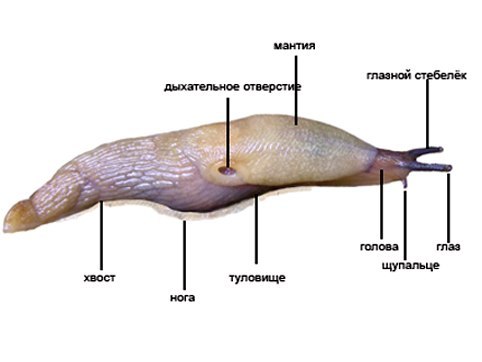
The body of land slugs changes shape through muscle contractions.
Slugs infest vast territories, including Australia and New Zealand, North America, Central and Western Europe, and the highly humid foothills of the Caucasus. The highest pest populations in Russia are found in the Leningrad, Pskov, Novgorod, Kalinin, and Yaroslavl regions. These terrestrial gastropods thrive in moisture and inhabit forests, fields, caves, and gardens. Their lifespan is up to two years. They are poorly protected and often become food for predators - large birds, hedgehogs, coyotes. They are omnivorous and gnaw on leaves, lichens, mushrooms, carrion, but more often they feast on living vegetation.
Some moderately large mollusks are an ingredient in exotic dishes, before which the slugs are left without food for 2-3 days or fed with pleasantly smelling plants.
Field slugs are common in garden plots. The most harmful are the netted slug, the small field slug, the plowed slug, and the bordered slug. Landowners are also harassed by the blue-black slug, the Pacific banana slug, the red slug, the large leopard slug, the red triangle slug, the red roadside slug, and the forest slug.
Photo Gallery: Types of Slugs
-
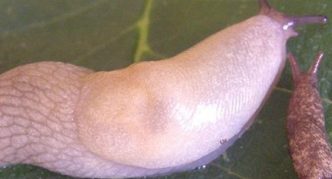
- The net slug is the most harmful
-
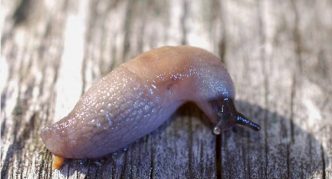
- The spindle-shaped body of the small field slug is tapered at the ends
-
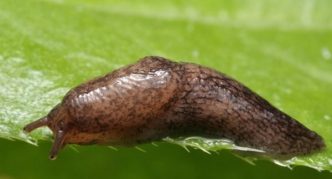
- The arable slug can destroy plants in a very short period of time.
-
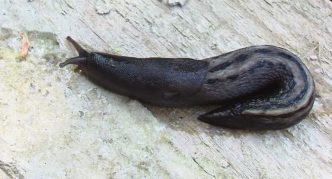
- The banded slug has a relatively moderate appetite.
-
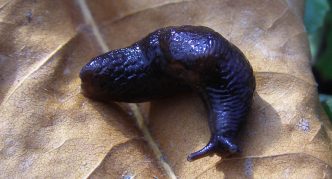
- The blue-black slug is listed in the Red Data Books of several regions of Russia.
-
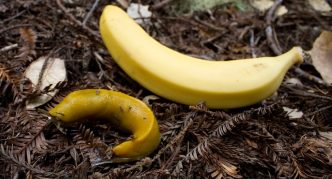
- The banana slug changes color depending on its diet.
-
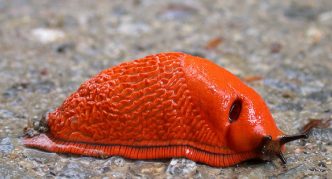
- The red slug has a smooth mantle that takes up a third of its body.
-
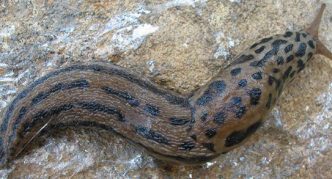
- The large leopard slug gets its name from its distinctive coloring.
-
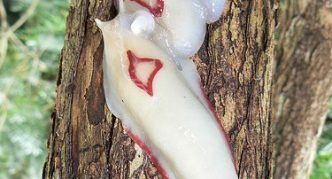
- The red triangle slug is distinguished by its distinctive purple mantle in the shape of a triangle.
-
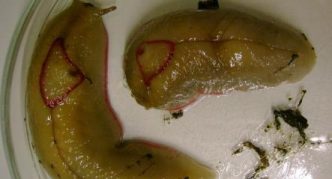
- A red triangle slug eats mold on bathroom walls.
-
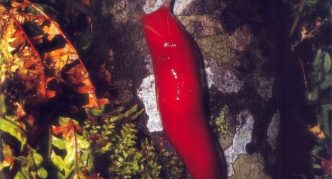
- The red triangle slug has a bright coloration
-
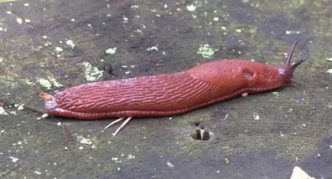
- The red roadside slug was accidentally introduced into Russia.
-
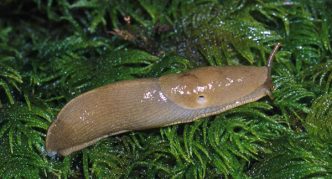
- The forest slug feeds on half-rotten plants, any mushrooms, and carrion.
Why do slugs appear in your yard or house and what harm do they cause?
The mollusks live in the wild and feed on leaves, excrement, and mushrooms. They balance the ecological balance of animal communities in forests and fields. Sometimes they crawl onto indoor plants, such as ornamental flowers. Stalk-eyed mollusks are also introduced to a property through newly acquired infested vegetation.
Slugs reproduce rapidly, laying up to four hundred eggs in a single season. New mollusks emerge in late spring from clutches in crevices, crevices, and other favorable locations.
Pests proliferate in the right environment. Ideal conditions for them:
- warm damp spring and autumn;
- slushy and moderately warm summer;
- not too cold winter.
Wet, compacted soil and piles of fallen leaves are a good habitat for pests. In gardens, they nest under large leaves, in the shade of shrubs, and in compost pits. The mollusks happily remain in basements and cellars, where they spoil harvested fruits and vegetables, spread mold, and various infections, including fungal diseases. Some of their species carry helminths - parasitic worms that infect other living creatures with diseases: chickens, sheep, goats.
Slugs reproduce especially quickly in greenhouses—humid and warm climate conditions, without access to the scorching sun, have a beneficial effect on this process.
In vegetable gardens and orchards, pests attack harvests and spoil the appearance of ornamental plants. The nature of the damage varies and depends on the crop and its development period:
- in sprouted grain crops, sprouts and vegetable seedlings they eat the stems;
- in cabbage, beets, and clover, they gnaw uneven round holes in the leaves;
- The leaves of cereal crops are eaten completely or eaten around the edges.
In greenhouses, hotbeds, and hothouses, they destroy tender seedlings, and in storage areas, they eat potatoes. Apartments, houses, and summer cottages are part of the gastropods' habitat. The most common pests include:
- ground floor apartments;
- houses with high humidity;
- buildings with cellars;
- Bathrooms - the constant use of water leads to the dampness that they love so much.
You can also encounter this pest in your bathroom, toilet, or kitchen. This happens to residents of private homes, as well as those living on the ground floor of an apartment building, or in apartments with high humidity. In the summer, slugs enter homes hoping to find cooler, more moist air, and in the winter, they crawl toward warmer areas. They will not crawl away from the premises on their own, since they take root and reproduce remarkably well in suitable home conditions. If you discover these neighbors on your property, there's no need to immediately resort to chemicals, as gardeners have a large number of organic methods at their disposal to reduce pest numbers.
Table: What different types of slugs look like and what harm they cause
| A type of slug | Body size, cm | Body color | What harm does it cause? |
| Reticulate | up to 7 | Grayish or brown with a mesh pattern of white and brown spots. | It seriously damages vegetable crops and root vegetables, and makes cabbage unusable by gnawing holes inside the head of cabbage. |
| Small field | 3–4 | From dull grey to pale brown without pattern. | He loves strawberries the most. |
| Plowed | 3–5 | From light gray and yellowish to dark brown. | Destroys everything in the garden that gets in its way. |
| Bordered | 5 | Grayish-yellow with a light stripe on the back. | It is not picky in its choice of food, but compared to other species it has a relatively moderate appetite. |
| Blue-black | up to 30 | It varies, even white, and in young individuals it is brown. | Eats all green parts of plants. |
| Pacific banana | 20–25 | Bright yellow, in some individuals brown or white with dark spots. | Eats vegetation. |
| Ginger | up to 18 | Orange, brick red, brown and even greenish brown. | Destroys cabbage, lettuce and other vegetables. |
| Large spotted leopard | up to 13 | From dull grey to pale brown with black spots. | It lives in greenhouses, where it eats various vegetables. |
| Red Triangular | 14–15 | Vivid colours (pink, red, white, cream, olive) with a distinct cherry red triangular mantle. | It gets into people's homes and feeds on mold on the walls in the bathroom. |
| Red roadside | up to 1 cm | Orange, red, brick. | Eats berries, fruits, flowers, vegetables. |
| Forest | 15 | From milky white to anthracite black, brown in young individuals. | Gnaws any vegetation. |
Photo gallery: Slugs eat crops
-
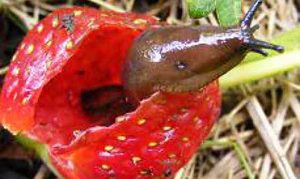
- Gastropods gnaw out cavities in wild strawberries and wild strawberries
-
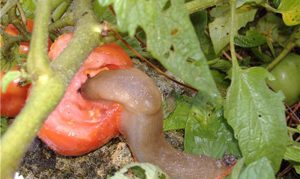
- A slug gnaws through a tomato and eats away almost all of the vegetable's flesh.
-
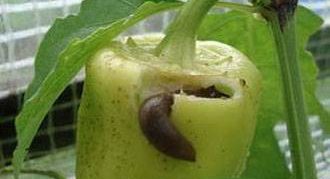
- The gastropod mollusk happily eats pepper
-
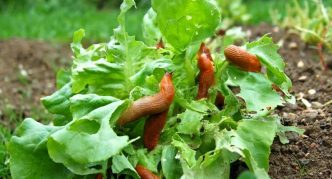
- Red slugs eat round holes in cabbage leaves
How to kill parasites
Slugs appear on the site in the spring and make life difficult for the landowners until autumn. It is better to fight them from May to July.
The mucus covers the sole of the mollusk so well that its foot practically does not touch the ground.
Many methods have been developed to destroy the pest, which can be divided into three large groups:
- mechanical impact;
- use of pesticides;
- use of folk remedies.
Mechanical impact
These are the safest methods for pest control for humans and plants.
Setting traps
During the day, slugs hide from the sun under boards, large leaves, and compost pits. Traps are set in such places, and the mollusks are then collected and destroyed. There are several options:
- Water the soil thoroughly and cover it with wet rags, wooden planks, old roofing felt, pieces of flat slate or thick film, and other available materials. During the day, slugs will crawl underneath. Check every two to three days.
- Squeeze a plastic bottle slightly to prevent it from rolling away, and pour sweet juice or compote inside. The mollusks will be drawn to the smell and won't be able to escape.

It is best to set slug traps in the evening.
- Place several small containers filled with a soap or salt solution, mixed in any proportions, into the soil. Once inside, the slugs will be unable to escape and will die.
- An original method involves making a small hole in half a grapefruit or orange peel and placing it upside down. The aroma attracts slugs, who crawl through the hole and are unable to escape.
- Slugs love the smell and taste of beer. If you bury cups of this drink in the ground, the parasites will drown. Another option is to fill the containers with a solution of 1 cup of water with 1 teaspoon each of sugar, flour, and 0.5 teaspoon of yeast.
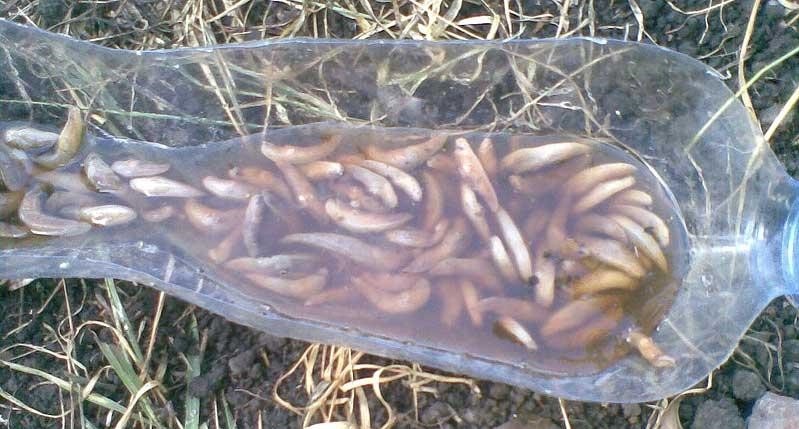
Video: Yeast trap for slugs
Insurmountable obstacles
Create all kinds of barriers for mollusks:
- Gastropods do not tolerate ash, lime and superphosphate. Sprinkle these substances onto the soil in dry weather. This option is not suitable in rainy weather.
- Mollusks don't like water: create a barrier of glasses of water, set in the ground at the same level. This will prevent pests from reaching your crops.
- Slugs don't like rough surfaces: sprinkle sawdust, coarse sand, crushed nutshells or eggshells around the area.
- Broken shells with sharp edges will help with protection: sprinkle them in the passages between the rows.
- Protect large plants with a wall of coarse sand around each specimen. Constantly monitor the fence for any holes. Use copper strips or rims for this purpose.
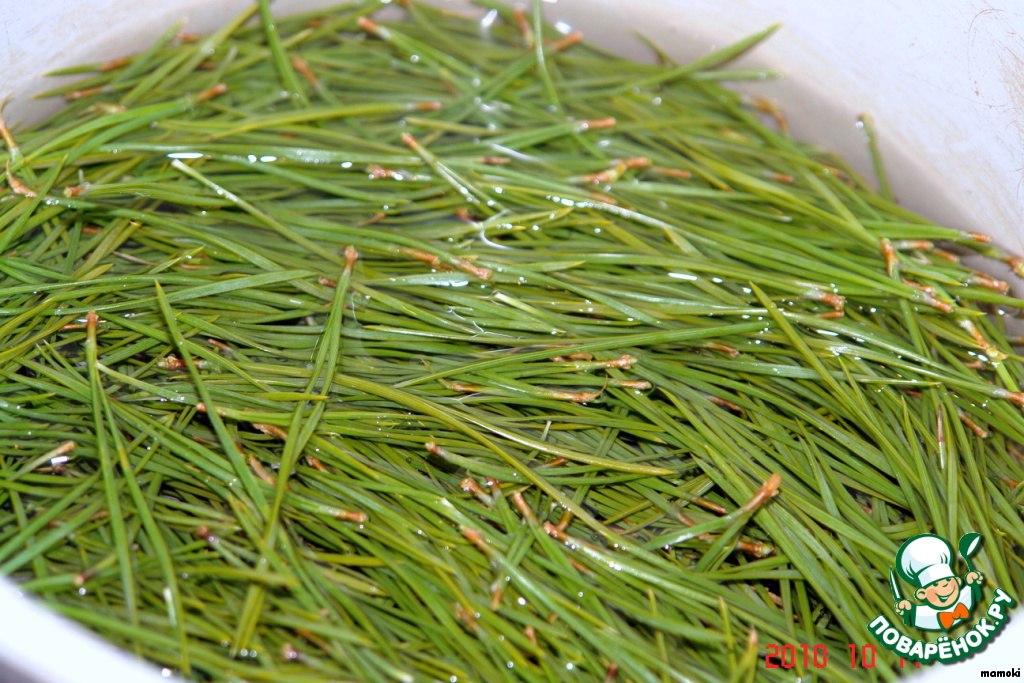
- Mulch your plantings with pine needles. Not only will gastropods avoid plants with such a pungent odor, but they won't be able to get to them either.
Pine needles will create a barrier for slugs: they will not be able to crawl along them to reach the plants.
Natural enemies
The most gentle method of fighting slugs is to create an ecologically clean and chemical-free area on the site with all the conditions for the habitation of natural enemies: birds, hedgehogs, moles, frogsThese helpers are rare in gardens and vegetable patches because they lack suitable habitat and food. But even here, there are some solutions:
- Create hedges from shrubs for the birds, hang birdhouses and periodically add grain to them.
- For snakes, build a home from leaves; even better, create a small pond on the site with a fence in the form of tall and thick grass.
- For hedgehogs, build a shelter near a pond out of planks, branches, or twigs and fill it with straw. You can feed them dry dog or cat food, nuts, fruit, or meat.
Microscopic roundworms are used to control gastropods. The parasitic nematode Phasmarhabditis hermaphrodite biologically kills gastropods. This measure is effective in damp weather from spring to fall, when the soil warms up to more than 5°C. The nematode is harmless to the surrounding environment. The solution is diluted according to the instructions and watered onto the plantings. The gastropods die within seven days; one watering is sufficient for protection for 1.5 months. If the infestation is significant, drastic measures and methods for exterminating slugs must be used.
Photo Gallery: Biological Control Products
-
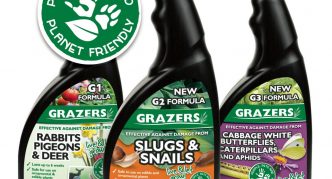
- Nematode spray is easy to use
-
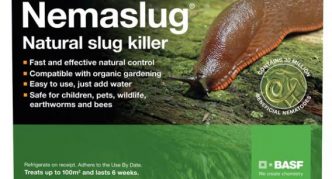
- Nemaslag is absolutely safe for people and animals.
-
- Parasitic nematode kills slugs
Chemicals
Their use is the last resort in the fight against slugs. General-purpose insecticides aren't suitable for this purpose. Those specifically designed to kill these pests are needed. They vary in spectrum of activity, dosage form, hazard class, and many other parameters.
Table: Comparative characteristics of chemicals for slug control
| Name of the drug | How to use | Duration of action, days | For the protection of which crops | How dangerous is it? |
| Predator | Pour the product onto cardboard according to the instructions and spread it around the beds. | Up to 30 | Vegetables, flowers, berries and grapes. | Does not affect beneficial insects and worms. |
| Stopulitis | Scatter the granules in areas where parasites accumulate. | Destruction in one day, protection up to 3 weeks | Vegetable, fruit and berry, ornamental crops. | Harmless to plants, animals and beneficial insects. |
| Ulitsid | Up to 14 | Any. | Safe for everyone. | |
| Ferramol | Up to 30 | Vegetables, strawberries, lettuce leaves and ornamental plants. |
| |
| Thunderstorm or Meta | 14-21 | Grapes, berries, citrus fruits, vegetables, fruit and flower crops. | Poisonous to humans and pets. All fruits and vegetables must be thoroughly washed before eating if this poison has been used nearby. | |
| Extraflor | Prepare the solution according to the instructions and spray the plants. | Protection for plants – up to 20, for the root system – up to 30. | Various (increases the yield and quality of garden and vegetable crops). |
|
| Slug eater | Scatter granules over the surface of the soil between rows and paths. | The results of the product are noticeable within 3–5 days. | Vegetables, fruits, citrus, flowers, ornamentals, as well as grapes and strawberries. | It is not very dangerous for humans, but is not recommended for use more than once per season. |
Photo Gallery: Slug Control Chemicals
-
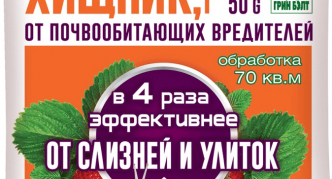
- The predator is used to protect vegetable, flower, berry crops and grapes from slugs.
-
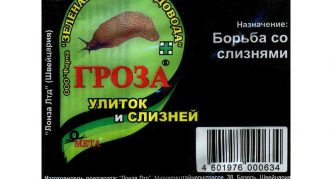
- Thunderstorm is effective even after heavy rains
-
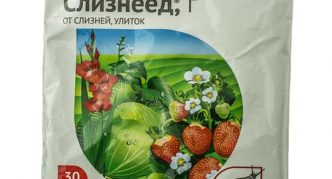
- Slizneed is not recommended for use more than once per season.
-

- Stopulit destroys slugs in one day
-
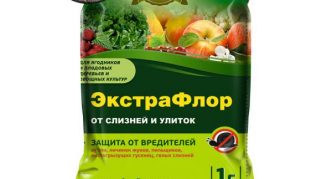
- Extraflor protects plants from slugs for up to 20 days
-
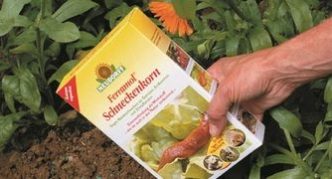
- Ferramol is safe for humans and animals.
-
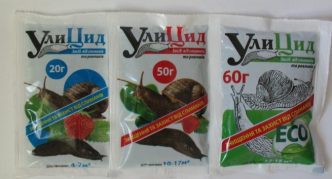
- Ulicid is rain-resistant.
Folk remedies
The easiest and fastest way to kill slugs is by heating it to 40–45 °C Water. It's used to water the soil under plants. You can spray the plants with a solution of brilliant green (1 bottle per 10 liters of water) or infusions:
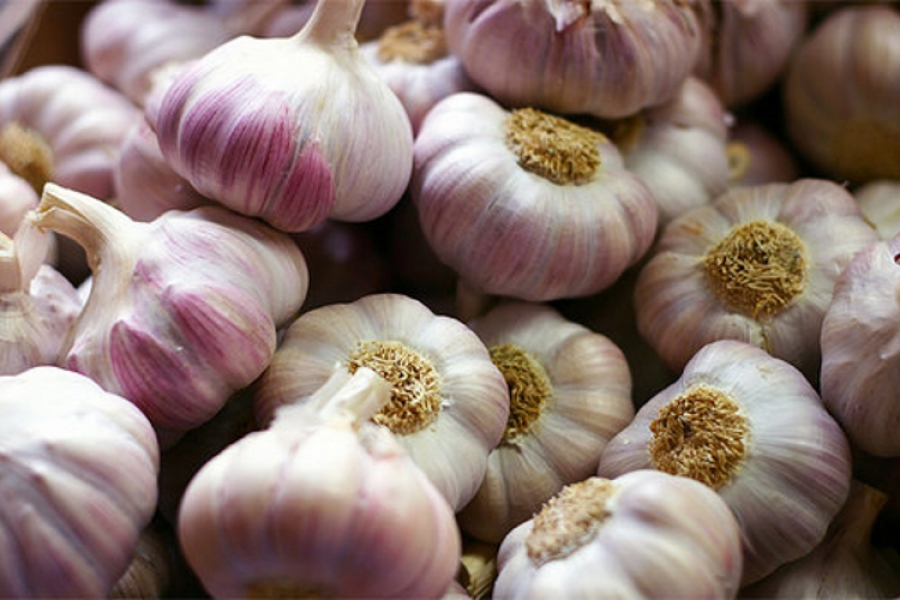
- garlic - 300 g, finely chop, pour in 10 liters of water and let stand for one day, stirring occasionally;
Garlic infusion is sprayed on plants to protect them from slug infestations.
- mustard - dissolve 50 g in 300 ml of water, leave for 60 minutes, dilute 3-4 times;
- Tobacco - 1 kg, pour 10 liters of water and after 24 hours add a little liquid soap.
To water the vegetation and the soil underneath it, use:
- delphinium infusion - chop 1 kg of dried leaves, pour in 10 liters of warm water and let stand for 2 days;
- mustard - 100 g of powder per 10 liters of water, leave for 60 minutes;
- hot pepper - 1 kg of fresh or 0.5 kg of dried product, pour 10 liters of water, leave for three days, boil and leave for another 2 days;
- coffee - 2 teaspoons diluted in 1 glass of water;
- aqueous solution of ammonia - 4 tbsp. per 10 liters.
There are also other effective ways to combat slugs:
- At the base of the bush trunk, make a 5 cm wide ring of cotton wool and apply tar or other sticky resin to it.
- Traditionally, table salt, which eats slugs, is used to combat parasites. Sprinkle it near the garden beds. But salt getting into the soil has a negative effect on the harvest, so it is better to sprinkle it on black paper
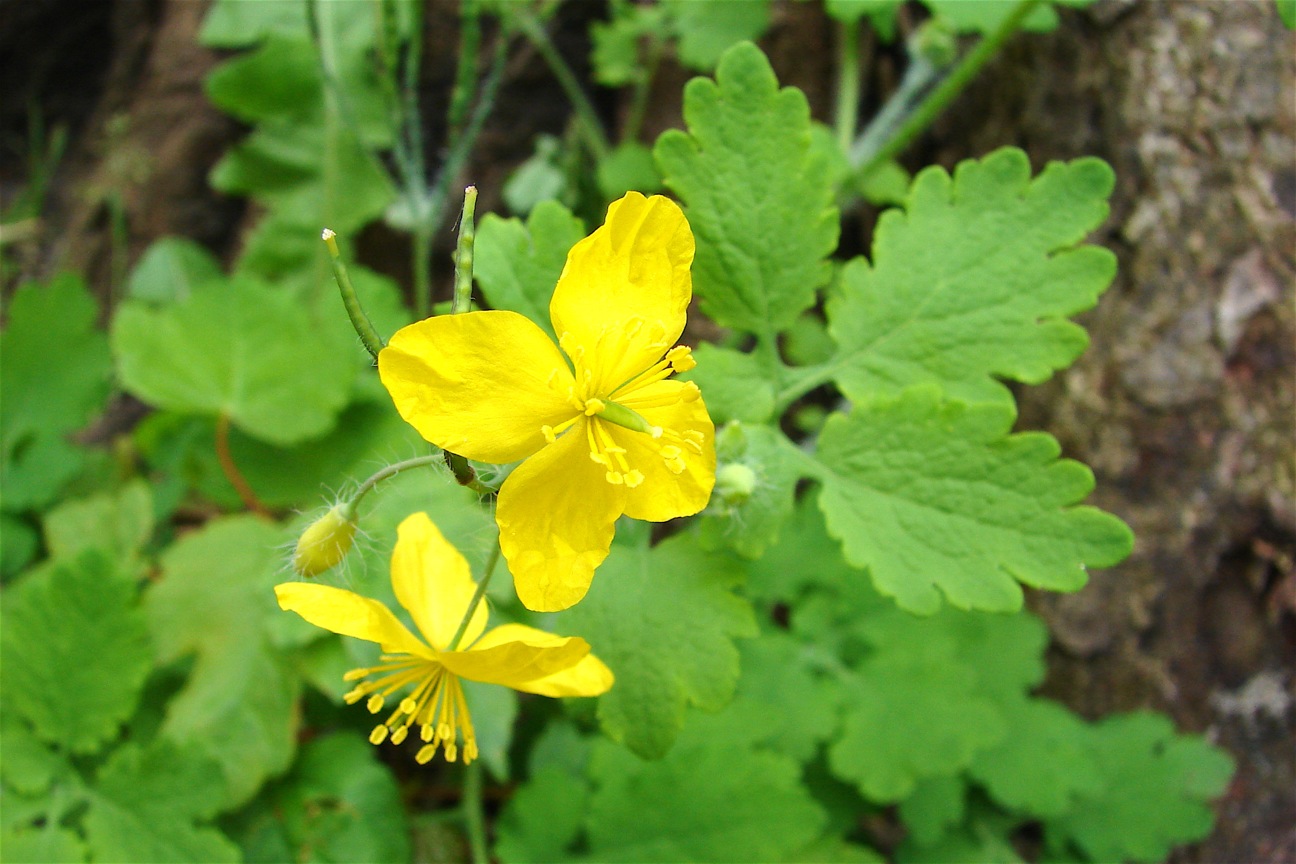
- Soak celandine in 10 liters of water for half a day and treat the plants.
Slugs can't stand the smell of celandine
- Mollusks are killed by contact with dry washing soda and an aqueous solution of table vinegar (65 ml of 9% vinegar per 10 liters). The dry solution is scattered on the ground, and the solution is sprayed on the parasites themselves and the plants, except for the roots. Frequent use of the solution harms vegetation.
Video: How to protect your plants from slugs
How to get rid of slugs in a house or apartment
If you see one individual, throw it away. If encounters with gastropods occur periodically, then:
- Identify the places from which they crawl out.
- Sprinkle them with salt or mustard, pour vinegar over them. Chemicals cannot be used in residential areas.
Video: Plant expert on slug control
Methods for preventing slugs from appearing in your yard and apartment
The best protection for your plot is proper gardening. The following measures help strengthen plants to increase resistance to pests and diseases:
- use of methods and means to increase soil fertility;
- improving the quality of the soil structure;
- correct selection of plants, their thoughtful combination, rotation of vegetable crops;
- timely completion of gardening work and sanitary and hygienic measures;
- attracting birds and other beneficial fauna for natural pest control.
To prevent slugs from appearing in your garden or vegetable patch, do the following:
- Make conditions unbearable for pests - deprive them of a home by removing stones, weeds, and grass from the area.
- Dry the wettest areas of the soil.
- When planting crops, keep your distance.
- Periodically cut off the lower leaves and thin out the plantings.
- Dig up the soil: mollusks like to live in cracks.
To prevent slugs from appearing in your apartment or house:
- Maintain hygiene in the wettest areas - the bathroom, toilet and kitchen;
- try to keep these rooms as dry as possible;
- Find all the cracks and holes in the floor and walls and seal them.
Reviews
...and we tried nematodes, but I didn't notice a difference. The pests die down for four weeks, then start all over again. It's expensive and doesn't work in my garden. I use pesticides in the flower beds, plant slug-resistant potatoes, the Kestrel variety, and lay straw in the strawberry beds. I didn't do that this year, but the losses were minimal; it was very dry, and slugs burrow into the ground in such weather and don't touch the crop. I plant lettuce that they don't touch—leaves like oak. Basically, I try to give them their own wedding, just as I have mine. Although I always walk around the garden with scissors; they're easy to snip at slugs. I collect them when I can—unfortunately, I often don't have time for them.
…My parents bought a house and a plot of land in the Orenburg region four years ago. The first year, the harvest was bad, and almost all of my mother's flower plants were eaten by slugs and snails… But my mother had a dream… A pond of her own on the plot. She spent a long time persuading the men of our family… Then one day, she picked up a shovel, went out into the garden, and started digging. After half a cubic meter, the men were embarrassed… And we have a lot of men in our family. My mother has two sons-in-law, a husband, and four grandchildren (three of whom are already good at digging)… So, we dug a pond, lined it with plastic, and planted plants from a nearby body of water…
The first to arrive at the pond were the toads. They loved Mom's pond so much that they laid so many eggs there that we were exhausted trying to catch them... Almost all the snails and slugs disappeared from the area around the same time the toads arrived. Now the pond has long since become its own ecosystem... Swallows fly in so comically and drink from it—on the fly... The toads gather at the pond in the evenings, have sex and lay eggs, sing songs (they sing beautifully...), and all sorts of water striders scurry about...
The water lilies are blooming... Beautiful!!! And there are so many slugs and snails that my child brought one home from the neighbor's garden this summer and was amazed that we actually have snails... I'm not saying this to tell you to grab a shovel and dig ponds... It might be worth trying to attract their natural enemies to your property... Snails and slugs probably have other enemies besides toads and birds...
I'm not saying this to tell you to grab a shovel and dig ponds... It might be worth trying to attract their natural enemies to your property... Snails and slugs probably have other enemies besides toads and birds, too...
When slugs appear (and they multiply quickly), attract hedgehogs, surround them with "water barriers," etc. — well, it's clear that the author of the article, whose information Pavel shares with us, has "many methods," but what can you really do?!! They drink beer, but the cups are empty in the morning. I spent three nights collecting them by hand—I'm terribly tired. The tweezers thing is nonsense. They crawl out at night. A flashlight in one hand, a jar of salt water on the ground. Collect with your free hand... I was lucky—I sprinkled "Ulicid Eco" (not a chemical!!!) on them—they disappeared very quickly. And I'm afraid to sprinkle chemicals, even though they're recommended. Eco = not chemical.
A product from Neudorf Ferramol Granules against slugs on vegetables, strawberries and crops Active ingredient: 9.9 g/kg Eisen-III-phosphat • Active ingredient iron compound, the same as in nature • Active ingredient is converted in soil into plant nutrients iron and phosphorus • Safe for hedgehogs, earthworms, pets, bees and other living organisms — environmentally friendly • No waiting time before harvest • New mechanism of action — no visible slug carcasses • No slime • Extremely waterproof — New bait technology Application: Application rate 5 g/m2 (= 350 granules = one slightly heaped teaspoon). Ferramol granules are evenly scattered among crops at the beginning of visible damage to plants by slugs. For best results, apply the product in the early evening hours when slugs leave their shelters.
Spread evenly and widely among plants. It is never recommended to scatter granules only around individual plants. In the event of a particularly severe slug infestation, the surrounding areas should also be sprinkled. If the granules are completely or mostly consumed the following day, they should be scattered again. This will also result in them being eaten by new slugs. If the soil is dry, lightly moisten it before applying the product. This will allow the granules to absorb water and become more attractive.
If the soil is very uneven, it is advisable to level it as much as possible. This will prevent the granules from rolling into areas inaccessible to slugs. Can be used up to 4 times. Environmental protection: Due to the product's safety for bees, it is classified as hazard class B3. The product does not pose a risk to populations of Aleochara bilineata and Poecilus cupreus. Granules and packaging should not be disposed of in water bodies. Consumer protection: Avoid unnecessary contact with the product.
Incorrect use is harmful to health... The granules are truly very effective. Very easy to use. A bit of criticism regarding the advertising claim that you can't see dead slugs and their slime. Nonsense. Although, if we're talking about dozens of little creatures throughout the garden, this may be true. But last summer I had thousands of them, and the morning views were not at all pleasing to the eye. I bought another similar product from another company, but it was less effective. Granules left lying around for a long time become moldy. Of course, it's expensive! It only pays for itself with strawberries.
To prevent your plot from becoming a slug den, clogging the soil and threatening the quality and quantity of your harvest, take a comprehensive approach and don't forget about prevention. Folk remedies, traps, and barriers will help get rid of the pest. Almost all of them are simple, safe, and effective. In severe cases, use chemical treatments.