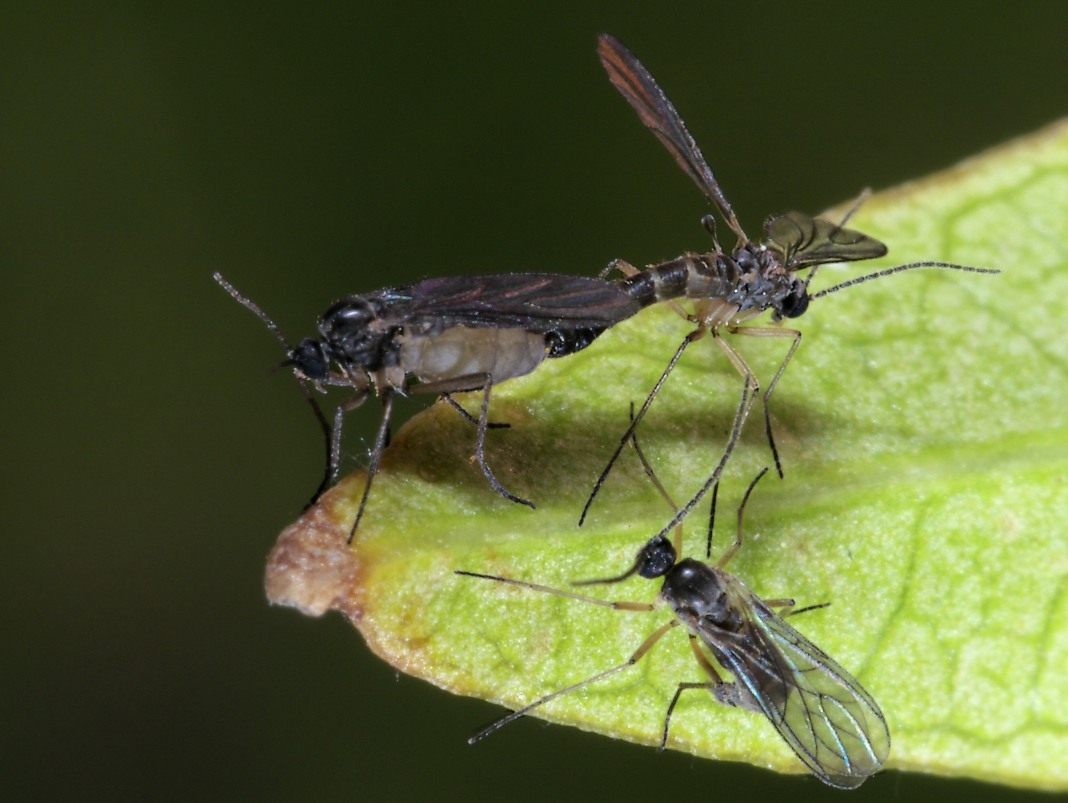
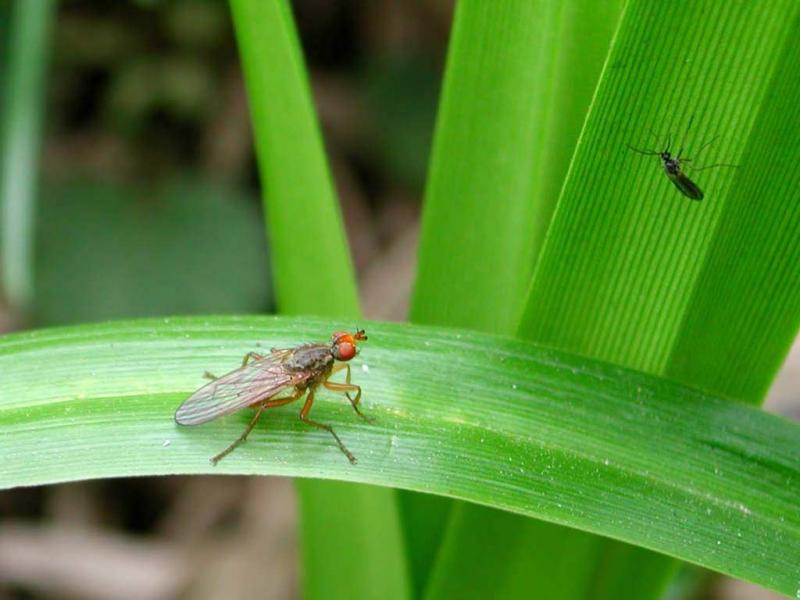
These annoying insects, irritating people and animals, causing not only tactile discomfort but also the potential to trigger allergic reactions, are tiny, numerous midges, found in large numbers throughout the globe, with the exception of the Sahara Desert and Antarctica. What causes these arthropods' invasions? Are there any ways to get rid of these pesky guests once and for all?
Content
Midges: General Information
Midges cannot boast of large sizes - their length ranges from 1.2 mm (inhabitants of the tropics) to 6 mm (inhabitants of temperate and northern latitudes). The body is divided into 3 sections: head, chest and abdomen.
Females, unlike the narrow-browed males, have a broader forehead. The insects' antennae are covered with hairs, which can range in color from dark yellow to brown and even black. In queens, these hairs are shorter and thicker, and taper toward the tips. The compound eyes (i.e., the paired visual organs) of females are identical, but the facets of males differ: the upper ones are larger, the lower ones are smaller. The wings are transparent, covered with small tubercles; when at rest, they fold horizontally, overlapping one another.
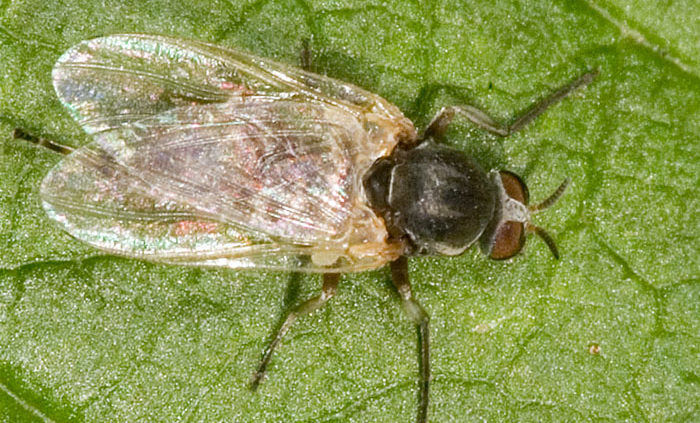
The wings of midges are round-oval in shape, their length usually reaches 2/3 of the insect's body
Diet
Male midges are vegetarians, feeding on nectar and plant sap. Females, however, are true gourmets. Their main delicacy is blood. They obtain this by biting people, cows, horses, sheep, goats, roe deer, buffalo, and poultry (chickens, ducks, etc.).
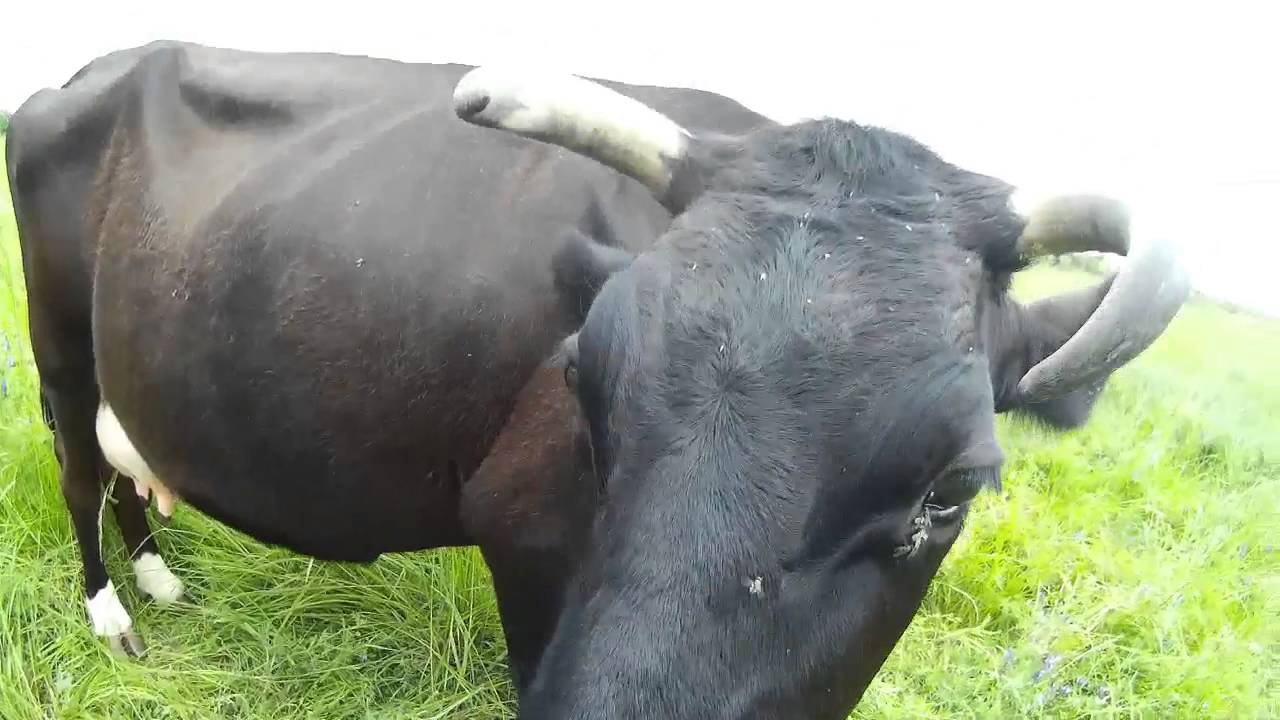
Cattle suffer most from midges
Life cycle
Like all living creatures, the lifespan of a midge depends on its diet. If these insects feed on plants, they live less than a week. Blood-sucking individuals can live for about a month. Moreover, some females remain viable for up to three months.
The life cycle of a midge consists of several stages:
- egg (in one clutch there are from 50 to 100 oval eggs measuring from 0.15 to 0.4 mm, they mature in 5 to 7 days);
- larva (on the thoracic section of the worm-shaped body there is a special hook for movement, and on the back there is a suction cup for fixing the location);
- pupa (the cocoon can be of different shapes, but is always covered with hairs; at this stage of development, the midge does not eat - its needs are only for water and oxygen);
- adult or imago (appears 2–3 weeks after the pupa).
During the colder months, insects survive as eggs, or rarely as larvae. In particularly hot climates, midges overwinter as larvae, but spend the summer as adults in bodies of water.
In 12 months, an insect can produce 1–3 generations.
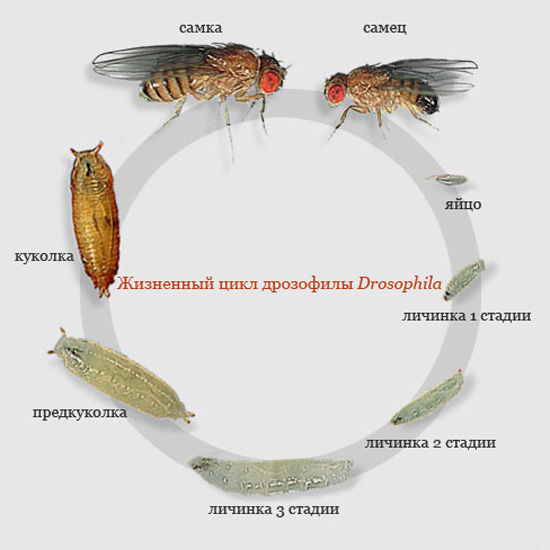
The life cycle of a midge usually does not exceed one month.
Habitats
The midge settles where there is moisture, since all stages of development from egg to imago require water. The insect's species also plays a significant role. That's why some insects thrive in the garden, others in the kitchen, and still others near bodies of water.
Types
The habitat of midges is determined by their species and the lifestyle characteristics of a particular population. Given that there are approximately 1,800 species in nature, we will list only the most common.
Table: Types of midges
| Species name | Peculiarities | Potential risks |
| Decorated (spotted) | Length: 3 mm to 4.5 mm. The back has a silvery border; antennae and body coloration vary by subspecies. They live on all continents. | Females drink the blood of humans and animals. |
| Horse | Length: 2.5 to 4 mm. Silvery-golden hairs on the back and abdomen; males have silvery spots on the upper body. They inhabit heavily polluted bodies of water and are bloodsuckers. | They attack people and animals. In horses, they accumulate in the ears. |
| Red-headed | Up to 3.5 mm in length, with red facets. Females have yellow legs. They are common in Eastern Europe and the European part of Russia. They inhabit the muddy channels of large rivers. | They bite people and animals. |
| Tundra | Size: up to 3 mm. Males have a black back with a silvery tint and golden hairs. Females have a gray-black back without silvery speckles and a dark yellow abdomen. These midges inhabit northern regions. | Vicious bloodsuckers. They attack people and animals. |
| Short-palp | They are approximately 3 mm long and have a black body with silvery spots. They are found primarily from Karelia to the Arkhangelsk and Moscow regions. | They bite people and animals. |
| Silvery | Length: 3.5 mm to 3.8 mm. Males have narrow silvery spots on their backs, while females have a more intense shade. The legs are brown-black with a yellowish tint. They are found in Russia, Western Europe, and North America. | They attack people and animals. |
| Light-browed | Length: approximately 4 mm. Males have black legs, while females have brownish-black legs. They inhabit northeastern Europe and Russia (the European part and Transbaikal region). | |
| White (springtail) | Body size up to 1 mm. They don't fly, but they jump well. They live in the trays of houseplant pots and on the soil surface. | The waste products can cause pathogenic fungi to appear on the undersides of leaves. Midges infect plants with viruses, and their larvae can damage the root system. |
| Sciarid (fungus gnat) | They resemble small worms, up to 3 mm in length. They are translucent in color and have a black dot on their head. | Adults flying over the flower are harmless, but the larvae feed on the sap of the roots and also degrade the quality of the soil, as they prevent oxygen from penetrating into the soil. |
Danger of bites
Midge bites affect areas of skin not covered by clothing: the face, neck, arms, and legs. Usually bloodsuckers attack en masse and only during the daytime. They are especially active in the summer. The optimal temperature for "feeding" is between 17 and 20 degrees Celsius. OC. The midge circles its victim for a long time, then crawls over the body, searching for a suitable bite site with thin skin. The bloodsucker's proboscis is too short to penetrate thick epidermis. Because of this careful targeting, the midge often strikes the ears, eyes, and nose. It has been observed that midges most often bite human legs. However, a definitive explanation for this preference has not yet been found.
The ornate, tundra, and red-headed midges are dangerous because they are carriers of onchocerciasis (an infection of the skin, eyes, and lymph nodes by helminths).
This is interesting. After years of research, scientists have concluded that one in every 15 midges is infected with onchocerciasis.
All blood-sucking species of midges can cause simulidotoxicosis, an allergic disease characterized by itching, swelling, and papules. These symptoms may be accompanied by tachycardia and hyperemia, or vascular congestion. Midges also transmit infectious diseases that affect poultry and pigeons. In hot climates, flying bloodsuckers can infect with such deadly infections as:
- leprosy;
- anthrax;
- plague;
- glanders.
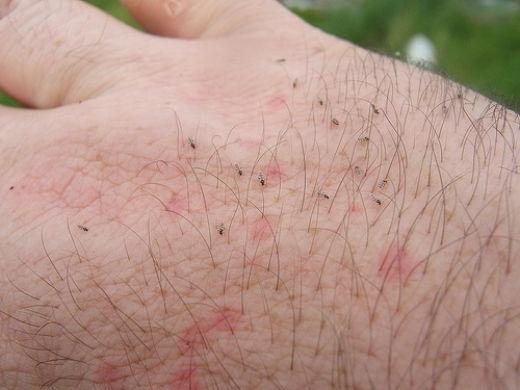
Midges bite all exposed areas of skin
Midges are dangerous because their bites can cause allergic reactions (especially in children). This is due to the fact that the insect's saliva gets onto the damaged area.
It's very important not to scratch the bite site (otherwise, you could cause an infection), but to neutralize the toxic substance with alcohol. If the mucous membrane is affected, specialist assistance is essential. The following is prohibited:
- apply medications to the bite site without a doctor’s approval;
- treat the damaged area with household chemicals;
- Do not apply any ointments to the wound, as they will cause a strong burning sensation.

Itching and swelling are considered the first signs of an allergic reaction to midge bites.
This is interesting. Midges, despite their modest size, bite even more painfully than mosquitoes.
Outdoor protection against midges
Adjusting your outdoor schedule to the life cycle of a particular type of midge is a huge and wasteful waste of time. More effective insect control options are recommended.
Professional approach
There are two types of products that repel midges from the human body: repellents and fumigators. The former are applied directly to the skin, while the latter kill insects within a certain radius.
Repellents (sprays, ointments, lotions)
They are applied to the skin, thereby blocking the olfactory receptors of insects.
- Mosquitall ointment, based on diethyltoluamide, effectively repels midges for 8–9 hours by disorienting their olfactory receptors. It has a pleasant vanilla scent.
- Help aerosol. Lasts 6–8 hours. Apply to skin and/or clothing. It is dangerous for children under 12 years of age, pregnant and lactating women to use this product.
- Gardex aerosol based on diethyltuolamide. Effective for 4.5–6 hours.
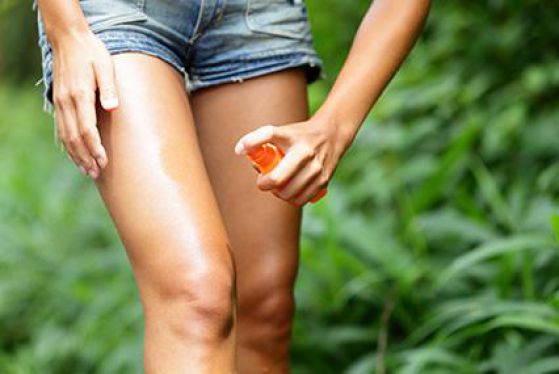
Aerosol is the most convenient form of repellent.
Fumigators
They contain toxic substances that kill midges. Fumigators come in two types:
- pyrotechnic (the spiral smolders and smokes, releasing substances toxic to midges);
- electrical (under the influence of heat, a plate soaked in poison or a bottle with toxic liquid releases these substances into the air and kills midges).
The most popular and effective fumigators are products of the following brands: Raid, Mosquitall, Fumitox.
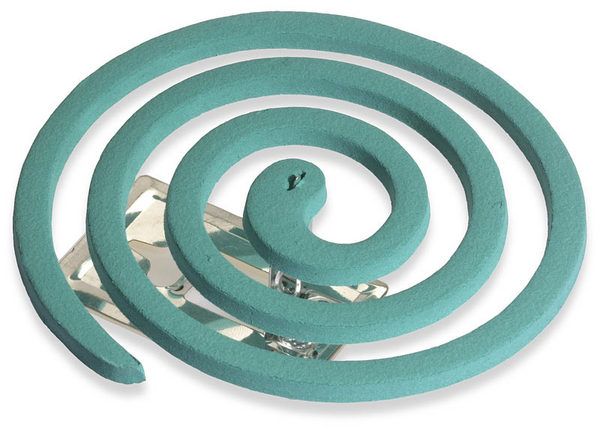
Spiral fumigators are convenient to use outdoors, but their coverage area is not very large.
Folk methods of protection
If the use of chemicals is contrary to your principles, you can use folk remedies.
- Vegetable oil infusion. Wormwood, parsley, tobacco, eucalyptus leaves or fir branches, vanilla pods, anise seeds, and cloves are infused in oil for 2–3 weeks. Strain the mixture and apply it to exposed skin areas.
- An ointment based on baby cream or petroleum jelly. Chop lavender leaves, basil, rosemary, bird cherry blossoms, garlic cloves, and lemon zest and mix with the base. Apply as needed.
- Alcohol tincture. Place 250 g of walnut shells in 500 ml of 35% vodka, add 10-15 drops of camphor oil (or 30-40 drops of peppermint oil), and let steep for 2 days. Apply to exposed areas of the body, except the face, as the alcohol can cause a burn.
- Essential oil blends. Strong scents repel gnats, while many people enjoy this aromatherapy.
Table: Effective Essential Oil Blends
| Composition | Ingredients |
| Mint-lavender | 5 drops of lavender oil; 5 drops of peppermint oil; 20 drops of citronella oil; 0.5 liters of water. |
| Lemon-basil | 5 drops of lemon oil; 20 drops of citronella oil; 10 drops of basil oil; 0.5 liters of water. |
| Vanilla-lavender | 5 drops of vanilla oil; 20 drops of citronella oil; 5 drops of lavender oil; 0.5 liters of water. |
Prevention
Since midges, according to the species table, inhabit the entire globe, with the exception of some northern regions and deserts, fighting the very existence of these insects is, to put it mildly, futile. The only option is to choose a means of protection against their bites and heed the advice of experts:
- Avoid choosing places near bodies of water overgrown with vegetation for walks or picnics;
- in the middle of summer you should not wear too revealing light-colored clothes;
- You should not stay in damp, shady forests or near swampy lowlands for a long time;
- It is better to organize walks and picnics away from livestock farms.
Houseflies: Types and Effective Ways to Get Rid of Insects
It's not uncommon to see small flying insects in houses and apartments, especially in the kitchen, near cabinets, and around houseplants. Many people simply ignore them, believing that simply ventilating the room or taking out the trash will make the gnats disappear. While this can sometimes help, it can also lead to these insects returning time and time again. So, it's important to know everything about these uninvited guests to develop a strategy for getting rid of them.
Table: Types of domestic midges
| Name | What do they look like? | Where do they live? |
| Drosophila (fruit flies or wine flies) | The body ranges from 1 to 3 mm, and is colored in shades of brown or dark yellow. Less commonly, it can be black or orange. | They are most often found in the kitchen. They swarm over fruits, vegetables, sweets, and alcohol (especially fermented alcohol), and are partial to the sink, trash can, and wet rags. |
| Sewer | Black in color, the body and wings are densely covered with hairs. | They fly into the house through the sewer system and carry dangerous bacteria. |
| Food moth | Gray or dark brown in color. The larvae are light beige and can reach 2 cm in length. | It damages food products (especially cereals, flour, tea, pasta, dried fruits, etc.). The larvae live up to 2 months. |
| Whitefly | Length 1.5–3 mm, body covered with white mealy pollen. | It feeds on plant sap. Scale-like larvae are found under the leaves, and a white, sticky coating can be seen on the tops of the shoots. |
| Clothes moth | The butterfly is 5–10 mm long. | The larvae feed on keratin from fur, carpet, and wool fibers. They live a long time, with the female laying up to 200 eggs during her life cycle.* |
| *Another common type of domestic midge, the sciarid (fungus gnat), is described in the table above. | ||
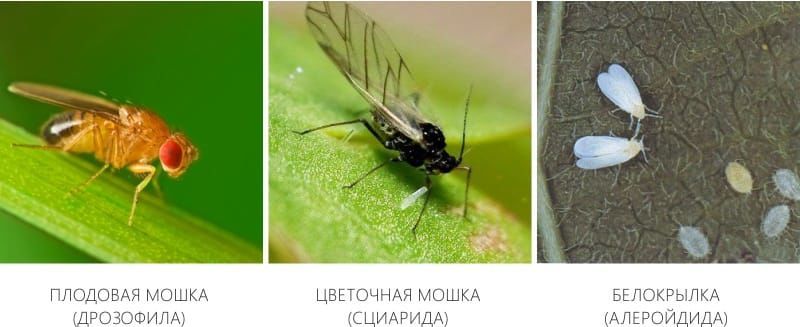
Three types of houseflies that almost everyone is familiar with: fruit flies, flower flies, and whiteflies.
How do insects get into the house?
Tiny, annoying bugs fly before your eyes, land on food and clean dishes, and drive your homeowners crazy with their presence. Don't be surprised by such guests if your home has:
- pets (especially rabbits, birds and hamsters);
- indoor plants;
- problems with sewerage or water supply;
- a trash can that doesn't close tightly and isn't emptied regularly.
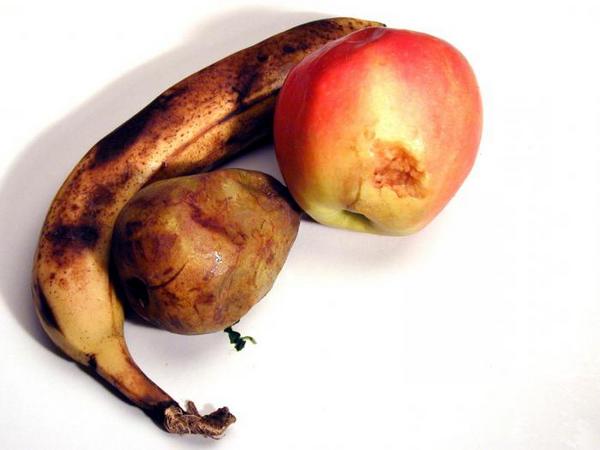
Rotten fruits and vegetables are an ideal breeding ground for grape gnats.
Living areas that are rarely cleaned and watered are another prime source of gnat infestation. Rotting debris from sewer and plumbing clogs also attracts these uninvited visitors.
This is interesting. It has been observed that filters under kitchen or bathroom sinks are a favorite habitat for midges, as over time, food particles that begin to rot accumulate there.
Additionally, midges are carried into the home on fruits and vegetables. And if the produce is even slightly spoiled, the insects are provided with a nutrient source.
How to get rid of house gnats
When dealing with pesky insects, you can choose one of two approaches: resort to professional means or use folk remedies.
With the help of chemistry
Industrial insecticides have proven very effective: midges disappear, and larvae and eggs are killed. Before applying aerosols or powder, wear gloves and a respirator or mask.
Table: the most effective chemical agents
| Name | Operating principle | Evaluation of effectiveness/disadvantages |
| Swissino Fruit Gnat Trap | The midges are trapped inside a device containing bait. It works within a radius of 10–30 square meters. | Durable, compact and safe for others. |
| MO-EL Fan Electric Trap with UV Lamp | Insects, attracted by the glowing heat, are sucked into the fan and destroyed by an electric discharge. The effective radius is 16–20 square meters. | The device's primary purpose is to repel flies, but the trap's power allows it to deal with midges as well. The downside is its high cost. |
| Aquafumigator Raid | Water, mixed with a crystalline insecticide, penetrates into the most inaccessible places favored by midges in the form of small droplets. | It's only effective in the room it's in. That is, its range is limited. |
| Dr. Klaus Aerosol | A strong stream penetrates under baseboards, trims and even cracks in the foundation. | Helps get rid of midge infestations. Affordable price. |
| Spray Medilis-Ziper | The active ingredient is cypermethrin. It is considered moderately toxic and therefore requires careful handling and keeping children and pets out of the area. | Excellent for dealing with spontaneous infestations of midges. |
| Dichlorvos | A universal insect repellent. Unscented available. | It works well against wine gnats in just a couple of hours. |
| Thunder-2 | Granules for killing gnats in flowerpots. You can sprinkle them on the soil after removing the top layer. Then cover with soil, and in just 2-3 days, you'll be able to forget about the insects for two months. | Manufacturers insist that the product is safe for the plant, but it is still better not to sprinkle it on the exposed parts of the flower. |
Photo gallery: Chemicals for controlling midges
-
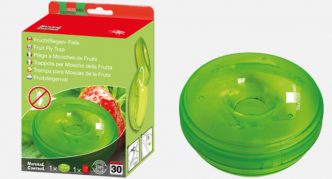
- The main advantage of this trap is that it requires no effort to use: just place the block in the kitchen
-
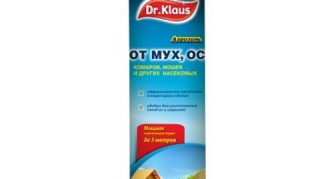
- Reaches the most inaccessible places inhabited by midges
-
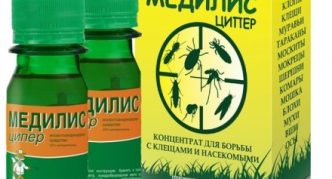
- The use of the product requires special safety precautions, as it is toxic.
Reviews of chemical mosquito control products
For many years now, when faced with the problem of insect infestations, people have begun to fight them with the tried and tested dichlorvos.
Odorless dichlorvos is very effective against fruit flies. I sprayed it, and within a few hours the flies were gone. Even though my vegetables were still there. Especially when tomatoes are laid out at home to ripen, flies almost always appear, but with dichlorvos, I got rid of the flies, and the tomatoes sit peacefully! (Just don't spray the tomatoes with dichlorvos, of course!)
Sometimes the presence of midges in the house is not immediately detected.
Two years ago, when we upgraded to plastic windows and the sills became wider, I decided to get some houseplants. At first, everything was fine; nothing was noticeable. But then flies started flying around the windows. I couldn't figure out where they were coming from. I'd read everything online, and everyone had different stories. I decided to dig around in the soil around the flowers and saw very, very tiny bugs. I couldn't figure out what they were, really tiny, and there were so many of them. The leaves or flowers weren't damaged, but I decided to play it safe and buy something to kill them. I explained everything to the saleswoman, and she said they were flies and suggested Grom, a dry powder mixture you sprinkle on the soil and lightly loosen to release the poison and kill the insects. It worked well, but it has a slightly unpleasant smell, so you have to be careful when handling it. And since then, whenever I see anything, I run to the store to buy this poison and kill those tiny pests on my favorite flowers. It's also effective against those pesky ants that constantly make their way through my garden and prevent my seedlings from growing properly.
Folk methods
Since midges have been a nuisance to humans for a long time, there are plenty of home-made ways to get rid of this scourge. Naturally, the most annoying insects are considered to be fruit flies that make their home in the kitchen.
Vacuum cleaner
This method is suitable if you've discovered an insect infestation similar to the bait (for example, a trap made from a bag of rotten fruits and vegetables). The harmful insects are sucked into the vacuum cleaner at full power, after which the container is emptied away from the house.

A vacuum cleaner is convenient for cleaning areas where midges congregate.
Smoking
An excellent way to get rid of gnats, especially if you have children in the house. This method relies on the insects' dislike of strong odors.
Instructions:
- Grind a piece of camphor.
- Place on a hot pan or in a roasting pan.
- After the steam appears, we fumigate the entire house.
Instead of camphor, you can use verbena or clove oil.

Clove oil is one of the remedies that can help against midge infestations.
For those who combine pest control with prevention, we recommend growing tomatoes on the windowsill. If the gnats are few in number, simply spread bird cherry and basil leaves near the area.
Water
This method is suitable for eliminating drain flies. Direct a strong stream of water under the sink, adding any drain cleaner (Mole, Flup, Mr. Muscle, etc.). The downside of this method is that you'll have to clean up the water on the floor.
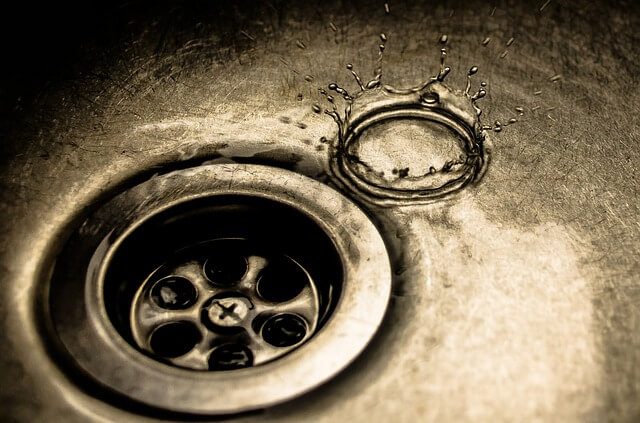
It is convenient for owners of private homes to use water to get rid of midges - there is no risk of flooding neighbors
Traps
The most popular method for getting rid of midges exists in several variations, the most common of which has the following sequence:
- Place pieces of sweet fruit or pour juice (wine, wine vinegar) into a plastic cup (you can make one from a bottle).
- Cover tightly with cling film.
- We make several holes in it and leave it overnight.

Holes in the film can be made with a knife or fork.
- In the morning we get rid of the “catch”.
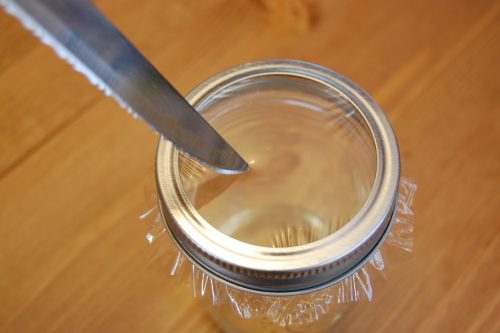
You can pour honey or syrup into plastic lids and leave them overnight - in the morning there will be a lot of drowned fish.
Another trap option is fly tape. Smaller flies are also easily attracted to this bait.
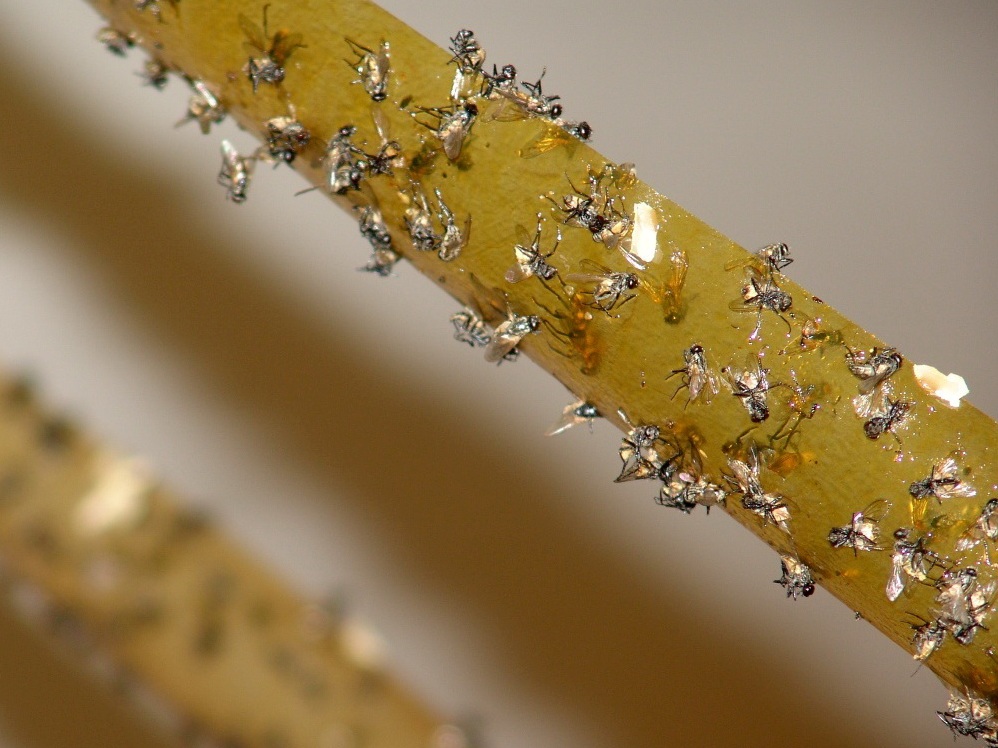
Sticky tape is a universal trap whose sweet aroma also attracts midges.
It's also worth mentioning a method that skillfully utilizes the waste left over from alcoholic parties: take an empty bottle of wine, beer, or liquor and place it on the table. After a few hours, all that's left to do is cork or cap it for those who are not careless about the alcoholic fumes.
Apple scent also makes midges uncomfortable. So, it's worth taking advantage of this weakness, following this simple sequence:
- Fill a half-liter jar ¼ full with warm water.
- Pour in 1 tbsp of natural apple cider vinegar.
- Add 1 teaspoon of shampoo or dishwashing gel.
The trap will work the same as the previous options, with the difference that the sticky foam from the shampoo or gel will prevent the gnats from escaping. Therefore, the container can be left uncovered.
Another trap composition is made from formalin, milk and sweet water:
- Mix formalin, milk and water in a ratio of 1:3:5.
- Pour into a plate and place on a windowsill or table.
Video: A sweet trap for mosquitoes in the kitchen
This is interesting. It's impossible to completely eliminate midges from grain. It's best to discard infested produce, do a thorough cleaning, and regularly check the condition of new produce.
Reviews of folk remedies for getting rid of insects
Traps are proving to be the most popular method for significantly reducing the number of midges in the home.
I recently learned about an easy and effective way to get rid of fruit flies: take a small container (like a plastic yogurt cup), place a few pieces of ripe, sweet fruit (like a banana or peach) in it, and cover the container tightly with plastic wrap, ensuring there are no gaps. Then, use a needle to poke several small holes in the plastic wrap. The flies will crawl through these holes, feed on the fruit, and once they're full, they won't be able to crawl back out. You can place several of these containers around your apartment to speed up the process. I've personally tested this method—it really does help get rid of fruit flies quite quickly.
In addition, you can fight gnats using a combination of different methods.
I solved the fly problem simply: 1) I used a handheld kitchen vacuum to collect the crawling and flying flies (thankfully, they don't fly very fast). 2) At night, I turned on a mosquito lamp in the area where they congregated (in my case, it was a jar of kombucha). The effect was amazing—by the morning, there were hardly any flies left!
How to get rid of gnats in indoor plants
When it comes to indoor plants as a source of gnat infestation, it's precisely because of overwatering, which awakens gnat eggs in the soil, and because of the special reverence flower owners place on traditional plant fertilization methods, that these pests appear. This includes, in particular, using tea leaves as a flower food.
For gardeners, an invasion of midges can sometimes become a real disaster, as the plant dies before their eyes. Measures to destroy insects must be taken immediately. First, stop encouraging these insects to appear, that is, avoid overwatering the plant. Second, try to correct the situation, which is caused not only by excess moisture but also, possibly, by poor-quality, infested soil.

Indoor flowers often become victims of midges due to mistakes in their care.
Chemicals
Dichlorvos (brands Raptor, Raid, Neo) and solutions (Anravertin, Aktara, Fitoverm, Mukhoed, etc.) are a universal set for a gardener.
This is interesting. After using any solution, the plant should not be watered for another 3 days.
When using dichlorvos to protect indoor plants, you must strictly follow the recommendations:
- We loosen the soil.
- We put the pot in a bag.
- We spray the product into the soil.
- We tie the flower so that only the pot is in the bag.
- After 4-5 hours you can untie it - the midges will die.
If there are numerous gnats hovering over the flower, you can place the entire plant in a bag. It's important to remember that spraying the leaves and stem is strictly prohibited. To increase coverage, spray the dichlorvos on the inside of the bag, not just the pot, and leave it in this "greenhouse" for 7 hours.
This is interesting. To prevent the leaves from crushing, we secure the bag to furniture or a door with tape.
Folk remedies
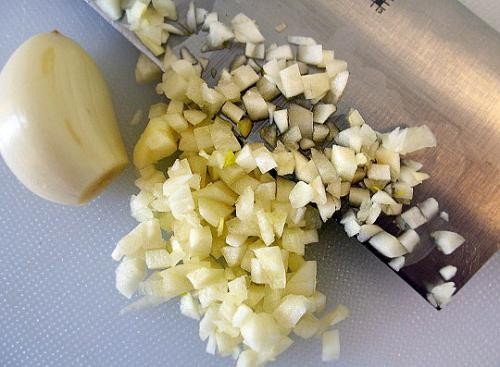
- The most popular is garlic. Gardeners recommend spreading cut garlic cloves on the soil. You can also make a garlic infusion. To do this, mix 3 crushed cloves with 1 liter of water and let it steep for 4 days. Water the soil with the solution and spray the plant. For those who prefer a more subtle scent, bury a few pieces of orange peel in the soil. However, it's not guaranteed that gnats will react to the citrus scent as well as to garlic.
Garlic is a natural insecticide for flower gnats.
- Ash can be used to combine gnat control with soil fertilization. It can be sprinkled into the top layer of soil and lightly dug in.
- Regularly watering with a weak solution of potassium permanganate (slightly pink) can help reduce the number of midges. However, this is quite dangerous—it can burn the plant.
- Watering with a solution of laundry soap will also reduce the number of invaders, as they strongly dislike alkaline environments. This same principle underlies the preventative advice of washing windowsills with a soap or soda solution. The same solution can be used to wipe the stems and leaves of the plant.
- Place matches around the perimeter of the pot, with the tips in the soil. Water the plant. After 1–2 days, if there's no sulfur, replace the matches and repeat the process for 1–1.5 weeks.
It will take about two weeks to get rid of midges in flowers using matches.

Preventing the appearance of house flies
Getting rid of insects isn't as easy as acquiring these tiny pests. It's important to follow simple preventative measures to prevent such a problem from happening again.
- Systematically do a general cleaning of the house (including sorting out cereals and folding clothes in closets).
Regular, high-quality cleaning will not give flies a chance to carry out their plans for invasion of your home.
- Store food in the refrigerator.
- Wash purchased fruits and vegetables thoroughly with hot water (this will kill midge eggs).
- Take out the trash and throw away spoiled food on time, and don't forget to wash the waste bin.
- Clean the drain regularly and avoid excess moisture.
- Proper care of indoor plants.
- It's a known fact that gnats tend to stay away from homes with strong odors. So, it's worth stocking up on a variety of essential oils to use in an aroma lamp, or at least some pine cones to place around the house.
At first glance, these tiny insects seem harmless, but in reality, they can cause significant problems. This isn't just about disgust, but also the danger their presence in close proximity to humans poses. Excessive midge activity must be combated to the bitter end. To protect yourself from midge bites outdoors, it's essential to use insect repellents. Only then can we truly live peacefully with them.