Millions of years ago, Earth was inhabited by amazing animals. Researchers are discovering the remains of extinct inhabitants of our planet, recreating their appearance, and studying their characteristics and habits. These were ancient giants that even the dinosaurs feared.
Titanoboa
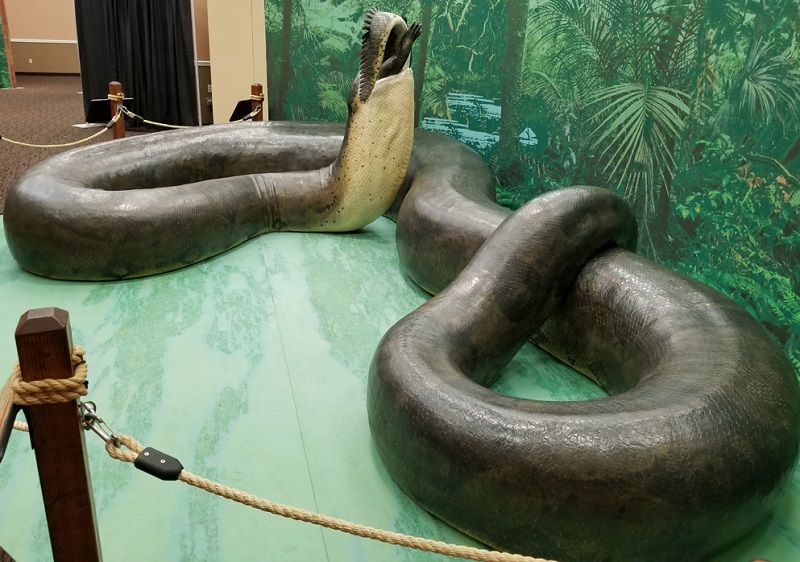
The largest snake in the history of the planet lived approximately 60 million years ago in what is now Colombia. It was there that its fossil remains were discovered.
After studying them, zoologists discovered that titanoboa weighed nearly two tons and grew up to 20 meters in length. They appeared shortly after the extinction of the dinosaurs. It's possible that titanoboa filled the void left by the disappearance of large predators.
Archaeologists were fortunate enough to discover a skull, a rare occurrence. The dental structure of this prehistoric giant suggests that it fed on fish, turtles, and even adult crocodiles.
In the hot temperatures of the tropics, cold-blooded reptiles can reach enormous sizes by absorbing heat from the environment with their bodies.
This enormous snake didn't need venom; it crushed its prey with its powerful body. Titanoboa could squeeze with a force of almost 500 kg per square centimeter, enough to kill almost any prey.
Giant Arthropleura
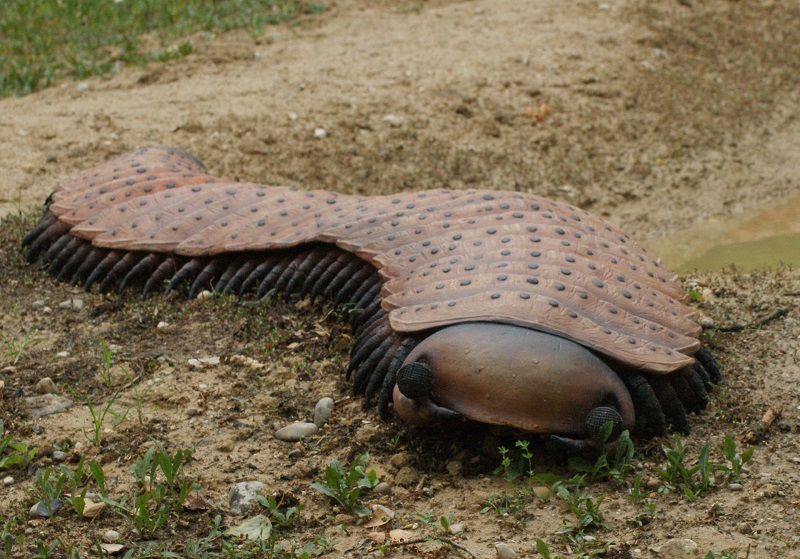
The prehistoric centipede Arthropleura is considered today to be the largest arthropod that ever lived on the planet.
They lived approximately 280 million years ago. Their remains have been discovered in Germany, Belgium, England, and the United States.
The largest known land invertebrates had 30 pairs of legs and reached up to 2.6 meters in length. Scientists have concluded that Arthropleura were herbivores. An average-sized individual consumed up to a ton of vegetation per year.
The millipede's record-breaking size is explained by the high oxygen content in the atmosphere at that time, as well as the absence of enemies.
Later, the level of oxygen in the air decreased significantly, changing the climate of tropical regions, which led to the extinction of these huge creatures.
Megalodon
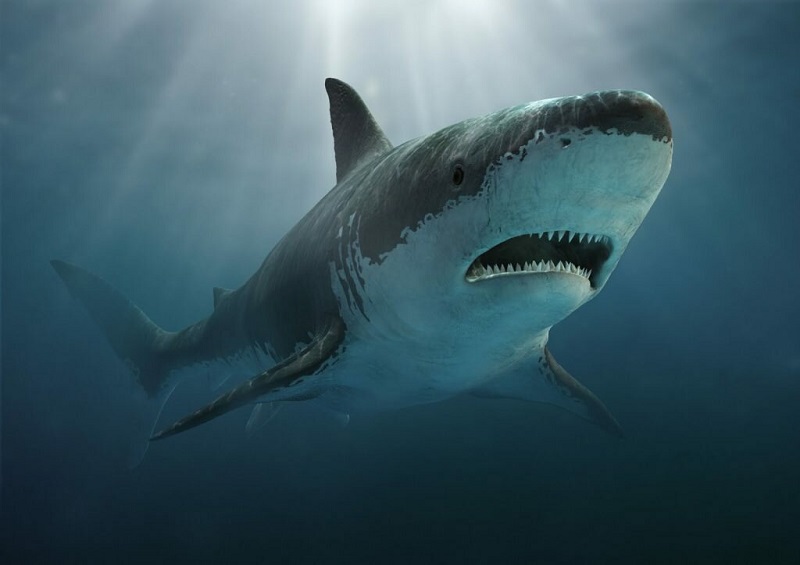
This species was one of the largest predators in the history of the planet. Megalodon may have occupied the top of the food chain.
This dangerous giant reached 18 meters in length and weighed 50 tons. The bite force of the largest specimens was nearly 11 tons—one of the most powerful bites known to modern science.
These predators had very strong, yet thin, teeth with serrated edges. This structural feature allowed them to easily rip open the chests of their prey and even bite through the spines of large marine animals.
Megalodons resemble modern great white sharks in appearance, but their cartilaginous skulls are proportionally thicker and stronger.
It fits large jaws to withstand their weight. Megalodons fed on small cetaceans, sirens, pinnipeds, and large fish. These prehistoric giants also ate the carcasses of dead animals. They became extinct around 2.6 million years ago.
Aegirocassida
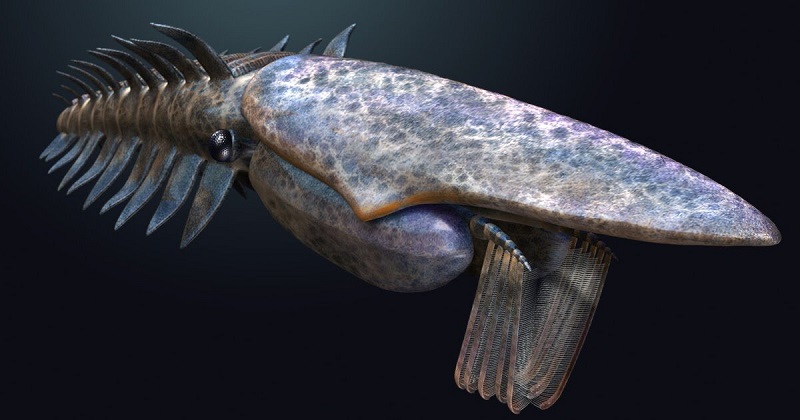
This prehistoric giant shrimp lived in the world's oceans approximately 480 million years ago. It was 2 meters long and resembled a fantastical cross between a sperm whale and an arthropod.
Aegirocassida fed on plankton, straining it from the water, like modern whales. This creature had two pairs of movable fins all over its body, which served as fins.
These unusual lobes correspond to the upper and lower limbs of modern arthropods. Based on this, scientists concluded that Aegirocassida is a prehistoric arthropod.
Sarcosuchus imperialis
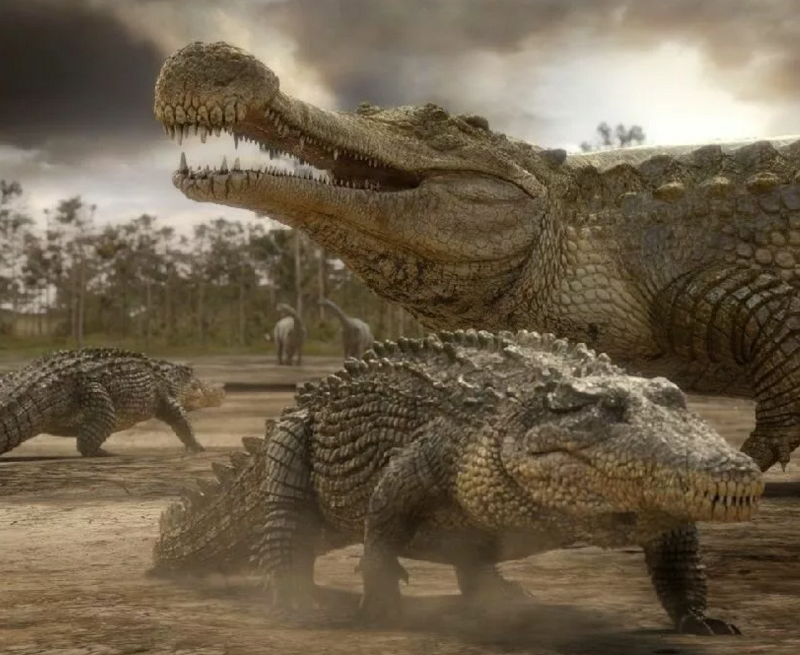
An extinct genus of giant crocodiles inhabited what is now Africa about 110 million years ago.
The super crocodile Sarcosuchus reached lengths of up to 12 meters and could weigh around 8 tons. Its body was covered in scales, and its back was covered with powerful rectangular shields reaching up to 1 meter long. This made it virtually invulnerable to its few enemies.
Sarcosuchus imperatorius possessed a remarkable, gigantic skull. Its upper jaw was 1.6 meters long and curved downward at the tip.
This predator fed on large fish and small dinosaurs. With its strong jaws and sharp teeth, it easily dragged struggling prey into the water.
Sarcosuchus differed from modern crocodiles not only in size but also in lifespan. Most modern crocodiles in the wild live 25-30 years. The Sarcosuchus remains discovered belong to an individual that was 40 years old at the time of death and not yet fully grown.