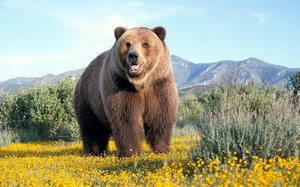
Clumsy, with short legs, a powerful head, and tiny eyes. A short tail, hidden by long fur, obscures any trace of muscle mass or enormous claws reaching up to 12 centimeters. This is how we know the master of our forests—the bear. Legends are told about him, and he is a frequent hero in fairy tales. In folklore, he is ascribed such characteristics as clubfoot and clumsiness. Let's figure out what's true and what's fiction in stories about bears.
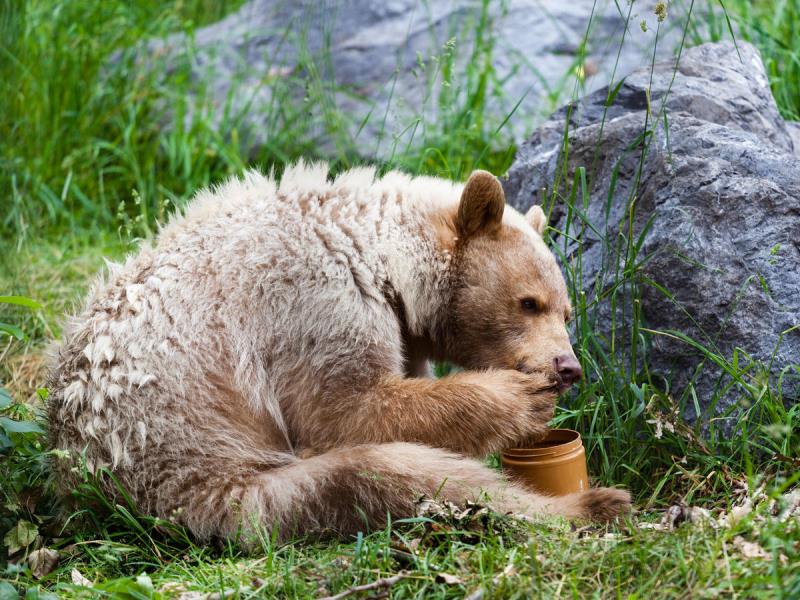
Is it true that bears are crazy about honey?
Bears feed on whatever the forest provides: small animals, acorns and nuts, and plants. They're also not averse to destroying birds' nests. Some aggressive, bloodthirsty males attack livestock and wild boar. They also enjoy carrion.
Bears are good fishers. But if they find a wild bee nest, they'll never leave it alone and will crawl in to feast on the honey. Even the most painful bee stings to their muzzles and noses don't stop them. Along with the honey, they'll also eat bees and their larvae.
The problem is that honey is high in calories and contains large amounts of fructose, glucose, and carbohydrates. Bears need all of this to build up fat before hibernation. So, it's only relative that bears can be called sweet-toothed.
Is it true that all bears are club-footed?
The bear's awkward, waddling gait is akin to an amble. It walks with both paws on one side of its body at a time. It places its paw heel outward and toe inward, supporting itself with its entire foot. This is why it's nicknamed "clubfoot."
Is it true that bears suck their paws in their dreams?
In winter, bears suck their paws; this helps them survive the winter because they contain a lot of fat. Everyone has heard this. But zoologists have their own theory. During hibernation, bears tuck their hind paws under them and cover their faces with their front paws. Apparently, this posture is what misled hunters who discovered dens containing sleeping bears.
The appearance of their paws after hibernation, with their tattered skin, may seem strange. This is because during hibernation, new skin grows beneath the hardened layer, and due to the itching, clubfoots chew off the peeling crust.
Is it true that bears are very clumsy?
Bears are called clumsy because of their peculiar gait. In fact, as naturalist, hunter, and writer A.A. Cherkasov noted: "Often, after an errant shot, the bear, with the sound of its shot dying away, appears at the feet of the astonished hunter." A bear's movements are light and swift. It stalks silently and cautiously, and pounces with astonishing speed.
A bear can reach speeds of up to 40-50 km/h while running. However, it finds it easier to run uphill than downhill due to its front legs, which are shorter than its hind legs.
Is it true that all bears hibernate?
All summer and fall, bears prepare for hibernation. They eat a lot and greedily, as they need to accumulate fat. These fat reserves help them survive until spring. As early as fall, they begin to look for a den site—a hole or an upturned tree.
Before settling down, the bear confuses its tracks, meanders through the forest, and gallops through the fallen trees. Then it calms down and goes to sleep. But if it hasn't accumulated enough fat over the summer, the animal doesn't lie down, turning into a dangerous and vicious wanderer. Most often, these wanderers die from cold and exhaustion.