 The brown bear is traditionally considered a symbol of Russia. This powerful predator belongs to the Ursidae family. These animals are distinguished by their robust build and massive head, whose size makes their eyes and ears appear quite small. Estimates of a brown bear's weight vary depending on the species and habitat.
The predator weighs between 350 and 600 kilograms and is 1.2–2 meters long. As a rule, males are larger than femalesAnimals reach their greatest weight in late autumn, as they accumulate fat reserves before hibernation.
Brown bears have strong paws with five toes, ending in sharp claws reaching 10 centimeters. The claws are non-retractable and sickle-shaped. They also have a short tail, which is almost invisible due to their fur. These animals have 40 teeth.
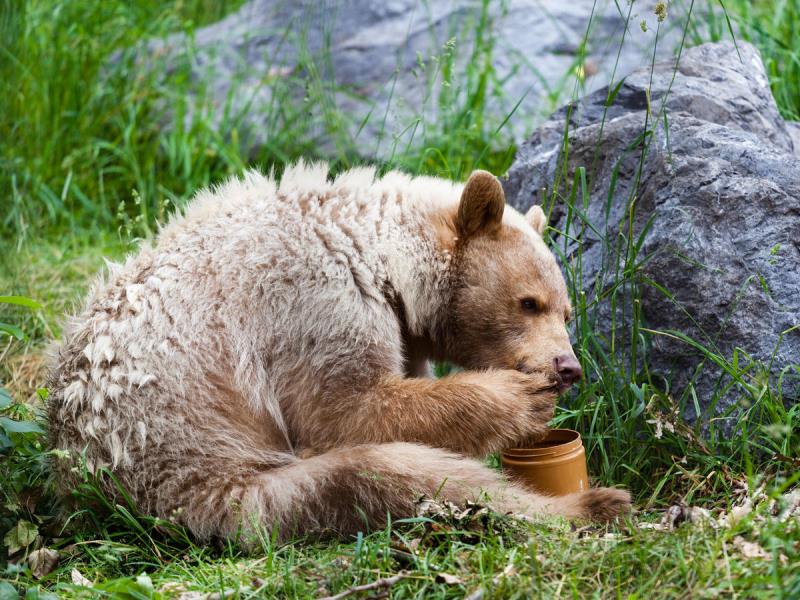
Their color varies depending on their habitat, ranging from light brown to black. Their coat is thick and has a prominent withers. They shed their fur in the spring and fall.
Where does the brown bear live?
This predator can be found in a fairly wide range:
- in the Alps, Pyrenees,
- on the Scandinavian Peninsula,
- in Finland
- in the forests of central Europe,
- in Asia
- in Canada and America.
It's safe to say that these animals inhabit all parts of the world. In the wild, they live in dense forests or clearings,located near bodies of fresh water.
What kind of lifestyle do they lead?
Brown bears typically lead a solitary, nomadic life. However, if food is plentiful in their chosen territory, they will not stray far from their natural habitat.
Although they appear clumsy, brown bears are very skilled tree climbers and water swimmers, capable of swimming up to 6 kilometers.
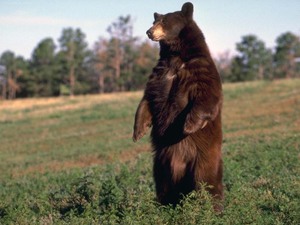 When confronted with dangerous opponents, this bear stands on its hind legs and tries to knock down the enemy with its front paws.
These predators are most active at dusk or at night.In winter, they hibernate, during which time animals can lose up to 80 kilograms of fat reserves.
Winter dens are chosen in quiet, secluded locations. These are warm, dry, and spacious shelters. Moss and dry grass are used as bedding, and branches provide camouflage. A bear may use the same den for several years.
Before hibernation, animals confuse their tracks. During this time, they meander through the swamps and even walk backwards!
During sleep, the bear's breathing and heart rate slow down, but the animal is a very light sleeper. It is easily disturbed and awakened. Hibernation lasts from October to April. During this time, the brown bears do not defecate. All waste products are recycled into proteins.
Stories about bears sucking their paws in winter are related to the shedding of skin on their paw pads. This occurs during the winter. The skin becomes very dry, peels and cracks.To somehow facilitate this process, the animal licks its paws and moistens dry areas with saliva.
Sometimes, during lean years, bears are unable to gain enough weight to hibernate safely. In such cases, the bear wanders in search of food. Such individuals are called "shatuns," and encountering them is extremely dangerous, as the animal becomes very aggressive when hungry.
In the spring, adult males are the first to leave their dens, and females with cubs are the last to leave their shelters.
What does a brown bear eat?
Bears are practically omnivores. Their diet includes:
- wild berries,
- oats,
- honey,
- insects and larvae,
- mice,
- bird eggs,
- fish,
- small animals.
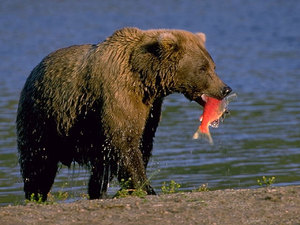
They most often feed on plant matter or fish, especially salmon. During salmon spawning season, ten to thirty bears can be seen in the river at one time. Sometimes, skirmishes over fish occur.
 Despite their strength and size, bears prefer not to attack large game. While pursuing prey, bears can reach speeds of up to 50–60 kilometers per hour. Young males typically hunt large game.
These animals do not disdain carrion. They can eat game killed by other animals.They camouflage their prey with brushwood. They don't stray far from their prey until it's completely eaten.
How does a brown bear reproduce and how long does it live?
The mating season begins in late spring and lasts for a month. During this time, bears are at their most dangerous, and it's best to avoid them. During this period, females secrete a special scent that males use to locate them. Several males may fight for a single female. These fights often end fatally for one of the contenders.
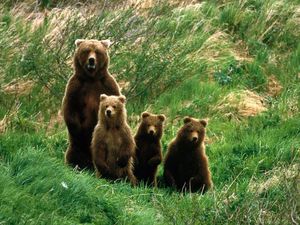
Gestation lasts approximately 7 months. Typically, 2-3 cubs are born. The cubs weigh 500 grams at birth. The cubs are born hairless with closed eyes, which open after a month.
They begin to emerge from their den in the spring, and at first they hardly leave the mother bear. The mother feeds them milk and teaches them the basics of hunting., since bear cubs' teeth erupt at 3 months.
The cubs grow slowly. They become independent at age 3, when they leave their mother. Sexual maturity occurs at around 4 years. Bears reproduce approximately every 2-4 years.
Life expectancy in the wild reaches 20 years, in captivity they can live up to almost 40.