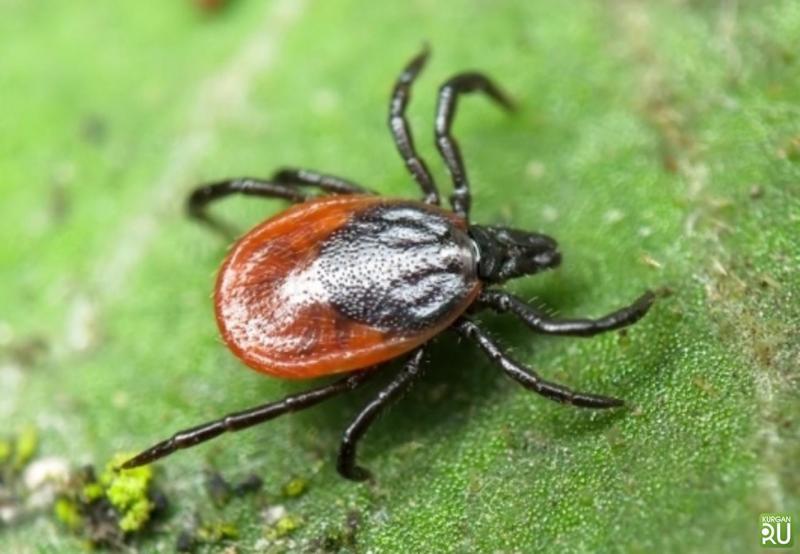
Forest ticks are dangerous parasites that carry a variety of serious diseases, and they can harm not only animals but also humans. If a tick has bitten you, it's generally too late to fight it. But is there anything you can do to prevent this?
Content
Plants against ticks
If you've already fallen victim to a tick, you should seek medical attention and take measures to prevent any illnesses the parasite may have infected you with. But before you become a victim, you can try to repel them from both yourself and your garden.
To prevent ticks from finding your garden an attractive place to live and hunt, it's a good idea to plant plants that will repel these pests. Several plants can even be called universal pest repellents, as they repel not only ticks but also other harmful insects, and some even rodents.
- Tansy. This plant repels ticks with its pungent scent, reminiscent of camphor oil. Tansy is quite easy to grow—it's not considered a weed for nothing. Despite this, it's worth planting under trees, around bushes, and along the perimeter of your property.
- Dalmatian chamomile. Another name for it is pyrethrum, which refers to the plant's high pyrethrin content. Chamomile also contains cinerin, which is harmful to insects.
- Bird cherry. The bark of the bird cherry tree we are familiar with is poisonous for ticks and their larvae. You can not only plant this beautiful plant but also prepare a decoction from its branches to spray on other trees and the lawn in your yard. To do this, simmer the cut branches in boiling water for about half an hour until the water turns red, then cool the solution and pour it into a spray bottle.
In a tent, you only treat the edges of the entrance with chemicals. If you go inside, you risk carbon monoxide poisoning or hallucinations, and you don't want to poison your child. To ensure a peaceful and pleasant sleep, spread the following on the tent floor and in front of the entrance: marsh rosemary—if you can find it, elderberry and wormwood are also very good—even chamomile and bird cherry are helpful, and they smell natural and pleasant.
- Schisandra. Another shrub that can be used to create a unique tick-proof hedge is Schisandra. The flowers of this plant and their smell repel parasites. To ensure that the effects of lemongrass don't end immediately after it blooms, you can prepare a decoction from its flowers and then spray it on other trees and grass in the area.
- Calamus. Another good base for acaricidal decoctions is calamus. It's not usually cultivated in gardens; it grows wild on the banks of ponds, lakes, and swamps. A decoction of calamus rhizomes and leaves is also suitable for treating a garden plot. Alternatively, instead of a decoction, you can use a diluted calamus tincture, which is sold in pharmacies.
- Wormwood. This plant is believed to protect not only from garden pests but also from ticks. A wormwood decoction can be sprayed on clothing and animal fur. Alternatively, placing wormwood branches under a dog's bedding should also repel ticks.
Wormwood really does help the first time, but I brew it in a bucket, tightly filling it with wormwood, then I put the dog in a full bath, adding this decoction there.
- Lavender. This beautiful flower will not only add a special charm to your flowerbed but will also protect your garden from ticks.
- Catnip. Catnip, or catnip, is somewhat reminiscent of lavender not only in appearance but also in its acaricidal effect. Nepetalactone, contained in its essential oil, is a real poison for ticks.
Remember that flowers whose scents ticks cannot tolerate can not only be planted in your garden or flowerbed, but also collected, dried, and hung in bunches on fences and trees for greater effectiveness.
Flowers against ticks - photo gallery
-
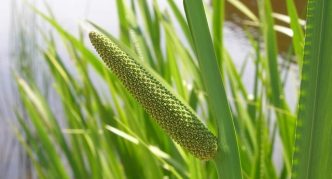
- A decoction of calamus will also help repel ticks.
-
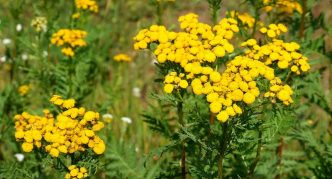
- Tansy, although a weed, is useful!
-

- Schisandra chinensis bushes are not only beautiful, but also protect the garden from ticks.
-

- Bird cherry bark infusion is a good remedy for ticks.
-

- Lavender essential oil repels ticks
-

- Dalmatian chamomile contains pyrethrin, a known acaricide.
-
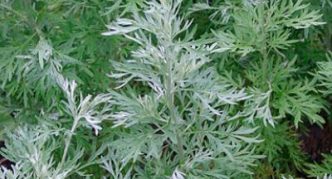
- All types of wormwood are good at repelling ticks.
-
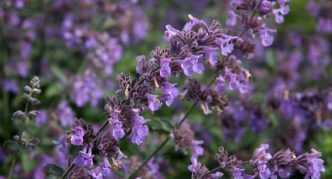
- Cats love catnip, but ticks hate it.
Essential oils for ticks
When choosing a victim, ticks primarily rely on scent, so it's best to change the scent to one that will repel the parasite. Continuing with the topic of plants, the first thing worth mentioning is essential oils that ticks can't tolerate. And here we can't help but mention the essential oils of the plants we've already mentioned—lavender, chamomile, catnip, and lemongrass. In addition to these, thyme, rosemary, clove, palmarosa, eucalyptus, geranium, lemongrass and basil oils are also effective.
It turns out that drinking tea with basil leaves added to it is very effective in repelling blood-sucking insects. This was told to us by a very elderly hunter we met on our route. He treated us to a tea with an unusual flavor (and, in fact, the tea was quite good). I don't remember the tea manufacturer, of course—it was a long time ago—but dried basil was already added to the brew, and the label read, "Tea enriched with basil raykhon."
However, they should be used with caution, given the potential for allergic reactions and the oils' very strong odor. Therefore, only a small amount of the active ingredient is needed to create a protective product.
Essential oil can be made into a spray: mix 10 ml of oil with 10 ml of alcohol and 100 ml of water, then pour the emulsion into a spray bottle. You can also mix a few drops of the oil with a fragrance-free moisturizer. You can also create a scented oil from a base oil (almond, shea, argan, jojoba, castor, etc.) and essential oil, using a ratio of 10 drops of essential oil to 2 tablespoons of base oil.
Tick Repellent: 2 tablespoons of vegetable carrier oil (if you're making a tick repellent, for example, for dogs, use sweet almond oil; it contains a small amount of sulfur, which also works on ticks). 10-25 drops of geranium or palmarosa essential oil. Mix the essential oil and carrier oil; the mixture will keep for 6 months. To protect against ticks, apply a few drops of the mixture to clothing and skin, avoiding the eye area. In addition to geranium essential oil, you can also use palmarosa essential oil for tick protection; it's less expensive but has the same properties.
For children, you can make scented bracelets by dropping a few drops of essential oil onto a strip of fabric or a piece of string, then placing the improvised protective jewelry on the child's arm or leg.
Other odors that are unpleasant for parasites
It's also believed that ticks can't stand the smell of tar. To use this to your advantage, you can wash your face and hair with tar soap, and also make so-called tar water. To do this, mix birch tar with water, shake well, and let it sit until the water runs clear. This solution can be sprayed on your garden and clothing, and used to wash your skin. Tar water is also suitable for bathing dogs.
An unusual tick repellent is vanilla alcohol, or vanilla vodka. To make it, infuse a packet of vanillin in alcohol or vodka (vanilla sugar won't work). The infusion has a fairly long shelf life. When you need to protect yourself from ticks, dilute it with water and fill a spray bottle, then spray it on your skin, hair, clothing, and even dog fur. You can also mix vanillin with warm water or unscented cream.
I treated my dogs three times a year after they became infested. Until I discovered the simplest solution. A scientist suggested it!!! 2 grams of vanillin (not vanilla sugar, vanillin!) per 100 grams of vodka. Let it sit for 7-10 days and then spray the dog's limbs, belly, and withers. The tick simply won't land!!! (it won't cling). Good health to your pets!
One of the significant advantages of this method is that vanillin is completely harmless and will not cause irritation even on children's skin. The downside is that the scent dissipates quickly, and the vanilla solution's effect lasts no more than an hour and a half, so it's best to take a bottle with you on a long walk. The water solution dissipates the fastest, while the alcohol and cream last the longest.
Another rather unexpected remedy for ticks is soy sauce. It's not meant to be applied to skin, but consumed internally as a food additive. Its effectiveness hasn't been scientifically proven, but there's a growing online belief that if you eat something with soy sauce, the smell of your sweat will repel ticks and prevent them from attaching to your skin.
It's easy to do. Just add soy sauce to your food before heading into the forest. As the centuries-old experience of the Chinese and the Khabarovsk police regiment, who adopted it, shows, this method is very effective in combating these dangerous insects. The smell of sweat released by a person after eating food laced with soy sauce repels ticks.
So, it's clear that there are many folk remedies for ticks, and you just need to choose the one that's most suitable for you, taking into account your preferences and body characteristics.
Tick prevention is important and necessary. But, as we can see, even if you don't have any special chemicals on hand, there's no need to despair. You can repel these parasites with folk remedies—this way, you'll protect your garden, your pets, and, of course, yourself and your family.