The South African Boerboel is a guard breed not recognized by the Fédération Cynologique Internationale (FCI). The blood of ancient molossoid dogs runs through these animals' veins. Representatives of this breed have a strong build and are known for their courage, agility, and endurance. Boerboels tolerate extreme temperature fluctuations well and boast robust health. With proper care, their lifespan is approximately 13 years.
Content
Historical background

African Boerboel puppies first appeared in Asia. Some time later, the dogs were transported to Egypt and then exported to Europe by Alexander the Great.
In the 17th century, Mr. J. V. Roebuck brought an African Boerboel to the Cape of Good Hope. He used the dog to protect his family. From that time on, the breed's dispersal and development began. Only the strongest and healthiest individuals survived the harsh conditions. As civilization developed, humans no longer needed this breed, and the lineage gradually became extinct.
At the beginning of the 20th century, a group of African Boerboel enthusiasts undertook an expedition to South Africa to select dogs for breeding. Thanks to the efforts of these breeders, the breed was revived in 1990.
Exterior Description
The South African Boerboel weighs around 90 kg, and stands about 75 cm tall at the withers. Females are shorter and lighter than males, with a height difference of 10 to 15 cm and a weight difference of 20 to 25 kg.
In 2002, the South African Kennel Union approved the following breed exterior:
- large head, wide forehead with skin folds in the area of the bridge of the nose;
- powerful jaws, large teeth, scissor or level bite;
- round brown eyes;
- small ears of a triangular shape, when alert they are slightly raised;
- muscular chest;
- straight limbs with large joints;
- The thick tail is set high and docked at the 3rd or 4th vertebrae.
The breed's coat is dense, short, and shiny. A black "mask" may be present on the muzzle. The standard allows the following colors:
| Color | Photo |
| Ginger |  |
| Pale yellow | 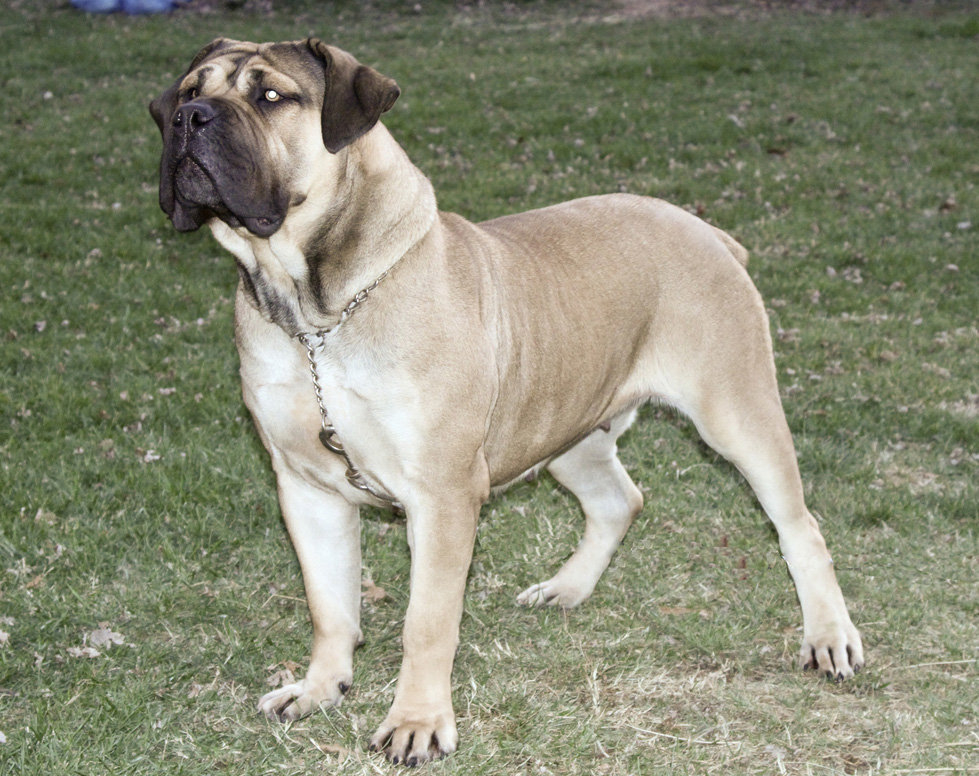 |
| Tiger | 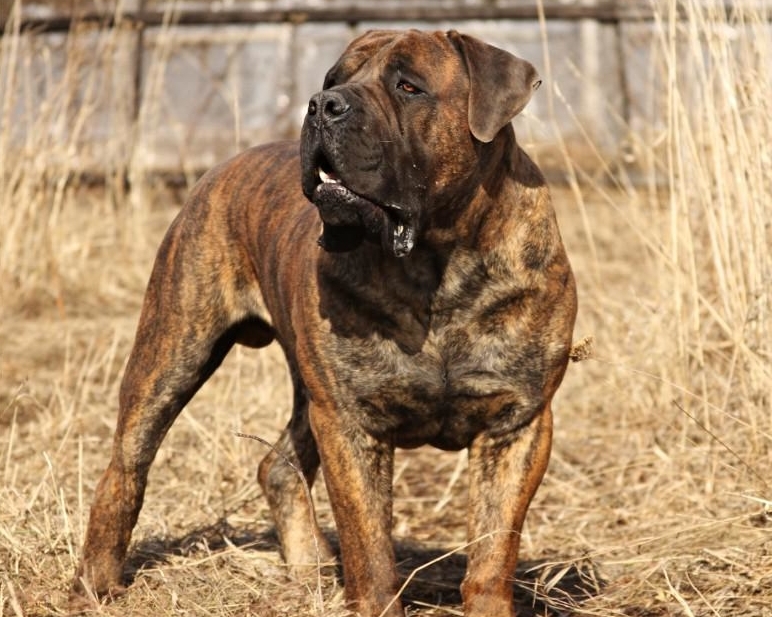 |
The presence of white spots in the coat is a serious fault of the breed.
Personality traits
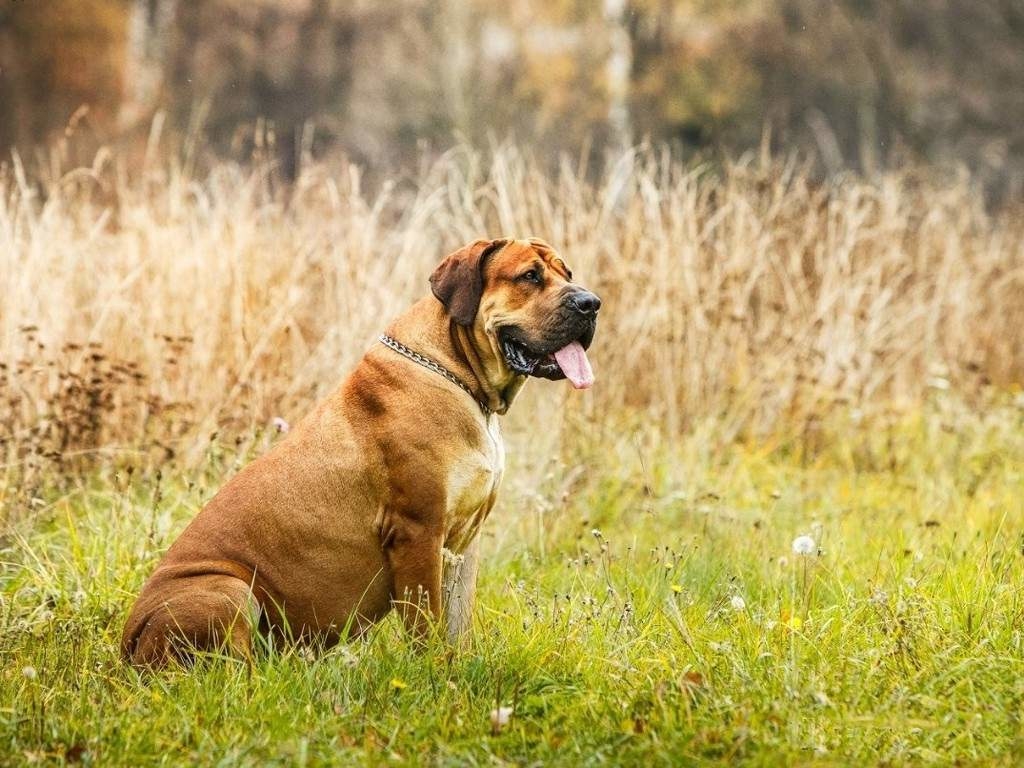
South African Boerboels are intelligent and incredibly loyal to their owners. However, their independent nature prevents them from submitting to weak-willed individuals. Earning this strong animal's trust will require considerable effort. Males of this breed tend to be dominant, while females have a more docile and gentle character.
Properly trained members of this breed will not harm children. They will selflessly protect them and happily participate in games. They will not show unwarranted aggression toward other pets. They generally ignore smaller dogs, but show interest in larger ones.
Boerboels have a strong guarding instinct. They are wary of strangers. In times of danger, these animals tend to make decisions independently. When confronted with an enemy, they display agility, courage, and fearlessness. Representatives of this breed do not tolerate familiarity and are impossible to deceive or bribe.
Pros and cons of the breed
Representatives of this breed have many advantages. These include:
- unprecedented power;
- high intelligence;
- propensity to learn;
- balanced psyche;
- courage and fearlessness.
Boerboels do have their drawbacks, however. Among them are the following:
- require professional training;
- do not tolerate low air temperatures well;
- need free space.
Choosing a puppy
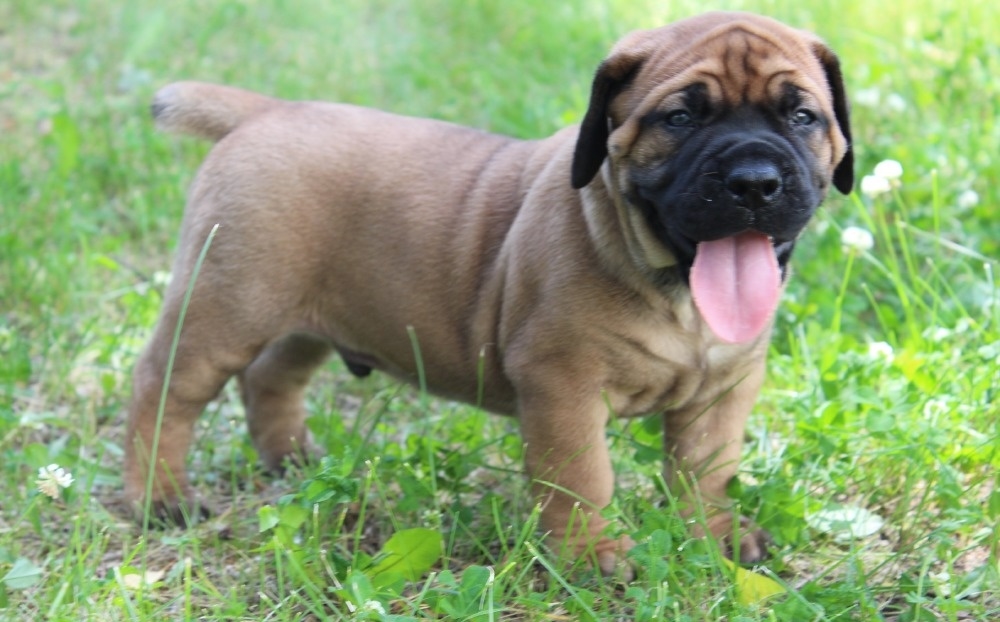
It's recommended to purchase a puppy from a specialized breeder. New owners should familiarize themselves with the parents' pedigree and titles. Having all the necessary documents not only allows the puppy to participate in shows but also guarantees its health and stable temperament. Avoid purchasing a puppy without a tattoo, puppy certificate, and veterinary passport.
A healthy Boerboel offspring can be selected based on the following characteristics:
- The appearance complies with the standard.
- The dog is distinguished by its active and sociable nature.
- There are no rashes on the body.
- The eyes are clear, without purulent discharge.
- In male dogs, the testicles are descended into the scrotum.
- The puppies are moderately well-fed.
Pet-class dogs, unsuitable for shows and further breeding, cost between 25,000 and 40,000 rubles. Show-class puppies, which have potential for show, range from 100,000 to 150,000 rubles.
Care and maintenance
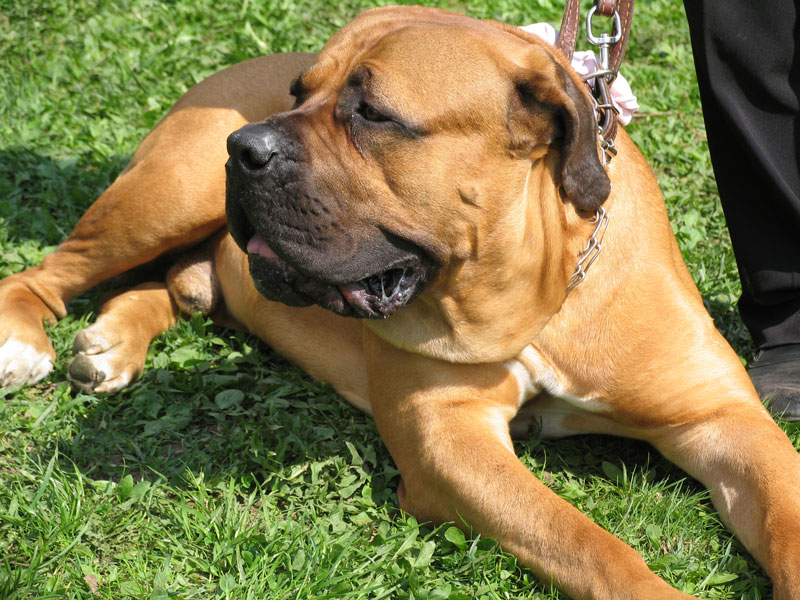
Boerboels are large dogs and need personal space, so keeping them in a city apartment is not advisable. The most comfortable place for them to live is a private courtyard. Representatives of this breed are able to adapt to any climate, but in winter, they should be kept in a heated room.
Care includes the following procedures:
- Several times a week, the coat is combed with a special glove with rubber teeth. This procedure improves blood circulation and helps remove excess hair.
- Trim the nails monthly using a nail clipper. Be careful not to cut blood vessels.
- Clean your ears once a week using a cotton pad soaked in chlorhexidine solution.
- Four times a year, bathe your pet with shampoo for short-haired dogs. Afterward, dry the animal thoroughly with a towel.
Nutrition
You can feed your dog premium dry food (Royal, Bosch, Acana). These contain trace elements and vitamins necessary for normal development and growth. Boerboels tend to gain weight quickly, so puppies are fed six times a day, while adults are switched to two meals a day. They must have free access to drinking water.
Feeding natural food includes the following products:
- raw or boiled meat (horse meat, beef, turkey, chicken);
- boiled sea fish (blue whiting, pollock);
- cereals (rice, buckwheat);
- fresh vegetables and fruits (carrots, zucchini, pumpkin, apples);
- fermented milk products (cottage cheese, kefir).
The pet's food bowl should be placed on a stand, the height of which should keep the dog's neck parallel to the floor. This will help prevent spinal curvature.
Education and training
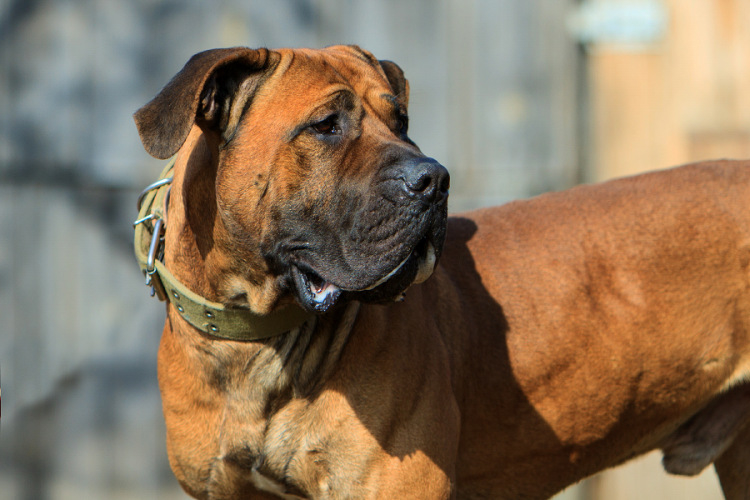
To prevent a puppy from growing up willful and disobedient, it needs to be trained from an early age. During training, the owner must be persistent and decisive. Any attempts at dominance should be immediately stopped. However, cruelty to the dog should be avoided, as this can lead to aggression.
The pet must know the limits of what is permitted and learn the following prohibitions:
- Biting the owner and family members is prohibited.
- You can't pull the leash.
- Do not stand up while leaning on a person with your paws.
- It is prohibited to pick up garbage on the street and from the floor.
- Avoid conflicts with other dogs.
It is better to conduct training under the guidance of an experienced dog trainer. Boerboels have excellent memories and learn quickly. Training begins with the basic commands "Heel" and "No." They are rewarded with treats for performing the command correctly.
Knitting
The first heat in females of this breed begins at 12–14 months of age and lasts approximately 22 days. During this period, the dog becomes lethargic or overly active, the vagina swells, and a reddish discharge appears.
It is necessary to mate males and females when they reach two years of age. Early sexual activity can negatively impact the health of dogs and their offspring. The ideal time for mating is 12–15 days after the onset of estrus.
Before mating, the animals should be kept dry and given ample exercise. To ensure the male feels secure, intercourse should take place in his own territory. A test mating should be performed 1–2 days later.
Pregnancy and care of offspring
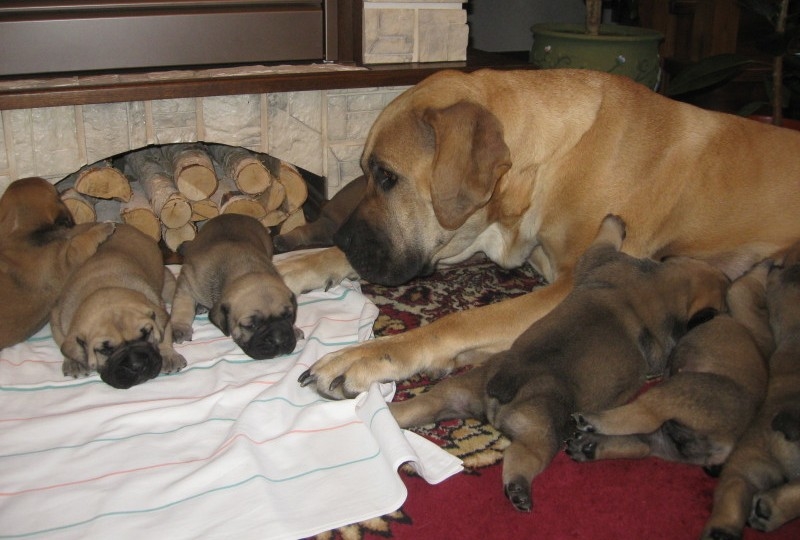
Pregnancy lasts approximately 56–72 days. During pregnancy, the bitch becomes calm and affectionate. After a month, her abdomen enlarges and her mammary glands swell. A yellowish discharge from the vagina and a lowered abdomen are signs of labor. A veterinarian should be present at this time to reduce the risk of complications.
Usually, the new mother herself will cut the umbilical cord and rupture the amniotic sac. If she hasn't done this, she should be assisted. The newborn's mouth and nose should be patted dry with a napkin to prevent suffocation. Then, place the newborn on the mother's breast. After the litter is born, the mother will care for them herself.
Choosing a nickname
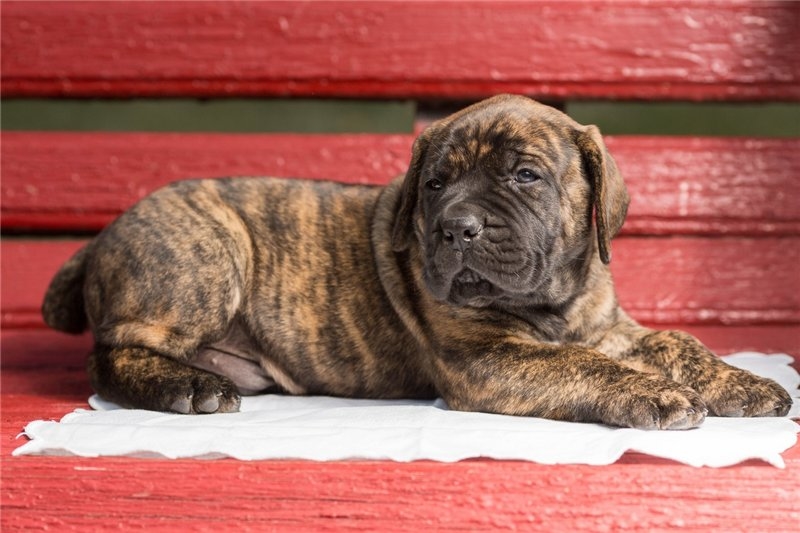
Immediately after the puppy appears in the house, it is necessary to choose a name for him. It is worth giving preference to a short and sonorous nickname, since a long one is difficult to pronounce.
When choosing, you need to be guided by three methods:
- Open a list of names on the Internet and choose the most suitable one.
- Come up with an exclusive name yourself.
- Name your pet after your favorite country, popular actor, favorite fairy tale character, movie hero, or plant.
Suitable names for boys: Cupid, Vex, Zeus, Myrtle, Mars, Nord, Cepheus.
Girls can be given the following nicknames: Aira, Vekta, Zhes, Zeta, Maysa, Ulma, Yarna.
Common diseases
Boerboels have a strong immune system, but their large size can negatively impact their health. To avoid various illnesses, follow these recommendations:
- Get examined at a veterinary clinic twice a year.
- Vaccinate your animal annually.
- Deworm once every three months. Drontal tablets or Prazicid suspension can be used for this purpose.
- From March to November, treat your pets monthly for fleas and ticks. Apply Dana or Advocate drops to the withers.
There are only a few diseases that can undermine the health of these dogs.
| Disease | Symptoms | Treatment methods |
| Joint dysplasia | Joint tissue is destroyed. The animal begins to limp and has difficulty getting up and walking up stairs. | The attending physician prescribes anti-inflammatory medications and a diet. In cases of severe joint damage, surgery is performed. |
| Epilepsy | Periodic attacks occur. They are accompanied by nervous behavior, profuse salivation, rapid breathing, whining, and urinary incontinence. | The condition is untreatable. The veterinarian prescribes sedatives and anticonvulsants, which the dog must take for the rest of its life. |
| Gastric torsion | Vomiting and shortness of breath appear, body temperature decreases, the volume of the abdominal cavity increases, and the mucous membranes become pale or blue. | The disease cannot be treated with medication. Emergency surgery is required. |
South African Boerboels are known for their strength and fiery temperament. They are best suited for experienced dog owners who are familiar with the breed's characteristics and have sufficient time for daily exercise. With proper training and timely socialization, these dogs will become obedient and reliable companions for their owners.