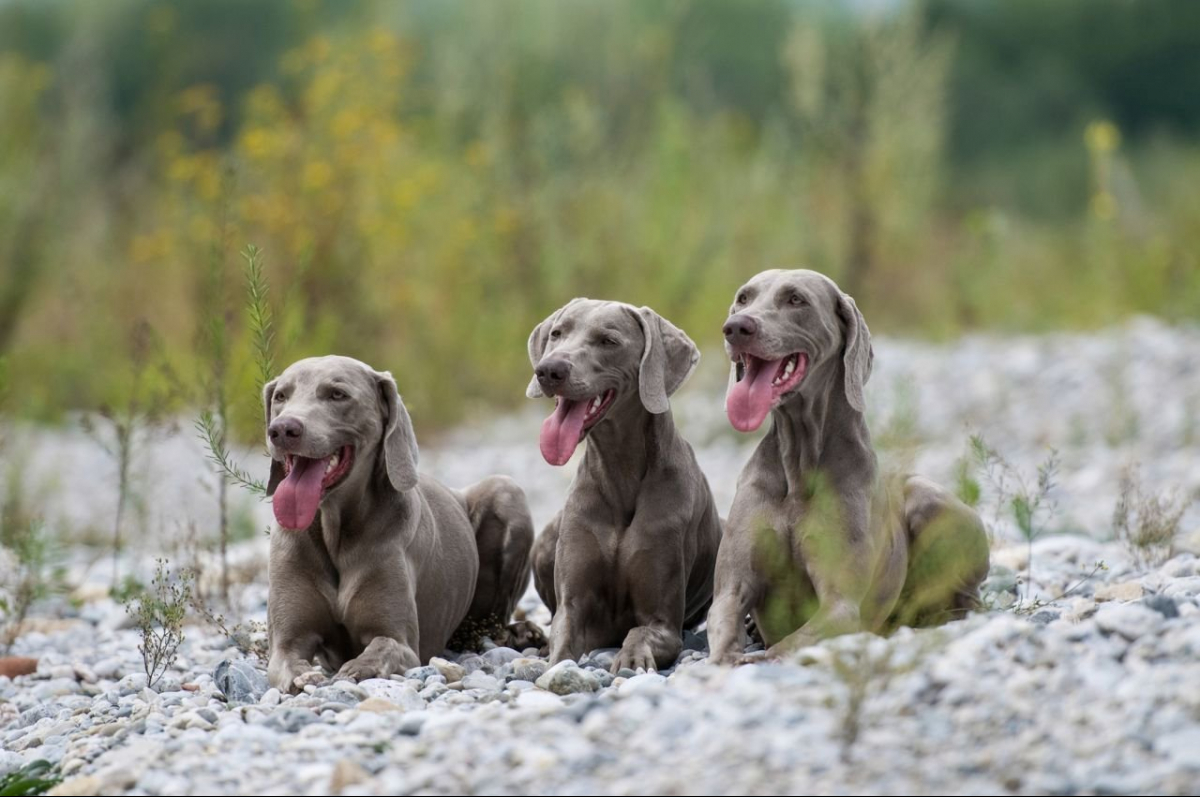
The Weimaraner is popular among hunting enthusiasts. The breed is versatile, hunting birds (ducks, partridges, pheasants) and small game (foxes, hares, and raccoons). The Weimaraner is nicknamed the "silver ghost" due to its inconspicuous coloring and quick, quiet movements. These active, friendly dogs make excellent companions for walks, country retreats, and travel. They require little grooming. To maintain good health, they need regular exercise and a well-balanced diet.
Content
Historical data
The average lifespan of an animal is 12-15 years.
There is an opinion that the history of the breed began in ancient times, and the ancestors are the European Braques
The Weimaraner is a hunting hound. It is used to hunt large and small birds (partridge, pheasant, and duck). It originated in Germany in the 19th century. There is no precise information about its ancestors.
Weimaraner pointers were actively bred at the kennel of Karl August, Archduke of Weimar. Specialists sought to produce a highly intelligent, easily trainable working dog.
External description
These are large specimens, with a shoulder height of 60-65 cm for females (weight 25-35 kg) and 60-70 cm for males (weight 35-40 kg). Approved breed standards provide a detailed description of the animals' appearance:
- The body is strong and lean, with clearly visible muscles. The body is elongated. The neck is set high.
- The skeleton is strong. The chest is low. The ribs are rounded. The skin is elastic.
- The forelimbs are long, the hind limbs are muscular and strong. The toes are strong, with the middle toe elongated and prominent. The claws are curved downward.
- The head is proportional. The back of the head is rounded, and the forehead is broad. When the dog is tense and hunting, the skin folds on the forehead are clearly visible.
- The muzzle is elongated. The cheekbones are clearly defined. The jaws are powerful, with a strong bite. The bite is correct, scissor-shaped. The teeth are strong. The chewing muscles are well developed. The tip of the nose is large, colored to match the coat.
- The ears are drooping, set high, fairly long, and rounded at the tips. When the dog is concentrating, they are slightly raised and tilted forward.
- The eyes are small and round. They are amber or yellow in color, and blue in puppies. The outer corner is slightly raised.
- The tail is set high. It is thick at the base and gradually tapers toward the tip. When at rest, it hangs down; when excited, it is parallel to the ground.
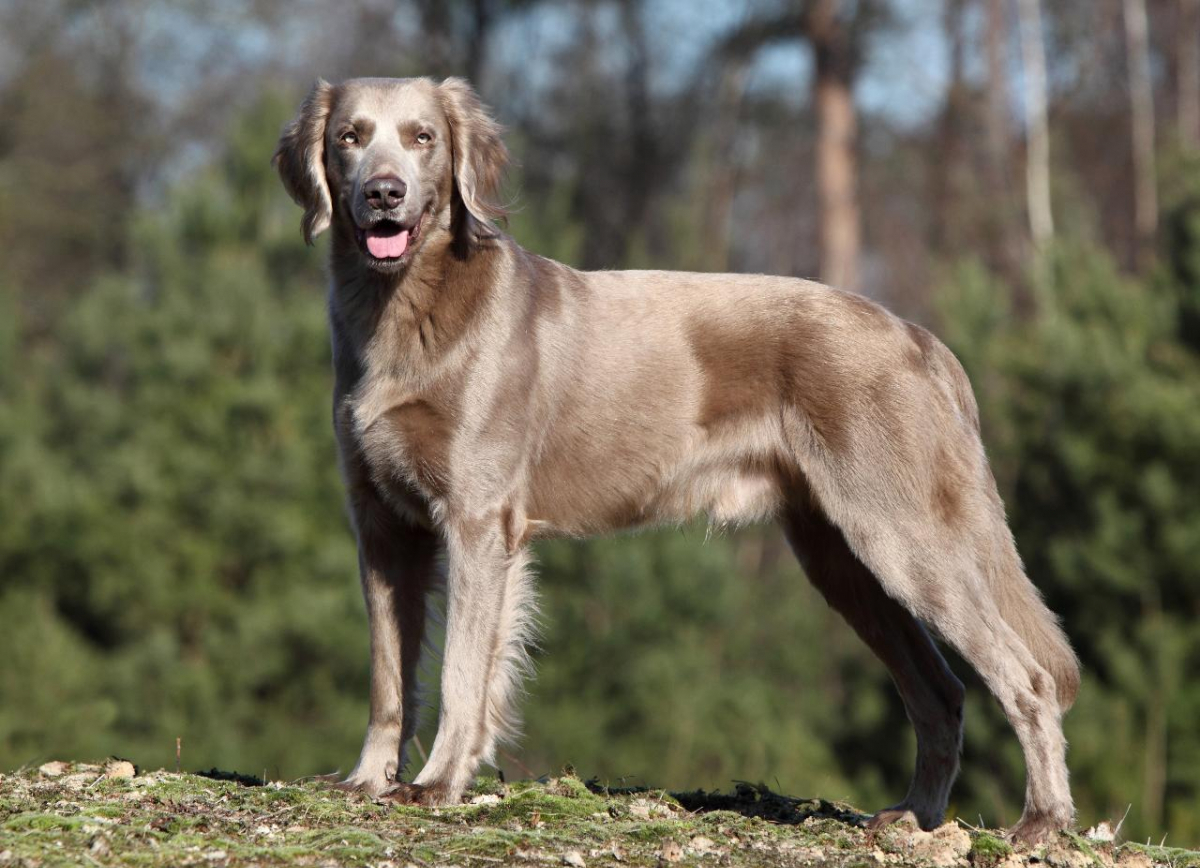
- I distinguish two types of coat. Short – the coat is dense, shiny, smooth, and lies close to the body. There is almost no undercoat. Long – the coat is elongated, soft, and wavy.
Both types are gray, mouse-gray, or silver-copper in color. A distinctive dark stripe runs down the spine. It is lighter on the head and ears. White markings on the toes and chest are not considered a fault.
The superciliary ridges in dogs are quite mobile
Choosing a puppy
The Weimaraner is a rare breed in Russia. Long-haired specimens are unpopular. When buying a pet from someone, there's a risk of getting a mixed breed. You should buy a dog from specialized clubs, with the help of experts. In Russia there is a nursery that breeds them (Yar Helen House). It's best to reserve a puppy in advance. When purchasing, it's best to look at the parents, ask for papers, review the veterinary passport, and assess the living conditions.
Healthy puppies are active, affectionate, playful, and neither skinny nor overweight. A purebred pet should possess ideal breed characteristics. It's a good idea to observe the chosen animal in its natural habitat for some time. A show-quality specimen costs at least 30,000 rubles.
A puppy must have a name. A short name is preferable. The breed originated in Germany, so German names would be suitable for the dog:
- for girls: Bella, Greta, Gabby, Wilma, Christa, Cora, Raida, Rona, Heidi, Utah.
- for a boy: Weiss, Boss, Ars, Hans, Gray, Luke, Rex, Ritz, Sam, Kai, Just.

Individuals with minor deviations from the standard are cheaper
Behavioral features
The breed has many advantages. The Weimaraner combines the qualities of a hunter and a companion. Their high intelligence, trainability, and courage make them ideal for rescue and law enforcement work (searching for evidence and drugs).
Pets have a stable psyche and do not show aggression. They get along well with families, are friendly, patient, and active with children. Their level of obedience and submissiveness depends on their upbringing. They quickly and easily adapt to people and are devoted to them. They enjoy long walks, jogs, and travel. They are always willing to follow their owner.
The dog may become strongly attached to only one family member and obey them, ignoring the others. It can also be overly clingy, following its owner everywhere. The dog is wary and suspicious of strangers, but does not display aggression; if necessary, it can protect by scaring off the stranger.
The breed has some shortcomings and is not suitable for guarding a home or territory. Training may be challenging if there are other pets in the house. The animal may chase cats, poultry, and rabbits, displaying hunting instincts.
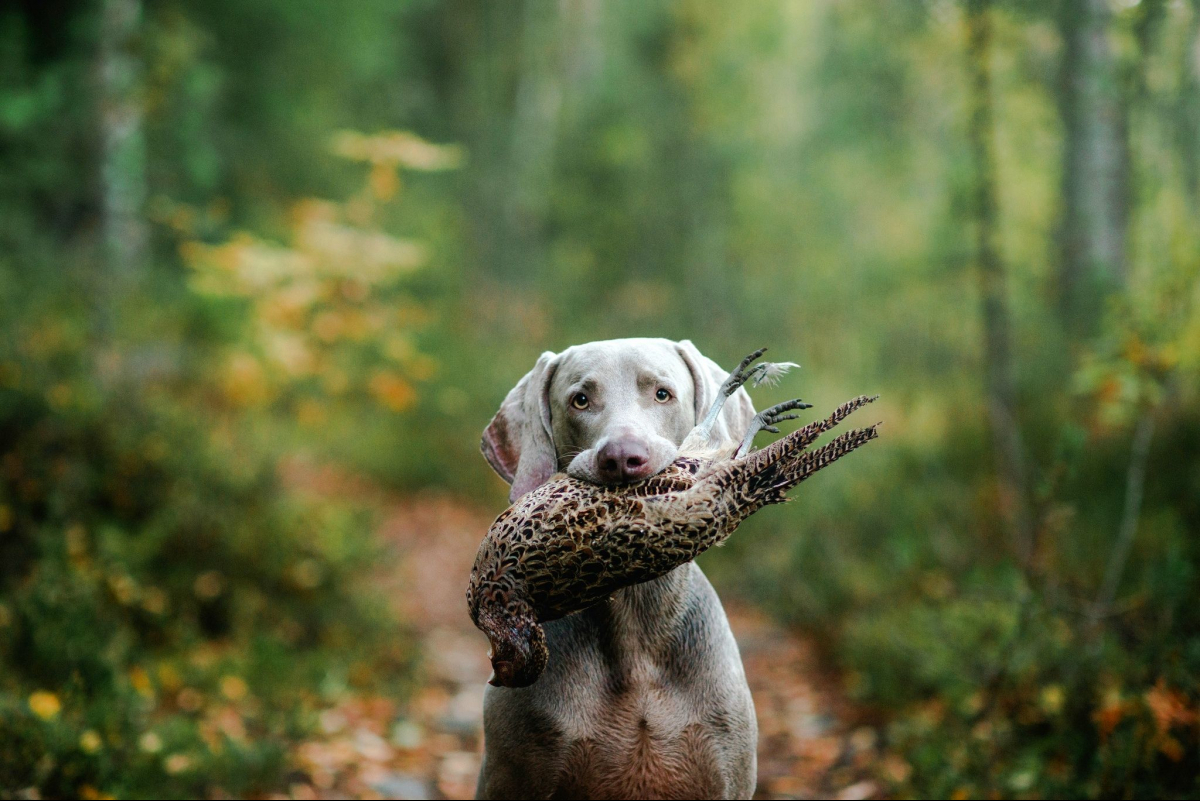
Dogs are active, often vocalize, and require constant physical exercise, active games, and training.
Training
The Weimaraner is a working breed. Training it to hunt is easy. It is intelligent, cunning, and quick-witted, but can sometimes be stubborn and willful. When training a puppy, do not use harsh methods or shouting. The pet responds appropriately to affection, praise, and good treatment..
The owner must become a leader, a mentor, a pack leader for the dog; this is the only way to achieve respect and obedience.
Maintenance and care
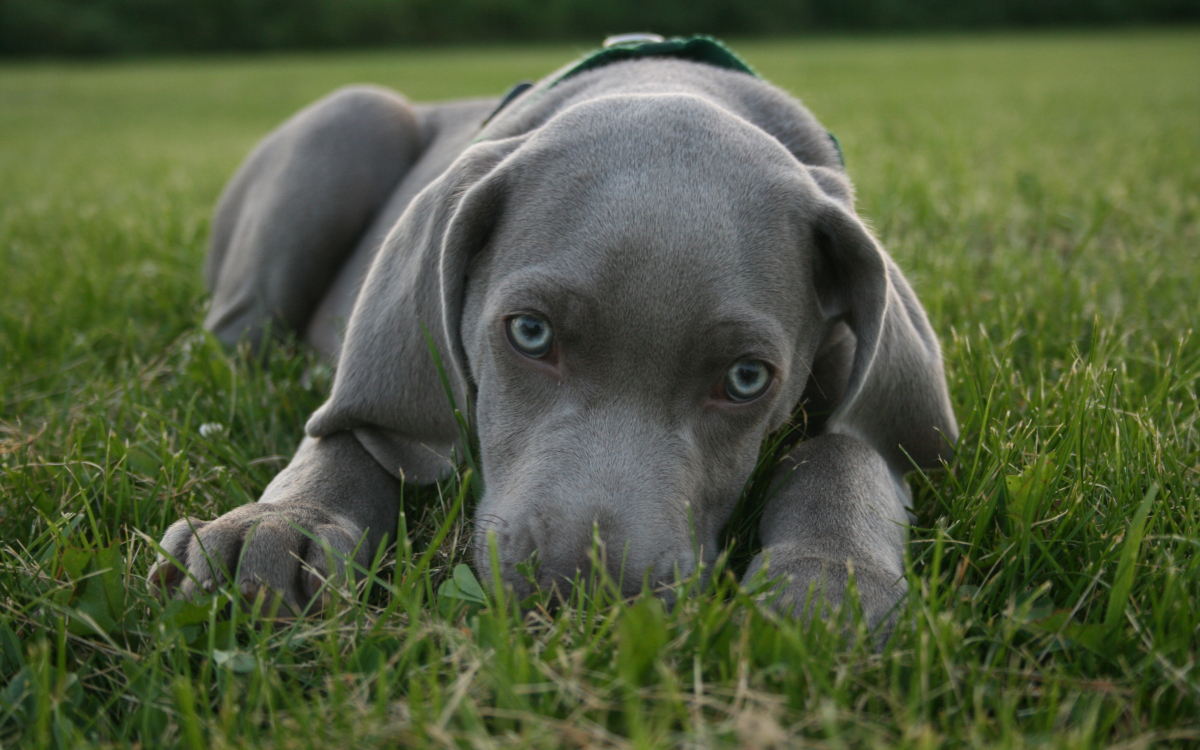
Pets are unpretentious in care
The ideal living option is a country house with a spacious area for walking. It is difficult to provide comfort in an apartment.
This dog is not suitable for being kept outside on a chain. He needs warmth and comfort. Provide him with a quiet area in the house with a bed and toys, a food and water bowl, and all necessary grooming supplies (combs, shampoo, etc.).
Personal care
Your pet doesn't require any special care; you just need to regularly perform the basic procedures that are the same for all dogs:
- Wash your pet no more than once a month with dog shampoo. Dry the coat with a towel. Clean the paws after each walk.
- Brushing is done once a week using a special rubber glove.
- Weekly routine: nail trimming, teeth cleaning, and ear cleaning. If your pet has been in water, the inside of the ears should be wiped dry.
Walking
The dog requires long walks of at least 1-3 hours per day and daily exercise (running, jumping over obstacles, playing, swimming). The animal does not tolerate loneliness well. A leash is required, and the pet should not be left unattended for long periods.
The dog is fed and watered 1.5-2 hours before a walk or hunt. After intense exercise, water is given after 30 minutes, and food after an hour.

Without an active life, the dog will become bored, chew furniture, make a mess in the house, and dig holes in the yard.
Diet
Dogs have a good appetite, but they shouldn't be overfed. Insufficient exercise can lead to obesity.
An adult is fed twice a day. In the summer heat, they are fed once in the evening. A regular pet should get most of its calories at the end of the day. A working dog should get most of its calories in the morning.
Proper nutrition ensures Weimaraners maintain good physical condition, a beautiful coat, and overall health. They can be fed a specialized diet or a natural diet. A natural diet includes the following foods:
- The diet consists primarily of 50% fresh meat (chicken, turkey, veal, beef, and ground meat). It is cut into small pieces.
- Boiled offal, fish.
- Dairy products (kefir, milk, fermented baked milk, cottage cheese, yogurt, whey), eggs.
- Porridge (rice, buckwheat) without salt, seasoned with vegetable oil. This helps improve digestion.
- Vegetables, fruits, and herbs (chopped). These are usually added to porridge.
- Additionally, ready-made vitamin supplements and fish oil are added to the feed.
- Constant access to clean drinking water is essential.
Food should be cut into small pieces. It shouldn't be too cold or too hot, as this can cause the dog to lose its sense of smell.
Excluded: smoked, fried, salted, pickled, fatty, spicy, pickled, hot, sweet, tubular bones. All of these foods impair the sense of smell and have a negative impact on health. Food should be fresh. The bowl should be washed after each feeding, removing any residue.
If owners aren't confident in formulating a proper natural diet, they can use premium or super-premium dry dog food and canned food. These contain all the necessary nutrients.
Diseases
With proper care and nutrition, dogs rarely get sick, but they may develop hereditary diseases:
- Intestinal volvulus and bloat. Occurs in puppies and older dogs due to improper diet.
- Demodicosis (subcutaneous mite). Bald patches appear on the fur. The veterinarian prescribes medications such as Saifli, Falmosan, and Maxidin. Treatment duration depends on the severity of the disease and is determined on an individual basis.
- Interdigital dermatitis (skin inflammation).
- Diseases of the joints of the legs and pelvis. This is a hereditary or age-related condition that cannot be cured.
- Eye diseases: retinal dystrophy, extra eyelashes, everted eyelid. Hereditary diseases are incurable.
- Cancerous tumors. Occurs in older dogs.
To maintain health, veterinary examinations and vaccinations are carried out twice a year.
Breeding
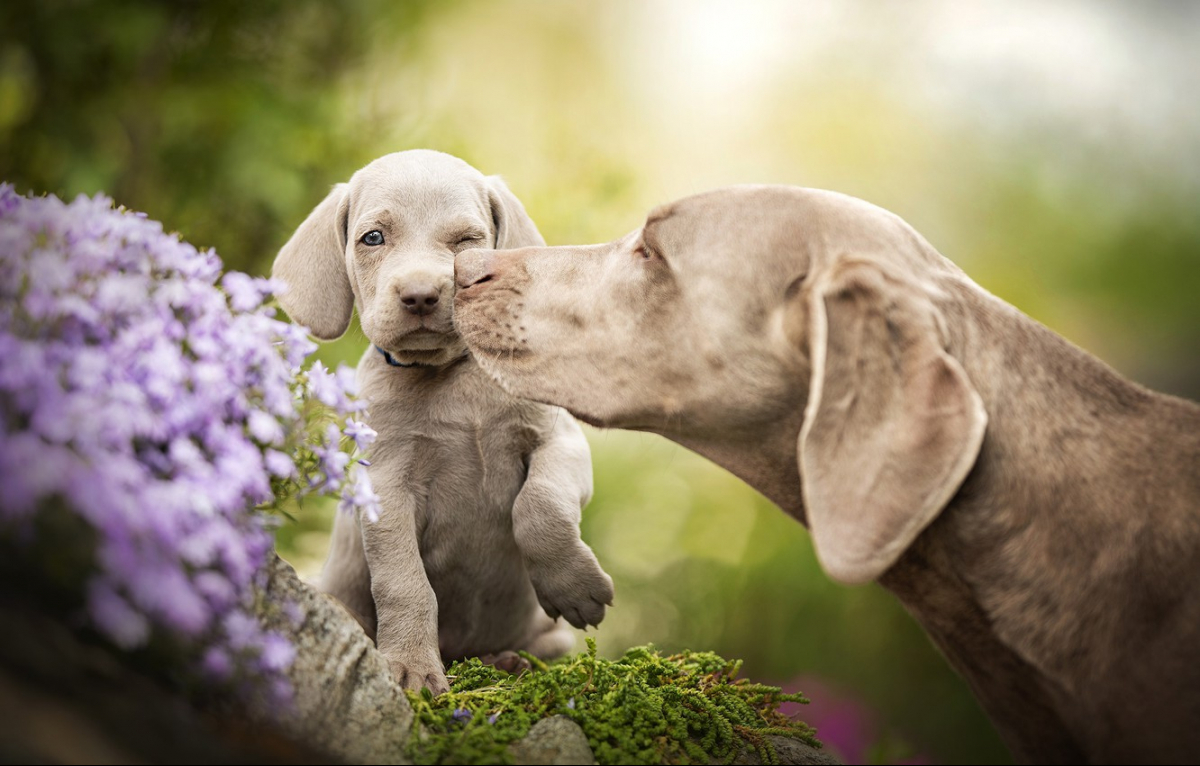
A veterinarian can confirm a dog's pregnancy.
For breeding, we select healthy animals with ideal breed characteristics (working ability, character, trainability, appearance, pedigree).
The best option is a pair living together in the same area. If this is not possible, a partner is found at a kennel or club. The selection is entrusted to an experienced person.
Mating a pet
Females are ready to mate at 8-12 months of age, but early pregnancy negatively impacts the health of the puppies and the mother. Experts recommend mating at two years of age (after the female's third heat). The meeting is arranged in advance and takes place on the male's property.
Pregnancy and childbirth
If mating was successful, signs of pregnancy will become visible within a month.
The gestation period is 63-67 days. A cozy, warm place for the mother and her puppies is prepared in advance. The pregnancy and birth of the puppies are usually uneventful, but the mother requires careful attention and supervision.
To maintain a steady milk supply, the female needs to be fed four to six times a day (in small portions)—soups, porridge, and meat broth. Dry food and canned dog food are introduced one week after birth. After one to two weeks, the female should regain her strength; if she is weak, consult a veterinarian.
Caring for puppies

Puppies are fed frequently, but in small portions.
Young animals of all breeds have a good appetite. Overfeeding them should be avoided, as this can lead to digestive problems or obesity.
During the first month of life, the offspring feed on their mother's milk. Later, they are supplemented with formula, broth, cottage cheese, porridge, boiled eggs, and fermented milk products.
From 2 to 3 months, feed 5-6 times a day, at 3-4 months, provide four meals a day, from 4 to 10 months, give food 3 times a day, after ten months of age, the dog is fed twice a day.
After three months of age, you can transfer your baby to dry food or leave him on a natural diet.
Puppies are first vaccinated at 23 days of age, again at 31 days, and then again at two months. At three months of age, they receive a booster shot with similar vaccines and a rabies vaccine.
Sterilization and castration
If the owner does not plan to breed the puppies, they are spayed (females are neutered at six months of age, before their first heat). Males are neutered at 7–9 months.
The procedures are safe for pets' health. They recover quickly after surgery. It is necessary to treat the sutures with hydrogen peroxide or brilliant green until they are completely healed.
A Weimaraner makes a wonderful hunting companion and a loyal companion for all family members. They are active, cheerful, and require little grooming or upkeep.