 In cold weather, rain, heavy snow, or wind, people wear warm, waterproof clothing, hats, and scarves. Our smaller brothers—dogs—also get cold and catch colds, and since humans are responsible for the animals they've tamed, it's their direct responsibility to look after the health of their four-legged companions, protect them from colds, and select clothing appropriate for the weather.
First of all, clothes are vital necessary for small "pocket" dogs, such as:
- toy terriers;
- Yorkshire Terriers;
- Chihuahua;
- Chinese Crested;
These small dog breeds have very short, fine coats with no undercoat, while crested breeds have no hair on their bodies, only on their ears, muzzle, and tail. Owners of these breeds, especially crested breeds and Chihuahuas, should pay special attention to their pets' clothing to avoid unnecessary hypothermia, pneumonia, and other complications.
Wardrobe
Every dog, especially small breeds (like Chihuahuas), should have its own wardrobe. Of course, you can do without decorative costumes and dresses. But Warm clothes are a must have in your wardrobe:
- A jumpsuit made of waterproof raincoat fabric: this item will save your dog from hypothermia in cold weather, and your apartment from black puddles and stains;
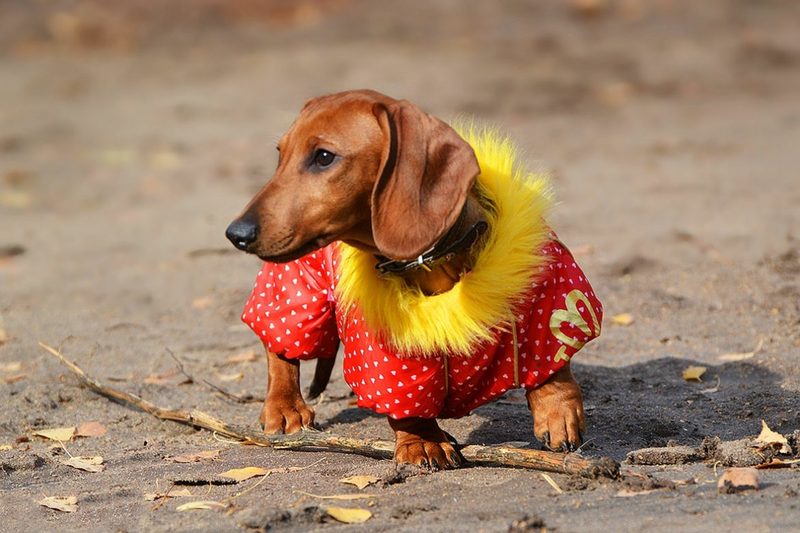
- A jumpsuit with synthetic padding or artificial fur will protect your pet from cold weather, dank winds and heavy snowfalls;
- A knitted sweater made of thick yarn or a shirt made of thick knitwear will protect your pet from slight spring and autumn cold snaps;
- An insulated blanket for dachshunds and other hunting breeds will help protect the animals' lungs from hypothermia;
- It is also advisable to have boots with waterproof soles in your wardrobe, which will protect the paws of small breed dogs from hypothermia, frostbite, mechanical damage and chemical burns;
Taking measurements yourself
In order to make a clothing pattern for your pet with your own hands, you must first take it from your dog or from a similar dog of the same breed all necessary measurements, that is:
 Head circumference - above the eyes at the widest lower part of the ears;
- Muzzle girth - girth at the widest part;
- Neck circumference is the same as the length of the collar your dog wears;
- Chest width - measured across the front from shoulder to shoulder;
- Length of front legs from elbow joint to floor;
- Chest girth - the girth of the widest part of the chest just behind the front legs;
- The distance between the legs (the length of the abdomen) is almost equal to the length of the back in females, and much shorter in males, so as not to stain or wet the overalls;
- Back length - measured from the withers (the place where the collar lies) to the base of the tail;
- Waist circumference (the circumference of the abdomen in front of the hind legs);
- Length of hind legs from knee to floor;
 Head circumference - above the eyes at the widest lower part of the ears;
Transferring measurements to patterns yourself
When transferring measurements to the pattern of future clothing, you need to take into account seam allowancesThe hand-cut pieces will be sewn together, but they should be loose and not restrict the dog's movement. Therefore, when cutting out your hand-cut pattern, leave 1 to 3 cm on each side for seams and room for the dog to move freely in the garment. After cutting out and basting the pattern, try it on your dog to ensure it fits well, is comfortable, and is the correct size.
If the pattern fits well according to all these parameters, it can be machine-stitched or carefully hand-stitched. Fasteners on these models are typically zippers on the back, making it easier to dress active and playful dogs before a walk.
Basic and most common patterns
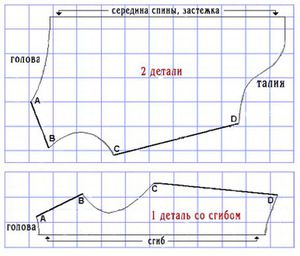
A simple horse blanket
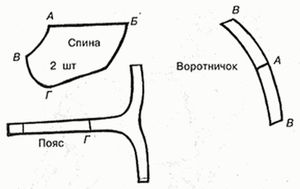
 The back can be made of two pieces or a single piece. The entire model consists of four pattern pieces. The back and collar pieces are sewn together along line BAB, then the collar pattern is secured into a ring with thread or buttons (fasteners), and the T-belt pattern is attached to the bottom, which is used to secure the blanket. A loop for the tail can be attached to the end of the blanket. The blanket can also be insulated by lining it with synthetic padding or thick knitwear, but this requires twice as many patterns, or eight.
Vest
In this model, the back will be sewn from two patterns and the stomach from one. If you want to make an insulated vest, you'll need to cut out twice as many patterns and sew a layer of insulating padding between them. The zipper is sewn into the back piece first, and then the pieces are sewn together.
Sweater for a small dog
This sweater can be made from a regular sleeve from an old sweater without using a pattern. The bottom of the sleeve will become the dog's collar; measure the length of your dog's back from it and, after sewing the sleeve, trim off any excess. Then, baste the openings for the paws and cut out the holes for them.
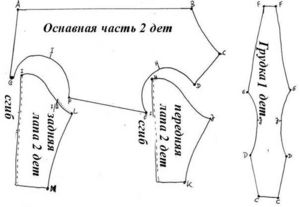
Overalls
The jumpsuit consists of 11 pieces: two back patterns, two patterns for each paw, and one pattern for the tummy and chest. First, a zipper is sewn between the two back pieces, then the back is sewn to the tummy piece, leaving openings for the sleeves. Each sleeve is sewn separately and then attached to the main body of the jumpsuit. If you want to make a jumpsuit for colder weather, you'll need to cut out twice as many pieces, and insert insulating material between them: synthetic padding or faux fur. The inner part can be cut from thick knitwear or wool, and the outer part from a waterproof material. This way, the jumpsuit can be worn by your dog in frost, snow, and even rain, replacing a raincoat.
Decorative clothing
T-shirt
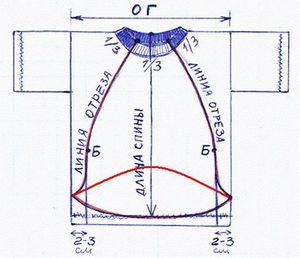 The easiest way to sew a dog T-shirt is from an old child's T-shirt. Keep in mind that the bottom of the T-shirt will be convex along the dog's back and will need to be trimmed down around the belly. Also, keep in mind that the widest part of a dog's body is the chest, so the clothing patterns should be basted after trying them on and ensuring the dog's movements are not restricted. Only if the dog is comfortable in the clothing should the T-shirt be stitched.
Dress
In addition to sweaters, overalls, and vests, you can also sew decorative clothing for your pet, such as a dress. A vest or T-shirt made of lightweight fabric will work for the main part of the dress, and a rectangular piece of fabric, twice the circumference of the dog's belly, will work for the skirt. You can also embellish the dress with silk, chiffon, satin ribbons, beads, or patches.
Additionally
In addition to sweaters and vests, you can also sew something for your pet with your own hands. a hat or scarf and shoesThe most important thing is that the clothes are comfortable, made from natural fabrics, and do not restrict the dog's movement. All this will help your dog avoid drafts and complications from colds during the cold season.