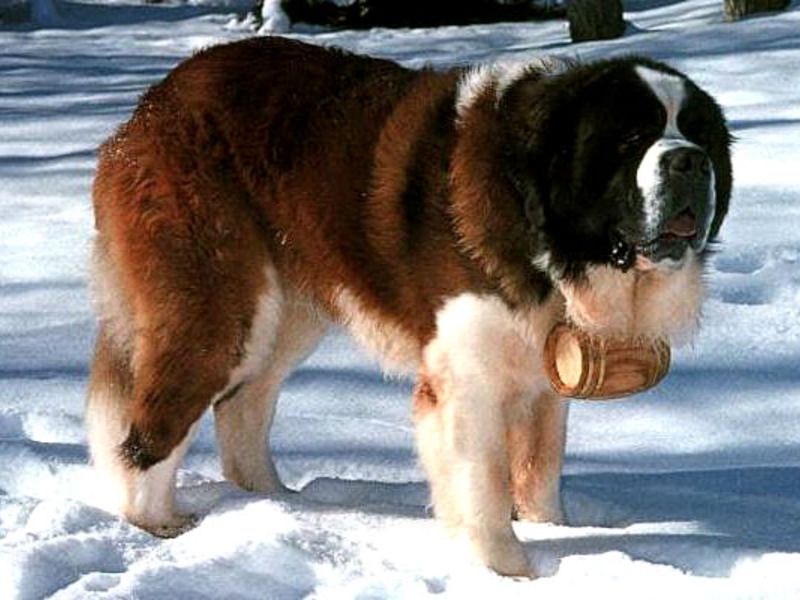
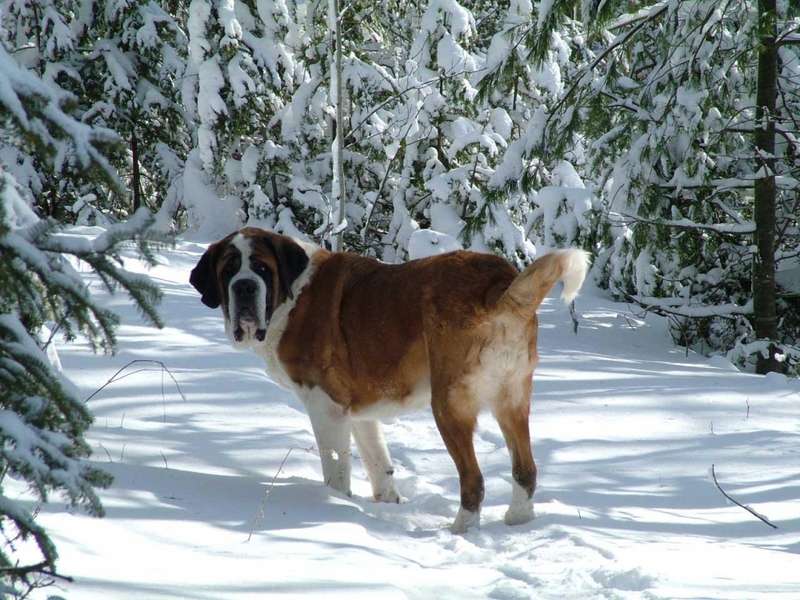
 The majestic and courageous Saint Bernard dog is renowned worldwide for its heroism. Born search dogs, they possess an instinctive drive and a strong desire to search for and find people trapped in avalanches. Their large, stable paws and arched legs allow Saint Bernards to avoid sinking into the snow and excel at digging. At first glance, the dog appears very bulky and downright defiant. In reality, this pet has a very gentle and cheerful nature. The breed gets along well with people and can be a family favorite. Saint Bernards can be both fierce guardians and excellent babysitters.
Introduction to the breed
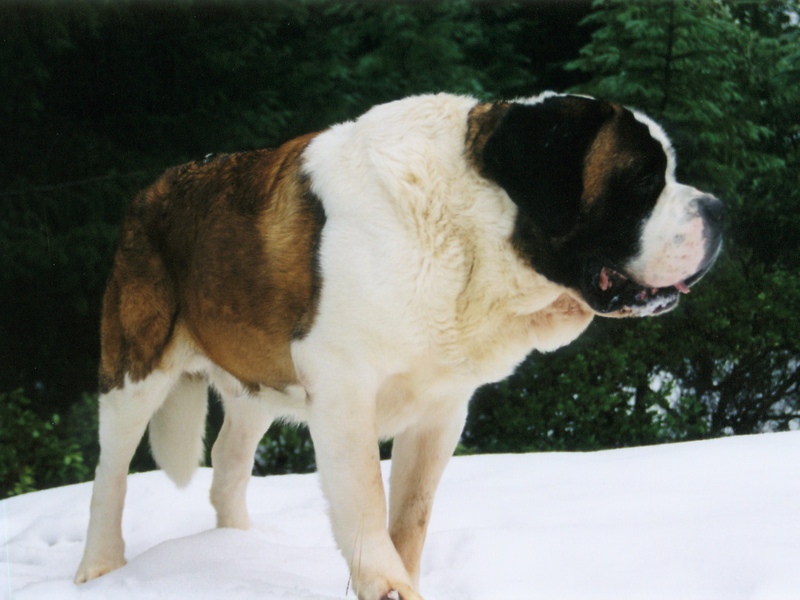
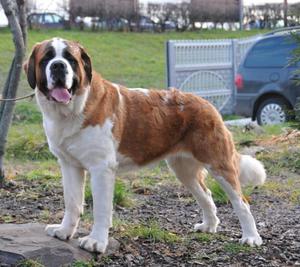
Large breed in weight can reach 80 kg, but specimens are known to weigh over 100 kg. At the withers, this large dog grows up to 70 cm. The enormous respect for this dog is explained not only by its size, but also by its friendliness towards people and its slightly sad and understanding gaze.
The breed standards include:
- Broad and large head.
- Slightly wrinkled, convex forehead.
- Drooping upper lips.
- Situated close to the bridge of the nose, the dark brown eyes are not very large and have a sad look.
- Medium-sized ears hanging down on the sides of the head.
- Strong neck with a large collar.
- Shiny coat with dense undercoat.
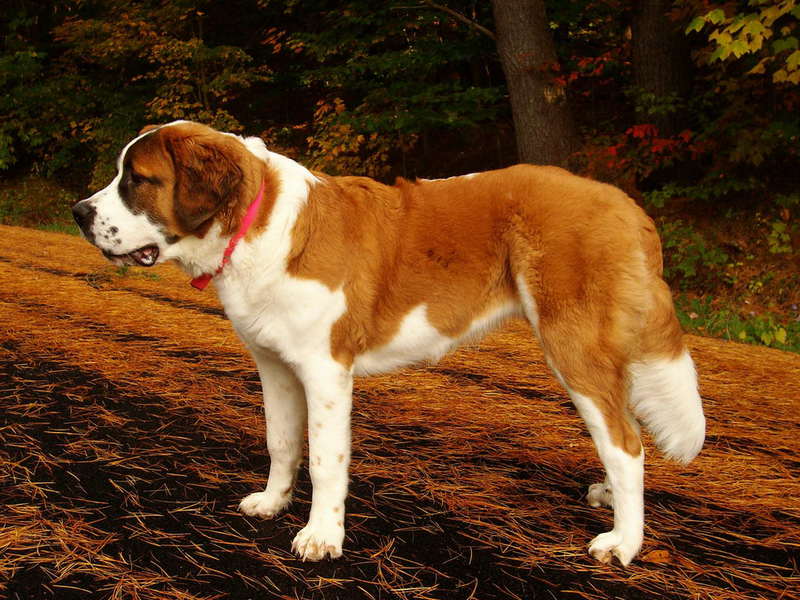
- White with red markings or red with white markings. Solid-colored specimens are very rare.
St. Bernards There are two varietiesSome have long hair, others short. The most popular dogs worldwide are the long-haired ones, which were bred by crossing with Newfoundlands. These dogs are less suitable for rescue operations because their long hair can develop a crust of ice, which impedes their movement.
The character of the St. Bernard
 This large dog is distinguished by its phlegmatic nature, yet also by its courage and heroism. Saint Bernards are extremely devoted to their family, and especially to their owner. This pet will love all the inhabitants of the house, including cats and parrots. And if a strange dog tries to harm the owner's cat, the dog will immediately rise to its defense.
For strangers St. Bernards do not pose any threatIf guests come to the house, the pet will simply look at them with a sad expression. However, the dog will quickly sense a threat from the stranger, change abruptly, and begin to defend its owner, turning into a ferocious predator.
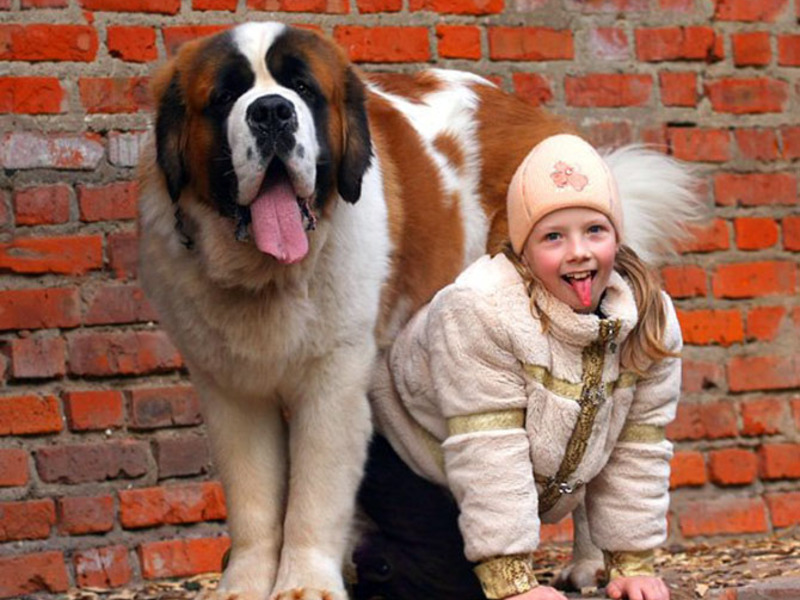
An adult St. Bernard loves to lie in the middle of the room and watch TV with the family. During this time, children can climb all over him and do whatever they want with him. A calm dog will pay no attention to the little ones' play.
Despite the breed's phlegmatic nature, the dog can be stubborn and headstrong. And because this pet possesses tremendous physical strength and excellent reflexes, an exciting walk can sometimes end in a trip into a puddle.
That is why St. Bernards are bred from an early age. it is necessary to educate and trainHowever, hitting the pet is strictly prohibited, as it could grow up to be a vicious and aggressive dog, posing a threat to others. A properly trained dog with a loving owner will become a friend and companion to adults and a nanny for children.
St. Bernards are naturally quiet. It's rare to hear them bark. They'll never bark, even during playtime.
Features of training
Training this pet won't be a problem, as rescue skills are ingrained in the breed's genes. To ensure this large dog grows up manageable and doesn't become a threat to others, it needs to be trained from an early age.
The process of raising and training St. Bernards gets boring quite quickly, but the pet always tries to please its owner and therefore obediently follows all his commands.
As early as possible, it is necessary to teach a St. Bernard good manners and go through the socialization process with him. Especially the dog we need to wean them off jumping on the hosts and guestsWhile you can handle the puppy's weight, an adult dog can weigh up to 80 kg. Therefore, an untrained dog that jumps on guests will simply make them wary. However, a well-mannered pet with a gentle and kind nature will be adored by all friends and acquaintances.
A Saint Bernard should be trained consistently. Commands should be given in a calm voice, without any frustration or irritation. The breed is very sensitive, and if the pet sees that its owner is dissatisfied, it can become very upset and lose interest in training. Saint Bernards love praise and rewards, which they then eagerly pursue.
Keeping a St. Bernard
The breed thrives in private homes with a large yard where the dog can roam freely. Apartment-dwelling dogs will need regular walks. St. Bernards require moderate exercise, preferably on foot.
Caring for the breed is not too difficult, however has its own characteristics:
 Long-haired dogs need daily brushing, while short-haired dogs require brushing no more than twice a week. Use a stiff-bristled brush for this.
- During the shedding season, St. Bernards are combed using a fine-toothed comb.
- Bathing should only be done when necessary. The coat should be washed with a special dog shampoo.
- Due to their anatomical features, a St. Bernard's eyes require constant attention. They should be wiped daily, especially after walks, with a damp cotton pad or cloth. If the eyes become inflamed, tetracycline ointment can be used. If there is purulent discharge from the eyes, consult a veterinarian immediately.
- The breed is prone to excessive salivation, so the pet's muzzle must be wiped after each meal.
- A dog's ears and teeth require regular inspection and cleaning.
 Long-haired dogs need daily brushing, while short-haired dogs require brushing no more than twice a week. Use a stiff-bristled brush for this.
St. Bernard puppies: price and selection
 Purebred dogs can be purchased from kennels and specialized clubs. The cost of a puppy with papers depends on the color, sex, and size of the little pet, as well as the pedigree of its parents. The price of a St. Bernard puppy from a kennel varies. from 15 to 45 thousand rublesAn online ad offers this friendly pet for 8,000-15,000 rubles.
When choosing a puppy, be sure to examine its parents, paying attention to their achievements and health. In addition, adult St. Bernards should be:
- bony and powerful;
- without mental deficiencies;
- with a good undercoat and beautiful coat;
- disciplined.
The puppy itself should be active and healthy. It should have a spotless coat and skin, a wet, glossy nose, and a flexible, non-bloated belly. You should ask the breeder about the puppy's diet and whether it has been vetted. deworming and vaccinations given.
If you are choosing a puppy to show, it is best to seek help from a specialist who is knowledgeable about the breed.
After purchasing a small St. Bernard and bringing it home, it's best not to leave it alone for long periods of time at first. It can become insecure, short-tempered, and nervous. If you need to leave for a long time, take the puppy for a walk and feed it beforehand, ensuring it sleeps while waiting for its owner. Otherwise, the pet may become bored and start destroying the home and furniture.
By purchasing a St. Bernard puppy and raising it properly, you get a good watchmanA true friend and companion for yourself, and a sitter for your children. However, before purchasing, it's worth considering whether you can afford to keep a very large dog in your apartment or house for many years.