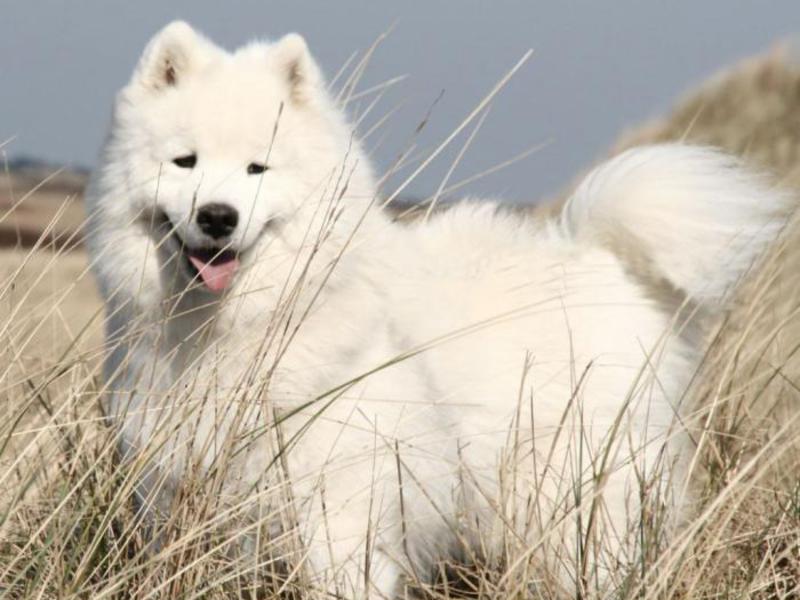
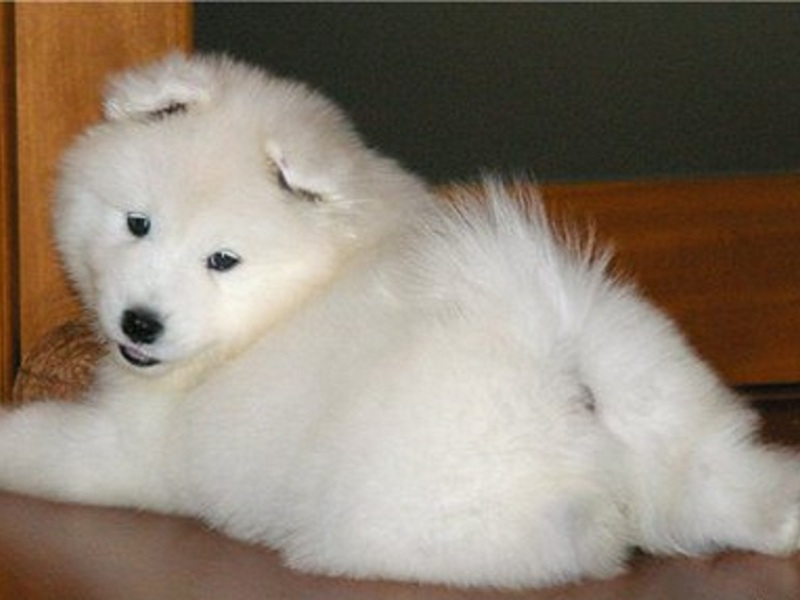
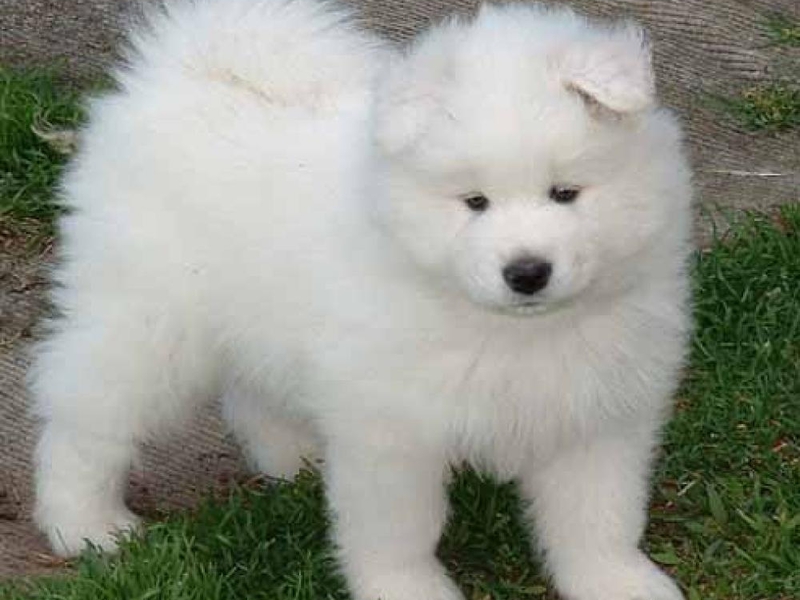
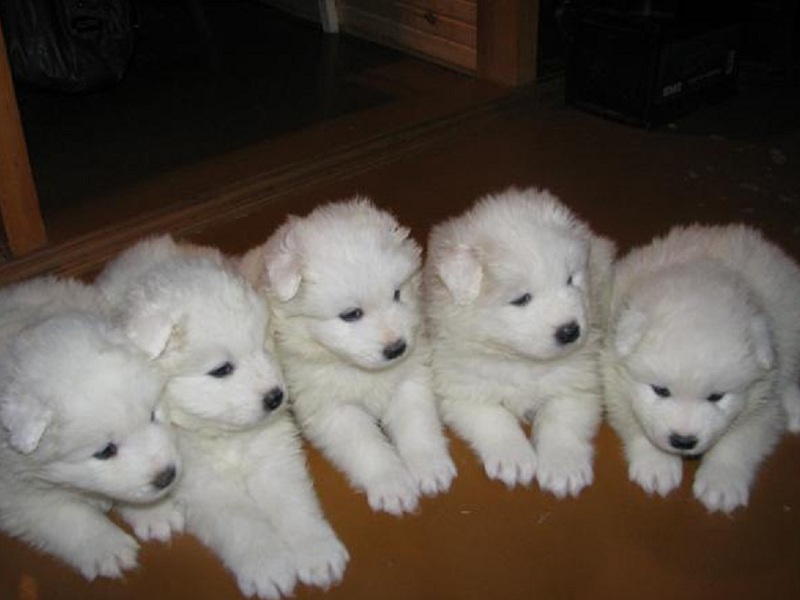
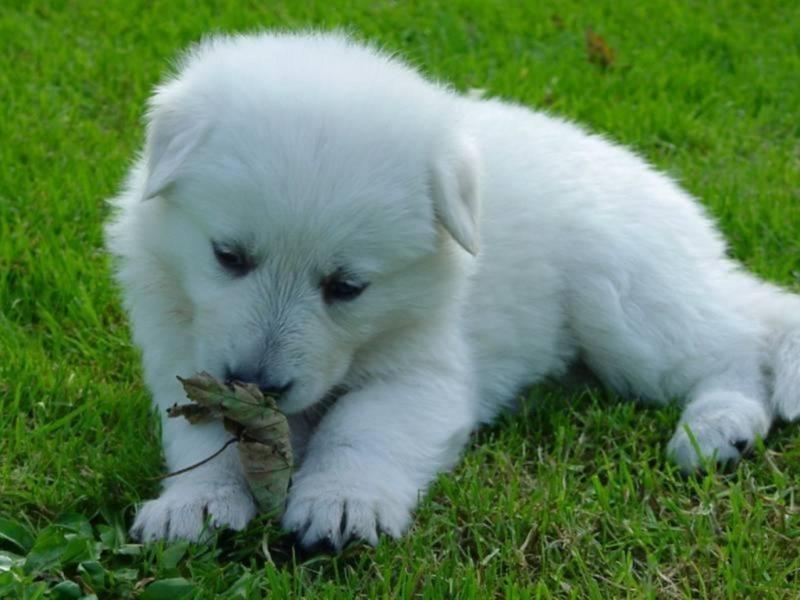
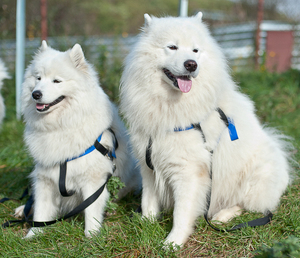
 The snow-white beauty—the Samoyed—captures the hearts of many dog lovers with its extraordinary appearance and exceptional intelligence. One of the ancient dog breeds, it served for several thousand years as a companion to the nomadic Samoyed tribes who lived in northern Russia and Siberia. The dogs were used for sled work, guarding reindeer herds, and hunting walrus and bear.
The breed was introduced to Europe in the late 19th century by British polar explorer Robert Scott. The Samoyed's excellent appearance and versatile qualities were appreciated by dog breeders worldwide. Since then, the dog has become popular in many countries.
Content
Samoyed: photos and breed characteristics
Among the Samoyed breeding dogs There are two types, which differ slightly in structure:
- The wolf type of Laika has an elongated body and a narrow head.
- The bear breed is distinguished by its powerful body and wide skull.
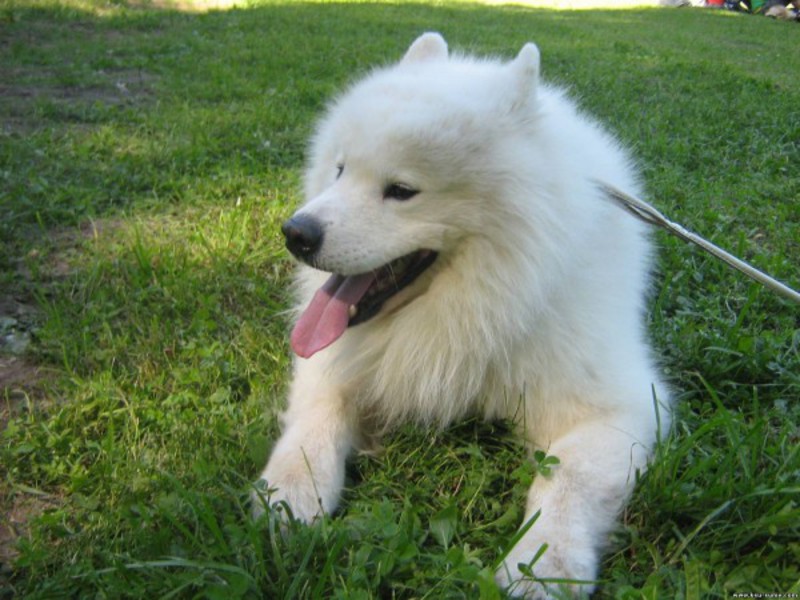
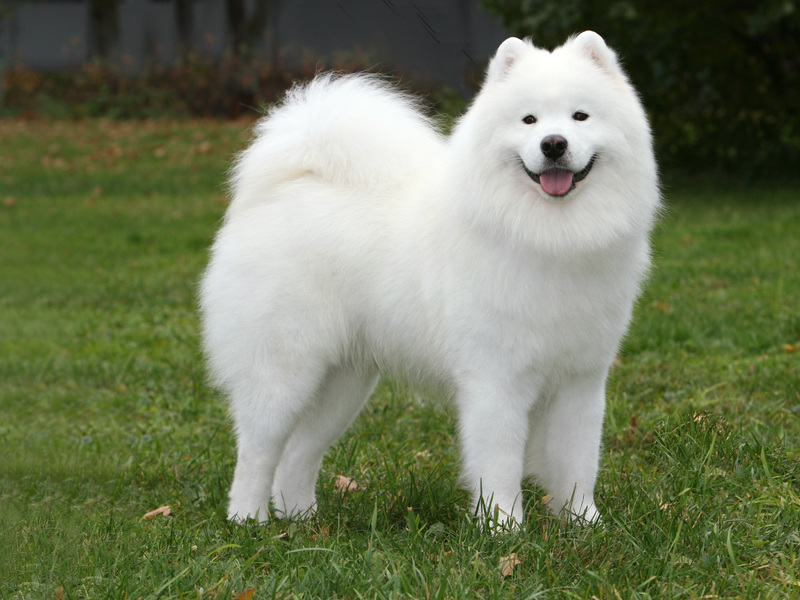
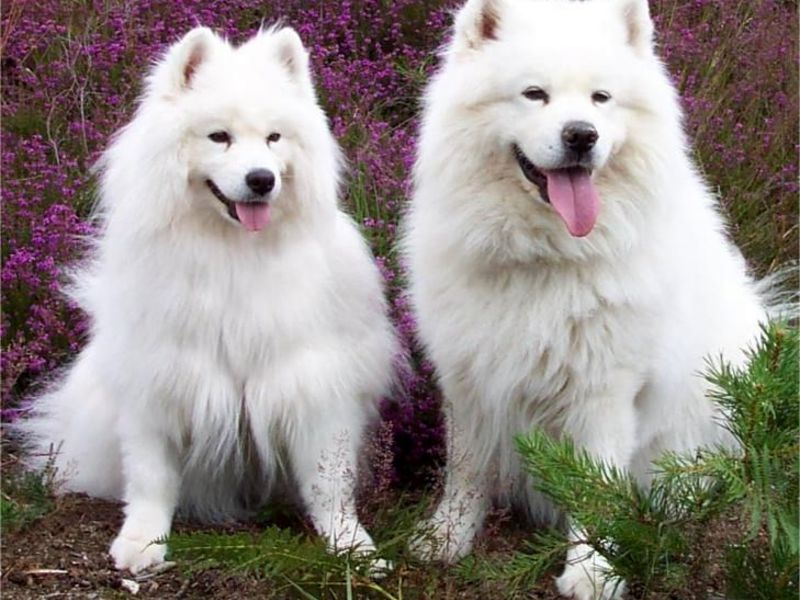
Dogs weigh between 17 and 30 kg. Males stand approximately 57 cm at the withers, while females reach 53 cm. Samoyeds are distinguished by their signature smile, deep-set brown eyes, and a black, brown, or flesh-colored nose, which may become discolored in winter.
To the main characteristics Samoyed dogs include:
 Compact, strong and flexible body, slightly longer than the height at the withers.
- Forelegs straight, muscular and strong.
- On the straight hind legs with strong muscles, protective hair grows between the toes.
- Proudly arched neck of medium length.
- The head is large and wedge-shaped. The skull is wide between the ears and slightly convex at the front and sides.
- The muzzle is deep and strong, tapering neatly to the nose.
- Strong and robust jaws with a scissor bite.
- The lips are tight, fleshy, and black. The "Samoyed smile" is formed by the corners of the mouth, which curl slightly upward.
- Deep-set and wide-set, dark brown, slanted, almond-shaped eyes have black rims.
- Triangular, thick, erect, small ears rounded at the ends.
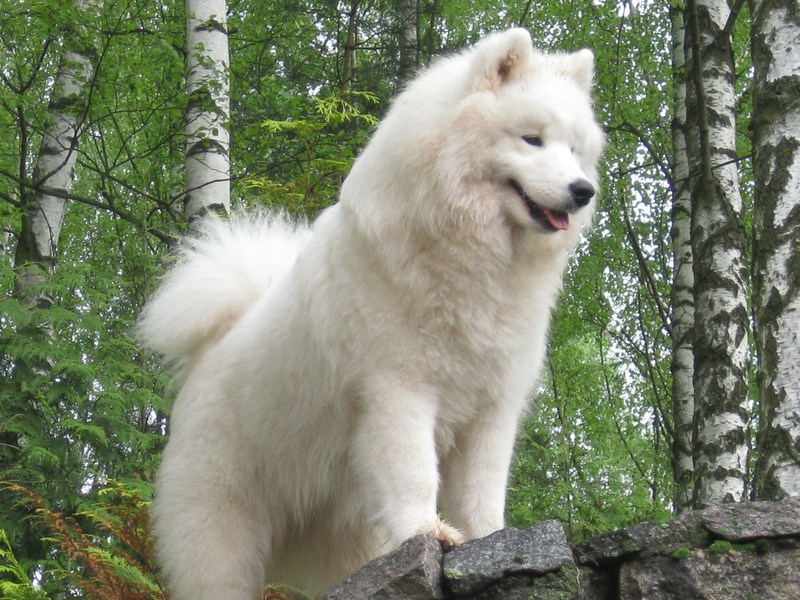
- The high-set tail hangs low when relaxed, reaching to the hocks. When moving, it curls over the side or back.
 Compact, strong and flexible body, slightly longer than the height at the withers.
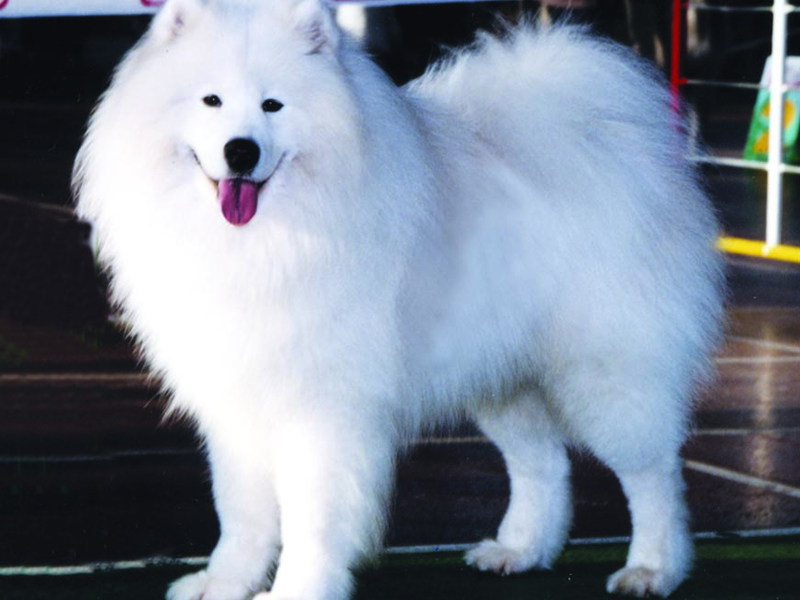
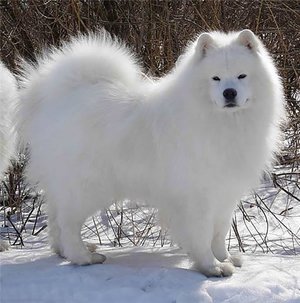
The Samoyed has dense, thick, shiny and soft fur, which can be pure white or cream, or white with fawn markings. The self-cleaning, virtually odorless coat is hypoallergenic. It tends to fluff up in cold weather.
Males have longer hair than females. The coat on the head is smooth and short, with a ruff forming around the shoulders and neck. The inner ear is furred, while the outer ear is short and grows parallel to the ear. The hair on the thighs forms "pants."
When choosing a Samoyed, keep in mind that the white coat may have a small amount of biscuit markings. Pale brown markings should not be present.
Samoyed personality
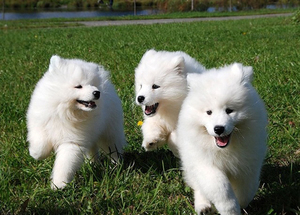 A hardy, delicate and unpretentious worker understands people well. He distinguished by intelligence and devotion and gets along well with children. For children, the dog serves as a toy and a good nanny. The pet will never bite or intentionally harm them. However, since the breed is large and playful, leaving it alone with a small child is not recommended.
This timid and non-aggressive dog can be used for guard and watch duty. The Samoyed has weak hunting instincts, so it can easily live with other animals. However, it will definitely start hunting strange cats.
The Samoyed is a pack dog and therefore cannot live alone. In a country house or apartment, it must be kept close to a human. The Samoyed also doesn't like staying home alone.
This dog can live in almost any environment, but requires daily walks. Intelligent and intelligent, Laikas are easy to train and discipline, which should be started from an early age. Training requires patience and persistence. While the breed can be stubborn, it will never attack a person or bark without cause.
Since the husky can overheat in hot climates, it always needs access to fresh air and drinking water.
Training and education of the Samoyed
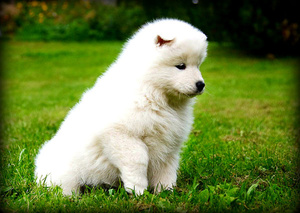 Smart dogs of this breed are easy to train. However, training a puppy can be challenging. innate stubbornness Likes. Independent dogs can find a multitude of reasons not to obey their owner's commands. Therefore, when training and raising a Samoyed puppy, allowance must be made for this character trait. Those without training experience are best advised to consult a specialist or take special courses.
From the very first day the puppy arrives home, it's important to establish strict rules and define what it can and cannot do. The dog must know its place. Under no circumstances should the puppy be allowed to sleep on the owner's bed. Otherwise, the bed will become the favorite sleeping spot of a larger adult dog, leaving the owner no longer able to sleep there.
Samoyed dog very sensitive to intonation in your voice, so scolding her harshly is not recommended. If your pet has misbehaved or is acting up, you should simply say "No" or give her a light slap. However, she shouldn't feel any pain.
It's essential to teach your puppy the "Come" and "No" commands. This will ensure that he approaches you outside and drops the object he's interested in. After each command, be sure to praise him and reward him with a treat. Good treats for Samoyeds include:
- Lamb stomachs.
- Boiled chicken hearts.
- Boiled beef lungs or liver.
All food should be finely chopped. By five months, the puppy should already know the following commands: "Come to me", "Lie down", "Sit".
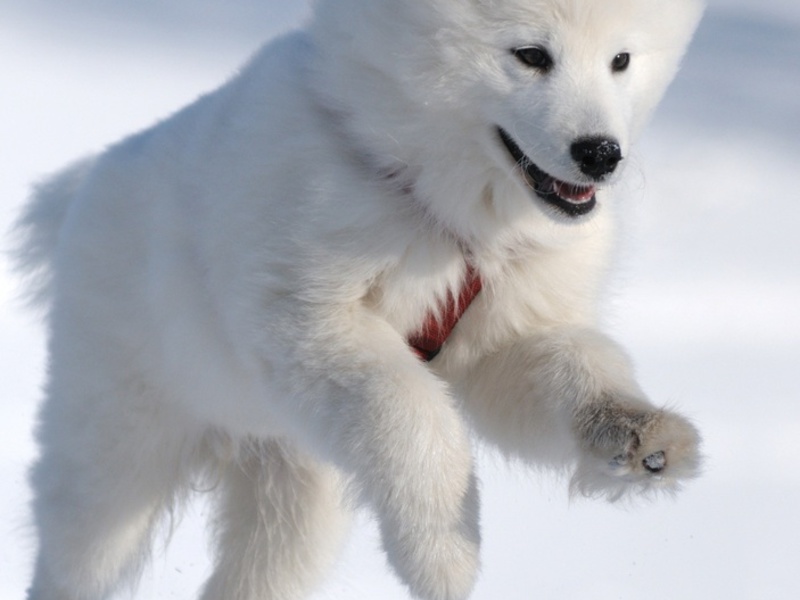
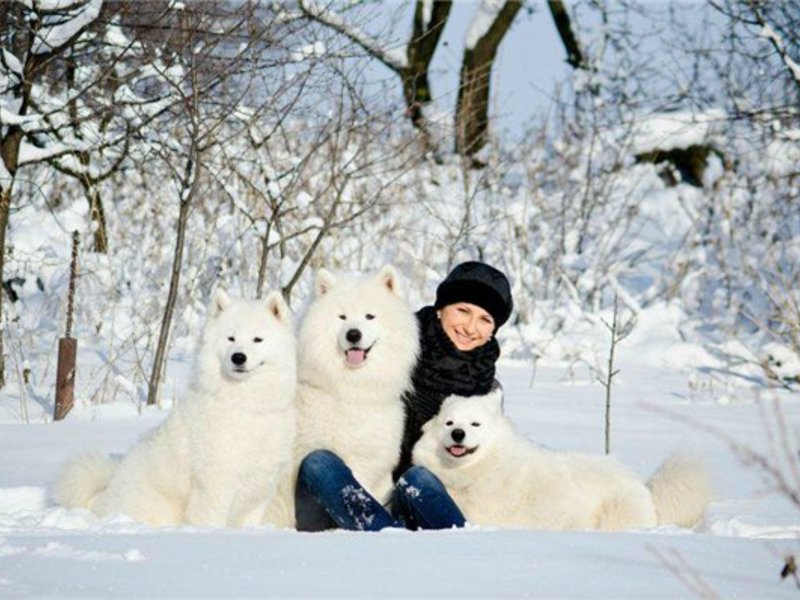
This breed requires daily, vigorous walks. It needs plenty of outdoor play, running, and even sled dog training. In winter, it can be harnessed to a sled, where it will happily pull children. Never let this breed off-leash while walking, and especially not near roads with the dog loose. Many dogs are killed by cars.
A young dog loves to be mischievous and mischievous. But with age and proper training, a Samoyed will become an obedient and reliable companion. Laikas don't reach adulthood until they're three years old.
For a Samoyed puppy, you should choose a secluded corner of the house that shouldn't be in a draft or near a radiator. You can't keep a Samoyed dog on a chain.The breed cannot withstand such conditions and begins to wither and become ill.
Keeping a Samoyed Laika
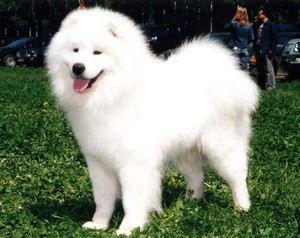 The best living conditions for a northern dog are a country house with a kennel and a doghouse in the yard. They can rest and sleep there, and run, frolic, and chase the neighbors' cats in the yard.
When a Samoyed is shedding, it needs daily brushing. During non-shedding periods, the coat is brushed with a slicker brush once or twice a week. Because the Samoyed's coat is self-cleaning, You can bathe a dog rarelyThis is usually done before exhibitions or no more than twice a month.
A healthy pet should have bright eyes, free of tear stains and discharge. As a preventative measure, they should be cleaned once a week with a soft cloth soaked in weak tea. The ears should also be regularly inspected and cleaned with a damp cloth soaked in warm water.
A pet's claws tend to wear down with their active lifestyle, but they still need to be trimmed. This procedure is performed with a nail clipper once every two months.
You can feed your Samoyed natural food or special food. Many experts recommend feeding the Laika ready-made premium food, because they contain all the nutrients, minerals and vitamins a dog needs.
Samoyeds should be walked at least twice a day, choosing places where they can run, play, or engage in training. This spirited and active breed loves to be the center of attention.
Samoyed: Choosing a Puppy and Price
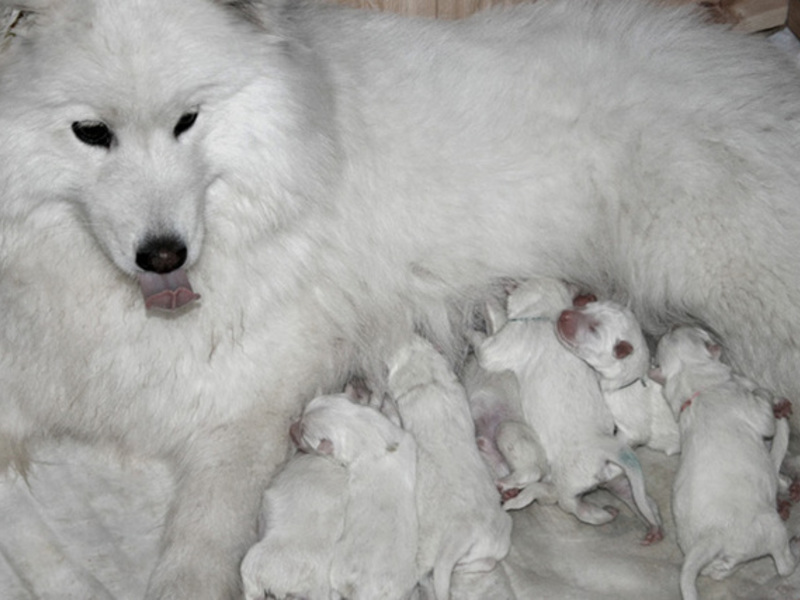
It's best to buy a Samoyed puppy from a reputable breeder or kennel. Dogs sold privately are usually cheaper, but there's a risk of getting a mixed breed or a completely non-pedigree dog.
When choosing a Samoyed puppy you should pay attention to the following factors:
- The puppy should be kept in a well-ventilated, warm and clean room without unpleasant odors.
- The breeder must show the pet's parents, tell about their pedigree and show any available documents.
- It is imperative to inquire about hereditary diseases.
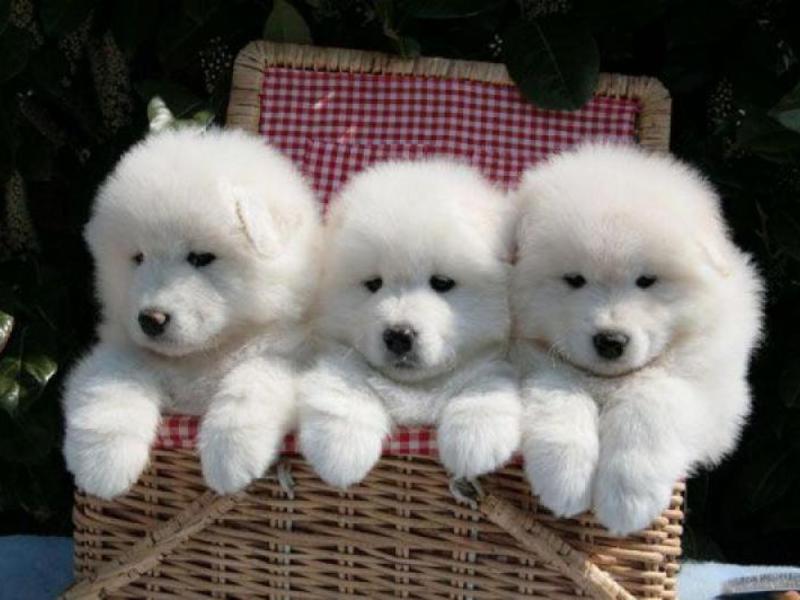
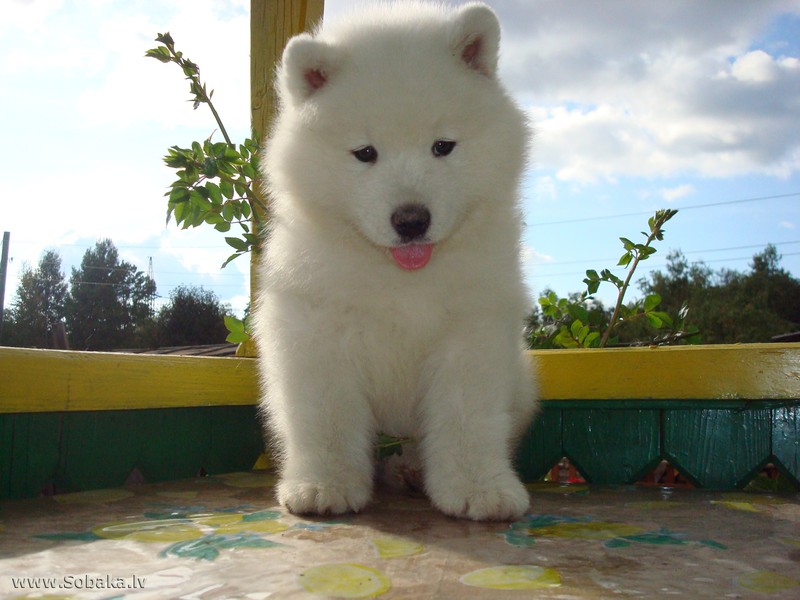
- A purebred Samoyed should have a small head, a broad and short muzzle, small almond-shaped eyes, and wide-set, triangular ears. Its coat should be shiny, clean, and free of dandruff.
- The puppy you like should be active and lively.
- It is necessary to find out about all his vaccinations and do not forget to pick up the veterinary passport and other documents.
The price for a Samoyed puppy can be within the range from 15,000 to 35,000 rublesIt depends on the quality of the kennel and the reputability of the parents. For the minimum price listed, you can buy a Samoyed puppy secondhand. It likely won't have papers. But if you simply need a companion and friend, you don't have to overpay and can confidently bring one into your home.
The large Samoyed dog, with its wonderful character, is suitable not only as a family pet but also as a guard or watchdog. However, it's important to remember that a dog's personality depends more on proper and timely training, which should be initiated from puppyhood, than on breed. Only then will the Samoyed get along well with mischievous young children and other animals.