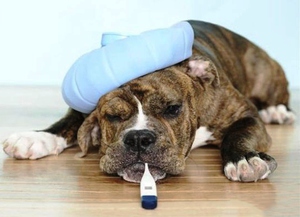
Pets depend heavily on their owners' care and are often very vulnerable. This is especially true during illnesses or poisonings. Therefore, a good owner will always be attentive to their pet and will not ignore any negative changes in its behavior. Signs of intoxication in dogs, for example, are easy to spot. Treating the poisoning itself is much more difficult.
Signs of poisoning

Signs of food poisoning appear after 4-5 hours.
Animals can suffer from two types of poisoning: food poisoning and inhalation poisoning. In both cases, the dog shows clear signs of severe illness:
- the pet vomits, and the vomit often contains blood; this is especially typical in cases of rat poisoning, which works by preventing blood from clotting;
- the animal begins to have diarrhea, often with signs of bleeding;
- profuse saliva is secreted, foam comes from the mouth;
- often the dog visibly trembles and shiver;
- In severe cases, there is a loss of coordination of movements, increased nervous excitability, increased heart rate, and pulmonary edema.
First aid

Regular medications from your own medicine cabinet are suitable as adsorbents: Enterosgel or other medications with a similar effect
Poisoning can be relatively mild if, for example, the animal ate expired food or pet food. In this case, you can treat the animal by giving it plenty of fluids and possibly performing a gastric lavage. Cover the dog well, and you can also dilute potassium permanganate in water (just a little) and give it to drink.
But often first aid is needed more seriously. Remove toxins from your body by inducing vomiting with a salt solution.
Try to determine what poisoned your four-legged friend:
- In case of poisoning with rat poison, give injections of vitamin K, it increases blood clotting.
- In case of arsenic poisoning, a mixture of magnesium oxide and iron oxide sulfate is sufficient at first, and drinking plenty of fluids is recommended.
Acid poisoning should not be treated with vomiting; the nose, tongue, throat, and stomach should first be rinsed with water, and then the animal should be given absorbents.
Consulting a doctor
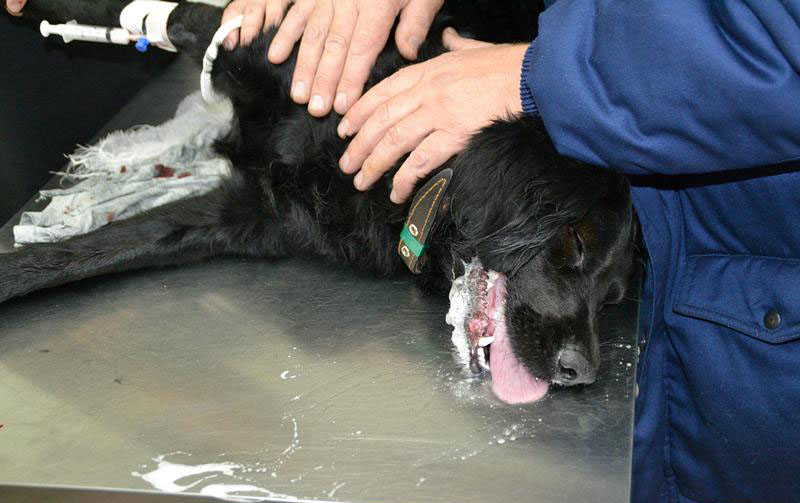
After any poisoning, the animal will need rest and a restorative diet for some time.
If symptoms persist after first aid, but instead worsen, immediate veterinary attention is necessary. An experienced specialist will administer an antidote, detoxify the body, and prescribe the necessary medications.
If your dog has been poisoned at home, after visiting the veterinarian, conduct a thorough inspection: remove all even the slightest dangerous substances, cleaning products, medications, and other chemicals from the animal's reach.
Every dog owner should remember that pet poisoning is most often the result of negligence on the part of the owner. Make sure your dog doesn't pick up anything from the street, feed it fresh food, and don't leave chemicals unattended. Then you won't need to rush to the vet.