The Karelo-Finnish Laika (Finnish Spitz, Karelka) is a medium-sized hunting and hunting dog. It is distinguished by its intelligence and friendliness, as well as a range of important hunting skills.
Content
History of origin
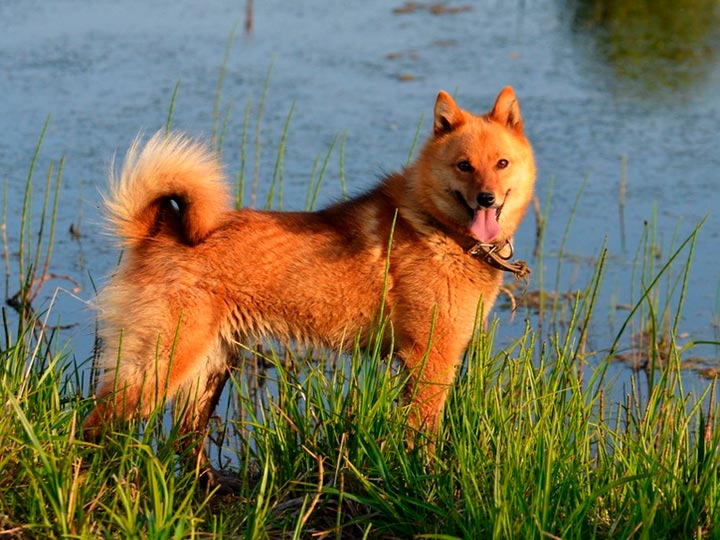
The Karelo-Finnish Laika adapts to any weather conditions.
This dog breed originated in the former USSR. It was developed using native breeds from the northwestern territories, as well as imported Finnish Spitz. The ancestors of the Karelo-Finnish Laika are believed to be the Old Korean, Olonetsky, and Finnish "bird" dogs, which are numerous in the Arkhangelsk and Leningrad regions, Karelia, and neighboring Finland.
At one time, the breed developed naturally in a limited area. Red-haired hunters successfully foraged for food and lived outdoors. Through natural selection, the most intelligent and resilient individuals with excellent hunting skills remained. Later, people used them to hunt game birds and fur-bearing animals.
A pack of Karelian-Finnish dogs can handle even a bear.
At the end of the 19th century, Finnish hunters H. Sandberg and H. Roos brought two such Laikas to Helsinki. Twelve years later, these dogs were recognized as a separate breed and registered as Finnish Spitz. By the middle of the last century, these "redheads" had become incredibly popular. They were acquired for hunting and as companion animals.
In the 1920s, the Soviet Union began considering developing its own breed. Breeders began work, resulting in the Karelo-Finnish Laika, a breed with excellent hunting qualities. A temporary breed standard was also adopted at the same time.
During the war, the Karelian population declined. Post-war, work on the breed resumed in the USSR, and in 1959, a dog bred from a cross between a Karelian-Finnish Laika and a Finnish Spitz became the champion of the vast country. After this, breeders decided to more actively use Finnish pedigree dogs in breeding.
In 2006, the Russian Cynological Federation (RKF) and the Finnish Kennel Club (SKZ) came to a joint decision to consider the Karelo-Finnish Laika and the Finnish Spitz as one breed - the "Finnish Spitz".
Not all Russian breeders and cynologists approved of this decision, as it effectively meant the extinction of the Karelo-Finnish breed. However, the fact that the Finnish Spitz is standardized by the FCI, the international cynological organization, gave dog owners the opportunity to show their pets at international shows and competitions.
Currently, there are many supporters of the domestic breed concept in Russia who, as before, adhere to the “Soviet” standard of the Karelo-Finnish dog and do not approve of the use of Finnish Spitz in breeding.
Description and breed standard (colors, height at withers, weight)
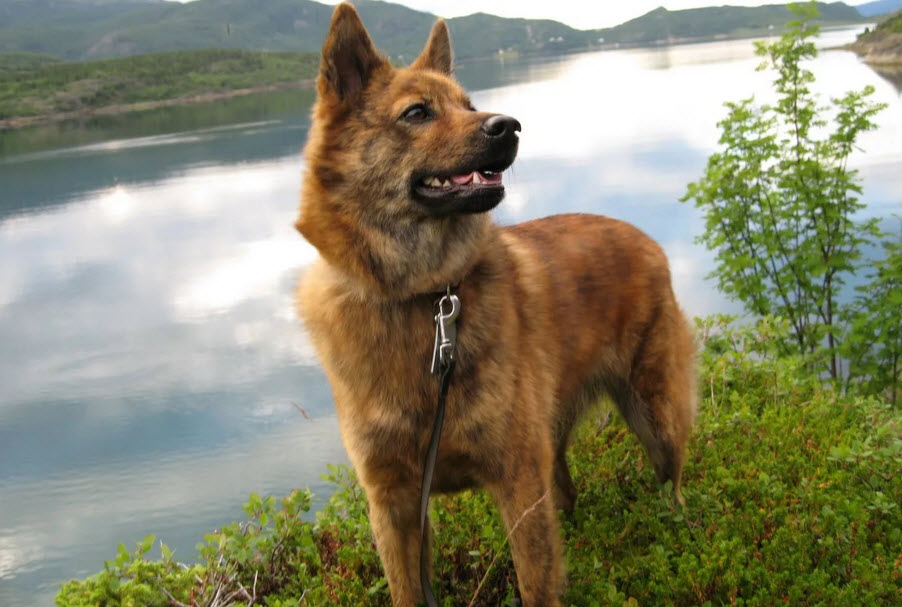
The fur on the trousers and tail is especially thick.
The dog's coat has a glossy sheen. It is long and thick on the body, but short on the head and legs. The coat is harshest on the neck, shoulders, and back. The undercoat is soft and rich.
Standard parameters of the breed:
| Floor | Ideal height at the withers (cm) | Ideal body weight (kg) |
| Male dog | 47 (± 3) | 12–13 |
| Bitch | 40 (± 3) | 7–10 |
Colors include all shades of red, from golden to fiery brick. The color on the back is always brighter than on the chest, belly, tail, and back of the thighs.
The presence of white markings on the paws and the same blaze on the chest, and the presence of black hair on the ears and around the eyes, as well as along the spine line, is considered acceptable.
Character
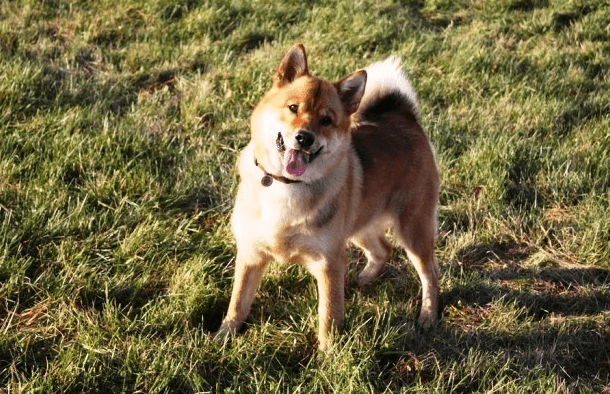
With proper training, your Karelian will be able to understand you and your moods.
Karelo-Finnish dogs have a wonderful character, the main features of which are:
- mobility, cheerfulness and efficiency;
- courage, but not reckless;
- moderate aggressiveness towards strangers;
- affection for the owner and his family;
- the ability to sense the owner's mood and behave appropriately.
The red husky always suffers from separation anxiety, and when handled roughly, it becomes stubborn and difficult to manage.
With proper training, these dogs get along well with other pets in the house and are also friendly with children. They are alert and will bark if they sense danger. Karelian-Finnish dogs have strong nerves and a good memory. They are known for their loyalty and friendliness, which is why they are considered among the best companion dogs in Europe and the United States.
Care and maintenance
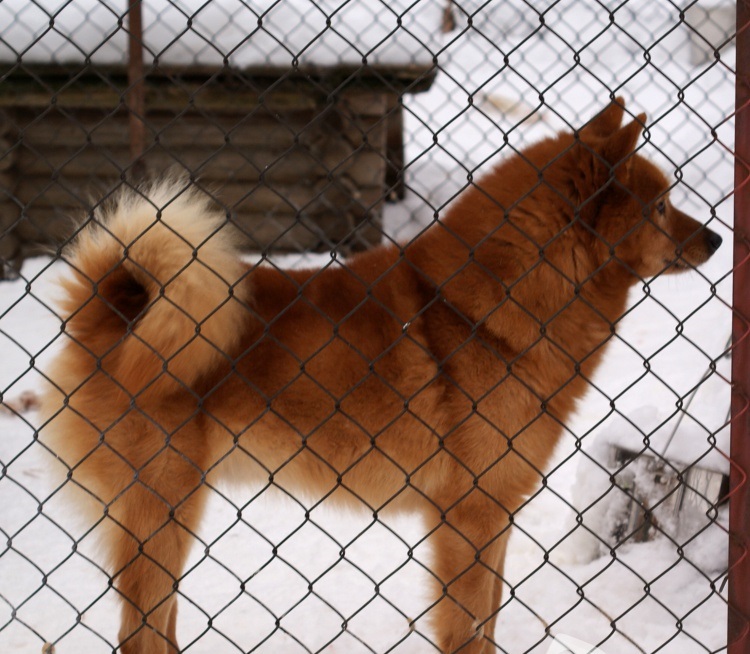
The Finnish-Karelian Laika thrives in an enclosure, but it is important to provide all the necessary conditions.
A dog can live in a kennel, but it adapts well to apartment living. Living under the same roof with people has certain advantages. A dog develops a better understanding of people more quickly.
When caring for a husky, it is important to remember that:
- periodic deworming and vaccination of the animal is necessary;
- She needs her own permanent spot with comfortable bedding and a bowl of water. It's important that it's not in a drafty area.
Working dogs need to be treated periodically with flea and tick treatments. A simple collar with an antiparasitic treatment is fine. More information on grooming the coat, as well as nails, eyes, and teeth, is available in the grooming section.
What to feed
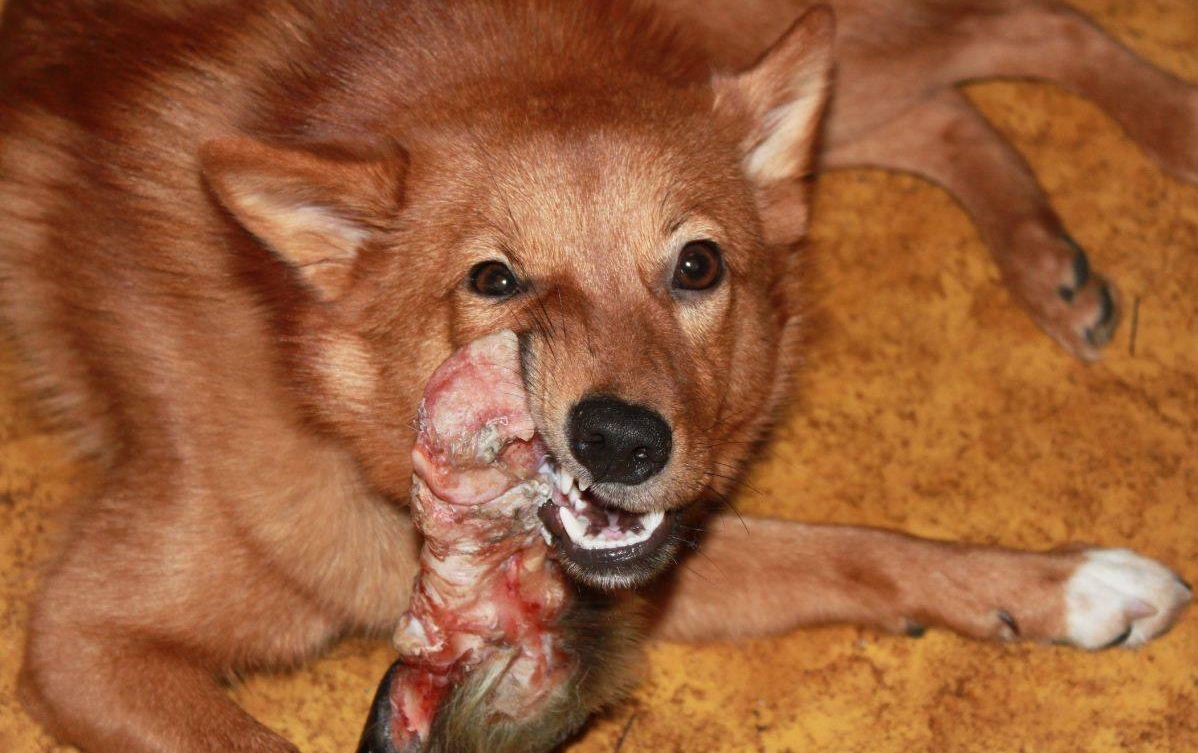
Dogs should definitely be fed raw bones.
The red husky is not picky about food. Her optimal diet consists of foods such as:
- lean meat, cut into small pieces, which can occasionally be replaced with sausages and hot dogs that do not contain pork;
- raw bones - large, with meat remains, but without sharp edges;
- Offal. In their raw form, they can be eaten as a regular food, and in their dried form, they can be used as a treat;
- porridges made from buckwheat, millet and rice, which can be cooked either in lean broth or with the addition of a small amount of vegetable oil;
- fermented milk products, including cottage cheese;
- vegetables and fruits in fresh, boiled and dried form;
- rye bread croutons.
You should not give your dog:
- tubular bones;
- fresh milk;
- butter;
- sweets.
Regarding dry food, breeders' opinions are divided. On the one hand, it's better to feed a hunting dog natural food, but on the other, specialty foods offer a complete and balanced composition and save time. Experts believe both options are acceptable; the key is to stick to only one. A mixed feeding regimen can lead to serious digestive problems, as natural foods and commercial foods are digested differently.
Grooming
Caring for a Karelian-Finnish Laika is not particularly difficult:
- Their fur doesn't have a strong, distinctive odor, but it does require attention from their owner. During the fall and spring shedding seasons, daily brushing with a comb and slicker brush is necessary. In winter and summer, weekly brushing is sufficient. Dull, falling fur, as well as dandruff, may indicate a vitamin or mineral deficiency, or a food allergy.
- The dog is bathed twice a year, as well as before participating in a show or if it is very dirty. Frequent water treatments are not recommended, as they remove the natural protective composition from the dog's coat. After swimming in a natural body of water during a hunt, the dog must be rinsed with clean water. Karelian-Finnish Laikas' coats are not clipped or plucked.
- Nails should be trimmed monthly with a medium-sized nail clipper and then filed smooth. The toe pads and heels should be inspected and wiped with a damp cloth after each trip outside.
- Eye care is necessary if mucus accumulates in the corners. In such cases, gently wipe them with a clean piece of gauze soaked in warm chamomile tea. If profuse tearing or pus is present, the animal should be taken to the veterinarian.
- Teeth are cleaned using special chewing stones. Hard foods and fresh tomatoes are excellent plaque preventatives.
- Ears also need attention. They should be inspected daily for foreign bodies and damage, and wiped inside (not too deeply!) with a clean, damp swab 2-3 times a month.
Education and training
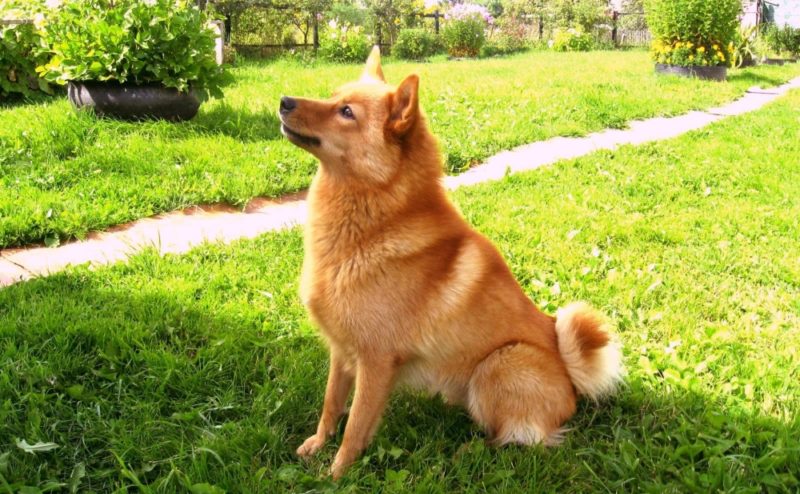
The "Sit" command is one of the most basic commands, and dogs learn it quickly.
The dog is trained to obey its first commands from the age of five months, when it can already consciously concentrate its attention on its human owner.
Hunting training should begin with showing the dog animal pelts and bird feathers. The dog should sniff them and taste them. It's crucial to accustom the dog to gunshot-like sounds from puppyhood. As for baiting, it's best to introduce it around six months of age. Training begins with small animals and birds, and then introduces larger ones. To stimulate the dog's hunting skills, it is introduced to live animals or carcasses. Hunting techniques are best learned when the puppy works with an experienced dog.
To keep them from getting bored, they need games, long runs, and outdoor outings. This is especially true for indoor dogs.
It's important to train your pet so that it feels human leadership and treats you as the pack leader. Otherwise, obedience problems are likely.
Diseases and treatment
Although these dogs are known for their endurance and robust health, they are prone to the following ailments:
- dislocations of the knee joint;
- eye diseases;
- allergies to certain foods;
- epilepsy.
Consultations on prevention and treatment can be obtained from a veterinarian.
How long do they live?
It is believed that dogs of this breed live for 10-12 years, and with proper care they can reach 15 years of age.
Breeding
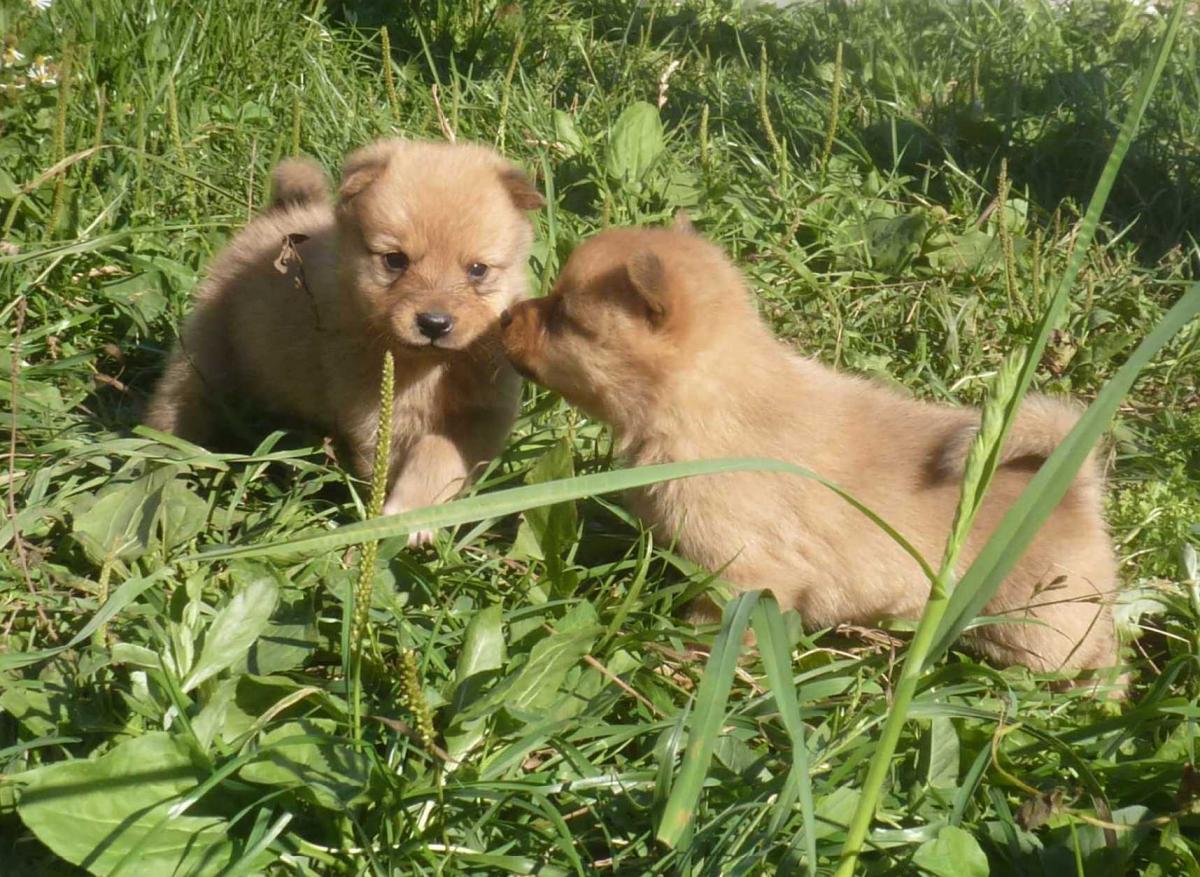
Finnish-Karelian Laika puppies are very playful and can be difficult to calm down.
The red-haired Laika is very popular in Northern Europe and the northwestern part of our country. This explains the large number of kennels breeding these dogs.
A real Karelian-Finnish Laika, whose pedigree will be confirmed by documents, can be purchased;
- from breeders who are engaged in breeding Karelian sheep;
- owners who find a mate for their pet through kennel clubs, resulting in a purebred litter.
Knitting
According to the breeding rules, a dog can be allowed to mate on her second, or better yet, third heat, provided that:
- the bitch must be dewormed in advance and vaccinated no later than 8 months ago;
- It is important that the dog is healthy, as the health of her offspring depends on it.
The gestation period lasts 62–65 days, but can sometimes extend to 72 days. This breed is known for its low fertility (1–6 puppies per litter), so pregnancy may be barely noticeable even in late pregnancy.
Caring for puppies
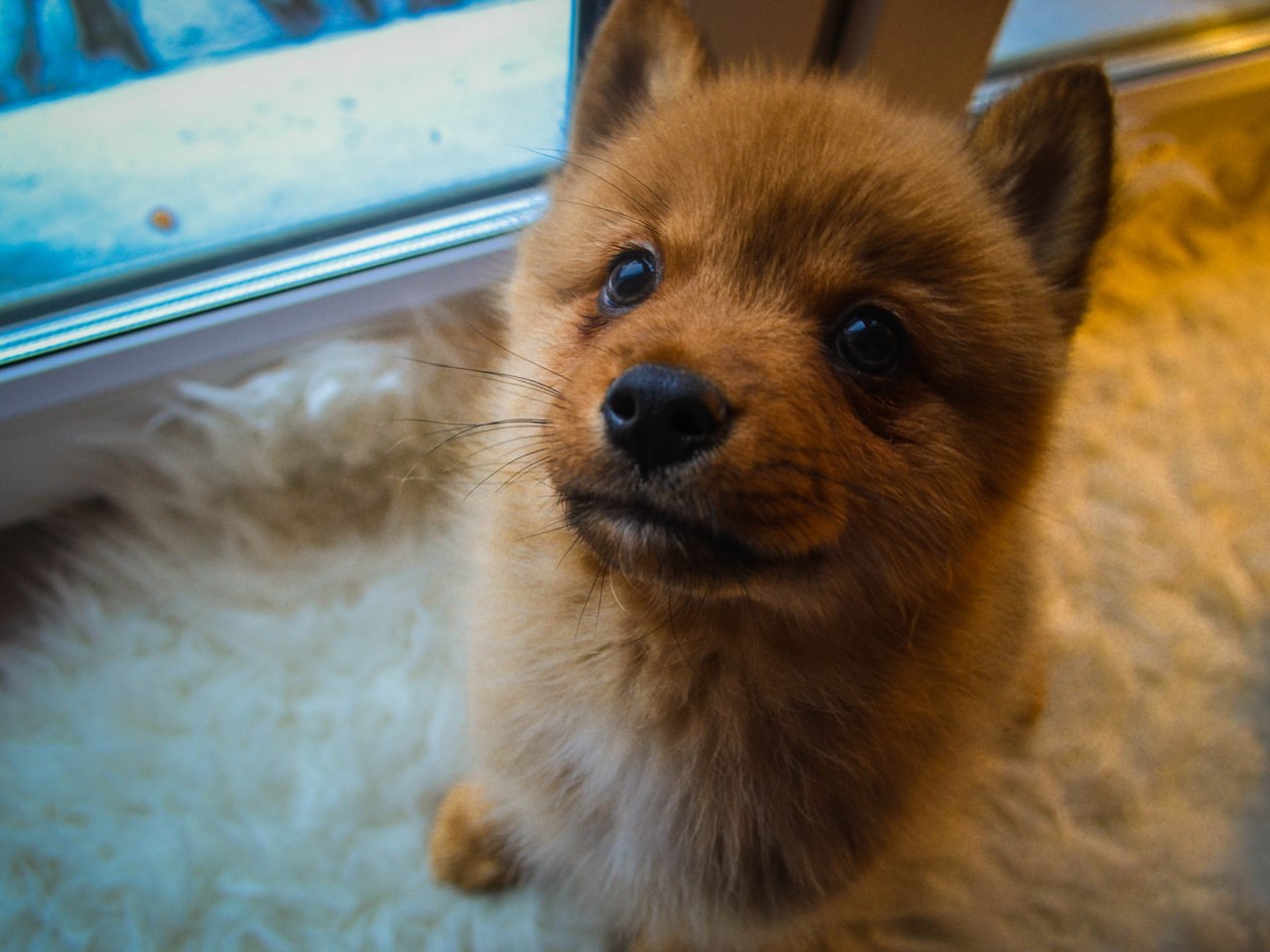
It is important to start caring for dogs properly from birth.
Puppies should be fed with their mother's milk until they are 1–2 months old, although it is not uncommon for the breeder to feed the litter additionally from 3 weeks. This is done so that the future owner, when purchasing, for example, a six-month-old puppy, receives a more or less independent puppy, independent of its mother. However, it is also important to ensure the mother's health, so weaning the puppies should not occur before they are one to one and a half months old.
A young husky's main diet is raw meat in pieces, except for pork, which should be limited. There are also other feeding guidelines:
- At 2-3 months of age, large, smooth bones or bones with meat are allowed so the puppy can "work" with them. Chicken should be given raw, without bones, as they can injure the esophagus.
- Cereal porridges are slightly salted, diluted with broth or flavored with meat, otherwise the dog will not show interest in the food.
- Offal is not given to small children, as it has a relaxing effect on the intestines.
- As for fermented milk products, vegetables and fruits, they are used as for adults.
- It is important to accustom your dog to greens from puppyhood, as this will be much more difficult later.
- It is better to take quail eggs (1-2 pieces) and give them once a week.
- Fish is also given once a week, and sea fish is given fresh, while river fish is always boiled.
It is important to remember that the dog should always have fresh water in its bowl. Any food left after feeding should be removed after 15 minutes so that the puppy gets used to the routine.
As for the exact number of feedings, it depends on the age of the dog:
| Age (months) | Optimal number of feedings |
| 2–3 | 5 (in small portions) |
| 2–3 | 3–4 |
| 4–7 | 3 |
| 8 and up | 2 |
In addition to proper nutrition, the owner's responsibility includes deworming the pet from the age of one and a half months, as well as vaccinating the dog according to the schedule:
- at 2 months - from plague and enteritis with subsequent devaccination;
- at 6–7 months – from rabies after a complete change of teeth.
Unfortunately, vaccinations do not fully protect a dog from health problems, so you should protect your pet from hypothermia and overwork.
It's important to avoid introducing your puppy to larger, stronger dogs. Besides the risk of injury, their aggressiveness can permanently discourage your husky from interacting with other dogs.
Hunting with a Karelian-Finnish Laika
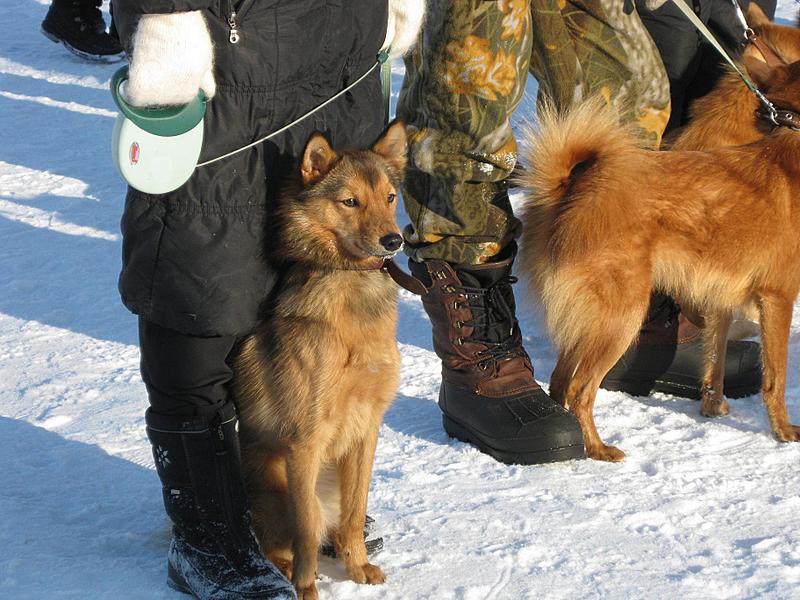
The Karelo-Finnish Laika is ideal for hunting and is capable of catching several species of animals.
Laikas are intended for commercial hunting. They take fur-bearing animals, large forest and marsh birds, ungulates and even bears.
Representatives of this breed are characterized by the following behavior during hunting:
- they track, bark loudly and stop the animal;
- lift the bird easily;
- successfully find wounded animals;
- bring prey to their owner;
- They climb into holes and jump into water without fear.
Karelian Shepherds have an excellent sense of smell and sense of direction, and are also passionate and resilient. Hunting with this dog is exciting and productive regardless of the season:
- Wood grouse and black grouse are hunted in the summer, as well as in early spring and fall. Early in the morning or at sunset, when the wood grouse descends to feed, a dog is set on the scent. Once found, the dog leads the hunter and flushes the bird.
- Sable, marten, and squirrel are hunted in the taiga between October and December. The Laika dog picks up the scent, finds the animal, and chases it up a tree. Trying to escape, the animal leaps to another tree, then another. The dog chases it with a loud bark until the animal reaches a tree trunk from which it can't reach the next shelter.
- Moose hunting takes place in early winter. The dog spots the animal, barks at it to alert the handler, and then stalks the prey silently. To stop the moose, the Karelian dog runs ahead with a loud bark, but never gets too close or attacks.
As for hunting foxes and hares, it works less productively there, although much depends on the individual qualities of the dog.
Nicknames for the Karelian-Finnish Laika
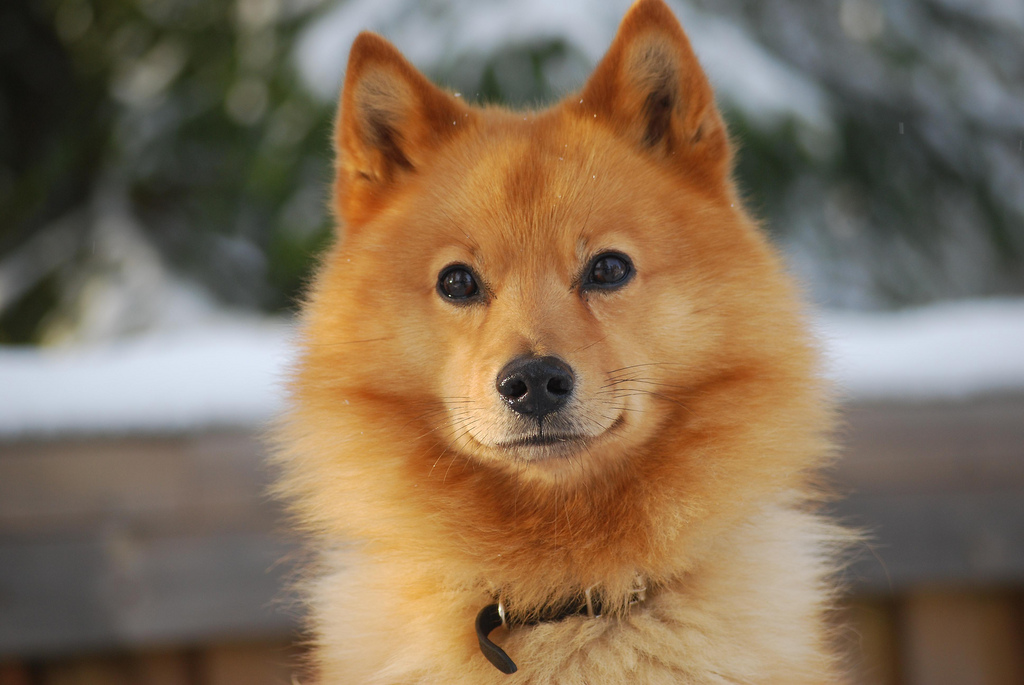
Often owners give their animals nicknames that evoke certain associations in them.
When puppies are born at the kennel, the breeder names them according to certain rules. Each litter is designated by a specific letter of the alphabet, which will be the beginning of the puppies' names. When newborn dogs are reserved in advance, their future owners are given the litter letter so they can choose a suitable name for their pet.
The nicknames of Karelian-Finnish Laikas often include:
- names of northern animals that hunters hunt with huskies;
- names of geographical objects;
A name consisting of two syllables is considered optimal.
What to name a boy
Nicknames such as:
- Shaman;
- Yamal;
- Valdai;
- Ural;
- Chakar;
- Ice.
Names for girls
Nickname ideas for girls
- Reima;
- Yucca;
- Squirrel;
- Dara;
- Rune;
- Vyatka.
The Karelian-Finnish Laika's main advantage is considered to be its working abilities. Furthermore, these dogs are prized for their small size, beautiful build and coloring, and the fact that they are inexpensive to maintain.
As for shortcomings, they do have them. These include excessive excitability and activity, a need for long walks, and a tendency to bark at strangers. The combination of breed characteristics makes Karelian-Finnish Laikas beloved companions and indispensable hunting companions.