Pets bring positivity into life and help us become better people. However, adults often forget this, and a request for a puppy often results in a flat refusal. Boys and girls dreaming of a devoted companion will have to think carefully about how to persuade their parents to buy a dog and strictly follow through. The main thing is to remember that tears, tantrums, ultimatums, and lengthy pleading will not lead to the desired result. This will require patience, calm, and prudence. First, you need to share your dream with your mom and dad, and then listen to their opinions.
Content
How to choose the right moment for a conversation
Don't start trying to persuade your parents to buy a four-legged friend when they're busy. Calling them at work with such an offer or making it when they have guests is also a bad idea. It is better to conduct the conversation on the weekend or in the evening when the whole family is resting.
It's important that mom and dad are in a good mood and are open to communication. For example, if they're pleased with the child's cleanliness, their academic success, and their good behavior, the chances of a positive response increase.
A good way to start a conversation is by watching a movie together about the loyalty and devotion of dogs or going for a walk near a park where owners walk their pets.
It's recommended to begin the conversation by asking the other person to listen carefully and take your words seriously. Then, voice your concerns, explaining that this isn't a momentary impulse, but a conscious decision born of a desire to have a true friend.
Seventy-six percent of Russian citizens own pets. The most common pets are cats (37%) and dogs (30%). Less popular are aquarium fish (4%), decorative birds (3%), and other small animals (2%), according to a study by the All-Russian Public Opinion Research Center (VCIOM).
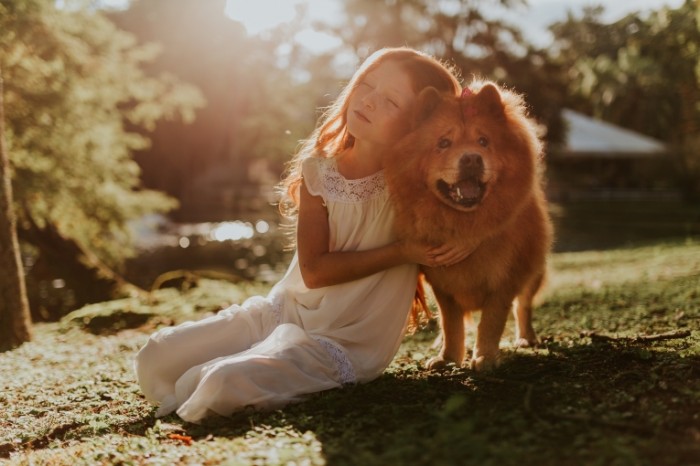
Showing concern for our smaller brothers shapes a person's character as a whole.
Be prepared for the fact that the first conversation about a dog will be fruitless. Parents will need time to consider how their lives will change with the acquisition of a dog. Before the conversation, it is useful to read literature about the breeds of “smaller friends” and how to care for them. Then consider the challenges associated with their content. The main ones are:
- organizing a place for a pet;
- the possibility of his bathing;
- possible damage to furniture and “troubles” in the form of puddles on the floor;
- purchase of rugs, disposable diapers, toys, food, medicines;
- visits to the vet;
- time for walking and training.
If such nuances can be resolved, all that remains is to explain this to relatives and back up what is said with convincing arguments.
Having a Dog in the House: Looking for the Benefits

Walking with your four-legged friend in nature is not only interesting, but also plays a huge role in a child's development.
In the difficult task of persuading parents to buy a dog, you can exploit the benefits of owning one. Chief among these is limiting the amount of time spent on social media and online gaming. The pet will need to be walked twice a day, and even more frequently during the first few months. Adults will appreciate the fact that their child will be spending time outdoors, rather than watching TV or playing online games. Other undeniable advantages of buying a puppy include:
- Transition to a healthy daily routine and active lifestyle. Raising a puppy requires being sedentary and flexible. You'll have to forget about late-night walks or late-night movie nights, and you'll have to go to bed on time. After all, you'll need to get up at dawn to walk your dog.
- Improving emotional state. "Little friends" can influence people's moods, relieving stress and inducing happiness. With the arrival of a pet, apathy, melancholy, irritability, or feelings of insecurity will be replaced by a continuous flow of positive emotions.
- Family cohesion. Walking together or playing with a pet brings children and parents closer together. It becomes easier for them to find common interests, and soon, with the arrival of a dog, all misunderstandings will become a thing of the past, and boring family videos will turn into real comedies, with the dog as the star.
- A faithful comrade and a good protector. This argument will be the most compelling in convincing parents. A dog will always keep them company while the adults are at work or away, and in case of danger, it will act as a loyal guard, chasing away troublemakers or scaring off thieves trying to break into the apartment.
- Developing good skillsCaring for animals fosters the qualities of a successful person: responsibility, sociability, and the ability to concentrate on the task at hand.
- The emergence of friends with common interests. A dog is a great way to meet new people. If you have difficulty socializing or don't have many close friends, a dog can change that. Walking with a dog in the park, attending dog shows, or other events can help you meet interesting people willing to share valuable pet-keeping experiences.
- Good health. Walking outdoors and playing sports with your pet helps maintain a healthy weight and improve physical endurance.
Research shows that children with pets are half as aggressive and conflict-prone as children without pets. Children with pets are less aggressive, short-tempered, and suspicious, and are more willing to compromise. They are more active and less anxious. K. Lorenz wrote that "as a result of interaction with pets, children learn to consider others at a very early age."
Parents, of course, want their son or daughter to be healthy, successful, and happy. The only thing that can stop them from getting a dog is the need to care for it. If the desire to get a puppy is genuine and not just temporary, then it won't be difficult to convince them otherwise.
Accept responsibility and eliminate parental objections
Before talking to your parents, you need to determine the level of responsibility that will come with having a dog. Besides being able to go outside in all weather conditions, you'll have to dedicate all your free time to caring for it:
- accustom to commands: “walk”, “sit”, “no”, etc.;
- remove wool, scattered toys, wash bowls;
- bathe, clean, comb your pet and monitor its health;
- play and engage with him, often sacrificing other interests.
Kids dreaming of having a dog will have to understand that owning one isn't just about fun. It's a rigorous, nonstop effort.
If the desire to get a restless puppy hasn't disappeared after realizing the responsibility, it's worth convincing mom and dad. Simply promise them you'll take on all the care. Parents should be confident that the dog will be kept clean, walked without excuses or tantrums, will gradually learn to behave properly, and won't bark without reason.

Taking care of a pet is not only about games and communication, but also an opportunity to become a more responsible and mature person.
Canistherapy is a new field in modern medicine. Instead of doctors, it employs Labrador dogs, who have successfully performed what conventional doctors could not.
To ensure your promise doesn't seem empty, you need to back it up by choosing a suitable veterinary clinic in advance or by explaining the nature of your preferred breed and the intricacies of caring for it. To find additional justification for your desire, you should ask your parents why they do not want to get you a pet.
If the reason is a small apartment or lack of funds, it's necessary to offer a solution. Opt for a miniature puppy that won't require much upkeep. Or help with its upkeep by earning the necessary amount by picking up trash, babysitting neighbors, washing cars, or doing other suitable work. If finding a part-time job isn't possible, you can use some of your allowance or holiday gift money to purchase a pet. Parents will certainly appreciate this, and convincing them to buy a dog will be much easier.
Show not only by word but also by deed
Making your dream of a friendly puppy a reality will be faster if your promises extend to other areas. Telling your dog that acquiring a puppy will positively impact their learning and behavior can help bring about the long-awaited success.
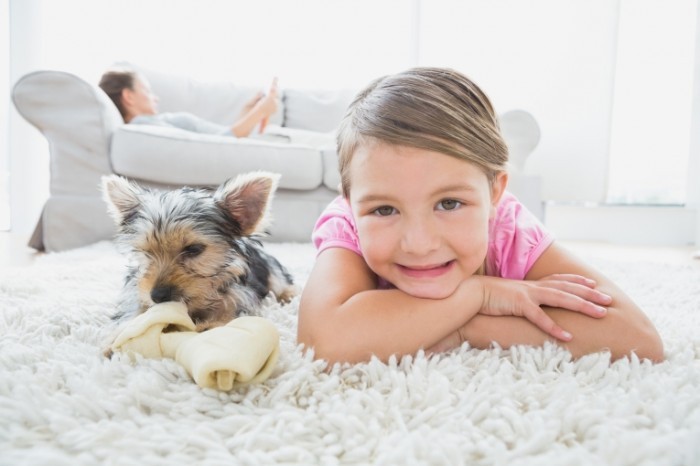
You won't be bored with a pet.
When considering how to persuade your parents to buy you a dog, it's worth considering a compromise. For example, offering to finish the semester with straight A's in exchange for a friend. Correcting bad grades, cooking dinner, and cleaning the room become additional "bonuses" that can help break down any remaining resistance.
After winning, the main thing is to remember to fulfill all your promises, convincing the parents of your reliability, so that they understand that in front of them is not a small child, but an adult capable of taking responsibility for their pet.
To get them to this point more quickly, you need to be at your best: avoid long periods of sitting at the computer, focus on your studies, get up earlier, exercise, or go for a run. Such changes will leave parents no chance, and soon they'll suggest starting a dog search.
Which breed to choose?
The characteristics of the puppy's breed should be discussed at a family meeting, considering:
- dimensions;
- temperament;
- ability to learn and train;
- high maintenance requirements.
If you have other pets in the house (a cat, hamster, or guinea pig), be aware that your dog will try to take over as the leader when they're around. To avoid conflict, choose friendly breeds like a poodle, pug, golden retriever, or boxer.
The best dogs for keeping in a family also include Dalmatians, Bordeaux dogs, English Shepherds, and Staffordshire Terriers. When you don't have time for frequent walks, it's recommended to choose miniature breeds like Yorkshire Terriers, Chihuahuas, or Pomeranians. They adapt easily to apartment living. If you can't afford a purebred puppy, consider choosing a "family" mongrels or mixed-breed dogs.
When you become the owner of a small, fluffy bundle of joy, you must understand that for them, their owner is not just a companion, but their entire life. They will miss you in your absence, but if they remain nearby, they will give them all the love and loyalty contained in a devoted heart. In return, the puppy requires only affection, kindness, and understanding. Surrounded by these qualities, the dog will grow up to become a reliable friend, whom their parents will sincerely love and soon call their arrival the best event in their family's life.