The Estonian Hound is a gundog breed developed in Estonia for hunting small game. They are energetic and independent animals, very eager and merciless in their pursuit of their prey. However, they are not aggressive toward people; they are good-natured and infinitely loyal to their owners. They have a strong immune system and, with proper care, can live for about fourteen years.
Description of appearance
The breed's body weight ranges from 15 to 20 kilograms. Males (Vhundes) stand between 45 and 52 centimeters at the withers, with a reach of approximately 110 centimeters. Females (Vhundes) stand between 42 and 45 centimeters at the withers, with a reach of approximately 112 centimeters.
Exterior Description:
- elongated head, domed skull;
- large nose, black or brown, lips compressed;
- long ears, rounded at the ends;
- almond-shaped eyes of medium size;
- muscular neck of medium length;
- strong body, wide back;
- barrel chest;
- long, muscular limbs with oval paws;
- a saber-shaped tail that tapers to a point.
The coat is shiny, harsh, and smooth, lying close to the body. The undercoat is sparsely developed. The tail appears thick, as the fur is thickest there.
The standard allows the following colors of the Estonian Hound:
| Color | Photo |
| Black and piebald | 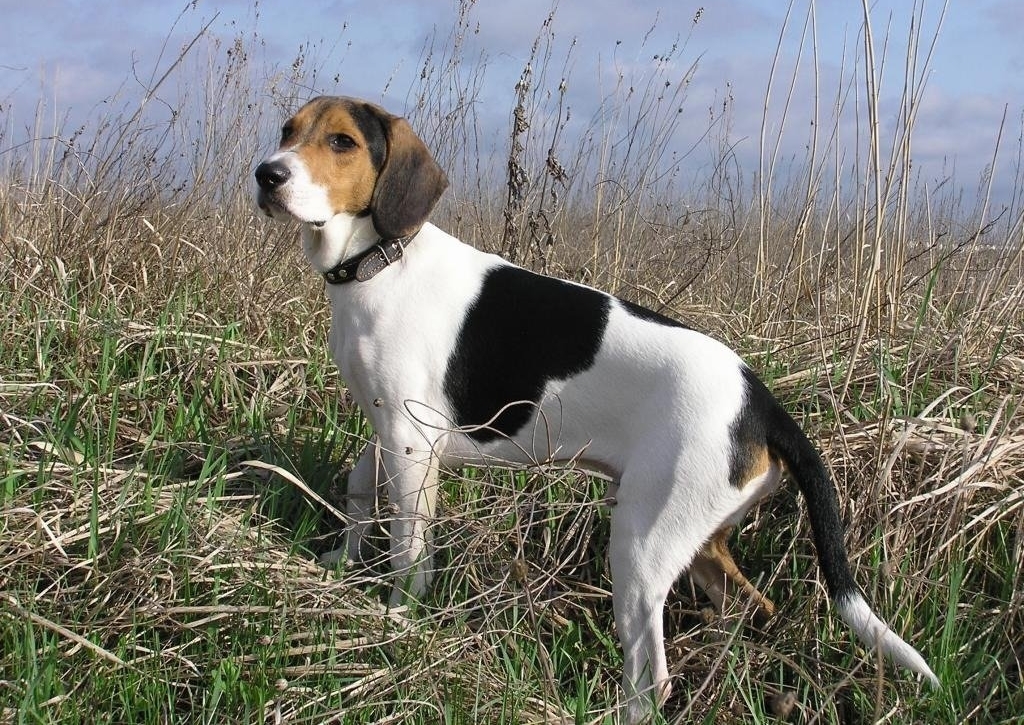 |
| Brown-piebald | 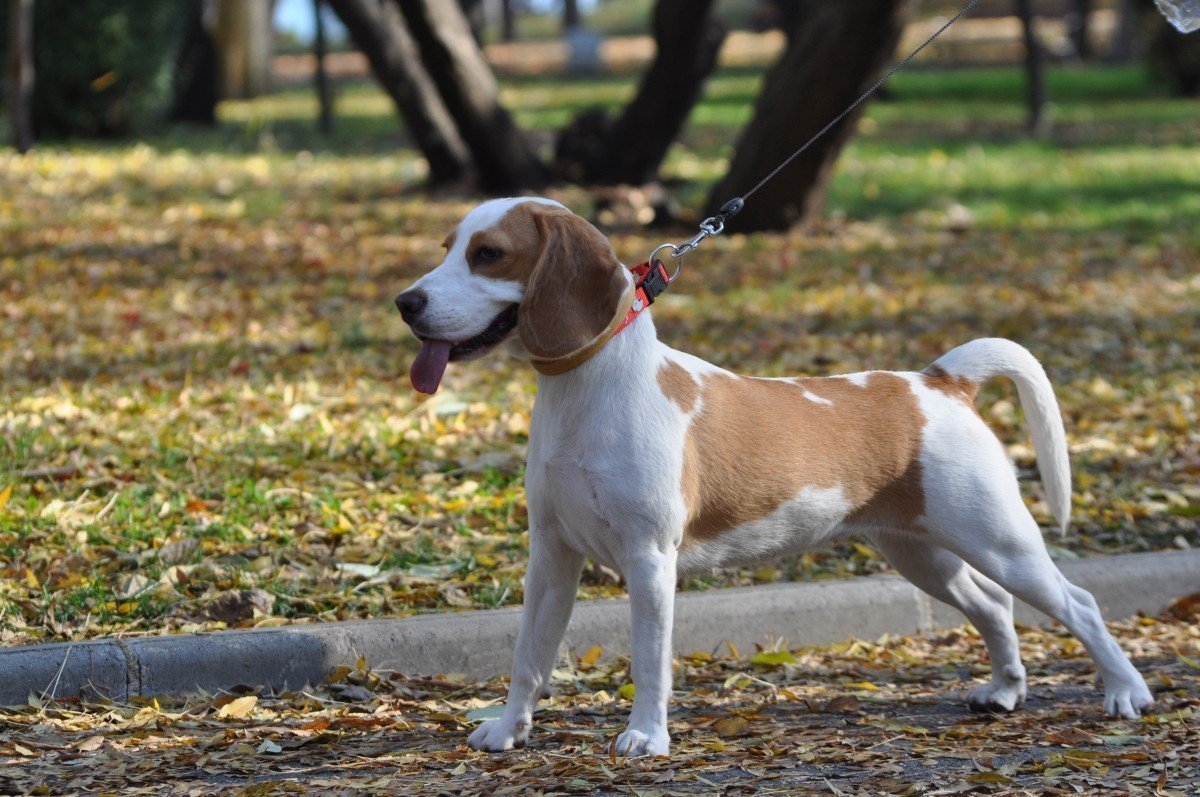 |
| Black-capped | 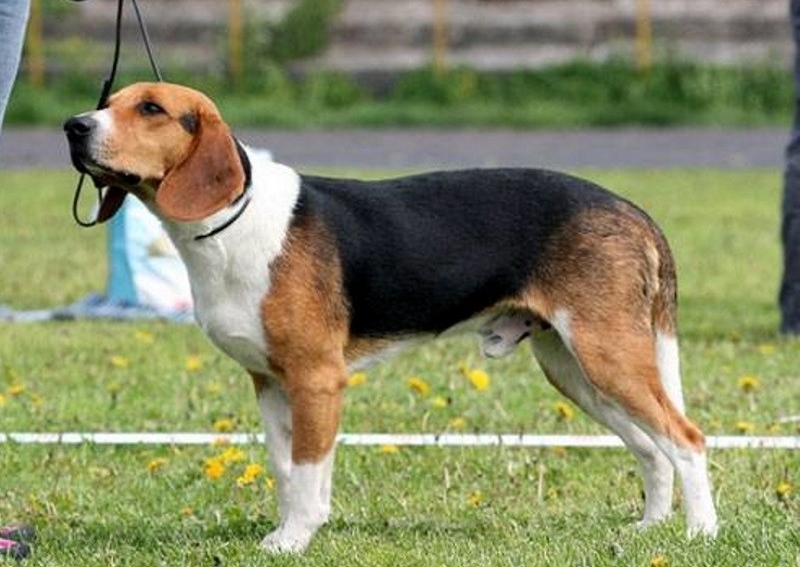 |
Black spots or blotches on white fur are considered a fault in the breed.
Personality traits
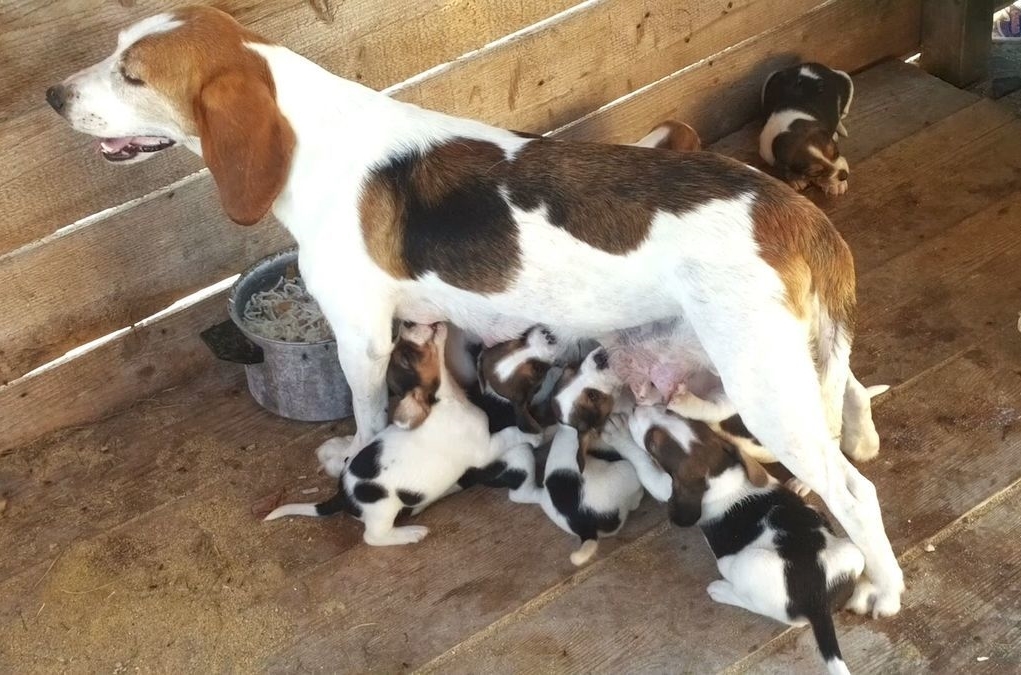 Typically, a female dog gives birth to 4 to 12 puppies.
The first heat in a hound occurs at the age of 6-10 months. It is necessary to mate a dog closer to the second year of life. By this time, the body will be stronger, and the risk of producing unhealthy offspring will be significantly reduced. The optimal period for mating is 11–13 days after the onset of estrus. It is recommended to mate the dogs in the stud's territory and do this on an empty stomach in the morning. A test mating is performed after 72 hours.
A female dog's pregnancy lasts 62 to 65 days. During this period, she should not be allowed to become lazy; light exercise will only benefit her. Two weeks before the due date, she should be transitioned to a light diet (broth, vegetables, and yogurt). A few days before the litter is due, prepare the area. You can place a cardboard box in a warm room and line it with disposable sheets.
To avoid complications, inexperienced breeders should entrust the birth to a veterinarian. To ensure the health of the litter, no more than four puppies are left with the new mother. The remaining puppies should be placed with another female who has recently whelped.
Choosing a nickname
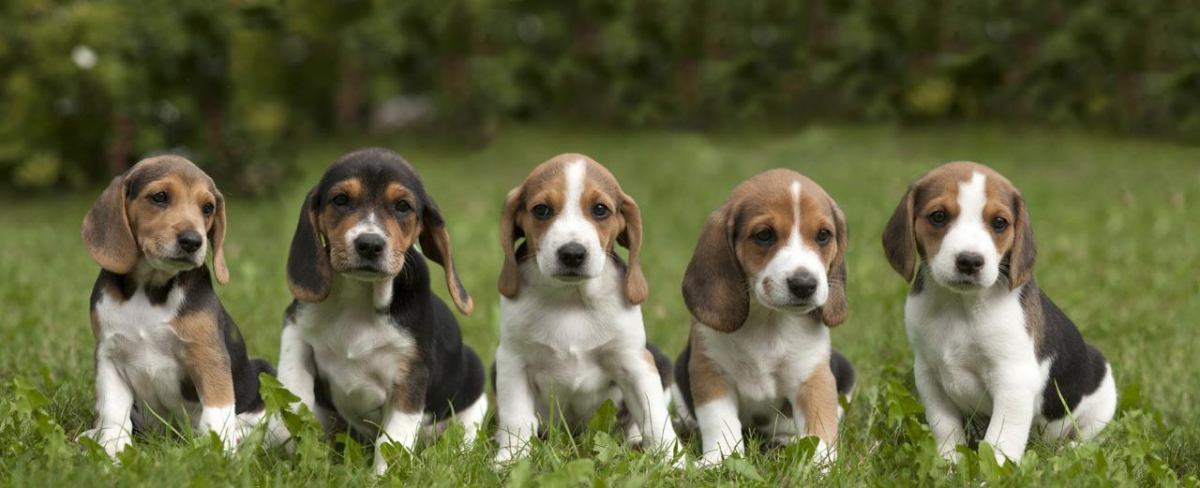 Choosing a nickname for a puppy often depends on the owner's interests.
An animal should be given a nickname at an early age. It should not be too long and should not be in tune with the names of family members.You can name your dog after your favorite city, musical instrument, character, or famous actor.
The most suitable nicknames for male Estonian Hounds:
- Archie;
- Skye;
- Chucky;
- Parker;
- Murphy.
- Bucks.
The following nicknames are suitable for girls:
- Peggy;
- Laura;
- Elsa;
- Bonya;
- Molly;
- Chelsea.
Health
Estonian hounds live no more than 12-13 years. The dog has a strong immune system, but can suffer from various diseases. To keep your pet healthy, you must adhere to the following rules:
- Vaccinate your animal annually.
- Several times a year, undergo routine examination at a veterinary clinic.
- Give your pet anthelmintic drugs (Drontal, Prazicide) once every three months.
- From March to November, treat the coat against fleas and ticks (Advocate or Dana drops).
Hounds are prone to the following genetic diseases:
| Disease | Symptoms | Treatment |
| Hip dysplasia | Difficulty climbing stairs and lameness appear | The disease is eliminated by surgical intervention. |
| Progressive retinal atrophy | Night blindness appears, the pupils are greatly dilated | The routine use of antioxidants, prescribed by a veterinarian, is practiced. The lens is replaced surgically. |
| Congenital deafness | The dog does not respond to sounds and becomes frightened if approached from behind. | The disease is incurable. Such dogs are not allowed to breed. |
The Estonian Hound is good-natured and non-aggressive, making it an excellent companion for a novice dog owner. To reduce the risk of genetic diseases, it's important to purchase a pedigree puppy from a qualified breeder.