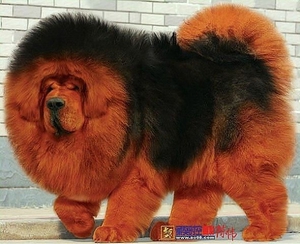
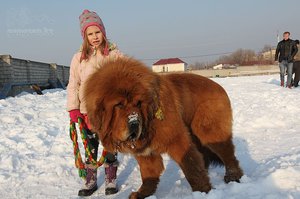
The English Mastiff is an excellent guard dog, capable of protecting any family member. This friendly and loyal dog dislikes being left alone for long periods of time, doesn't cause much trouble, and doesn't make noise without reason. For normal growth and development, it requires proper nutrition and daily walks. Since meat makes up the bulk of its diet, it can be quite expensive. This breed is suitable for responsible people.
Historical facts
There is no exact data about the origin of the breed and the origin of its name. The Tibetan mastiffs are considered to be their ancestors. Archaeological finds indicate the existence of similar dogs as early as the sixth century BC. English mastiffs were used in military battles, and armor was even made for them. They fought gladiators and guarded slaves and territories. These dogs were strong, aggressive, and capable of taking on large animals or humans.
Breed characteristics
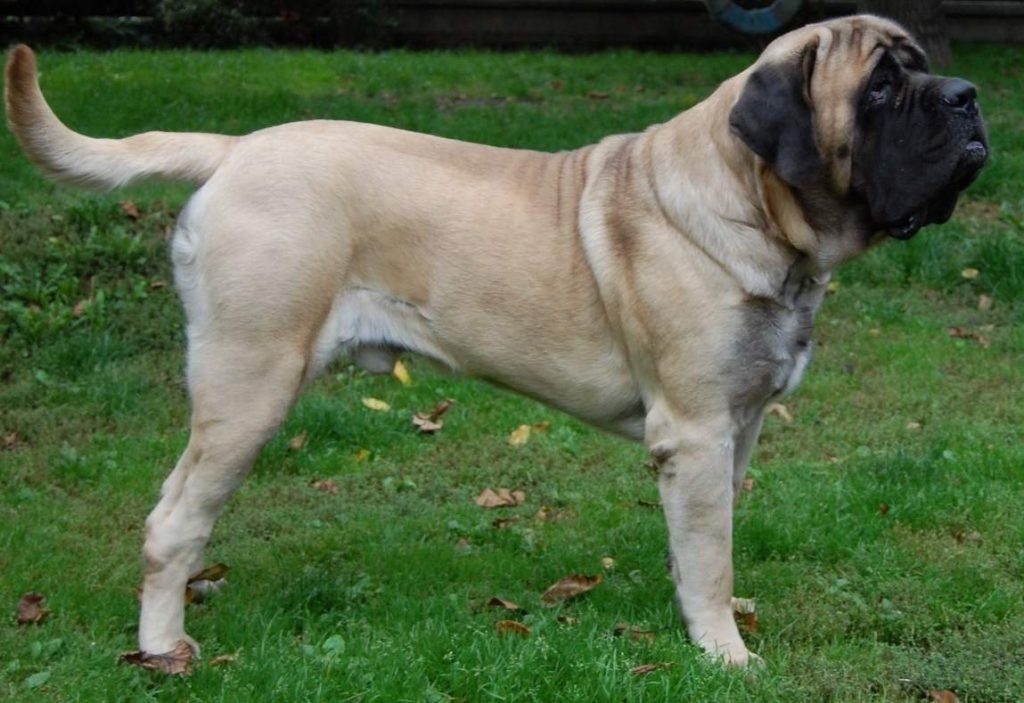
These dogs are very large, hardy, and suitable for guarding the home and surrounding area. The English Mastiff has a detailed breed description:
- The body type is dense and muscular.
- The English Mastiff is 75-80 cm tall and weighs 70-90 kg.
- The chest is wide and powerful.
- The back and neck are well developed.
- The legs are strong, thick, the paws are large and round.
- The head is large and square, with prominent brow ridges and cheek folds. The muzzle is broad and short.
- The teeth are strong, the jaws are powerful.
- The nose is black, slightly flattened.
- The ears are small in size, hanging wide and set high.
- The eyes are small and round.
- The coat is short, dense and hard, with an undercoat.
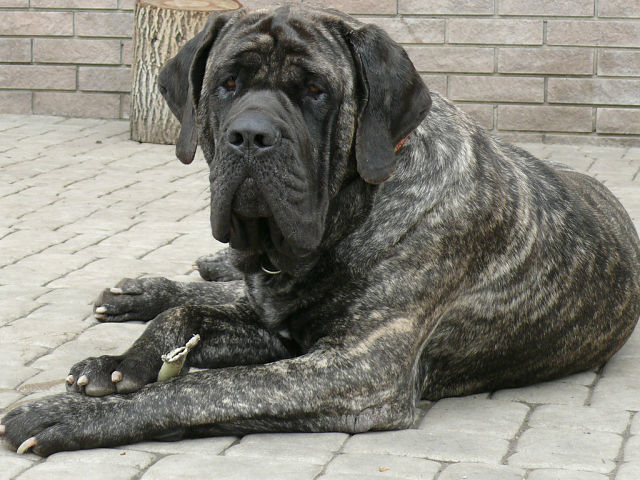
- Color: Various shades of beige, brown, brindle, and fawn. A black mask on the muzzle is mandatory.
Behavioral features
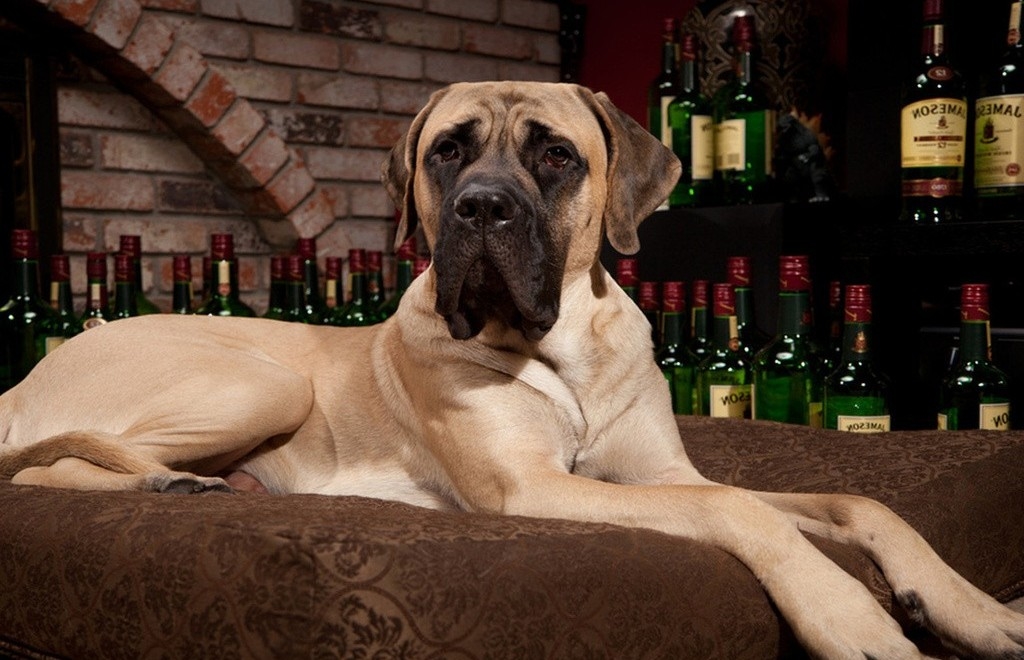
The English Mastiff has a docile nature. The dogs are calm, balanced, reserved and loyal. They only vocalize when necessary. They are slow-moving and enjoy lying down and sleeping. In a dangerous situation, they can protect the home and owner from intruders. They get along well with other animals in the same area.
The dog is intelligent and quick-witted, and is easily trained. Training should begin at 8-10 months of age. Required behavior rules and boundaries are established. When training, it is important to avoid harshness and violence. This pet holds a grudge and may retaliate against an offender at any time. Any displays of aggression toward family members are stopped immediately.
The owner is the most important person, not the pet. A dog should know this from puppyhood to avoid training problems later.
Choosing a puppy
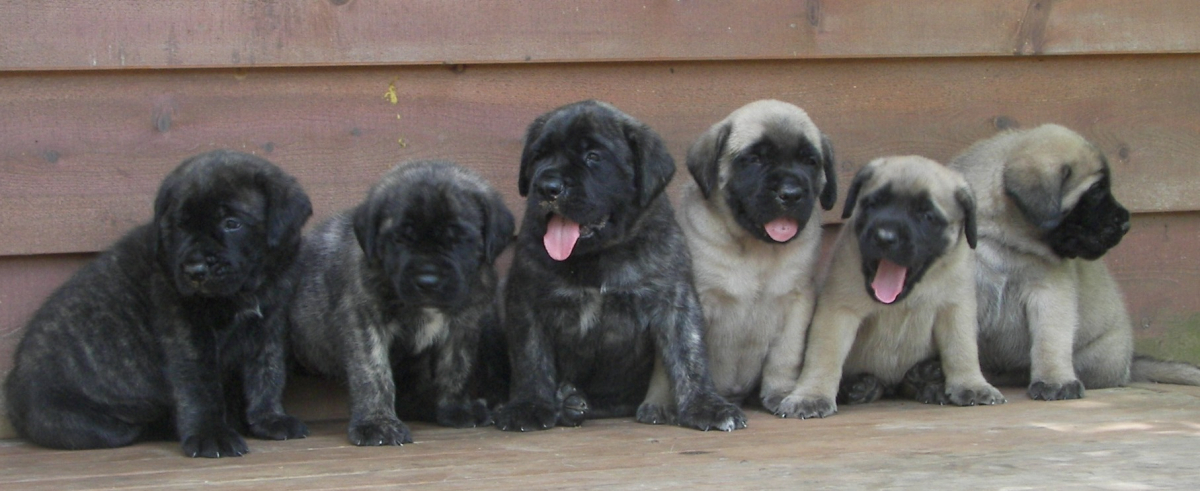
The breed is suitable for those experienced in breeding large dogs. Experts do not recommend choosing a mastiff for a family with small children (infants). The dog will not be aggressive, but due to its size, it could accidentally harm a child.
To choose a healthy pet, experts advise following a few rules:
- They purchase an animal from a nursery or from an experienced breeder.
- They buy a puppy without hereditary diseases, but with a veterinary passport and vaccinations.
- Pedigree is of great importance if the individual is to participate in competitions and exhibitions.
- Before purchasing a puppy, observe its behavior in its natural environment. Healthy puppies are well-fed, active, and curious. Their eyes and nose are bright, and their coats are smooth and free of spots and bald patches.
- The puppy shouldn't be timid. This is considered a genetic defect.
- The price depends on the kennel's prestige, pedigree, the parents' titles, color, and gender. Approximately 25,000-55,000 rubles. A puppy without papers costs less (8,000-10,000 rubles).
Pet lifespan — 7-12 years. There have been cases where dogs have lived to a ripe old age. — 15-18 years old.
Maintenance and care
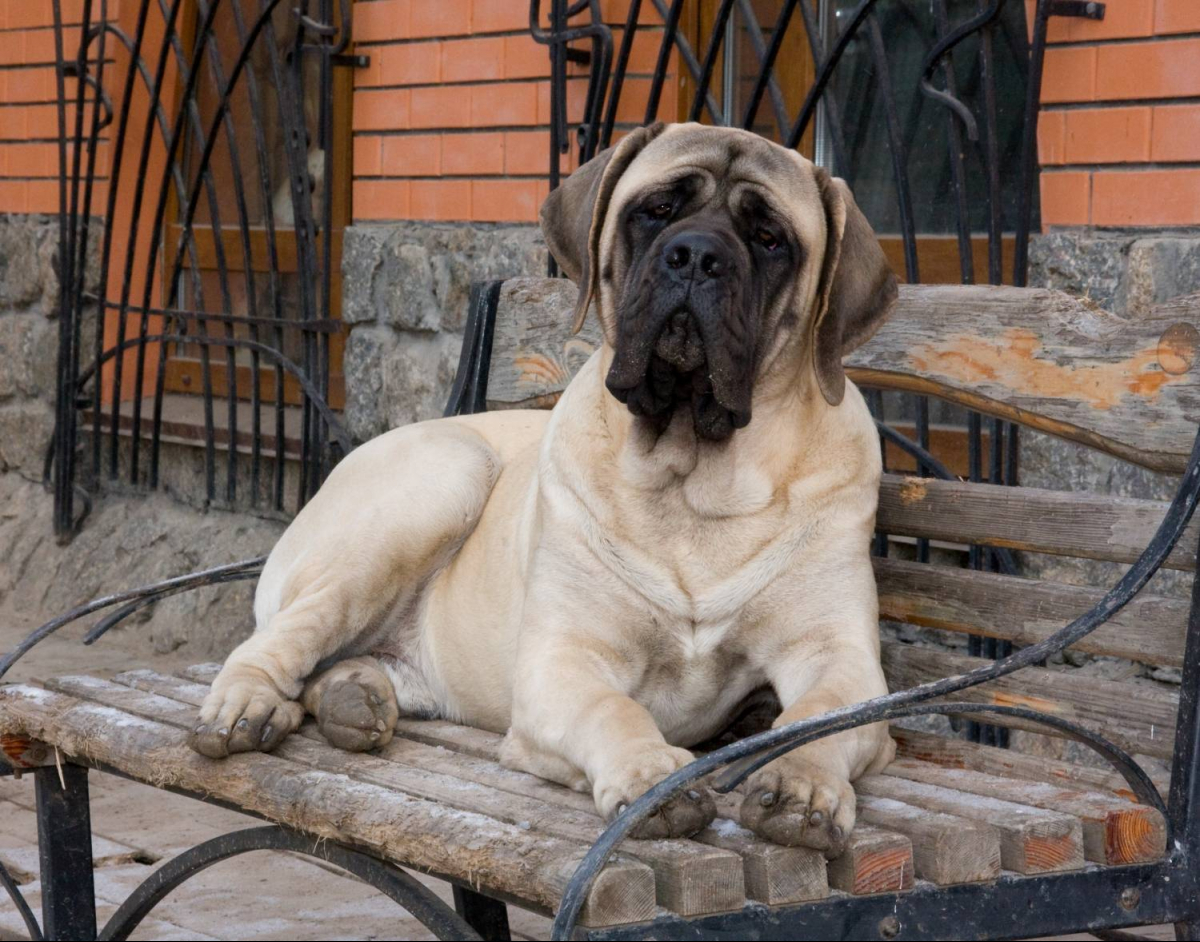
The animal is not suitable for a small apartment. The ideal option is a country house with the possibility of walking in the yard. From early puppyhood, dogs are given a bed to rest and sleep in a quiet, comfortable place. Allowing them on a bed, sofa, or chair is prohibited. They must know their place and not dominate their owners.
The breed is not suited to outdoor living. For long winter walks, clothing designed for large dogs is recommended.
Nutrition
The dog needs a balanced diet (twice a day). 70% of the diet consists of fresh and high-quality meat (lamb, chicken, turkey, veal), boiled offal. Boiled sea fish is offered once a week. Porridges (rice, buckwheat), boiled or raw vegetables (finely chopped), eggs, milk, fermented baked milk, kefir, yogurt, cottage cheese, cheese, and whey are added to the menu. Dry food can be used instead of natural products. It contains all the right ingredients and vitamin supplements.
Exclude sweet, salty, pickled, sour, spicy, fatty, smoked, spicy foods, legumes, fish and chicken bones, canned food, chips, and crackers.
The food is prepared without salt or seasonings. Table scraps are not used to feed your pet.
Grooming
The dog does not require special care, but some procedures should be carried out regularly:
- Brush the coat once a week. During shedding season, brush every other day.
- Overgrown claws are trimmed monthly.
- It's recommended to wash your dog no more than 2-3 times a year. Frequent shampooing can dry out the skin.
- Eyes and ears are examined daily. Dirt is promptly removed with a damp cloth.
- After each meal, the folds of the muzzle should be wiped, otherwise bacteria will accumulate there. Some dogs salivate excessively. This can be a problem, so wipe away the saliva as it accumulates.
- Vaccinations and treatment of fur against fleas and ticks are carried out regularly.
- Veterinary checkups are performed once or twice a year. Mandatory vaccinations against distemper, rabies, and other diseases are required.
Walking
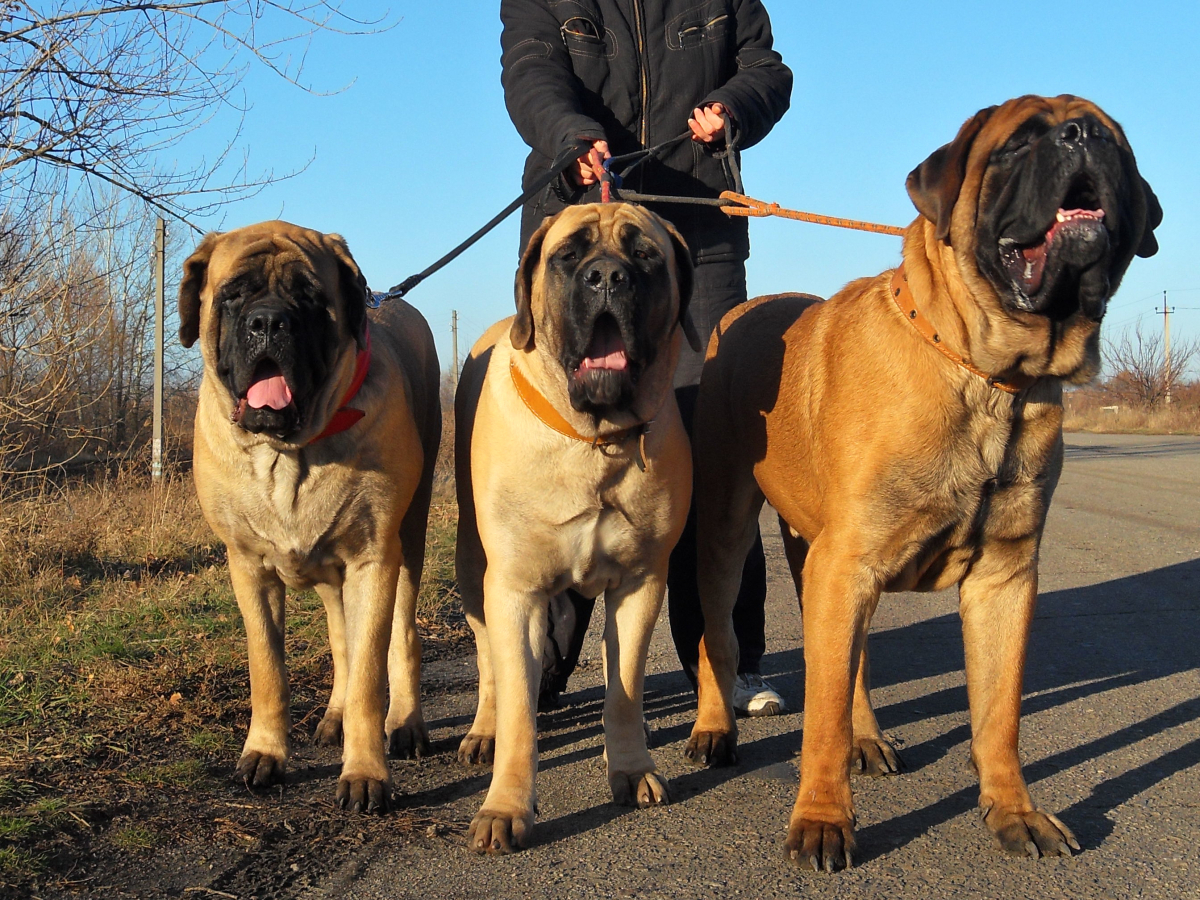
The pet needs physical exercise and a spacious place to walk. Regular walks and jogging are beneficial for health. The dog enjoys spending time outdoors and playing active games with children. Outside, it is unaffected by cats, cars, and other animals. Because this is a large breed, a sturdy leash and muzzle are required in crowded areas.
Diseases
Dogs are prone to certain diseases:
- Hereditary pathologies of the hip joint. The disease is incurable. Individuals are not used for breeding. Over time, the dog will have difficulty moving.
- Urolithiasis. Usually found in males. Difficult to treat.
- Digestive problems. The disease occurs due to improper nutrition or overeating.
- Heart failure and joint diseases. They appear with age due to insufficient physical activity or obesity.
Diagnosis and treatment are entrusted to an experienced socialist. If the pet's condition worsens, a veterinarian is consulted.
Breeding
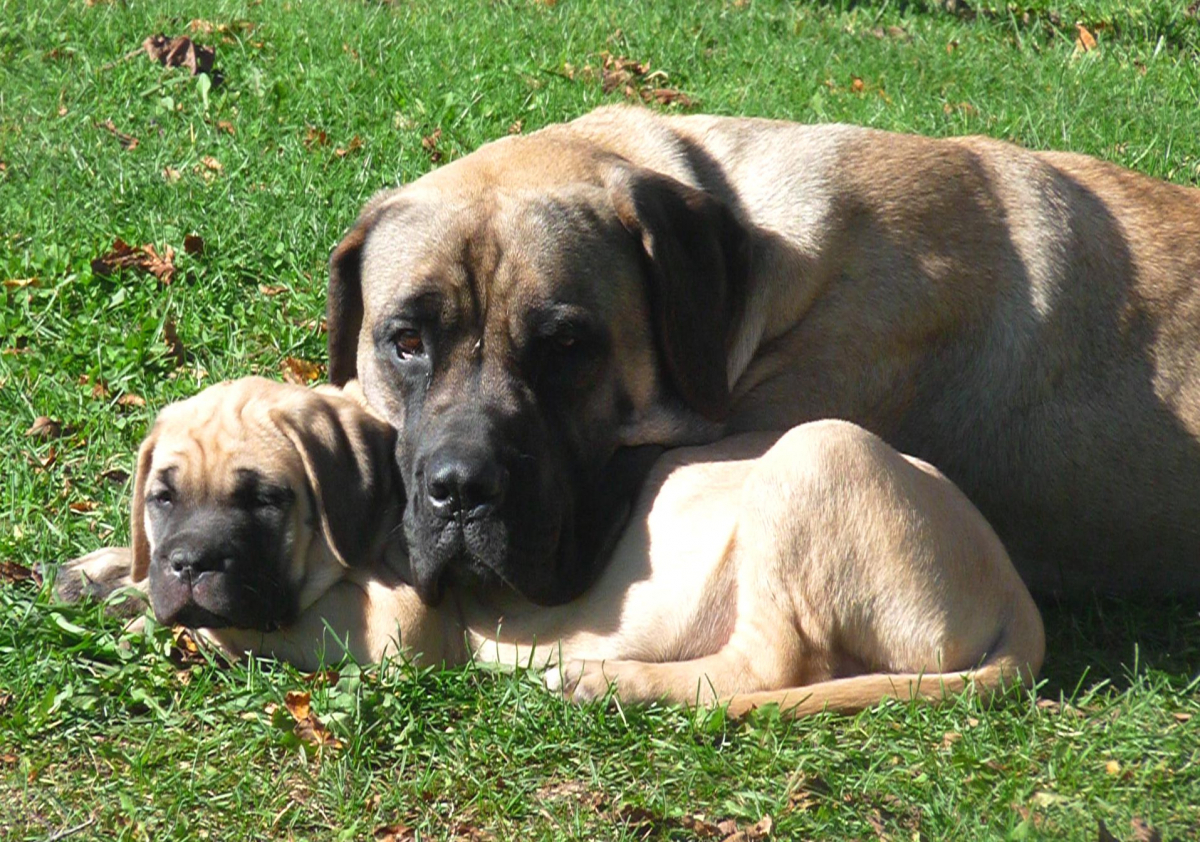
The first mating takes place at the age of two. Early pregnancy carries a risk of developing pathologies in both the mother and the offspring. Mating typically occurs on the male's territory. Only healthy individuals without hereditary diseases are allowed to breed.
Pregnancy lasts 60-63 days. There are no symptoms in the early stages. The dog requires rest, enhanced nutrition, and vitamin supplements until birth. Several specialist examinations are also required. Usually, there are no complications, and the birth proceeds smoothly, but sometimes the female may require assistance to ensure a healthy litter. Mating is performed no more than once a year.
Selling puppies can generate additional income, and pets can participate in competitions and shows. Only individuals with ideal breed standards and pedigrees are eligible for competition. Such dogs command a high price.
Keeping an English Mastiff is not easy, requiring financial investment in food and proper training. The breed is suitable for experienced and responsible breeders.