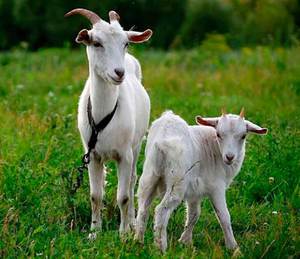
 It's unlikely that anyone unfamiliar with farm animals can accurately determine a goat's pregnancy. It's difficult to tell by the animal's outward signs that she's in this exciting position. The amount of milk she produces remains constant, and there are no behavioral abnormalities. However, there are certain ways to determine whether a goat is expecting. This is a crucial question for owners, as they must be prepared to care for a pregnant animal.
How to determine if a goat is pregnant?
Our ancestors determined pregnancy in goats in the following way. If they've already mated, then afterward, take a glass of water and add a couple drops of milk. Then, observe them: pregnancy will be indicated if milky drops will sink to the bottomIf they manage to maintain their integrity and dissolve in water, and its color turns white, then there is no particular reason to worry.
But don't rely entirely on the results of this method. Sometimes it can also fail. Therefore, we suggest considering another, proven method. Three weeks after mating, bring the goat to the buck and observe her behavior: if she shows no interest in the buck, then it's time to prepare for a new addition to the goat family.
Some farmers also resort to unconventional methods of pregnancy testing, such as rectally. They insert their fingers into the anus and, using vibrations as a guide, try to determine the position of the fetus. However, this method should be used with caution, as specialists have little information about it. Furthermore, few people use it, making it difficult to guarantee the reliability of the results.
Another clue about whether the goat is in pregnancy can be amount of milkIf a goat exhibits attraction to the opposite sex, her milk production decreases. However, once mating occurs, her productivity returns to normal, although in most cases, she produces even more milk than before. This indicates that she is pregnant.
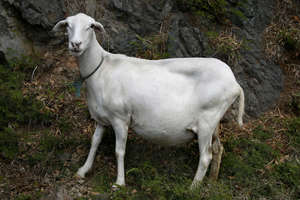
Late pregnancy can be determined by the animal's appearance. A pregnant goat's flanks are usually smooth and rounded, and the udder and genitals become swollen.
More accurate information about the goat's condition can be obtained through an ultrasound examination. This method can be used at any stage of pregnancy, as the equipment can detect even early pregnancy.
How long does a goat stay pregnant?
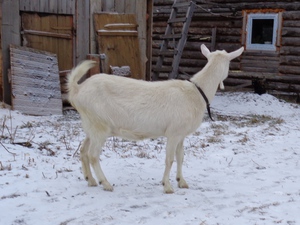 As a rule, the appearance of offspring occurs 150 days after matingBut sometimes this period can be extended, which requires special attention from the owner, who needs to take the animal to the veterinarian.
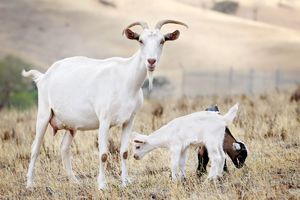
Goats of different breeds can produce between one and five kids per year. Lambing lasts a maximum of one hour, and the kids are born without delay. Given that there are no complications during birth, it is not necessary to be present during the birth.
How to behave during childbirth?
If this is your goat's first lambing, it is advisable observe her during laborIt would also be a good idea to have a veterinarian present, as their assistance would be very helpful if any unexpected complications arise.
- When the kid is born, it should be wiped with a dry, clean cloth or a bunch of straw. This will remove mucus from the kid's respiratory tract.
- Next, the baby needs to be placed next to the mother so that she can lick it.
Goats are very caring mothers, so they can feed their kids without outside help from birth.
Care during pregnancy
There are known cases where a goat produces quite a lot of milk for many months of pregnancy. In such situations, experts even recommend stop milking animals completely, but this must be done gradually. This procedure has a special name—launching.
Launch procedure
Its purpose is to enable the animal to stock up on enough food to have the strength to feed its offspring.
If you continue to milk the animal in the same quantities during pregnancy, it may suffer, since the milk produced by its body contains nutrients necessary for carrying the fetus.
The launch must be carried out gradually:
- If you have previously milked the goat three times a day, then to start, you should increase the number of milkings to two.
- After a week, the goat should be milked no more than once a day.
- The animal is subsequently milked if there is an urgent need for it.
From the first month until the birth of the offspring, the animal must be provided with special nutrition:
- It should consist of green and mixed feeds. This way, the body will receive the necessary nutrients and vitamins.
- It is recommended to give her root vegetables and vegetables, but they must be boiled.
When there are about two weeks left before the appearance of the offspring, it is necessary to approximately reduce the amount of compound feed by halfYou can feed the goat in the same amount only after at least three to four days have passed since the kids were born.
Conclusion
 When keeping a goat on his farm, a farmer must be attentive to her, as she may become pregnant at some point. It's a good idea to know how long a goat's pregnancy lasts. After all, if this is your goat's first birth, you'll need to be present with her. However, caring for her after the birth is equally important. During this period, a pregnant goat needs special nutrition from the very first month.
Furthermore, it's not a good idea to take advantage of the fact that a goat will produce increased amounts of milk during pregnancy. She needs it for the normal development of the fetus, so the number of milkings should be gradually reduced over several months to ensure the animal has enough strength to maintain her own health and feed her young.