 When caring for farm animals, special attention must be paid to their well-being. Even vaccinations don't always guarantee protection against dangerous diseases. Therefore, if you keep goats, cows, or sheep on your farm, be aware that these animals can be affected by a disease called mastitis. It is the most common cause of culling dairy animals from the herd. The explanation is simple: even if the disease is completely cured with prescribed treatment, the dairy animal will never return to its previous level of productivity.
Content
Causes and prevention
All diseases arise naturally—favorable conditions must be created for them. As for mastitis, it develops against the background of hypothermiaTreating it isn't easy, and not all cases end well for the animal. Therefore, it's best to monitor the condition of still-healthy animals and take appropriate preventative measures promptly. First, ensure there are no drafts in the barn. It's also important to inspect the bedding where the animals rest, as dirt on it can harbor dangerous viruses. Therefore, to reduce the risk of mastitis, bedding should be changed as frequently as possible.
Also, the occurrence of mastitis in dairy animals can be promoted by incomplete milkingIf there are any colostrum remnants in the udder, they will burn out after a while, but the breakdown products can cause serious harm to the body, as they trigger inflammation as a result of decomposition.
Types
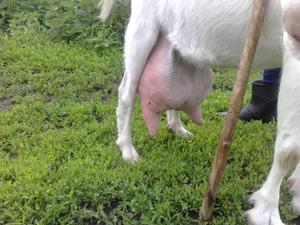 Before choosing an effective treatment for mastitis in goats, it's important to understand the specific type of disease affecting the animal. Typically, open mastitis develops within a couple of weeks after lambing, due to hypothermia or infection. If this disease is detected early and appropriate treatment is administered, the animal typically recovers quickly, and its productivity levels are maintained.
The most dangerous variety
The greatest difficulties in treatment arise during development gangrenous mastitis of goatsThe challenge for veterinarians is that this disease can occur in a hyperacute or acute form. In the former case, due to the rapid progression of the disease, the chances of saving the animal are extremely low. The chances of recovery are much higher with acute mastitis. Animals with this form typically recover in 65% of cases.
Other varieties
In addition, mastitis can take other forms:
- Serous;
- Fibrinous;
- Hemorrhagic.
The types of mastitis listed above are most common in goats.
Serous mastitis, the most common form of the disease, causes the least harm to the body. Regardless of which form of mastitis is detected, it is necessary to show the animal to a veterinarian immediatelyGiven the high risks, self-treating an animal is not recommended. Due to a lack of knowledge and experience, you will likely be unable to help the animal, which will die despite your best efforts.
Serous mastitis in goats: symptoms and treatment
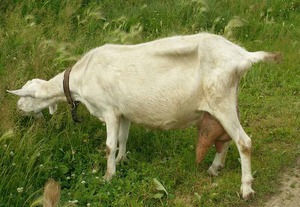
This type of mastitis does not pose a significant threat to goats' health. However, treatment should still be initiated at the first signs of the disease. A characteristic symptom of this type of disease is inflammation of the udder, accompanied by the release of exudate into the connective tissue. The main symptoms of the disease are:
 decrease in milk yield;
- depressed state of the goat;
- loss of appetite;
- increase in body temperature;
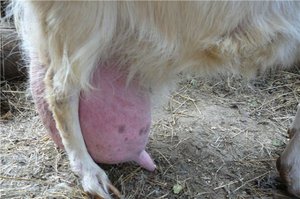
- increase in volume of the affected part of the udder;
- redness of the skin;
- an increase in temperature at the site of the outbreak of the disease;
- enlargement of the supramammary lymph node.
 decrease in milk yield;
At the time when the disease is just beginning to develop, no changes in milk are observed, and its quantity remains the same. However, after some time, as the disease begins to progress, the milk takes on a watery effectWhen serous mastitis develops, the udder tissues are usually not affected.
To determine if your goat is affected by this disease, you can do the following. You'll need a special product called Mastistest. Use it as a milk supplement, adhering to the recommended dosage. Once it enters the milk, it will either curdle or become gelatinous. If the diagnosis is confirmed, symptomatic treatments can be used alongside medications.
Signs of purulent mastitis
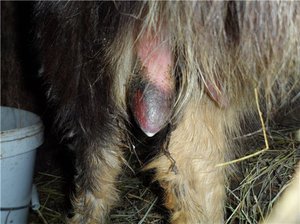 This type of disease also deserves attention. During the development of the hyperacute form the following symptoms are observed:
- increase in body temperature to 41.5 degrees;
- increased breathing and pulse rate;
- the appearance of bloody exudate from the hot, painful udder.
Within 24 hours of the onset of the disease, significant changes in the udder are observed: it becomes swollen, loses sensitivity, and becomes cold. Simultaneously, the skin also changes, turning bluish. There is no treatment for this form of the disease, and by the end of the second day, the animal dies in agony.
Acute mastitis has similar symptoms, but does not manifest itself as quickly. This indicates the development of acute mastitis. characteristic stance of an animal: it assumes a position in which its legs are spread wide apart. The condition of the goat's udder can also help determine its shape: during the first day, it remains warm, but on the second and subsequent days, it becomes cold and develops signs of swelling.
How to treat mastitis in a goat?
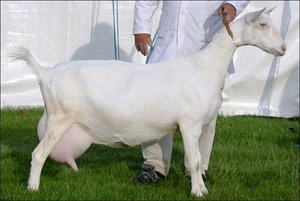 At the first sign of illness, it's essential to take your goat to the veterinarian immediately, as only they can determine what type of mastitis has affected the animal. Treatment isn't limited to a single specific medication. For a speedy recovery, you'll need not only prescribe a course of special medications, but also to carry out physiological procedures.
Once the area of the udder showing signs of disease is identified, an injection of penicillin or streptomycin is administered. After each milking, antibiotics should be administered intracisternally. Products such as Masticide or Mastisan can be used for this purpose.
If the animal's condition requires emergency measures, then preference is given to "Mastomycin"; this drug quickly brings relief to the animal due to the presence of lidocaine.
Most medications used to treat mastitis in goats have one thing in common: they use an oily base. In some cases, it may be necessary course of furacilin therapy according to the following scheme - 1:5000 in 0.9% sodium chloride solution.
Regardless of the drug used, each injection into the udder should be completed with a gentle massage from the bottom up.
In addition to medication, the animal needs regular milking. This procedure is most beneficial if performed every 4-6 hours. The effectiveness of this procedure depends largely on how it is performed: first, massage the healthy part of the udder, then move on to the affected part. After completing the massage, apply ichthyol ointment and rub it into the skin 1-2 times a day for three to four days. If this ointment is unavailable, salicylic or camphor ointment can be used instead.
In some cases, a specialist may prescribe a course of therapy. using symptomatic drugsIt is based on the use of cold compresses, which should be applied during the first days of illness. Afterward, only warm compresses are used. The animal should also be regularly given diuretics and laxatives.
In general, treating mastitis in a goat isn't easy. During illness, the animal requires especially careful care. For a speedy recovery, strictly follow your veterinarian's recommendations and never attempt to treat the goat with home remedies. If the pain is causing significant discomfort, additional application of an anesthetic ointment is necessary. Prepare it as follows: take 1 gram of novocaine, add 20 grams of petroleum jelly, and 4 grams of boric acid.
Even before you start milking, you need to massage the affected part of the udder.
Feeding a sick animal
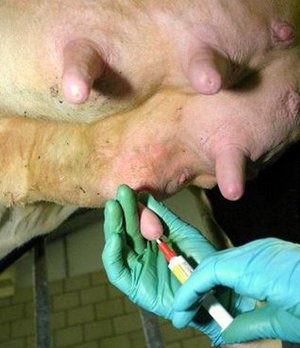 During the development of mastitis in goats, swelling of the udder is pronounced. Therefore, the medications recommended for treating the disease should have a soft effectto prevent the disease from progressing further. However, this isn't always enough—sometimes it's necessary to review the animal's diet, eliminating all foods that could trigger lactation. The following should be excluded from the animal's diet:
- juicy vegetables and fruits;
- potato;
- milk.
If you're tempted to treat your pet with fresh grass or branches, discard the idea. During illness, it's important to reduce the daily feed ration. During these days, a sick animal should be fed high-quality hay and brooms.
Conclusion
When raising goats, the owner must be attentive to their animals. To produce high-quality milk, it is necessary not only to provide the goat with the right feed, but also monitor her healthMastitis is particularly noteworthy among the diseases that can affect goats. Although it is a well-known ailment, its harm can be significant, as not everyone knows how to treat it.
The fact is that a goat that has recovered from mastitis will never return to its previous level of productivity, which is sufficient grounds for culling it from the herd. Therefore, to protect against this disease, regular vaccinations are essential, as well as regular veterinary checkups so that treatment can be initiated at the first sign of developing the disease.