 Today, many farmers frequently use cow's milk replacer to feed young bulls, but it must be a high-quality product. However, finding a cow's milk replacer that meets these requirements isn't always possible. Sometimes, substitutes produced using low-quality raw materials are found on the market. Therefore, a farmer who cares about the nutrition of their animals needs to know the rules for choosing a high-quality milk replacer for calves, as well as the breeding and feeding procedures.
Content
What are ZCMs used for?
Experienced farmers know that only those substitutes that are of the best quality are made from wheyThis is a very healthy product obtained by processing cottage cheese, cheese, and casein. It is impossible to produce good cheese without curdling milk. This requires a special enzyme called rennet. There are several types of whey that can be obtained using various methods.
Casein whey is the result of casein precipitation, achieved using hydrochloric acid. Typically, the finished whey replacer for calf feed has the following composition:
- protein - 12%;
- mineral substances - 10%;
- lactose in dry matter - 75%.
Today, the milk obtained from a cow during lactation differs in composition from that offered many years ago. First of all, concerns protein and fat, the proportion of which may vary in each case. This occurs due to differences in the animal's feeding conditions and the time of year.
Milk replacers offered today contain nutrients essential for calf development, as well as iron, the level of which is several dozen times higher than in whole milk.
High-quality milk replacers are also available on the market, their composition being virtually identical to cow's milk and at a lower cost. When produced correctly, milk replacers can be used as a premix, providing calves with the vitamins and minerals they need at this stage of development. This is what sets milk replacers apart from whole milk.
Modern technology has advanced greatly in recent years, and today stores offer a wide range of milk replacer products made from pasteurized milk components, the production of which destroys various infectious agents. The substitutes contain substances such as:
 immunoglobulins;
- lactoferrin;
- lactoperoxidase;
- phosphopeptide;
- glutamine peptide.
 immunoglobulins;
Including whole milk replacer in the calf diet is a common practice among farmers, as these products allow the calves' delicate gastrointestinal tract to better adapt to the subsequent transition to feed.
What types are there and how to choose?
A distinctive feature of whole cow's milk replacers is that they take into account the physiology of calves, whose bodies are excellent at absorbing essential nutrients. Depending on the consistency of whole cow's milk replacers, classify into several groups:
- Liquid. This refers to ready-to-use substitutes.
- Concentrated. Before use, they are first diluted with water or serum.
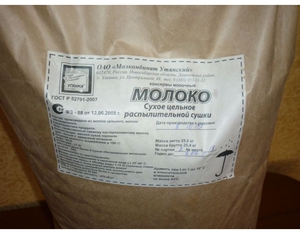
- Dry. They are used after diluting with water or another liquid, maintaining a ratio of 1:8.
To date, problems with transportation and storage conditions for the first two types of milk replacers remain unresolved, which is why farmers most often prefer the dry substitutes group.
Experienced farmers speak highly of the following brands of milk replacers:
- "Kalvolac";
- Calvomilk;
- "Eurolac"
- "Prodlak".
Advantages of ZCM
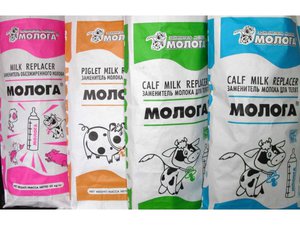 The unique feature of these products, which successfully replace whole cow's milk, is that when stored as a dry powder, they do not lose their properties over a long period of time.
In the ZCM antibacterial drugs are present, which help prevent the proliferation of harmful microorganisms in the body of calves.
Imagro, the product on which Calvomilka is based, is quite effective. It contains probiotics, prebiotics, and organic acids necessary for normal gastrointestinal function. Numerous laboratory studies of this substitute have shown that its inclusion in the diet of young animals reduces disease rates and increases productivity.
When studying foreign alternatives to whole cow's milk, one can discover that they contain whey proteins. This allows calves to digest the substitute much more quickly than the natural whole product.
This leads to a rapid increase in the animal's rumen volume, which subsequently guarantees high milk yields. Many experts advise use foreign substitutes For calves aged 5 days. These products have many fans, which is not surprising: not only do the substitutes have a balanced composition that takes into account the individual's body needs, but they also have a wonderful aroma and pleasant taste.
Choosing milk replacer as an alternative to traditional whole milk is preferable, as it helps prevent calves from becoming infected with dangerous diseases such as viral diarrhea or infectious rhinotracheitis, which are transmitted through milk.
How to breed?
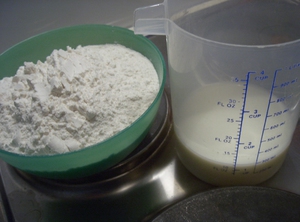 Now you know that today, when choosing feed for calves, many farmers often use modern feed mixtures that are as nutritious as regular milk. As raw materials, producers choose dry skim milk or dry whey, and in addition to them, vegetable and animal fats, grain feed grits and special premixes.
A positive effect of using milk replacer on a farm is the ability to save on cow's milk. However, to achieve the desired results, it is necessary to understand the rules for preparing dry milk replacer for calves.
How to prepare the mixture?
To prepare the substitute, the powder must be diluted in 7-9 parts water. When determining the amount of powder, it is assumed that the dry matter content of the finished solution should be at least 12.5%. For example, to prepare 100 kg of feed mixture, you need 13 kg of powder composition and add 87 liters of water to itIt is important to note that the powder should be diluted with water in small portions.
After determining the required amount of powder by weighing it, mix it with water. Once all lumps have disappeared, add more water, which should be at a lower temperature. The mixture prepared for feeding young animals should be heated to 35-38 degrees Celsius.
Sheep can only be fed freshly prepared milk replacer. According to experts, it is recommended to introduce this feed mixture to animals at twenty days of age. This is due to the unique nature of calves' bodies, which are not yet adapted to digesting plant-based feed. Calculations conducted by experts revealed that during one feeding period, each calf requires approximately 28-40 kg of dry feed.
The calves' need for milk remains over the course of two to four months, and the duration of the period largely depends on the amount of substitute given to the calves.
The following feeding scheme is considered optimal, provided that the calf was weaned at the right time:
- first week - milk share 3-6 liters, substitute - 0-7 liters.
- Second week - amount of milk - 6 liters, formula - 7 liters.
- Third to fifth weeks - the proportion of the substitute should be 8 liters per day.
When the calf reaches 6 months of age, the amount of mixture bring to 6 litersWhen animals reach one year of age, they can be given a substitute in quantities of no more than 4 liters.
Conclusion
 Nutrition plays a crucial role in raising calves. Therefore, it's important to first familiarize yourself with the types of feed available today. Milk replacers are deservedly popular, as they are not only as nutritious as whole milk but also superior in digestibility. However, when using milk replacers, there are some important considerations. Proper preparation of the feed mixture before use is crucial, as its nutritional value depends on the concentration of the finished product.