Seizures in cats are not a disease in themselves, but a symptom of a specific underlying condition. If they occur, the animal should be examined by a veterinarian immediately. Therefore, every owner should be able to recognize seizures in their pet and understand the specific symptoms.
The cat has erratic body movements
Some time before a seizure develops, the animal begins to behave unusually. It may become agitated and restless. The cat meows loudly and protractedly, makes senseless, chaotic movements, and responds poorly and indifferently to its owner's calls.
During a seizure, the animal begins to experience paroxysmal, involuntary muscle contractions. These can involve individual muscles or all at once. Visually, this is perceived as chaotic movements and tremors.
The pupils are dilated
An attack of convulsions is quite difficult for an animal to endure. The pain causes a reflexive dilation of the pupils. The gaze is unfocused.
The toes are clenched
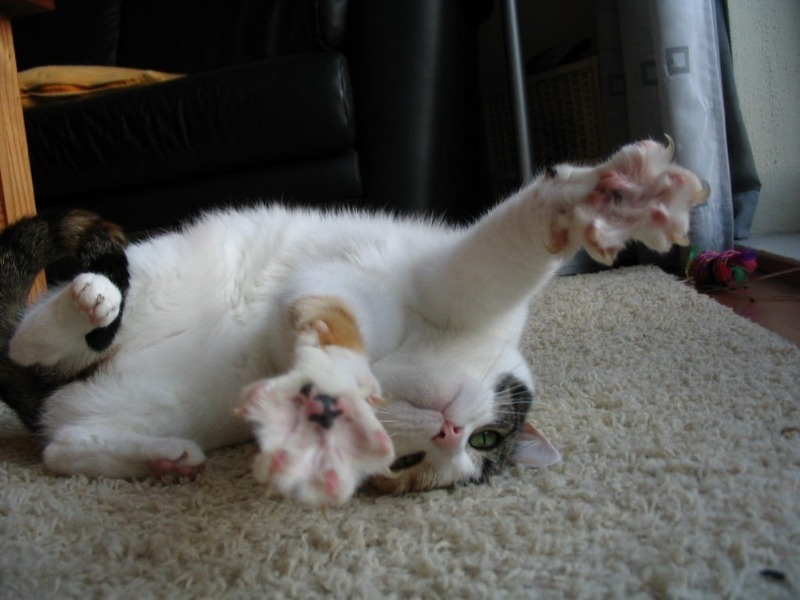
During muscle spasms in the cat's limbs, the cat's paws assume an extended or, conversely, unnaturally bent position. The toes, along with the claws, are tightly clenched in a crooked and tense paw.
The pet may lose consciousness.
Sometimes, due to severe pain and shock, the animal may lose consciousness during a seizure. Saliva and foam may be released from the mouth. Involuntary urination and defecation are common.
The pet may behave aggressively towards the owner.
In most cases, during the post-seizure period, the cat appears weak and disoriented, unresponsive to outside sounds, and severely inhibited. However, it also happens that after the seizure ends, the animal, under extreme stress, begins to become agitated and behaves aggressively toward others: hissing, making loud guttural sounds, and even attacking people and other animals.