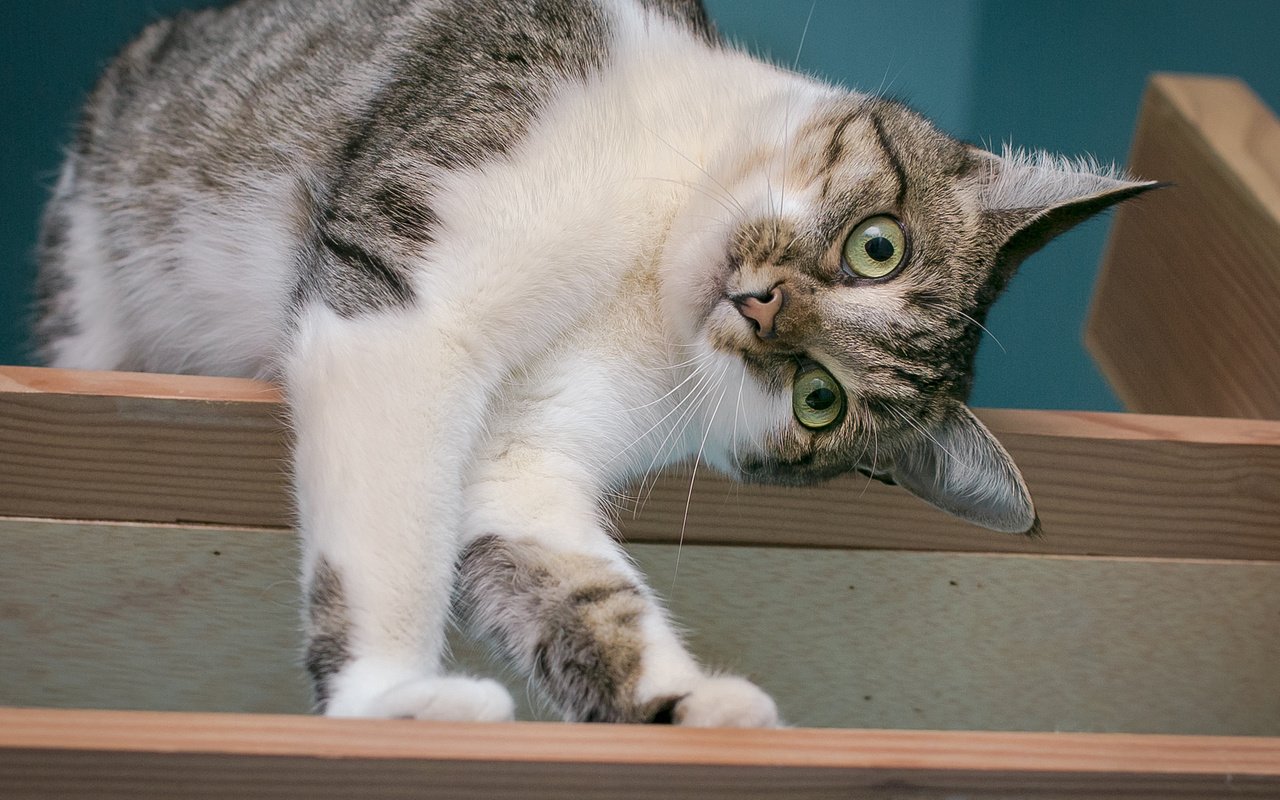
A cat's ears can reveal a lot about its emotions. It's important to understand the meaning of its different ear movements, as this is an integral part of its communication with you. Their ears can also reveal their emotional state and level of anxiety.

She is completely relaxed.
In this case, the ears point forward. Sometimes, they spread slightly to the sides. The animal's ears assume this position when it's comfortably nestled in its owner's lap or somewhere else where it feels safe.
Something interested her.
According to the old saying, when it's time to keep your ears perked up, this is precisely the time. A cat's ears stand almost vertically and rotate slightly to the sides. The cat is beginning to listen for something meaningful and extremely interesting. At the same time, the pet is trying to gather a lot of information by pinpointing the source of the sound.
You may notice your cat's ear movements in the following cases:
- She hears birds chirping outside.
- I spotted a fly flying past.
- I heard the rustling of a rodent behind the wall.
The cat is nervous
The animal's ears are turned back and pressed tightly against its head. This position symbolizes a kind of protection from external factors, such as noise.
Cats also begin to fold their ears when water gets into them, or become irritated when meeting a strange cat.
Something made her angry.
Sometimes a cat becomes angry. Her ears are pressed tightly against her head. This means the animal is about to attack to defend her territory, ready to fight for her offspring.
Sometimes in this situation, the cat's ears point to the sides. This means it's already "figured out" the situation. And it's time to scare off the enemy. To do this, follow these steps:
- Ruffle the fur.
- Spread your ears out to the sides.
- Arch your back.
When a cat doubts its own victory and is ready to retreat, its ears move slightly, press against its head or straighten out to the sides again.
The cat is confused
Cats sometimes find themselves in situations where they don't know what to do or how to behave. The animal is overwhelmed with emotions. Its feelings are mixed.
At this time, the cat's ears shift in different positions, just like the eyes of an agitated person. The ears symbolize a change in mood.
How else can you determine a cat's condition other than by its ears?
But ear position isn't the only signal that can help you determine your cat's emotional state. If you want to more accurately determine a cat's emotions, you should pay attention to its facial expressions or the movement of its pupils and whiskers.
When the ears are fully turned back and pressed against the head, the animal is frightened. However, if the pupils are constricted at the same time, the animal is angry and may become aggressive.
Owners also study other behavioral manifestations of their pet, such as the position of their tail, whiskers, or the way they make different sounds. All of this provides clues to what the cat is feeling at the moment. This helps them understand their mood and what to expect from them.