If you feel like you're completely misunderstanding your cat and can't find common ground with them, perhaps it's worth paying attention to their nonverbal cues. Your pet sends them almost constantly through various parts of their body.
Communication using the tail
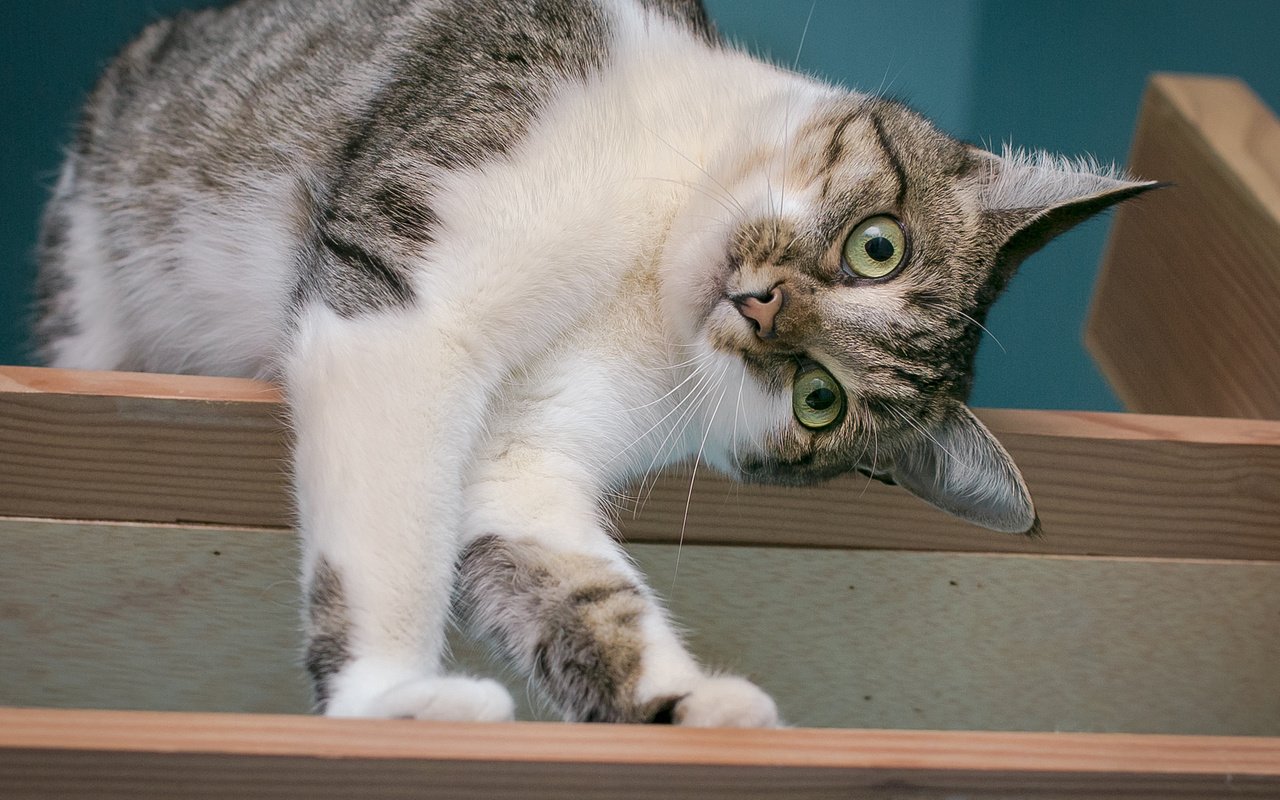
A cat's tail position often indicates its mood. If this part of the body is raised vertically when interacting with its owner, it indicates the cat's alertness and confidence. The cat trusts you and expects affection and interaction. This is where the expression "to keep your tail up" comes from—to maintain a good mood.
When communicating with a person or another animal, a cat's tail can make completely different movements:
An upward-facing tail with a curled tip expresses contentment and enjoyment of life. This is how a cat can demonstrate that this is its territory.
Frequent twitching of the tail from side to side indicates overexcitement or stress. If this occurs frequently and for no apparent reason, it may be worth consulting a veterinarian.
If a cat's tail is fluffed up, it means it's tense and afraid. This behavior demonstrates to an enemy that they are larger than their actual size.
If the tail transmits barely noticeable vibrations, the cat expresses joy at meeting its owner or is begging for a treat.
A cat's defensive posture is characterized by raising its tail, lowering its front paws, and arching its back. Gently pet and caress your pet, avoiding any sudden movements.
A tail that's straight but not raised (for example, at a 45-degree angle) indicates aggression or fear. Sometimes this position indicates a confused cat.
If your pet has misbehaved, it will lower its tail or tuck it between its hind legs. This may also be a sign of submissiveness.
If a cat swishes its tail sharply, it means it's angry and aggressive. Sometimes this is a sign that pets want to play actively.
What can the eyes say?
An animal's eyes, like those of humans, can express a variety of states and moods.
Dilated pupils, occupying almost the entire eye, are a sign of strong emotions, both positive (joy) and negative (anger, aggression, anxiety, fear). When a cat first finds itself in a new environment, it dilates its pupils to acclimate to the unfamiliar surroundings. If a cat interacts with you and its pupils are dilated, it means it's eager to play.
A direct gaze is a sign of trust. The animal is expressing affection and is comfortable with its owner.
If a cat looks at you with a slight squint and slowly blinks, it means it's feeling calm and peaceful. This state is often accompanied by drowsiness and purring. Closed eyes are a sign of pleasure.
Pay attention to the ears
A cat can rotate its ears 180 degrees and move them independently. Look at your pet's ears to learn a few things about its condition:
If a cat raises its ears so that they stand almost vertically, it means that it has seen something that has aroused its strong interest.
When a cat is extremely frightened, it flattens its ears against its head. This is often accompanied by a bared tooth and hissing, with its whiskers pointed forward.
Ears turned back and pressed tightly to the head are a sign that the cat is ready to rush into battle.
If the ears are erect and slightly turned back, the pet is very surprised or expressing its indignation to you.
Where is the cat's head pointing?
Sometimes a pet will cuddle up to its owner and gently headbutt them. This is the animal's way of expressing its deep devotion and gratitude.
If the head is thrust forward and the gaze is directed at one point, the animal is tense, concentrated and preparing to attack.
A sharp turn of the head indicates that something has caught the cat's attention and it's searching for the source of the sound. Your pet may also be frightened. This sometimes happens when it's eating and suspecting danger. However, if the cat is mildly interested in what's happening but too lazy to turn its head, it will only slightly move its ear in the direction of the sound.
If, when communicating with you, the cat lifts its head high up and looks at your hands, most likely it is hungry and waiting for a treat.
Your pet's body language can reveal a lot about their personality and mood. Pay attention to your cat's posture and gestures to learn to better understand them.