Are there any situations in life that you dislike most? What about injections, for example? Of course, you're terrified when the doctor picks up a syringe! And while you won't actually feel any serious pain, you'll definitely experience some stress. Most cats feel something similar before a bath. Naturally, they'll resist, and who knows how your plan will end. Therefore, cat owners must try to outsmart their pets, and to do so, learn the secrets of how to bathe a cat properly—easily and without mutual injury.
Content
How often should you bathe a cat?
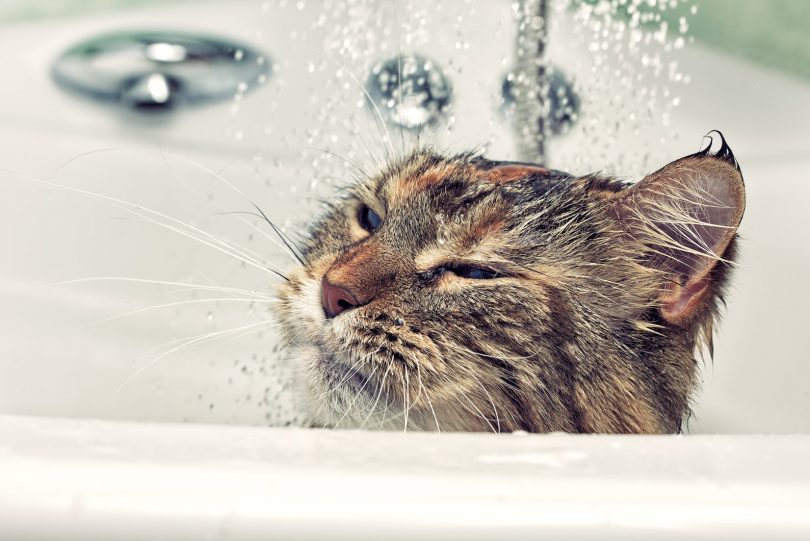
Don't overdo it with the frequency of water procedures
Bathing cats too often strips their fur of its natural oils, which can lead to skin problems. There's no need to be overly zealous in caring for your pet—one or two baths a year will be enough to keep your pet healthy.
"What a relief!" you might exclaim. However, don't be too quick to rejoice: experienced cat owners perform this procedure much more frequently. Moreover, long-haired cats require more baths than short-haired ones. There are several reasons for bathing your pet more often than recommended. Here they are:
- Stubborn dirt. It inevitably appears on the fur of an explorer cat, exploring the world around them. This could include paint, oil, and even toxic substances that are dangerous to the animal and must be washed off.
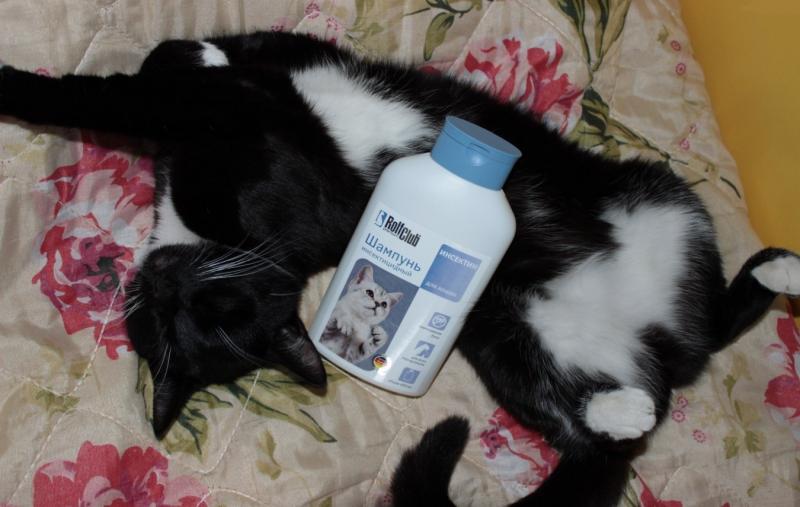
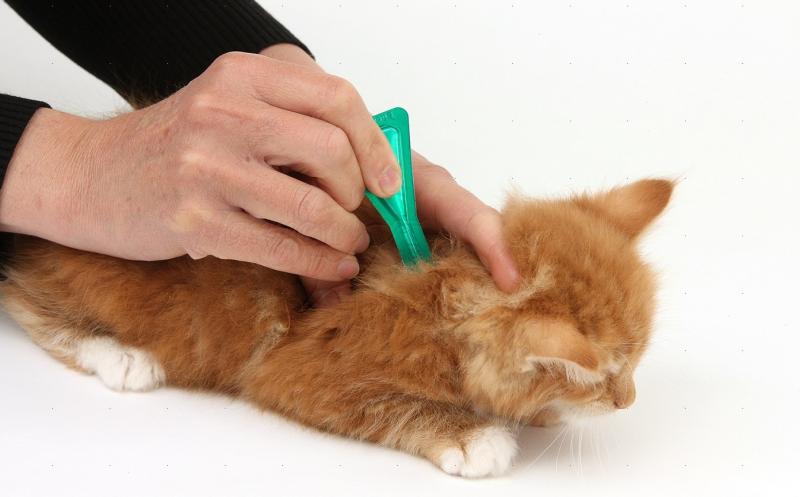
- The presence of parasites (fleas). Getting rid of them without bathing your pet is unlikely. Your veterinarian will recommend a special shampoo to help combat this "external enemy."
- Preparing for a cat show. Cats competing in shows and championships must look impeccable. To make you proud of your pet and be confident of winning, you'll need to bathe it more often than usual.
- A number of skin conditions. Baths can help solve problems like dandruff.
- Overweight. If a cat is overweight, it's difficult for them to groom all parts of their body, especially the base of their tail and lower back. Baths help these animals keep their coats clean and healthy.
If any of the above reasons apply to your pet, then you can bathe him every month.
Preliminary preparation
When bathing a cat, it's very difficult to plan everything. Both owner and pet should be as prepared as possible. Everything that might be needed should be prepared in advance.
Prepare yourself
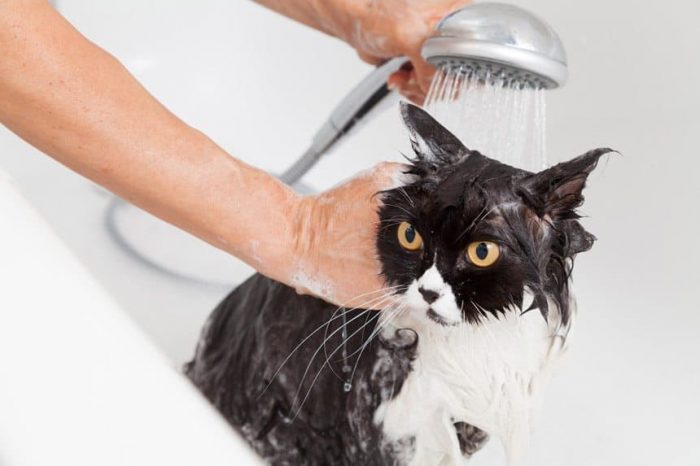
An unexpected shower can provoke aggression from a cat.
Remember that your cat has claws that can hurt you and teeth that are ready to bite you.If you don't rule out such a development, do the following:
- Get another pair of hands involved. Ask someone to hold the cat firmly but gently while you wash her in the tub.
- Wear protective clothing. Both you and your assistant should wear long-sleeved clothing made of durable, tear-resistant material (these can be old items that you won't mind throwing away later). A pair of rubber gloves will also be helpful.
- Prepare yourself mentally—stay on top of your game, and put your best foot forward. Even if you've never bathed a cat before, try to remain confident. It's important for your cat to feel like you're in complete control of the situation and there's no reason to be anxious.
Preparing the cat
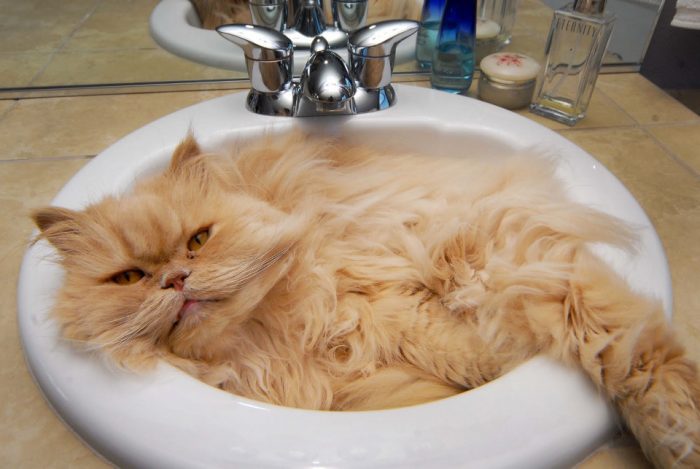
Ready for swimming!
Would you like to put off this difficult task for months? In vain! It is better to accustom cats to bathing early, from 8 weeks. Cats who were bathed as kittens become accustomed to the procedure and may even come to love it. Here's how to prepare your pet for its first bath:
- Introduce your pet to the bathtub (sink, basin) where they will be bathing. A few days before the procedure, place your pet in the area where you plan to bathe them. Let them stand there for a while and get a feel for the new surroundings to avoid shock on the day of the bath. If possible, use a kitchen or bathroom sink for the bath—it will be easier to hold your pet while bathing than in a large bathtub.
- Help your cat get used to the hair dryer. It dries fur more effectively than towels, but if you don't introduce your pet to it beforehand, it may become intimidating. Try drying your cat's hair with a hair dryer yourself so that it gets used to the sound.
- Trim your cat's claws. Do this before bathing. This will minimize the chance of your cat injuring you during the bath.
Preparing bathing accessories
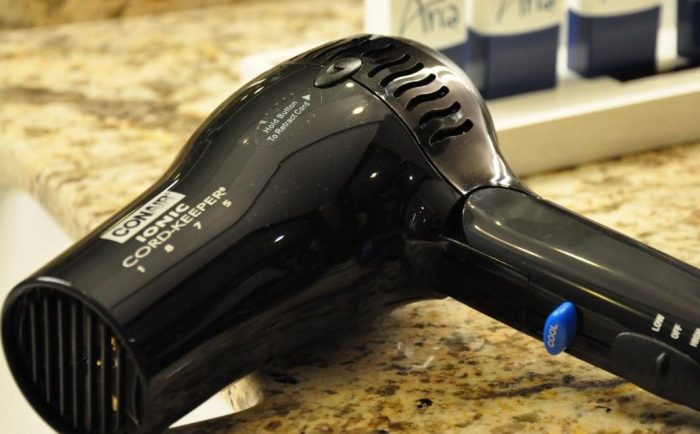
Introducing a cat to a hair dryer should be gradual.
It's important to have all the necessary items ready in advance. Later, you won't have the opportunity to choose a towel or shampoo—your pet will take advantage of the interruption and escape.
Here is a list of what you need:
- rag;
- a rubber mat or towel for the bath to prevent the cat from slipping on the bottom;
- rubber gloves;
- cat towels (2 or more);
- hair dryer;
- cotton balls for cat ears;
- cat shampoo;
- the cat's favorite toy;
- soft brush;
- wide-tooth comb;
- a jug (or other container) for rinsing;
- warm water for rinsing.
Never use human shampoo on a cat (even if it is “mild” or “gentle”). Only buy cat shampoo recommended by your veterinarian. Products made for humans can be harmful to your pet's skin.
It's a good idea to get an engaging toy specifically for bathing your cat. This will help distract them from procedures they might find unpleasant (like being doused).
If preparation is complete in all areas, you can start swimming.
A step-by-step guide to bathing a cat
Bathing a cat is a simple process. With proper preparation and a positive attitude, any pet owner can handle it.
Step 1: Brush your cat
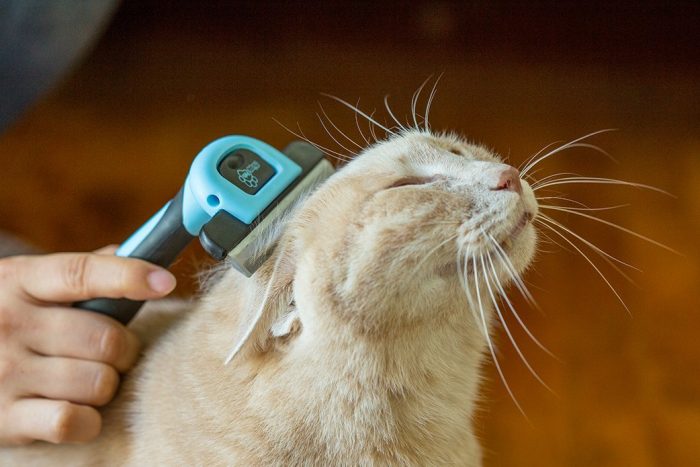
Before bathing, the cat must be thoroughly combed.
This should be done before bathing, using a soft brush. Brush the coat in the direction of hair growth to remove tangles and exfoliate dry skin. This step is important to prevent the coat from hardening after exposure to water. Furthermore, this procedure is pleasant for the animal, as it calms them.
Step 2: Prepare the bath
A rubber mat or terry towel in the bottom of the bathtub will prevent your cat from slipping, so be sure to include them. Fill the sink with water to a depth of 4–5 inches (10–12.5 cm). Always use warm water, not hot or cold. Place cotton balls in your cat's ears to protect them from the water. Then gently place your cat in the bathtub.
Step 3: Wet your cat and shampoo
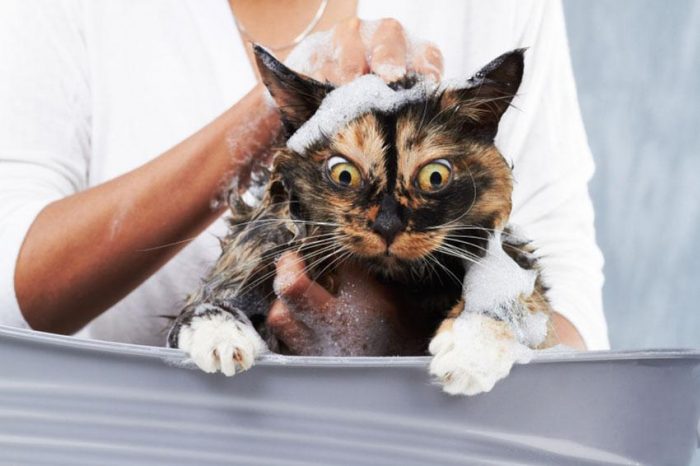
If the cat is excited, try to calm him down with your voice.
Use a pitcher or other convenient container to gently wet your cat's fur, starting from the neck and ending at the tail. Then, apply shampoo and gently lather. Massage it in in the direction of hair growth.
Make sure all of your cat's fur is clean. However, avoid rubbing the animal's head or ears. Talk soothingly to your pet, especially if they're angry or agitated. This will help them avoid becoming frustrated with you.
Step 4: Rinse thoroughly
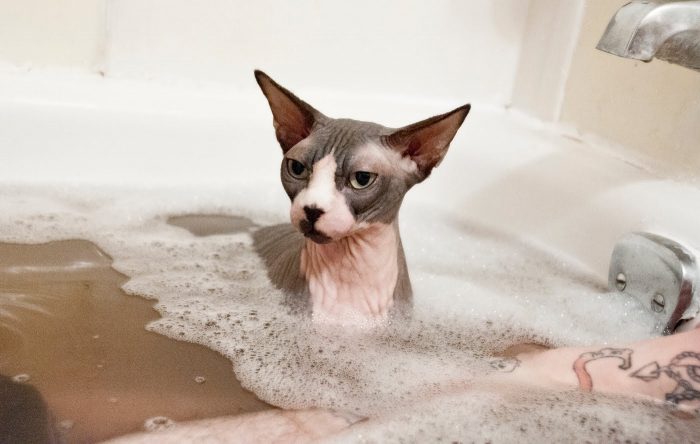
When the cat's reaction is clear without unnecessary sounds
If you're satisfied with your work, take a pitcher of warm water and rinse out the shampoo. You can do this: use water in the sink for the first rinse, then rinse the cat's fur with clean water from the pitcher. The fur should be completely clean. Be very careful when doing this: if any shampoo residue remains on the cat's fur, it can damage the skin. Furthermore, the cat may ingest some of the shampoo while grooming, which can cause an upset stomach.
Step 5: Wash the face and ears
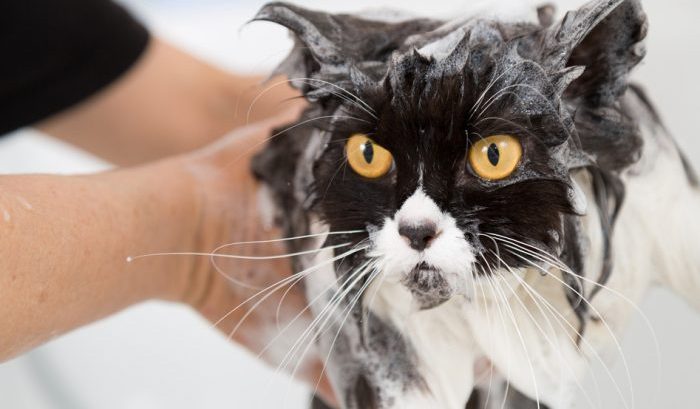
Long live scented soap!
Now it's time to tackle the kitten's head. Using a damp washcloth, wipe its face. There's no need to use shampoo unless there are stubborn areas of dirt. If there is, apply shampoo sparingly and only to those areas.
Wipe your cat's ears with cotton balls. Make sure no water gets into the ears or eyes, as this could be dangerous to your pet's health.
Step 6: Dry your cat
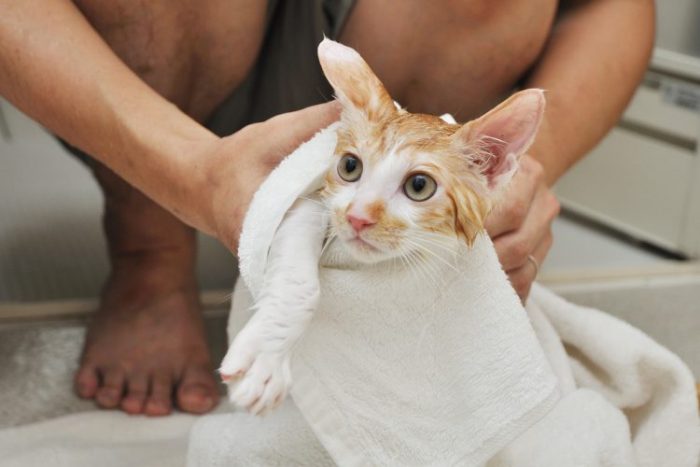
And the towel is fluffy!
You've successfully completed most of the work. But you still need to dry the cat. Wrap a towel around the animal and gently pet it. As soon as the towel gets wet, replace it with a dry one. Dry the cat until its coat is no longer wet. If your cat has long hair, you may need to comb it with a wide-tooth comb.
If your kitten seems calm and even seems to have enjoyed the bath, you can dry them with a hair dryer. Make sure the air is warm, not hot. If your cat was aggressive or showed signs of displeasure during the bath, don't make things worse—don't use a hair dryer. Simply dry them with a towel. This will take longer, but it won't cause any emotional distress, which they'll be grateful for. You can try using a hair dryer another time, once they've gotten used to bathing.
Step 7: Offer your cat a reward
Are you breathing a sigh of relief yet? We understand your joy—you've likely conquered one of your biggest fears. However, you're not the only winner. Your cat has behaved well, and it's time to reward her for it. You could offer her her favorite food. Perhaps she'll remember the connection between bath and treat, making it easier for you to give her another bath in the future.
What to do if your bath was unsuccessful?
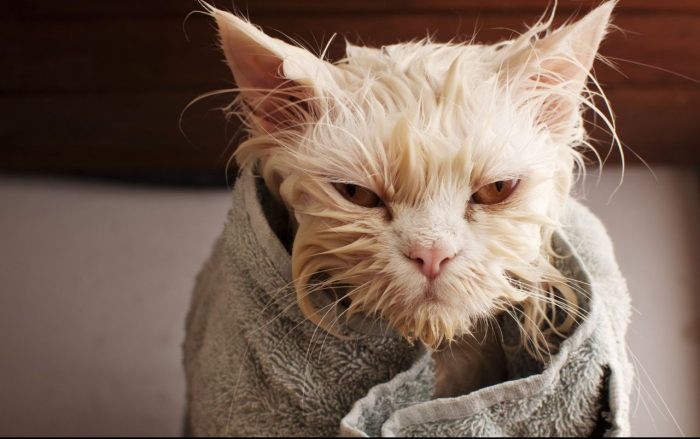
No gratitude
We hope the important event was a success, as many cats tolerate baths well. If the cat behaves aggressively, do not punish it.Let's look at a few alternatives that will keep your kitten clean and help you maintain a good relationship with it:
- Dry bath. If your cat is averse to water, consider purchasing dry shampoo. It comes in powder, foam, or spray form and is applied to the animal's coat. Be sure to read the instructions before use. Some shampoos require you to clean the cat's coat before using them, while others require the owner to clean the animal after applying the product. Check the shampoo's ingredients and ensure your cat isn't allergic to any of its ingredients.
- Damp cloth. You can wipe your cat's fur with a damp cloth or washcloth. The water should be warm, and your movements should be gentle. Continue wiping until you're satisfied with the results.
- Wipes. Take a package of special cat wipes and gently clean your cat's fur. Wipes are not only an alternative to a bath; they can also be used to remove minor stains from your cat's coat as needed.
- You can keep your pet's coat in good condition by taking them to a professional groomer or veterinarian. They have the skills and specialized tools to safely groom your kitten and give them a bath.
Fortunately, cats are quite good at grooming themselves, but from time to time, their owners still have to help them out and give them a "bath day." While cats shouldn't be bathed too often, there are times when baths are necessary (for example, if a cat's fur has come into contact with toxic substances).
Bathing helps rid animals of parasites and, in some cases, improves skin condition. Cats accustomed to bathing also show less resistance in other situations—for example, when visiting a veterinarian for treatment.
Proper preparation is the key to getting your kitten used to regular baths. If your cat resists bathing, consider alternative methods such as dry baths or washing with a damp washcloth.
Armed with this information, you're probably ready to put it to the test. Let us know how it goes by leaving a message in the comments. If you have any secrets or interesting experiences of your own, please share them with our readers.

 Tatiana
1 comment