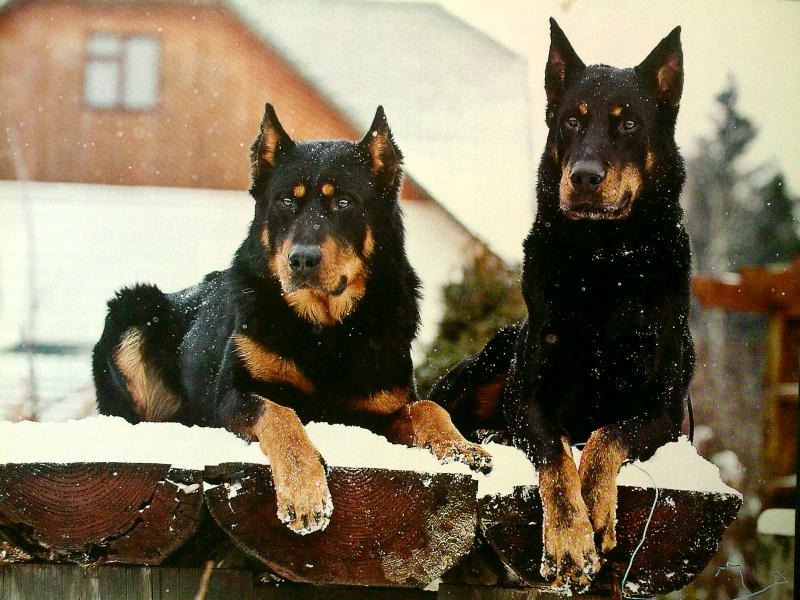
In ancient times, man's faithful companions were imbued with sacred powers. People believed that dogs possessed mystical powers: they could see spirits and all evil spirits, discern sorcerers, sense the presence of the Angel of Death, and serve as guides to the world of the dead.

Domestic dogs
The ancient Greek philosopher Plutarch mentioned cleansing rituals in which a person suffering from an evil spirit was passed between the halves of a dog cut in half. The ancient Roman encyclopedist Pliny wrote that the bile of a black dog should be used to protect a home from evil spells.
The ancient Persians believed that a dog-like guide would help them avoid getting lost during the transition to the underworld. To achieve this, the animal was shown the body of the deceased, and if the death was a pregnant woman, two dogs were brought for the ritual.
Slavic beliefs ascribed to pets the ability to sense witches and other evil spirits, warn their owners, and neutralize dark magic. Folk omens described this as follows: if a guard dog's fur stands on end and barks loudly, a witch is nearby; if it refuses to let a person into the house or attacks them when they approach children, a servant of dark forces has arrived in the yard. If an animal growls at bread brought by someone, it means someone is trying to cast a spell on the owners through the bread. If a domestic protector is restless, whining, growling, barking, and pacing the yard, expect trouble; evil has entered the house.
Animals with unusual colors were endowed with special powers to ferret out evil spirits and protect the well-being of their owners. "Four-eyed" pets with light spots above their eyes sense future events, see the inhabitants of the underworld, ward off ghosts and dark spells from the home, and prevent thieves and demons from entering the yard.
Those born in white colors neutralize any witchcraft, transforming dark energy into positive. Redheads ward off curses, the evil eye, and witchcraft. Puppies born on Saturday were also considered powerful amulets.
Attitudes toward the black coat were mixed. It was believed that lightning would not strike a house where a pet lived, and thieves would be wary. However, only families with love and harmony could keep a black cat, as it enhanced both positive and negative emotions.
Particularly coveted were the "yarchuks"—the first puppies from the first litter. Everyone coveted these powerful fighters against evil spirits, but raising them was difficult. Witches would specifically sniff out the yard in which a female dog would give birth for the first time, in order to destroy her offspring. There was a curious superstition associated with the last puppies of a litter: if a woman carried such a puppy in her bosom for a year, it would grow up to be a powerful protector against witchcraft and sorcery.
Superstitions imbued dogs with mystical powers even in death. In the Middle Ages, the repose of dead French queens was guarded by statues of dogs at the base of their tombs, while kings were accompanied by lions. At the same time, some cultures practiced cruel rituals to protect against evil: ordinary puppies were buried alive under the threshold, black ones were buried in a pot in the stable, and the walls of the house were sprinkled with the blood of pets.
Yard dogs
While domestic guardians were revered, strays had a hard time. In superstition, they are often portrayed as harbingers of misfortune and death. In many cultures, encountering such a dog on the road, especially after sunset, was considered a bad omen. This mystical fear has a perfectly rational explanation: stray dogs were carriers of disease, and when they formed in packs, they could attack people, so such encounters were not very pleasant. A stray animal wandering into a yard also evoked superstitious fear.
According to popular belief, stray animals never attacked witches, who could negotiate with them and bend them to their will. So women who were skilled at handling stray dogs were looked upon with suspicion, suspected of witchcraft.
A curious story involving sorcerers, the Inquisition, and four-legged creatures occurred in Milan in 1617. On April 29, during a procession of fifty "servants of darkness" condemned to be burned at the stake in Piazza della Vetera, a pack of thirty wolfhounds suddenly attacked the monks and inquisitors escorting the doomed procession. The beasts tore out the throats of the men in cassocks. The attack so terrified the monks that they abandoned the condemned and fled. As they fled, the citizens began killing the monks. As a result, the head of the Inquisition died, and the people rebelled. The governor was forced to issue an edict banning the Inquisition within Lombardy. The wolfhounds that saved the condemned and freed Milan from the rule of the cassocks belonged to a citizen, Dr. Malenbrache. He hated the Inquisition and trained his pets to kill men in cassocks.
Reversals
In ancient times, people believed that dark forces and their servants could take the form of dogs. Widespread superstitions claimed that the souls of people who died a cruel death, including those hanged, drowned, suicides, great sinners, and children who died before baptism, would inhabit the body of a dog. It was believed that if a dog jumped over the body of a deceased person or their grave, the deceased would soon return to the world of the living as a vampire.
Sorcerers could transform themselves into a shaggy skin while alive. In Siam, there was a belief that at night, when a witch's body sleeps, her soul transforms into a dog. If you look a shapeshifter in the eyes, you'll see that it has no pupils. In this form, the minions of evil prowl the roads, attacking people.
There are numerous legends of people who, after maiming an animal that attacked them at night, discovered the battered remains of a neighboring healer the following morning. The ancient sophist Philostratus also described a similar incident that occurred in Ephesus during the plague. On the orders of Apollonius of Pianea, a crowd stoned an old beggar, and when the stones covering the unfortunate man's body were removed, the corpse of a dog was discovered beneath them. With the death of the sorcerer, the plague ended.
The Slavs believed that witches took the form of black dogs to cause cattle plagues. Stray black dogs running around herds were considered shapeshifters and were called Cow Death.