 A small, fluffy bundle of fur—that's exactly what a kitten looks like to a child and many adults when they first get it. However, as time passes and the cat matures, it becomes clear that a decision must be made about the future of this pet, specifically: whether to neuter the animal.
Unneutered cat: potential problems
The question of whether to neuter your cat may not be a pressing one during his first year of life, but as spring approaches, you'll find yourself pondering this question more and more often. Most often, cats that rarely go outside, whether voluntarily or at the whim of their owners, they start marking their territoryPets often don't even care where they do it. Both ordinary slippers and an expensive sofa can be completely ruined.
It's worth noting that male cats, unlike female cats, are more persistent in their desires. Thus, a caring owner, seeing their pet suffering, will likely offer the cat:
- go outside and find the cat there yourself;
- bring a couple into the house or send them on a date.
If the first option doesn't work, the second one may not always fully satisfy you either. Often, cats aren't satisfied with just one encounter, and they continue to behave indecentlyMoreover, in most cases, in addition to marking their territory, animals vocalize loudly. It is at such moments that the question of whether to neuter an animal becomes especially pressing.
What you need to know about castration
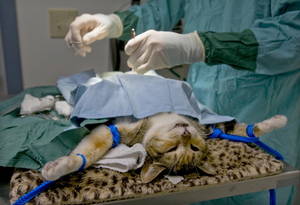
 Owners often face the question: should they neuter or spay their cat? Veterinarians have their own opinion on the matter. Castration is an operation, in which incisions are made on the scrotum and the animal's testicles are completely removed. Neutering is simply the ligation of the spermatic cords. The latter option tends to be easier for the animal to tolerate, but if the owner's goal is to prevent the animal from marking or screaming, this option should be avoided. After sterilization, the cat will be unable to sire offspring, but all of his bad habits will remain.
If you have a male cat, veterinarians recommend castration. The surgery is more complicated, but everyone will be happy afterwards. Neutering a female cat is more dangerous due to the risk of complications.
Experts say there's only a short window of time when neutering is advisable. This window is between the ages of 7 months and 7 years. There's another caveat: sometimes the age depends on the breed. Some cats reach sexual maturity significantly later than their peers.
Some owners hesitate until the very last minute, hoping that the pills and drops supposedly supposed to relieve agitation will work. But in the vast majority of cases, they ultimately decide to neuter their cats.
How to prepare for surgery
Any veterinarian will tell you to do this procedure. necessary before the first mating of the animalOtherwise, the cat will still have a slight desire, since the pituitary gland continues to produce sex hormones, and your pet will remember exactly what it was like and will want more from time to time.
When choosing a location for your pet's surgery, veterinary clinics are recommended. Although the procedure takes about 30 minutes, it's best performed in a special facility. It's also important for a loved one to be present for the first few hours after the procedure.
The following tips will help:
 The postoperative period should take place in a calm environment, where nothing or no one can disturb your ability to rest after the intense stress. A warm place with a soft surface is ideal.
- It is advisable to have someone with the cat during the first hours after the operation, as it will be recovering from the anesthesia.
- Your pet will likely want to lick the wound. This should be prevented. You can bandage the wound or put pants on it.
- Follow the advice of the veterinarian who performed the surgery. They will likely recommend thoroughly cleaning the wound in the first few days, for example with hydrogen peroxide.
- Complications in cats after castration are quite rare, however, if the temperature rises, the question of whether or not to seek professional help should not arise.
- Most often, after surgery, the animal needs to be fed a special dietary food. It's important to ensure the cat has sufficient water, unless otherwise contraindicated. However, it's highly undesirable to mix homemade food and special diets. It's best to choose one over the other.
 The postoperative period should take place in a calm environment, where nothing or no one can disturb your ability to rest after the intense stress. A warm place with a soft surface is ideal.
It's important to understand that if an animal is neutered, its behavior may be somewhat unpredictable. Some cats return to their normal routine within a few days, while others become ill. It doesn't matter how healthy your pet is; there's a common misconception that this happens. due to psychological discomfort.
Before deciding on castration, it's important to know that it's not advisable to perform this procedure on animals that regularly roam freely outdoors. Remember that despite the procedure, your pet will likely still have these habits. In the first few days after the procedure, your pet will already want to hang out with other cats. It's unlikely that owners will be able to keep them from going outside, and the risk of being outside the home is too high. risk of contracting an infection, because the wound hasn't healed yet. And the cat will have a hard time in the future.
Everyone chooses the option that suits them best. In any case, it's worth weighing all the pros and cons before deciding on such an important step.