A composting litter box for cats is a great alternative to a simple litter tray. This sanitary device is a closed structure with walls and a lid. Your pet can relieve themselves in privacy, and the deep tray allows them to dig into the litter without spilling it over the edges.
Advantages and disadvantages of a bio-toilet
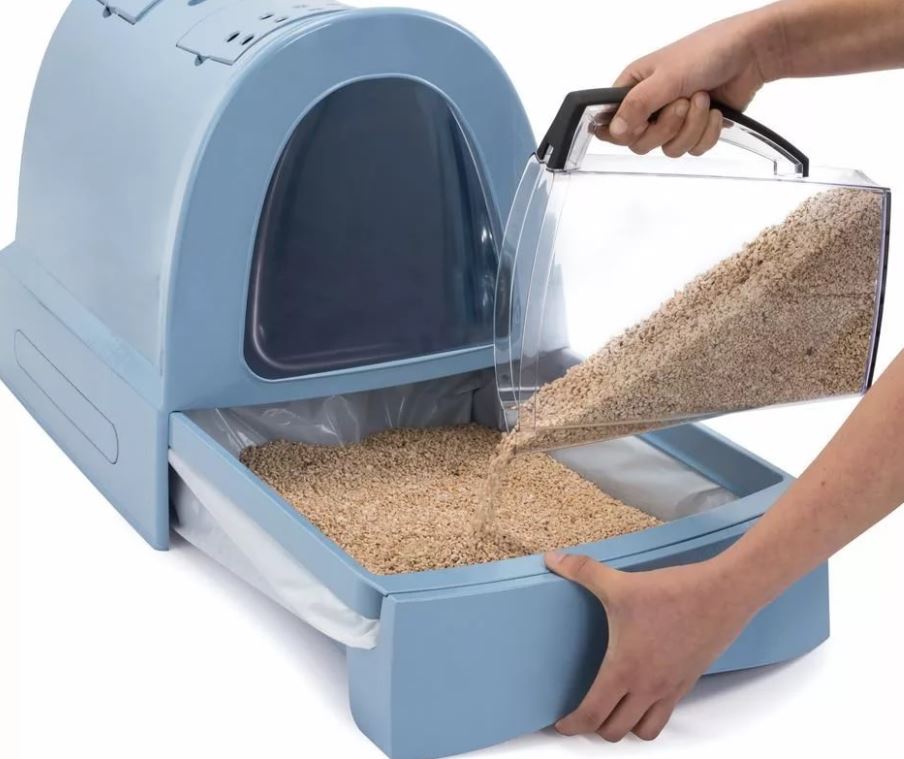
Portable toilets are relatively new, but have already gained popularity among cat owners due to their convenience and functionality. These devices offer the following advantages:
- Hygienic. Unlike a regular litter box, a composting litter tray can be cleaned every 2-3 days. Many units are equipped with an odor-absorbing filter and antibacterial properties, making cleaning easier and more comfortable for fastidious cats.
- Privacy for your pet. Some cats experience discomfort when using an open litter box and may relieve themselves in inappropriate places.
- A neat appearance. You can choose a composting toilet model to match your room's design. There are compact units that fit in a corner.
- Choose a model based on your cat's size. Your cat can easily turn around and find a comfortable spot.
The main disadvantage of a composting toilet is its high price. Other disadvantages of these hygienic devices include:
- Complex maintenance. Requires thorough cleaning. The composting toilet must be completely disassembled and cleaned, not only the tray but also the walls and roof.
- It is necessary to monitor the condition of the filters and replace them periodically.
- Cost of consumables. Regular litter is not suitable for composting toilets, and the special type is much more expensive.
- Some cats use the litter box for play and rest, rather than for its intended purpose.
How to choose a litter box for your cat
The device should be selected according to the pet's size. The side should be high, but not so high that it interferes with the animal's ability to jump in and out. It's best to choose eco-friendly materials.
The table shows the main types of bio-toilets for cats and their characteristics.
| Type of bio-toilet | Description | Pros | Cons |
| With filtration | A closed model with a roof equipped with a carbon filter. Unpleasant odors are absorbed by an adsorbent, and the walls are made of water-repellent material. | 1. No unpleasant odor. 2. Natural material of manufacture. 3. The bio-toilet is suitable for travel with the additional use of moisture-absorbing wipes. | It is necessary to monitor the condition of the filters and replace them in a timely manner. |
| With automated cleaning | After the pet has eliminated, the mechanical cleaning system is activated. The device sorts solid waste into a special bag or flushes it directly down the drain. Some smart models monitor the frequency of pet toileting and alert the owner to any potential problems. | 1. There is no need for cleaning at all. 2. Safety for the animal. If the cat returns to the litter box, cleaning is suspended. | 1. High price. 2. Complex installation of models with outlet into the sewer. |
| Built-in | This model can be built into furniture or walls. It's designed for spaces with limited space. | 1. Saving space. 2. Does not disturb the aesthetics of the room. | If thorough cleaning is required or if there is a breakdown, dismantling is necessary. |