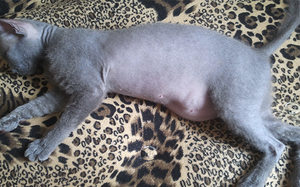
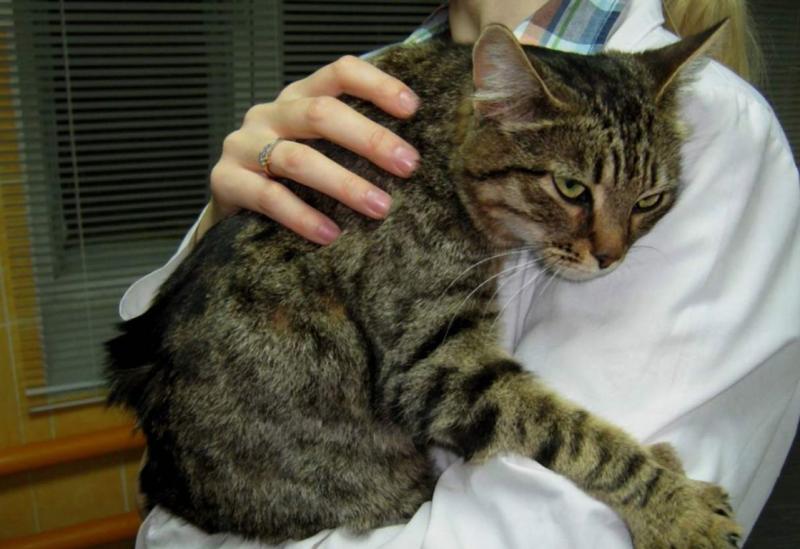
 When a small kitten comes into the home, few people think about spaying or neutering it in the future. But the kitten's rapid growth immediately reminds them of this.
To make this important decision, it's essential to fully understand the purpose and purpose of these procedures. It's essential to be familiar with the process itself, the preparation process, and, of course, the subsequent care required. Carefully research all the reviews and prices for these procedures in your city, as well as the methods used.
Why is sterilization/castration necessary?
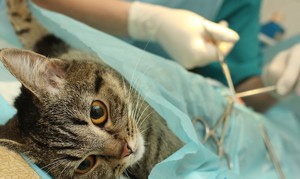 In every city and town, there are countless cats roaming the streets, homeless and ownerless. And, of course, they're all prone to reproduction.
Despite all their efforts, volunteers are struggling to find homes for so many stray cats. several times higher the number of people who want to take them in.
Cats may end up on the street for a variety of reasons:
- someone's owner died;
- someone got lost at the dacha or after a walk;
- Someone fell out of the window.
If an owner allows their cat to become pregnant, they are thereby increasing the number of homeless kittens roaming the streets.
Of course, finding a home for small kittens can fall on the shoulders of the owner, but in most cases they remain on the street and this is done by volunteers.
Left on the street, as they grow older, they will also begin to reproduce and increase growth stray catsThat's why the issue of castration and sterilization is so pressing and important in our time.
Consequences of not spaying or neutering male cats
 Some people know the importance of these processes, but fear the risks of surgery and avoid them. This raises other risks. The reproductive organs are designed in such a way that they cannot function idle.
An animal that has not been sterilized cannot become pregnant for a long time. risk of developing pathologies, related to the genitals. Such pathologies include:
- Mammary gland tumor. This disease is hormonal in nature. Unlike tumors that develop in humans and dogs, in cats it is most often malignant. This disease in cats is incurable and is fatal.
- Pyometra. These are purulent inflammations of the uterus, and in some cases, they even result in uterine rupture. When rupture occurs, pus leaks into the animal's abdominal cavity, leading to death.
Cats that have not been neutered, marking territoryThis smell is difficult to remove. Moreover, they can squawk around the clock during mating season, which can be disturbing to both you and your neighbors.
In this regard, female cats aren't much different from male cats. Their heat cycles are long, occurring one after another, with intervals of two to three weeks between them. Male cats, on the other hand, have mating seasons up to twice a year.
But the duration of one such period can range from late August to December, which is considered autumn. The spring period, however, begins as early as February and continues until June.
During this period, the animal's behavior changes. The cat becomes restless, nervous, losing weight. And, no less frequently, signs of aggression are shown both toward other animals and toward the owner.
Using contraceptives such as Anti-Meow and Contrasex for a long period of time can be very dangerous. The use of such drugs disrupts hormonal balance animal, as a result of which ovarian cysts, uterine tumors, glandular hyperplasia of the uterus, and pyometra may form.
Castration and sterilization procedure
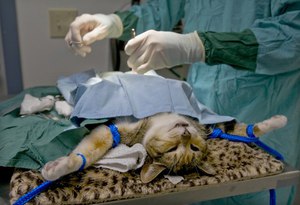 Spaying of cats is the process of removing the ovaries (ovariectomy) or removal of the uterus and ovaries (ovariohysterectomy). The second option is best, as it also eliminates any potential uterine diseases.
Tubal ligation does not eliminate sexual desire and does not provide a 100% guarantee that a cat will not become pregnant. Before the procedure, it is important to consult with your veterinarian about the method to be used.
Sterilization is done in two ways:
- Along the white line.
- Along the side slit.
With the first method an incision is made on the abdomen The animal's incision is made along the semitendinosus alba linea. The length of the incision depends on the animal's anatomy. Vets always try to keep it as minimal as possible.
This method allows for the complete removal of all uterine tissue and also provides an equal path to both ovaries. This is crucial, as the ovaries tend to regrow if even one ovarian cell remains within the cat.
Since a cat's ovary is about the size of a pinhead, it can be quite difficult to find it during a repeat operation.
When using the second method, the abdominal cavity is opened along the oblique abdominal muscle. In this case, there will be much less blood. more and access to the ovary, located on the other side, will be much more difficult.
The risk of leaving a piece of the ovary in this case increases, and the cat may begin to leak again. The positive aspect of this surgery is that the suture will be heal faster, and it does not require processing.
This method is used in most cases on stray cats, who have no place to stay after surgery and are immediately sent out onto the street, or on pregnant cats, for whom abdominal sutures are contraindicated.
Laparoscopic sterilization method
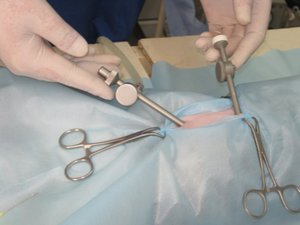 In this case, sterilization is performed using a special device – a manipulator. One to three punctures are made in the side, and the abdominal cavity pumped with gas and illuminated.
Laparoscopy is less common due to its cost and complexity. However, scammers do exist here, too. They pass off a standard operation performed through a lateral incision as laparoscopy. And the cost of such an operation is quoted at 6,000 to 10,000 rubles, instead of the prescribed 1,700 to 2,500 rubles.
These methods are carried out under general anesthesiaIt is administered intravenously or intramuscularly. Postoperative complications are not observed in 99% of cases.
Castration of a cat
This operation involves removal of cat testicles Surgical castration. Castration is also performed under general anesthesia. During the procedure, the scrotal skin is incised and the testicles are removed. The procedure takes no more than 5 minutes and requires no postoperative care.
Cost of sterilization and castration
 There's a lot of information about the cost of this procedure. Different clinics offer cat sterilization at different prices, which can vary significantly, for example, from 400 to 1,000 hryvnias (2000–7 thousand rubles).
Castration of a cat costs from 200 to 500 hryvnias (1000–4 thousand rubles)
The cost of the surgery, of course, includes the cost of anesthesia and sutures. So, consider the low cost of the surgery.
This indicates either a doctor willing to work for free or cheap anesthesia and suture material, which directly depends on the quality of these materials. Skimping on anesthesia is not worth it, as the success of the surgery largely depends on it. Otherwise, the cat may even die.
Suture materials also vary in price and quality. Some sutures are self-dissolving, eliminating the need for subsequent suture removal. This makes life much easier for owners who have cats that are extremely intolerant of medical procedures and are extremely aggressive.