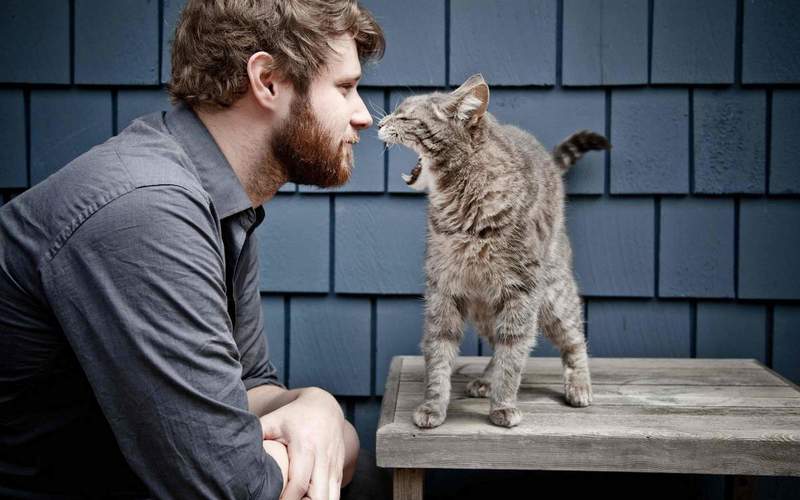
Hissing is a warning signal that the animal does not want to interact and requests that it be left alone. This behavior can be triggered by a stressful situation where the cat feels threatened. This can occur in response to loud noises, the arrival of guests or a strange animal, or if the cat is in an unfamiliar place.
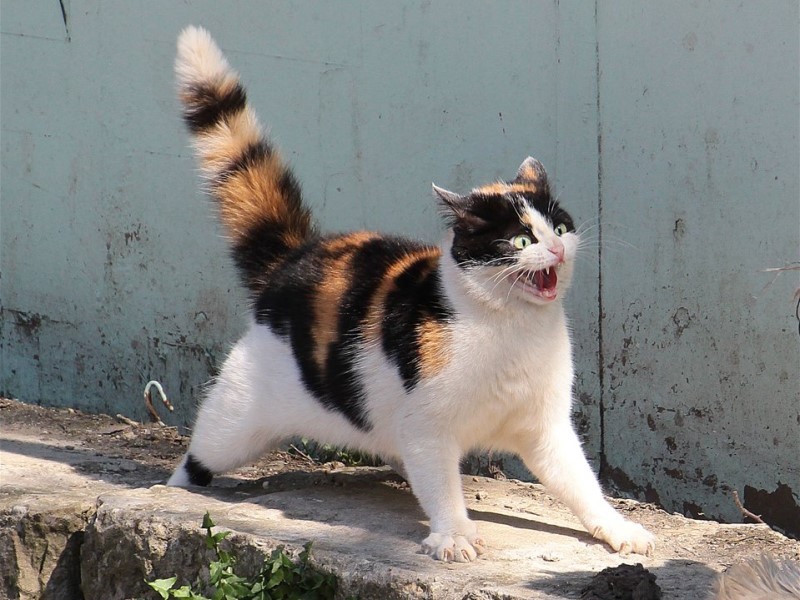
Aggression
Cats are courageous animals and thus demonstrate that, despite their fear, they are ready to defend themselves. Such behavior can also be triggered by sudden movements from their owner, which the pet interprets as aggression.
You can assess your pet's condition by its appearance: it becomes tense, arches its back to appear larger, presses its ears back, and constricts its pupils. This appearance indicates a sudden surge of adrenaline and intense concentration. Ruffled fur gives the animal a frightening appearance.
Never punish your pet; after a while, they'll calm down and likely approach you and ask for affection. Try not to make any sudden movements near your pet to avoid such situations.
Discontent and irritation
Hissing can also be caused by irritation and discontent. This is the cat's way of showing that it's in a bad mood and shouldn't be approached. It doesn't want to interact or play, and wants to be left alone. In this situation, it's best not to bother the animal, lest it attack you.
Cats are very sensitive creatures, and if they constantly hiss in the presence of a particular person, then perhaps this person has not very good energy or is simply not liked by the animal.
Fear and pain
Sudden movements, loud noises, falling objects, and the movement of other pets can cause intense and sudden fear in a cat, which will be expressed by raised fur and hissing.
The pet instinctively tries to protect itself and show that it is larger than it actually is by arching its back and ruffling its fur.
A similar reaction can occur if you accidentally step on your pet, catch it in a door, or bump into it. When moving around the house, be careful not to accidentally hurt your pet, especially if it's a kitten.
Hissing from painful sensations
Sometimes pets hiss when they're experiencing pain. This behavior is an attempt to protect themselves from the touch of humans and other animals. Cats believe touching them will trigger further attacks of pain. They hide in a secluded spot and wait for the pain to subside, or, conversely, pace anxiously around the apartment.
If a pet tries to cower or paces restlessly, doesn't calm down for a long time, thrashes around restlessly, refuses food, or appears lethargic, the owner should definitely consult a veterinarian. The cat may be ill or injured.
If your cat is hissing, arching its back, or acting ready to attack, don't bother it. It should calm down after a while, so give it a treat. If your pet is hissing and restless, seek immediate medical attention to rule out illness or injury.