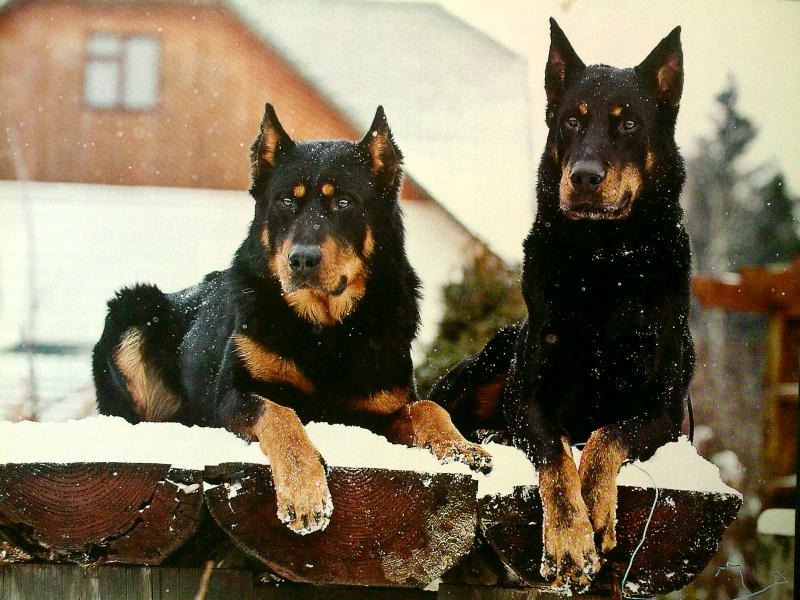
A howling dog is unpleasant for its owner and everyone around it. It's natural to want to train your pet to stop this behavior. But before attempting any training, it's important to figure out why the dog is howling. Simple prohibitions and harsh punishments are unlikely to work. Only by eliminating the underlying cause can you break your dog of this negative habit.
Content
Why does a dog howl? - The main reasons

The ability to howl was inherited by dogs from their predatory ancestors, wolves.
A dog's howl, especially at night, frightens and irritates many people. This attitude toward such sounds is partly due to folk beliefs that a dog's howling foretells various misfortunes:
- to the moon - to a change in the weather for the worse;
- on a dark, moonless night - to upcoming troubles and even war;
- looking at a specific person - to his illness or death;
- mass howling of dogs in the area - to a dead person in the populated area;
- the howling of a homeless dog means bad news from afar;
- A pet's howl while simultaneously bending its head to the floor means the death of a family member.
Zoologists and dog handlers are skeptical about folk omens. In their opinion, such behavior of the dog can be explained only by its own physical or mental state. In each specific case, there is a completely logical explanation:
- Deterioration of health. The animal is trying to communicate illness to its owner. This is a form of complaint, and at the slightest suspicion of illness, the owner should take the pet to the veterinarian.
- Discomfort. The animal may be cold, hungry, or bothered by a strong smell.
- Instincts. Sometimes dogs howl to warn of danger threatening their owner or home.
- Fear. Dogs are frightened by loud noises, flashing lights, and fireworks. In this situation, a person screams, and a dog howls.
- Yearning. This is the most common reason for a dog to howl, especially when chained. Howling is a sublimation of loneliness, a manifestation of a lack of human attention.
- Basic instinct. Sensing a female nearby, a male dog may begin howling, demanding to be let out "on a date." Punishing a pet for such behavior is foolish and even cruel. It's better to provide an opportunity to fulfill this natural desire by arranging a meeting with the opposite sex.
- Desire to communicate with fellow humans. People use phones to communicate with loved ones from a distance, and dogs use their voices for the same purpose. This way, they communicate their location to other dogs from all over the area.
- Security of the territory. Hearing the steps of strangers, a dog howls to alert its owner to the danger.
- Expression of dissatisfaction with the owner's actions. Dogs dislike manipulation of their bodies: bathing, grooming, nail filing, etc. By starting to howl loudly and protractedly, they try to force the owner to abandon their intentions and leave them alone.
The logical explanation for howling with the head bending to the floor is the sensation of a smell from a seriously ill person. Irreversible processes in the body of a dying person cause a specific odor that only a dog's sensitive nose can detect. The animal covers its nose from this deathly scent, expressing its discontent and longing for the imminent loss with a plaintive howl or whine.
At different times of the day
First of all, it’s worth understanding why a dog howls in the morning, afternoon, or evening, and what it wants to convey to its owner:
- Nighttime howling is simply a sign of boredom. A young dog only needs a few hours of sleep, so he doesn't understand why everyone around him is lying motionless and not interacting with him. This behavior can only be corrected with proper training.
- Daytime howling is a manifestation of emotion, and not always negative. A cat may even howl out of joy, expressing delight at a game or meeting its owner. If there's no reason for joy, howling is a demand for attention from its owner. It may be seeking companionship, asking for a walk, or it may be hungry.
- Howling in the morning is a way for a pet to manipulate its owner. It's a way for the pet to force its owner to take it out for a walk as quickly as possible.
There are so-called quiet breeds, which are difficult to get to even bark. These "intelligent" dogs include whippets, shar-peis, Akita Inus, and St. Bernards. If a pet of one of these breeds suddenly starts howling, it means that it has health problems or something is causing it to feel anxious or afraid.
In a dream

Little puppies often howl because they miss their mother.
A sleeping dog's howling is a reaction to dreams. Dogs' dreams are typically much more vivid than those of humans. A sleeping dog can often be seen wagging its tail, kicking its legs, as if running, growling, and barking. This behavior is associated with the dog's processing of the day's events.
This is most common in puppies or young dogs, who are very energetic and impressionable. As the dog matures, its sleep becomes more restful, and the howling stops.
If your pet consistently experiences restless sleep, consult a veterinarian. They may require sedatives.
When you're left alone
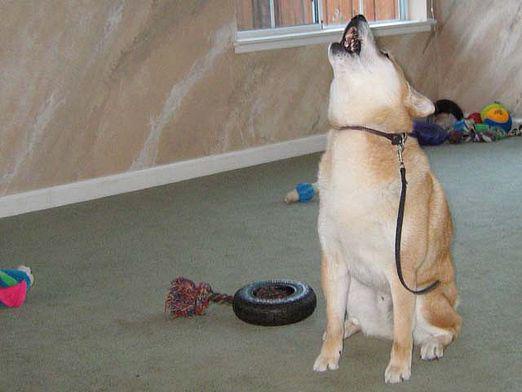
When a person moves just a couple of meters away from a dog, it starts whining, and now imagine what it’s like for it to be alone at home.
A feeling of loneliness and uselessness inevitably arises in a dog left locked in an apartment or sitting in the yard on a chain. A dog is a social creature and requires almost constant attention from its owner.
When the owner leaves for work or other errands, the dog feels abandoned. The same thing happens with a howling dog in the yard. The animal doesn't understand why the lights are on in the house, why voices are heard, and why it has to spend time alone, chained near its kennel. By howling, the dog demonstrates its disagreement with this situation.
There are breeds that absolutely cannot stand being alone. When left alone, they howl, tear or chew various objects, and scratch furniture. Dachshunds, Alaskan Malamutes, Chihuahuas, and Basset Hounds are considered noisy. If dogs of these breeds are left in an apartment for long periods, the neighbors are guaranteed to complain to the owner.
To the moon

There is a theory that not all dogs howl at the moon, but mainly those who have a more free lifestyle, that is, street dogs
The moon's effect on the human and animal psyche remains largely unstudied. During the full moon, scientists note sleep disturbances, poor health, apathy, and even aggression in some people. This is especially true for animals, which are highly sensitive to natural phenomena.
Howling at the moon is a manifestation of anxiety and fear, similar to human feelings. This is how the animal expresses its anxious mood, which is influenced by the moon.
To the music
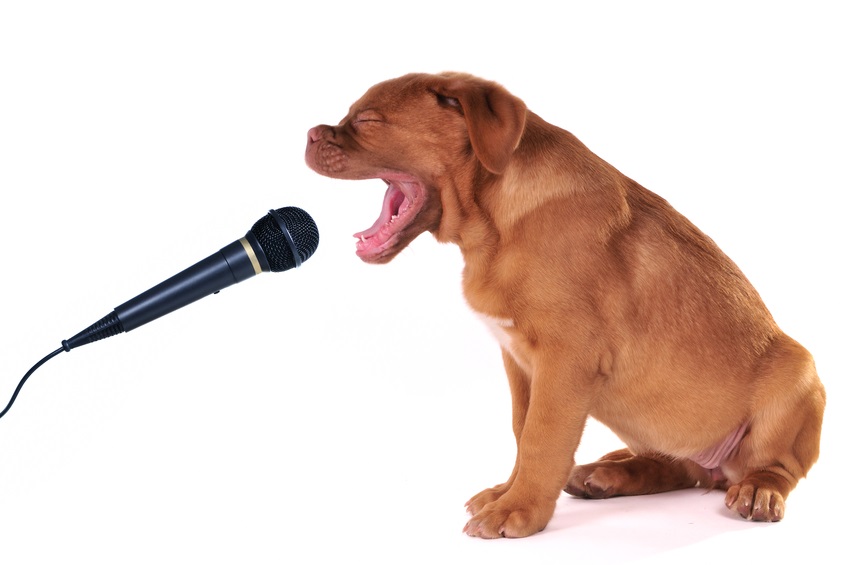
Very often, the "singing" of dogs becomes the subject of videos that then become popular
The peculiar "singing" of dogs to music is a common phenomenon. When a dog starts howling to the beat of a melody, it doesn't mean it's experiencing negative emotions. If a sound is unpleasant, it will try to move away from it rather than whine or howl.
A dog's howl to music is a song. It expresses its appreciation for the piece of music and demonstrates its own positive emotions.
Huskies are considered the most vocal breed. These dogs rarely bark, relying entirely on whining, howling, and growling to communicate. Eskimos believe this behavior is due to their close relationship with wolves. Zoologists attribute this to the fact that huskies are pack animals. They require constant communication with their fellow dogs. When living in an apartment, the breed considers its family to be its pack, so it constantly howls when interacting with people.
How to stop a dog from howling

Choose gentle methods to stop dogs from howling; cruelty is not appropriate here.
To wean your pet off an unpleasant habit, you must first try to determine the specific cause of this behavior. First, it's important to rule out illness. A dog that constantly howls should be taken to the veterinarian to determine its health.
If the dog has no physical health problems, it is important to start working with its emotions:
- Try to increase the amount of time spent walking and playing with your pet. Walks should provide your dog with sufficient energy: a tired dog won't throw "concerts," especially at night. If your dog is a hunting breed, regular outings into nature are essential to satisfy its instincts.
- When leaving your dog alone indoors, make sure there's plenty of food and water. Provide your dog's corner with the necessary toys. Alternatively, leave a radio on in the house to help it feel more present.
- Soundproof the room. Dogs' sensitive hearing is sensitive to sounds in the entryway or neighboring apartments, and they express anxiety by howling or barking.
- Teach the commands "quiet," "be quiet," and "no." This will allow you to control the animal.
- If a dog howls to music, it's best to turn off its favorite tune immediately. It's best not to reward howling with applause or laughter. Once the pet realizes its songs bring pleasure to its owner, it will begin howling even at night, just to have some extra contact with its owner. It will be very difficult to stop the dog from howling in this situation.
- Reward your pet if it stops the unpleasant howling on command: praise and give a treat.
- Punish howling by leaving the house. As soon as the dog starts howling, the owner is advised to leave the room and return as soon as the pet stops howling. The dog will understand that the owner is displeased with its behavior and will learn to remain quiet.
- An effective way to deal with a dog that's howling for attention is to ignore it. If the dog learns that howling can attract the owner to play or take him for a walk, he'll howl more often.
- A dog that sleeps outside in a kennel can be left with something belonging to its beloved owner overnight. This will create a sense of human presence and calm the pet.
- A somewhat harsh method of preventing howling is the Anti-Bark collar. It's equipped with a remote control that the owner uses to deliver an electric shock to the dog's neck whenever an unintentional howl or bark occurs. This is used to train the dog to stop howling. If the shock is accompanied by the command "quiet" or "be quiet" each time, over time, verbal commands alone will be sufficient, eliminating the shock altogether.
There are various ways to stop a dog from howling, but this doesn't mean the animal will stop experiencing negative emotions. The owner needs to ensure the pet's psychological comfort, then its emotional state will stabilize and the howling will stop. If the howling is an attempt to communicate problems, the dog needs help. If the howling is an expression of joy, there's no point in fighting it, as the animal also has the right to express its emotions.