This rare and very expensive breed originated in Singapore. Their ancestors are believed to be stray cats. Their exact origins are unknown. These small-sized cats are beautiful, graceful, intelligent, and curious, with no known health problems. Breeders consider the Singapura an ideal companion and friend for families with children. They require little grooming or upkeep. They are playful and active even in old age.
Content
Historical data
The breed's origins are shrouded in mystery. It is believed that the ancestors of modern cats roamed the streets of Singapore. They lived in ports, cesspools, and drainpipes. Most of them died during the city's reconstruction.
The breed gained popularity thanks to tourists from the United States. In the 1970s, the first specimens were brought to America. Breeders became interested in these unusual cats, and they began appearing at cat shows.
In 1984, TICA (The International Cat Association) recognized the breed. It is now accepted by many official domestic cat organizations.
Not all Singaporeans appreciate these animals. Some call them "love cats," others "children of the gutters." In 1991, the Singapore government recognized the breed and declared its representatives a "living national monument." It is believed that these animals can still be found on the streets of Singapore.
Singapura cats are most popular in the United States.
Experts have approved breed standards by which individuals are evaluated at exhibitions:
- Life expectancy is 12-15 years.
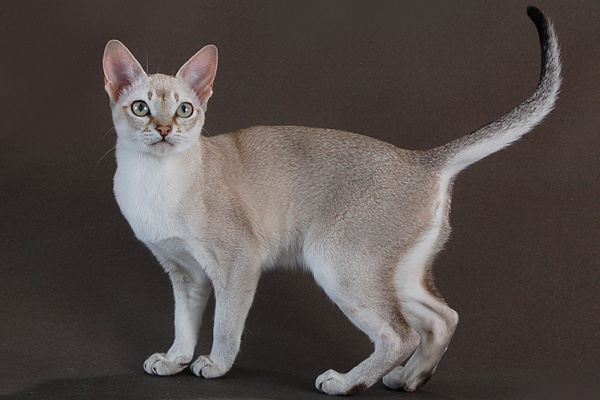
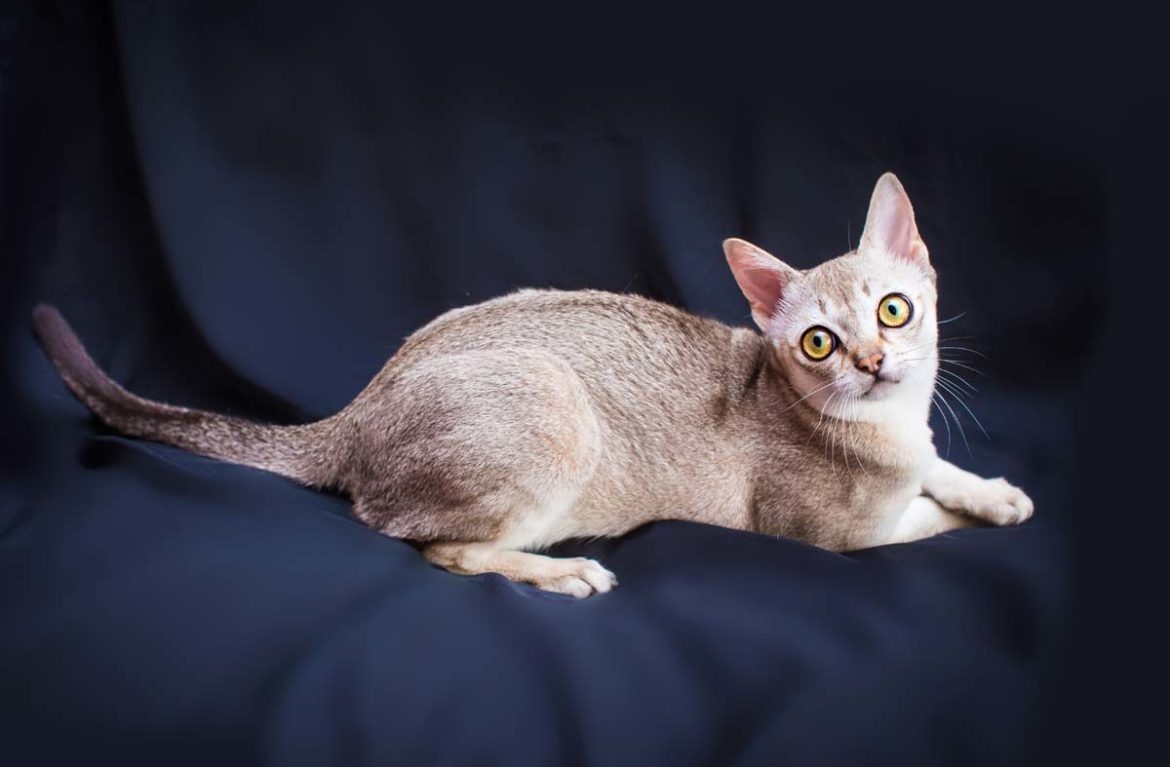
- The build is petite but muscular. The body is square-shaped.
- The female cat weighs about 2 kg, the male cat is larger – 2.5-3 kg.
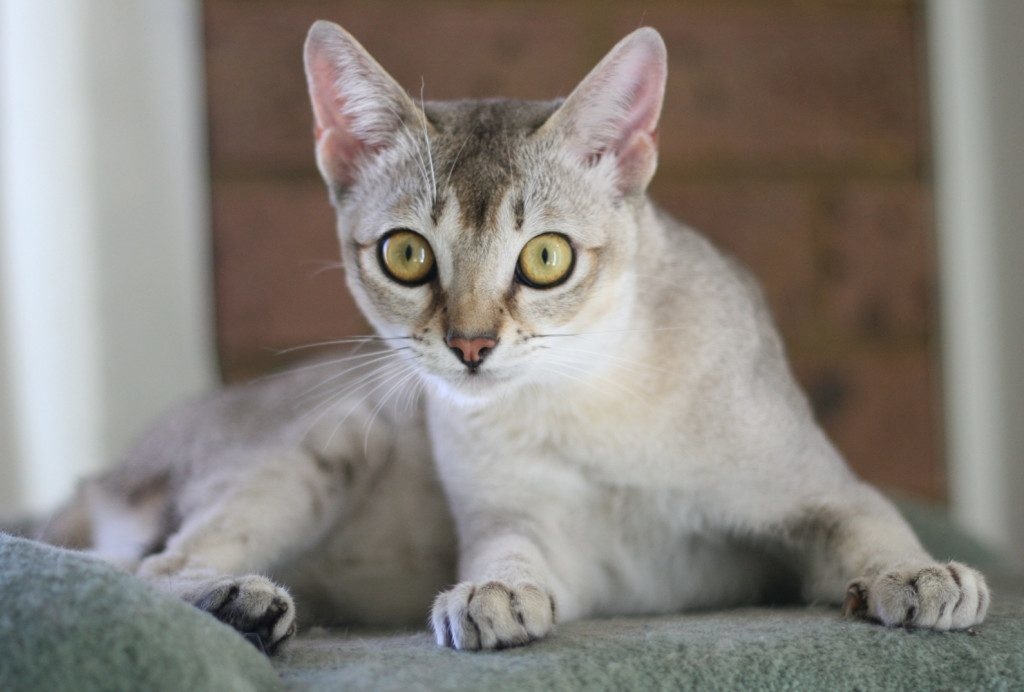
- The head is round. The muzzle is wide, the nose is blunt. The neck is well developed and short.
- The eyes are large, wide-open, slightly slanted, and yellow-green, yellow, or green. Other colors are unacceptable.
- The ears are large, with a wide base and pointed tips. The ear flaps are pink.
- The legs are medium length, with clearly defined muscles. They flow into small, oval paws. The pads are pink or brown.
- According to breed standards, the tail, carried lengthwise by the cat's body, should reach the cat's shoulders. The tip is rounded and dark in color.
- The coat is fine, short, and shiny, covering the entire body evenly and densely. Kittens have longer coats. There is no undercoat at all.
- Only one officially recognized color is "sepia agouti"—dark brown ticking on an ivory base coat. The muzzle, chest, and belly are lighter. The fur around the eyes, nose, and between the toes is brown. The tip of the tail is dark. A dark stripe is present on the inside of the legs, on the stifles (on the hind legs), along the back, and on the tail.
The wool shimmers with a pearlescent sheen. This effect is due to the hair's unusual structure.
Each hair has at least two areas of dark ticking separated by a light zone. The base is light, while the tip is darker.
Ticking is the alternation of light and dark shades in hair coloring.
Behavioral features
The breed has many virtues. Individuals are highly intelligent and quick-witted. They are attached to their owners but unobtrusive, affectionate, friendly, playful, and cheerful. They remain cheerful even in old age. Singapuras are independent, determined, and courageous.
The cat gets along well with children and pets and quickly learns house rules. This pet is curious and observant, showing interest in everything that happens at home. It rarely vocalizes and doesn't cause any particular problems. If necessary, it can hunt mice and small birds. It can be trained to perform simple tricks.
The breed does have some drawbacks. These cats are cautious and do not tolerate loud sounds, noise, or prolonged loneliness. They take a long time to adapt to new environments and are wary of strangers. Fans speak highly of these cats, considering them ideal family pets.
Choosing a kitten
The breed is very expensive and rare (due to breeding problems, cats often have difficult births). There are reputable catteries in Russia. You may need to reserve a pet in advance.
The average price for a pet-class kitten is 30-40 thousand rubles. Show-quality kittens are several times more expensive. Kittens are offered for sale at 3-4 months of age. By this time, they are independent and have received all necessary vaccinations.
Recommendations for choosing a pet:
- They buy an animal that meets all breed standards.
- A small kitten is no different in appearance from an adult cat.
- Healthy babies are active, well-fed, with clear, shiny eyes and beautiful fur.
- Before purchasing, you need to observe the behavior of the chosen kitten.
The acquired pet must be given a name:
- for a boy: Tom, Teddy, Max, Pete, Luke, Sam, Tim, Peach, Mickey, Tyson.
- for girls: Tusya, Tosya, Elsa, Kitty, Mini, Sima, Zoya, Sonya, Dana, Ruta.
Maintenance and care
The cat doesn't require any special conditions. The pet enjoys spending time with its owner and doesn't need its own resting place. A rubber grooming glove, a litter box, bowls, and toys are included. Breed enthusiasts claim that Singapuras are very clean and can be toilet trained with a special seat.
It is important to protect the animal from drafts.
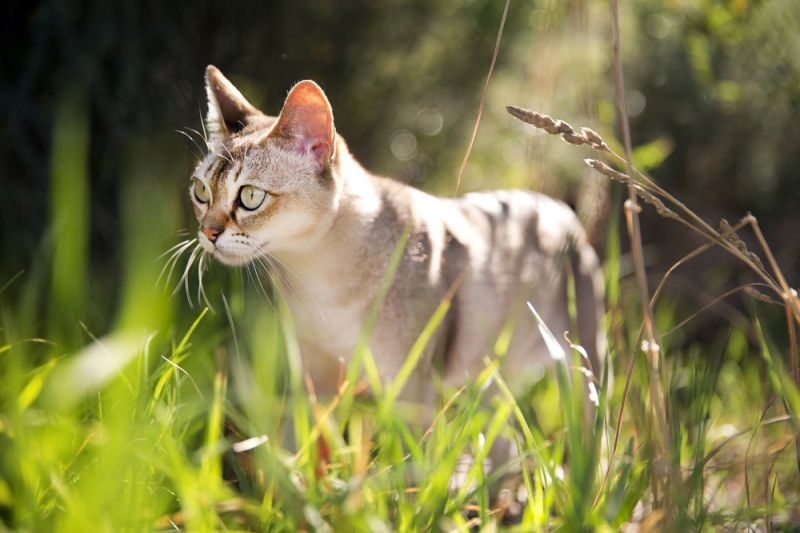
Outdoor walks are permitted only during warmer months and under owner supervision. A leash or harness can be used for outdoor walks.
Proper nutrition
Cats of this breed have a good appetite, so it's important to monitor their diet. They are not picky eaters. Adults are fed twice a day. Kittens are fed four small meals a day. They are fed high-quality specialized food (containing vitamins and nutrients) or a balanced diet of natural foods:
- The base is boiled meat (turkey, chicken, rabbit, beef) and sea fish, minced meat.
- Boiled offal.
- Eggs.
- Porridges (oatmeal, buckwheat, rice) are seasoned with vegetable oil. Boiled vegetables (carrots, zucchini, pumpkin) can be added. Prepared without spices or salt.
- Fermented milk products (kefir, sour milk, fermented baked milk, cottage cheese, unsalted cheese, natural yogurt). Full-fat milk is poorly digested.
- Clean drinking water.
The following foods are prohibited from the host's table: sweets, salty, fried, fatty, spicy, sour, pickled, spicy, smoked, and baked. They are harmful to the body.
Maintaining appearance
These cats are clean and require minimal grooming, which is standard for all shorthaired breeds. Pets are accustomed to procedures from early childhood:
- Clean the ears as needed, about once a week. It's recommended to inspect them daily.
- The eyes are wiped daily with a cloth soaked in warm boiled water.
- Cats shed very little. Their fur is brushed twice a month with a rubber glove or a natural bristle comb.
- Cats are bathed only when absolutely necessary, or if the animal is very dirty. Special shampoos are used.
- Claws are trimmed once a month.
- The wool is treated against fleas.
Cat health
Singapura cats grow and develop slowly, reaching full maturity at two years of age. These cats are robust and free of hereditary diseases, a trait they inherited from their stray ancestors.
- Some pets may have difficulty with standard vaccinations. Vaccinations should be administered under the supervision of a veterinarian.
- Singapuras are sensitive to drafts and can catch a cold. Symptoms of a cold include sneezing, fever, nasal discharge (runny nose), watery eyes, loss of appetite, and lethargy. A visit to a vet for treatment is necessary. The cat usually recovers quickly.
Breeding
Breeders and experienced breeders meticulously maintain the purity of the breed. Specimens that do not meet standards, as well as those with poor health, are excluded from breeding.
There's a serious problem in breeding Singapura cats. All females experience uterine inertia (absence of muscle contractions) during labor. They undergo cesarean sections. They rarely give birth spontaneously, and natural labors are lengthy. Litters range from 1 to 4 kittens.
Mating takes place no earlier than two years of age for female cats and 1.5 years for male cats. A perfect partner is selected. It's best to reserve a match in advance to avoid a long wait. The meeting takes place on the male cat's property.
Pregnancy lasts an average of 60 days. All cats undergo a Caesarean section for safety. Kittens grow and develop slowly. Cats care for their offspring very carefully and tenderly. They are capable of raising other cats' kittens. By the age of 3-4 months, the kittens become independent and are offered for sale. Vaccinations are also administered at this time. All records are recorded in the veterinary passport.
The Singapura cat is a cute, miniature cat that is kind, affectionate, loyal, and obedient. It requires little maintenance and care.