Cats, like humans, have their own celebrities. Some were lucky enough to find shelter with famous people and thus gain popularity, while others distinguished themselves through their heroic deeds. Russia, too, has its fair share of "celebrity" felines.
Cat Dorofey and cat Milka
Former Russian Prime Minister Dmitry Medvedev is the owner of two charming creatures – a cat named Dorofey and a cat named Milka.
Milka the Cat
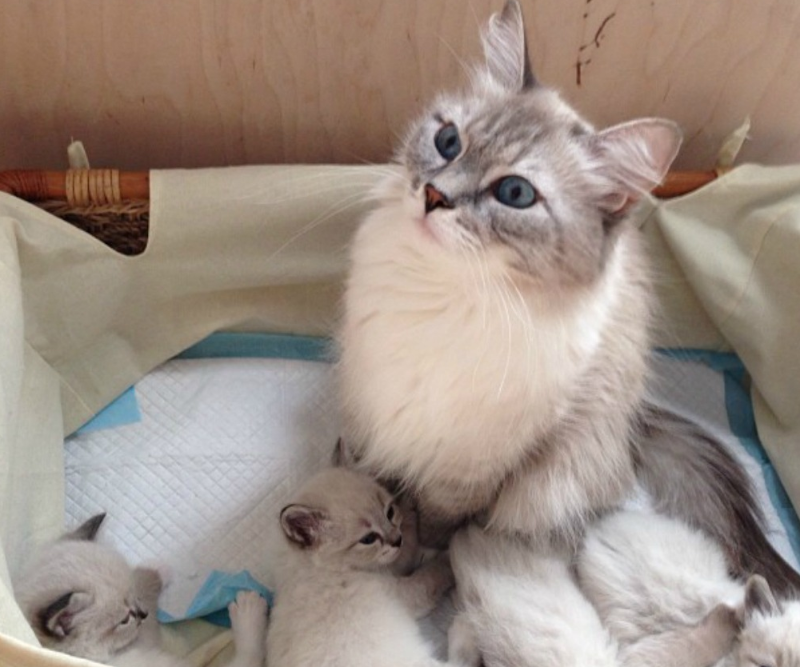
Milka, the cat, is rightfully considered the most influential of our country's tabby cats. She is an unusual breed—the Neva Masquerade—a subspecies of the Siberian cat. She has a pointed coat and expressive bright blue eyes.
In 2013, Milka gave birth to kittens, and the news sparked a frenzy of excitement online. One kitten was given to former Finnish President Tarja Halonen, whose beloved cat had died at the time. The Prime Minister's family wanted to keep a couple, but the fate of the others remains unknown.
Dorofey the Cat
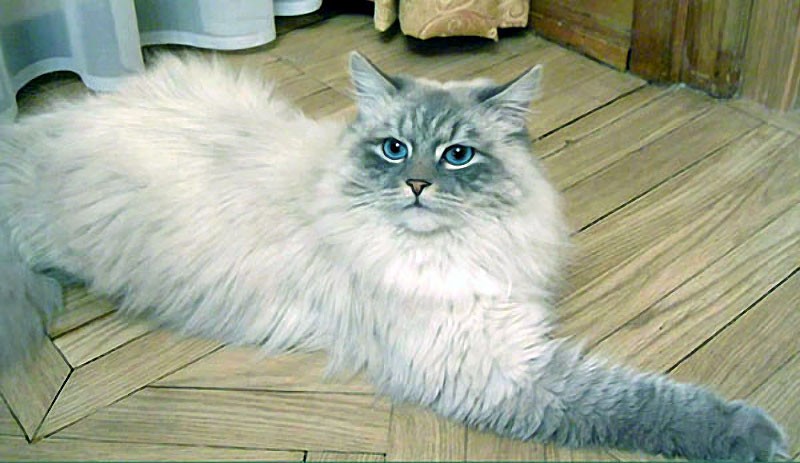
Before Milka, Dmitry Anatolyevich had a well-known cat named Dorofey living in his Gorki residence. The news that he had gone missing, and that the prime minister's entire staff was investigating his disappearance, gripped the entire world. It even reached third place in international news, surpassing breaking news from Syria and Iran.
And the fact that he was defeated in a battle with Mikhail Gorbachev's neighbor's cat provoked the indignation of representatives of the Communist Party of the Russian Federation, who claimed that "Zyuganov's cat Vasily, unlike Medvedev's Dorofey, always won duels with his rivals, never shying away from a confrontation."
In 2014, journalist and music critic Artemy Troitsky told the Sobesednik newspaper that the cat had died. Officials have not confirmed this report, but there has been no further news of Dorofey.
Masha the Cat
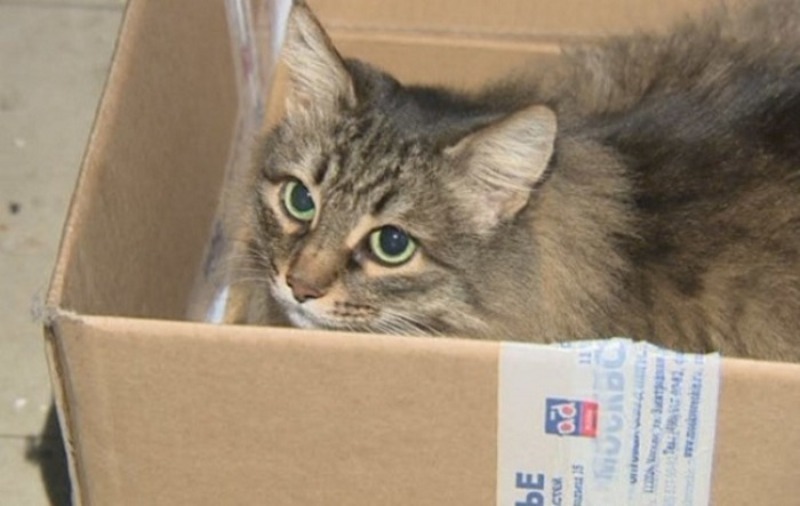
An unremarkable stray cat from a building's entrance became a celebrity overnight. In January 2015, this fluffy beauty, resembling a Siberian cat, saved the life of a newborn baby in Obninsk.
Unknown people placed the baby in the box where Masha lived, along with a couple of diapers and a bottle. Pregnant Masha, keeping the baby warm with her own body, cried out for help for several hours, meowing loudly. People woke up and went out to see what had happened to the unfortunate woman, and upon seeing the baby, they called an ambulance. Fortunately, the baby was unharmed, and Masha the cat became beloved all over the world.
The boy was named Vanya, and over 100 families, including couples from abroad, wanted to adopt him. But child protection authorities chose a young couple from Obninsk, and now the little boy is five years old.
Renowned animal trainer and founder of the "Cat Theater," Yuri Kuklachev, even wanted to take Masha home. The residents of the building where the incident occurred disagreed, and the cat became a pet. At the end of 2015, Russia awarded heroic cats: for her heroism, Masha received a house or a bed.
Hermitage cats
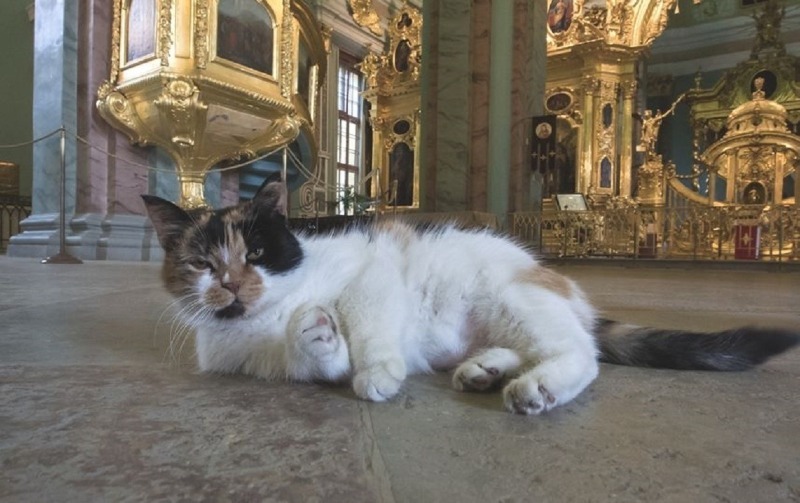
"Hermitage cats" is the affectionate nickname for the Hermitage cats. Legend has it that Peter the Great himself brought the first cat to the palace. His daughter, Elizabeth Petrovna, issued the "Decree on the Expulsion of Cats to Court" from Kazan. Catherine the Great granted the cats the status of "art gallery guards," despite the empress's dislike of the furry four-legged creatures. This was all because the cats were excellent at protecting the palace from rats and mice. They continue to perform this service to this day.
Nowadays, every new recruit to the Invisible Guard is given a flea collar and a name. At first, they were given the names of famous artists and sculptors whose works are housed in the museum, then the names of countries, then US states, and then Indian states.
Each of the Hermitage's freelance "employees" has their own area of work: the aristocratic cats are allowed on the mezzanine, the mid-level ones inspect the basement, and the rest keep watch in the courtyard. Museum staff have posted a "Caution: Cats!" sign for them to keep them safe.
The Hermitage is home to up to 60 animals. People occasionally abandon kittens and even adult cats at the museum's gates. Therefore, on the website "Hermitage Cats," you can choose a furry pet that once guarded the Hermitage.
Cat Mostik
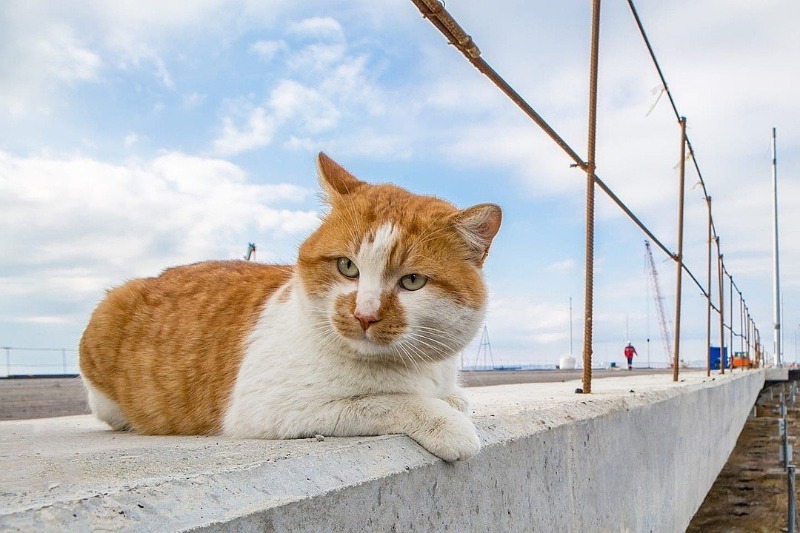
He's also known as the "Bridge Cat." Back in 2015, security guards at the Crimean Bridge construction site took in an abandoned, skinny ginger kitten and gave him a place to live in their trailer. Thus, the cat became the "inspector," monitoring every stage of construction, and the Crimean Bridge's mascot. Mostik has gained a significant amount of weight over the past five years, and his favorite foods are dumplings, pancakes, and shrimp.
In December 2019, the bridge across the Kerch Strait was completed. Mostik will inspect train traffic for a few more months, and then move on to a new location. He has already received job offers, according to the Crimean Bridge information center.
Mostik regularly maintains his own blog, where you can always find his latest photos. Some fans even suggest building a bronze monument to the inspector cat before entering the bridge.
Cat Zarathustra
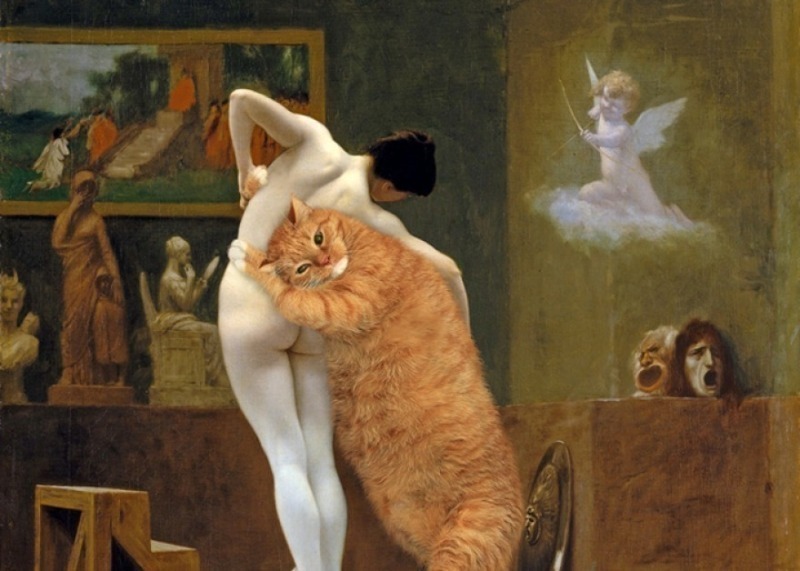
This fat ginger cat belongs to Svetlana Petrova from St. Petersburg. She adopted Zarathustra after the death of her mother, whose passing she grieved greatly. Then a friend suggested creating an art project featuring her mother's pet. That's how FatCatArt came to be, featuring the cat in classic artistic settings.
Zarathustra is now a worldwide favorite. People from 30 countries follow the release of new works featuring the ginger "hero." Svetlana and her team work daily, entertaining the cat to achieve the perfect pose and facial expression. After all, only the best photos will delight fans.