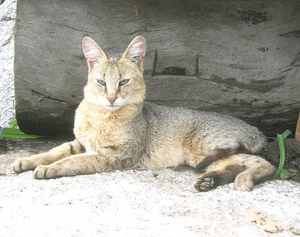
 The breed has been known since ancient times. One of its names—the Nile cat—refers to the ancient Egyptians' familiarity with these predators. Surviving drawings suggest that the Egyptians trained them for hunting, and these elegant, graceful creatures lived in homes alongside people. This is reflected in the Latin version of the breed's name—Felis chaus. The second part of the name means "house, domestic."
Unlike in Ancient Egypt, jungle cats in other countries were considered highly dangerous predators and were the main threat to villagers. While preying on muskrats and pheasants, jungle cats would approach residents' homes and hunted poultryOn the other hand, hunters were engaged in capturing wild cats, and the skins of the killed animals were used for economic purposes.
The history of the Chausie, a hybrid breed for domestic use, began in the late 19th century. While retaining many traits of their wild ancestors, these animals have the docile nature of domestic cats.
Content
Description
Classification
An order of carnivores, a member of the Felidae family, the species is the jungle cat. Other names include the house cat and the swamp lynx. This species has nine subspecies (some zoologists count ten).
Habitat
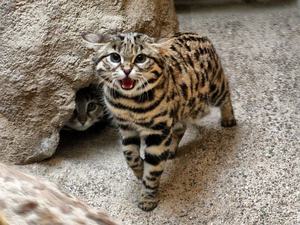 Their primary habitat is the Caucasus, the Caspian regions of Russia, and the riparian jungles of the Amu Darya. However, within Russian borders, representatives of this breed have not been encountered since the 1980s.
In addition to their main range, these cats can be found throughout Asia and North AfricaBut in general, encounters with them are quite rare due to the caution of these animals.
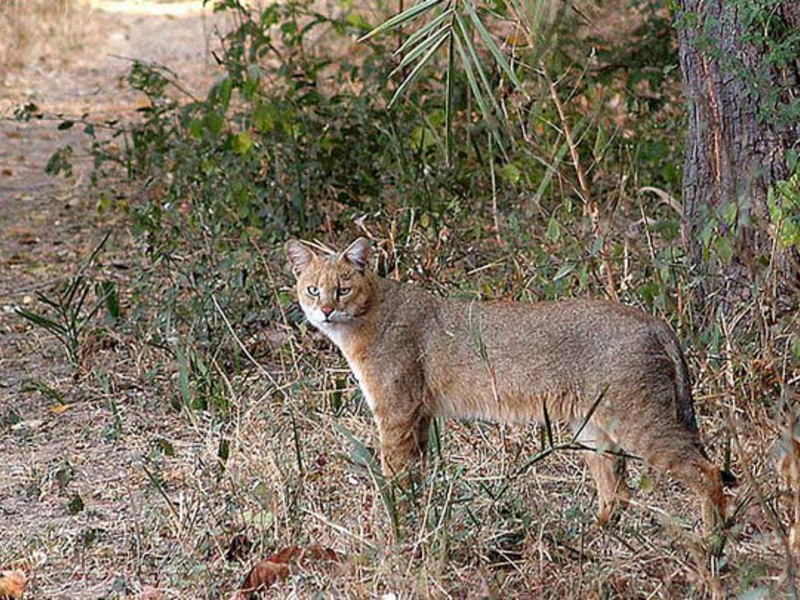
The area where jungle cats live and hunt is covered with impenetrable thickets, damp forests, and often thorny bushes. Bodies of water with thickets of sedge and reeds are also a favorite habitat for these predators, as they are excellent swimmers and are not afraid of water. However, jungle cats dislike open spaces and mountains. Cold, snow, and icy surfaces are also undesirable for these predators—their thin fur and paws, which are unsuited to snow cover, are the reasons for this behavior. Generally, these predators prefer warmth.
Appearance
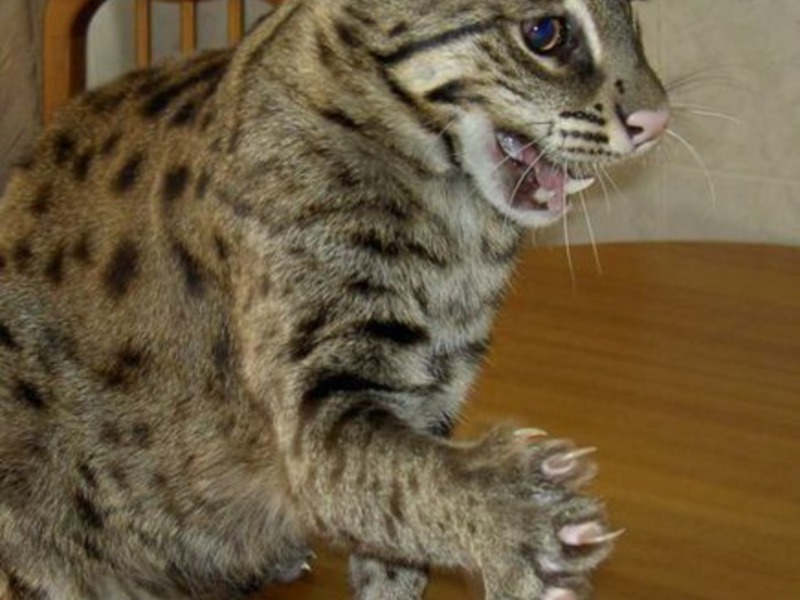
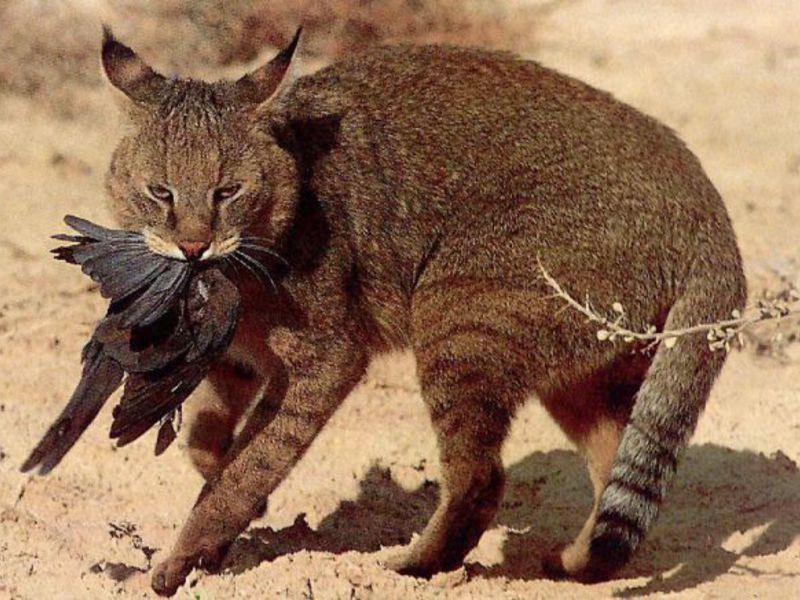
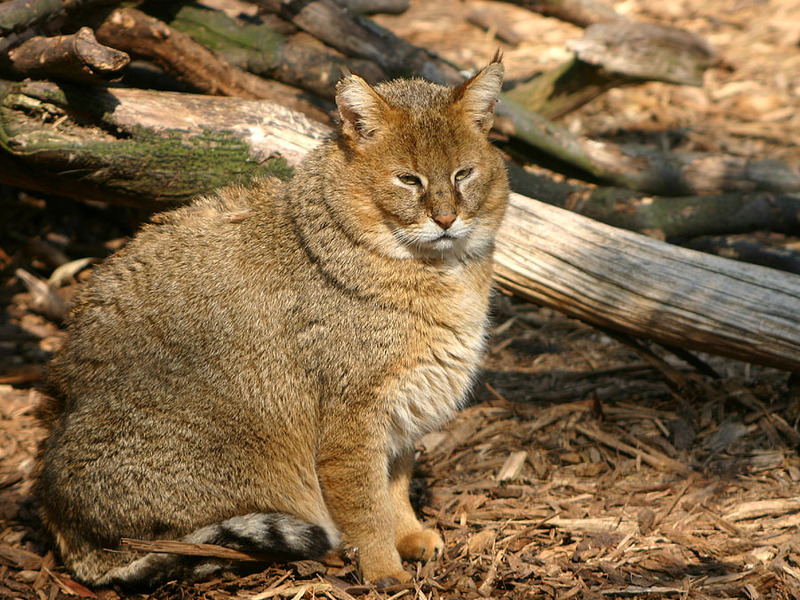
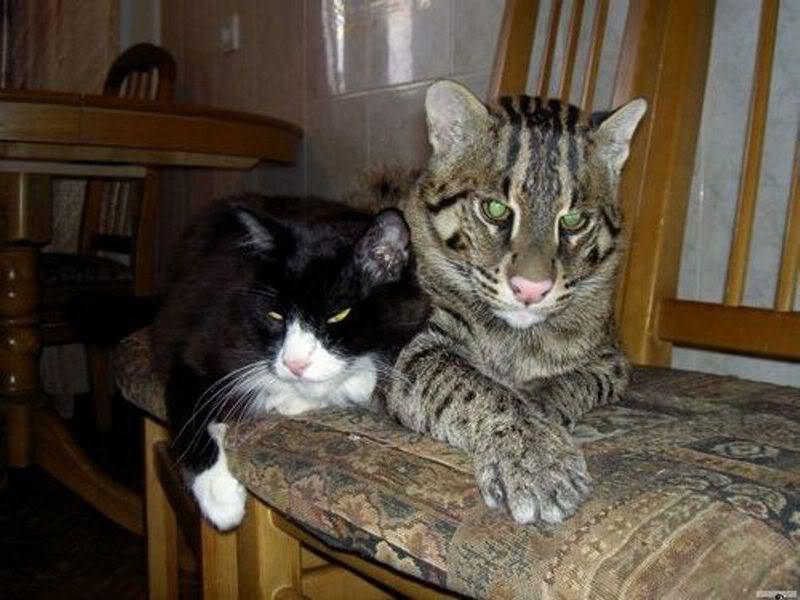
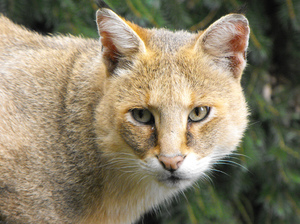
The jungle cat may resemble a lynx due to the tufts on the ends of its ears. Other characteristic features can be systematize as follows:
- Animal dimensions: length up to 120 cm; height up to 50 cm (some sources give a value of 70 cm); tail length within 20-30 cm.
- Weight from 8 to 16 kg (females are smaller and lighter than males, weighing up to 10 kg).
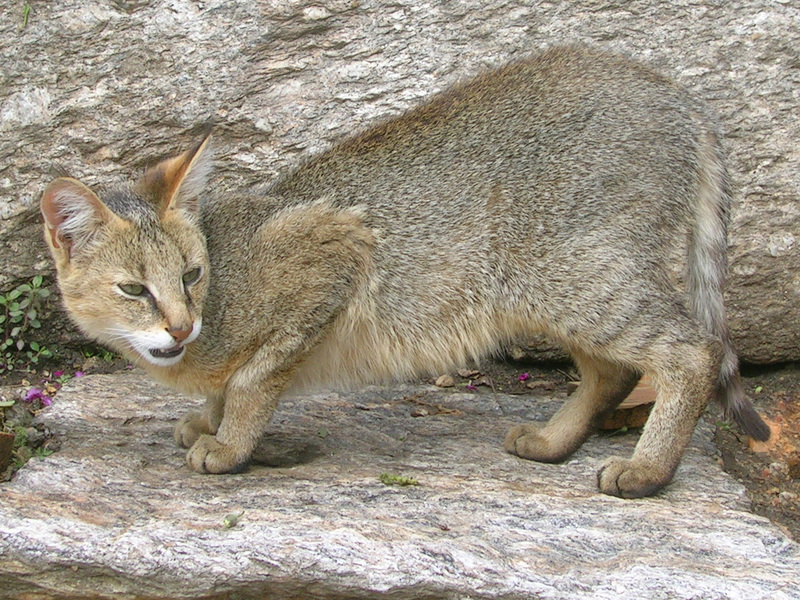
- Coat color varies greatly depending on habitat. However, the primary colors include brown, gray, and brown tones in a variety of combinations and proportions.
Some animals have a uniform coloration, with barely noticeable markings. A reddish stripe runs along the entire back. The ears, forehead, and nape are the same shade. However, the groin and chin are close to white or slightly yellowish. The tail is gray, with dark rings. The tip of the tail painted blackNewborn kittens have stripes all over their bodies.
Central Asian and North African cats are grey-yellow, which is apparently explained by the need for camouflage on sandy soils and in thickets of dried reeds.
Red and brown shades are typical for cats of South Asia.
But the subspecies of the House with thin and rough to the touch fur (in winter it becomes thicker) differ greatly from each other in color.
Habits
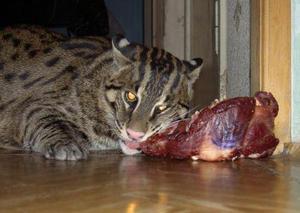 Jungle cats are not fond of climbing trees and do so only when absolutely necessary, to escape large predators. They nest in abandoned burrows (badger, raccoon, fox, and former porcupine dens). They do not dig their own burrows. They enjoy resting. on the trampled compacted reedsThese predators change their shelters from time to time and do not stay in one place for long.
During the period of raising the cubs (2-5 animals are born in one litter), the female lives in a nest built in the most inaccessible places.
More males are born than females.
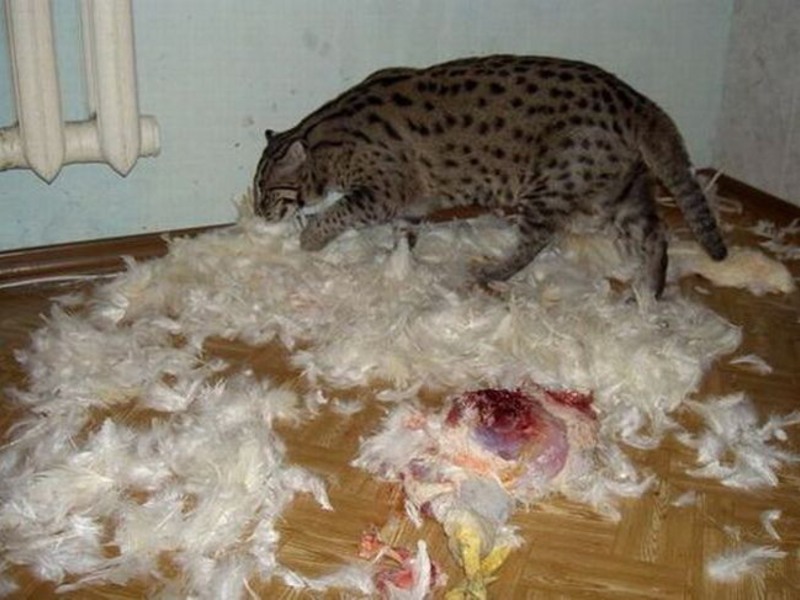
These cats hunt at night. Their excellent jumping ability, keen hearing and sense of smell, and swimming ability help them achieve this feat. In winter, they may also hunt during the day. They search for prey during leisurely walks, sometimes even lying in wait. Their prey includes wild ducks, rodents, wild boar piglets, and hares.
Jungle cats are solitary and interact with female cats only during the breeding season, which occurs between February and March. A territory belongs to a specific male. has a size of 50-200 m.
Home maintenance
Hybrids
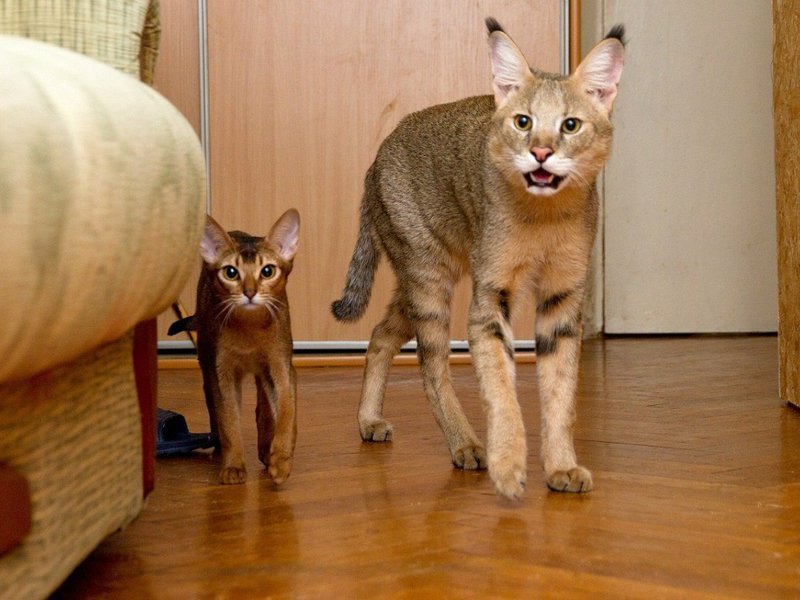
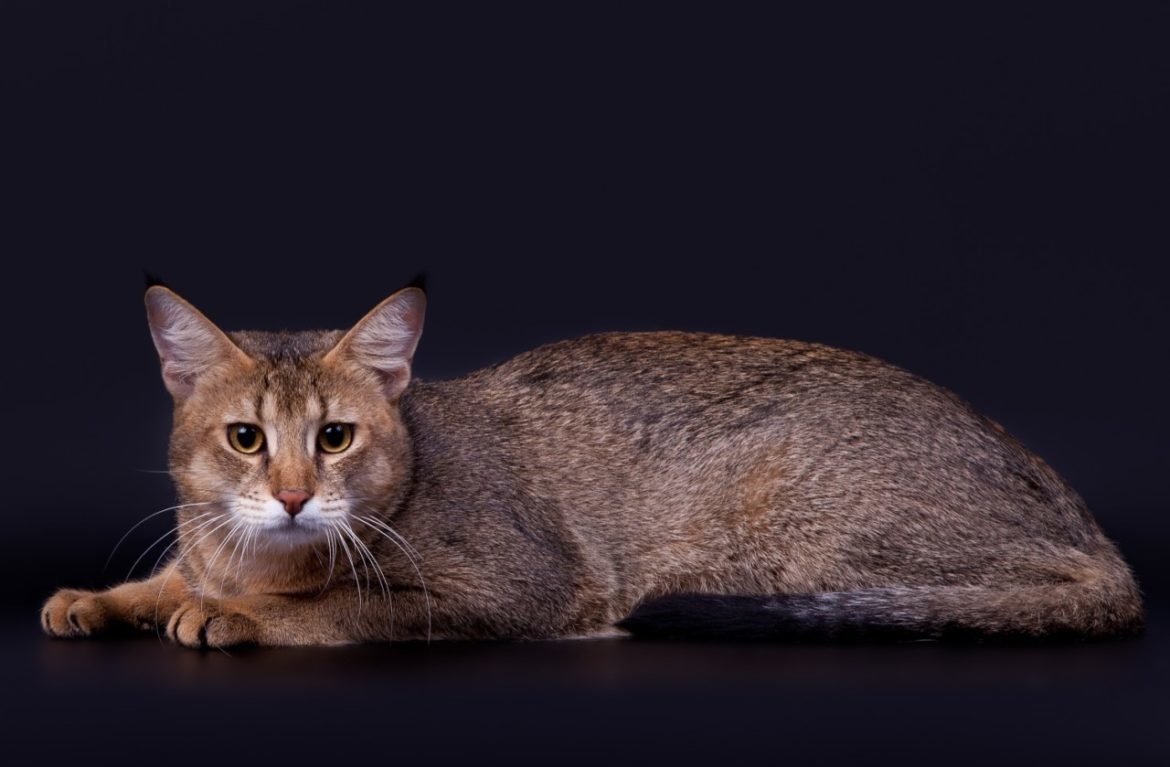
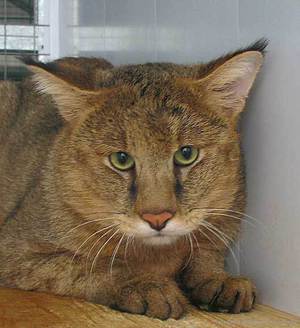 First of all, it's worth considering the advisability of keeping a predatory animal as a pet, especially in a city apartment. There are breeds called Chausies (or Chausies, both names are commonly used interchangeably)—the descendants of crossing wild jungle cats with domestic breeds (primarily the Abyssinian). These cats have a friendly and docile nature. The breed has been officially registered since 2003.
It is also worth mentioning other domestic breeds that have jungle cats among their ancestors: Stone Cougar and Jungle Kern.
Wild cats are very active and have a fiery temperament, posing a serious threat to all animals in the area, including dogs. Recognizing only one owner, these cats (and female cats) demand the utmost attention. If they don't receive it, they can become seriously offended, even temporarily abandoning the home. During lovemaking, cats are also dangerous to humans. Headstrong, highly intelligent, and loving space and complete freedom, jungle cats are ill-suited to being pets. Those who decide to keep them should acquire them at a very young age, so they have a chance to cope with the peculiarities and nature of these predatory animals. Don't expect a jungle cat to become a quiet couch potato.
Buying a kitten
Finding a Reed Cat kitten in Russia is very difficult. However, there are specialized catteries available to those who love them. You can also find the perfect specimen at elite breed shows. The price of a Reed Cat kitten is 5 thousand US dollars.
The kitten vaccination schedule is designed for 3 months of age, so it's best to purchase kittens at this age. Please note:
- for the presence of the necessary set of documents certifying both the breed and pedigree of the cat;
- The kitten's character is playful, cheerful and affectionate; the cat has tolerated vaccinations well, is healthy and ready to move;
- to train the kitten to use the litter box;
- for the presence of a habit of using a scratching post;
- the ability to calmly, even friendly, relate to other kittens and strangers.
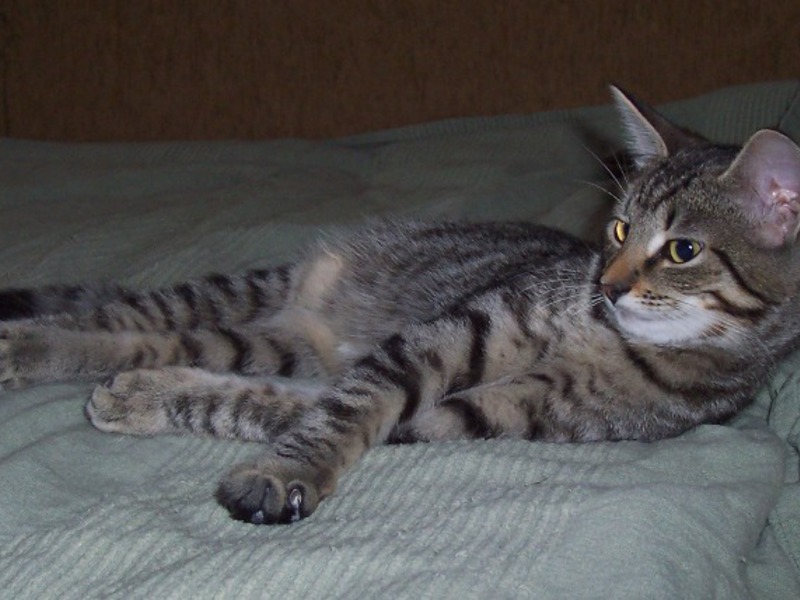
Moreover, it is at three months of age that the difference between a Housey and a normal kitten born in the same litter becomes easily discernible.
Care
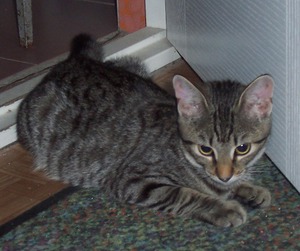 Keeping any elite animals it's a troublesome and expensive businessNot everyone can handle this. Raising jungle cats at home requires an unlimited supply of love and, one might say, a hellish amount of patience. Jungle cats require even more attention and affection than other felines. They love active games and distinguish their owner from others.
Animals require space. From this perspective, a country home is preferable to a city apartment.
To stay healthy, house cats should receive their vaccinations on time, eat well and regularly, and receive the necessary dose of ultraviolet radiation. Cats can live a long time, up to 14 years..
These animals are highly trainable; they can easily be taught to open and close doors and use a litter box. They obey their owners unquestioningly and react calmly to the presence of other pets (outside their territory, they will still terrorize "foreign" animals). However, if they don't receive their owner's attention, they may even start hunting "their" pets.
Among the characteristics of these cats, it is worth noting their inherent curiosity and love of water.
These cats should be brushed once a week. The exception is the shedding season, when brushing should be done daily. Nail trimming is not necessary; provided scratching posts are provided, these cats will not damage their owners' furniture.
Jungle cats are unpretentious and undemanding when it comes to food. Their daily diet typically consists of two mice (or one rat) and 200 grams of meat.
Feeding rules:
 During the first year of life, kittens are fed twice a day; in subsequent years, one daily meal is sufficient.
- It's important to include both live food and plant foods in your Hauschmidt's diet. If your Hauschmidt asks for a cucumber, zucchini, or pumpkin, it's worth honoring their request. Sweet fruits also wouldn't be out of place in their diet. In general, plant foods should make up a third of your Hauschmidt's total diet.
- Boiled fish can be included in the menu, but not more than once a week to avoid rickets due to the leaching of calcium from the bones.
- One day a week should be a fasting day.
- Food should contain vitamins and mineral supplements, especially if owners feed their pets artificial food or store-bought meat.
 During the first year of life, kittens are fed twice a day; in subsequent years, one daily meal is sufficient.
If cats are allowed outside the city provide space for movementIn a city apartment, they can become obese from a sedentary lifestyle and become ill from a lack of ultraviolet light. Therefore, walks with pets in the fresh air should be frequent, although not as regular as with dogs.
Mating is recommended after puberty has occurred, reaching 18 months of age. Hausy cats can be mated with Abyssinian or other shorthaired cats, and the litter will include both jungle cats and regular kittens. Gestation lasts 66 days.
If these conditions are met, the graceful and devoted jungle cat will become a true friend to its owner and their friendship will last a long time.