During heat, a cat can cause a lot of trouble with her behavior. Owners scour the internet in hopes of finding a cheap and effective way to calm their pet, only to encounter some rather strange advice.
Bathing
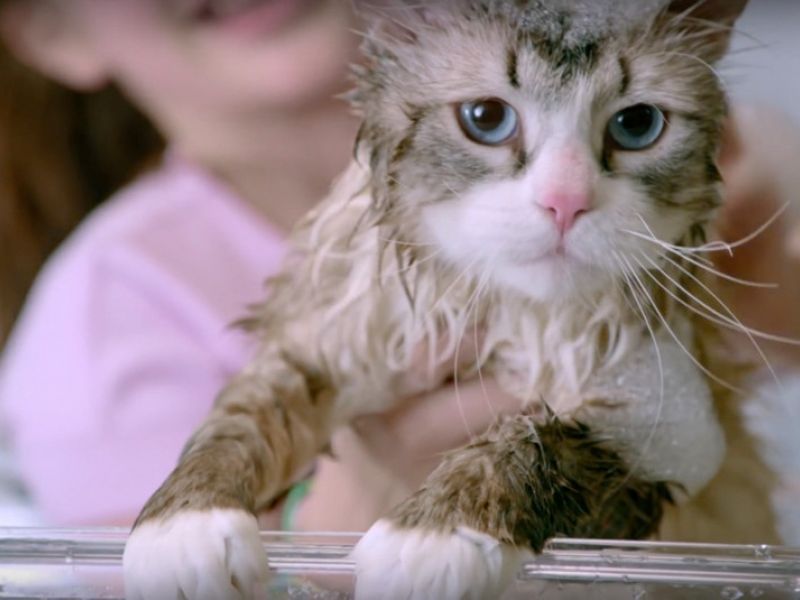
One piece of advice from experienced owners is to fill a basin with cool water and immerse your pet in it, wetting their belly, tail, and genitals. Other owners recommend bathing their cat up to their ears, claiming this will enhance the effect.
It's likely assumed that after this procedure, the animal suffering from unrequited "love" will have an epiphany, comprehend the frailty of existence, and understand that the meaning of life is greater than satisfying base instincts. In reality, this method not only fails to produce the desired result, but will only increase the cat's already stressed state. Sure, she'll stop meowing for a couple of hours and begin drying herself vigorously. But then the show will continue.
After such a bath, you might be surprised by hair loss, timidity, and refusal to eat. Restoring health will require the help of a veterinarian.
Distract with food and affection
Another common piece of advice is to distract the cat, for example, with tasty food. While a treat will certainly distract the animal for a while, if you feed it constantly, it can lead to gastrointestinal problems and obesity. Veterinarians, on the contrary, advise not overfeeding the cat during this period, but rather, feeding it a balanced diet and small portions to avoid triggering hormonal imbalances. Not every cat responds to food; many experience decreased or even complete loss of appetite during the mating season, as the reproductive instinct is paramount.
Petting and scratching your cat excessively is also not recommended. This will increase arousal. Avoid touching the sacrum and lower back. Such movements mimic the behavior of a male cat ready to mate, and the cat may become aggressive, scratching, or biting the owner. To avoid causing further discomfort, it's best to avoid touching the cat at all.
Give herbal remedy
Veterinary pharmacies offer a wide selection of herbal sedatives. However, veterinarians' experience shows that these medications don't help reduce a cat's libido. Firstly, the instinct is so strong that no herbal remedy can suppress it. Secondly, the effect of these medications is cumulative, and by the time the concentration of the substances in the body reaches the desired level, the cat's heat cycle will have ended on its own. However, sedatives can help in one case: when administered by the owner, they are less nervous and don't aggravate the cat.
The best way to eliminate unacceptable behavior in a pet and preserve its health (and the owner's mental health) is spaying. The procedure is performed after the animal reaches six months of age and permanently eliminates the cat's ability to come into heat and produce offspring.