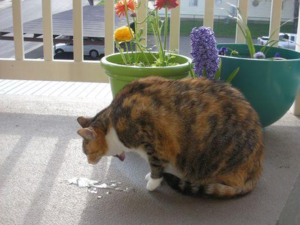
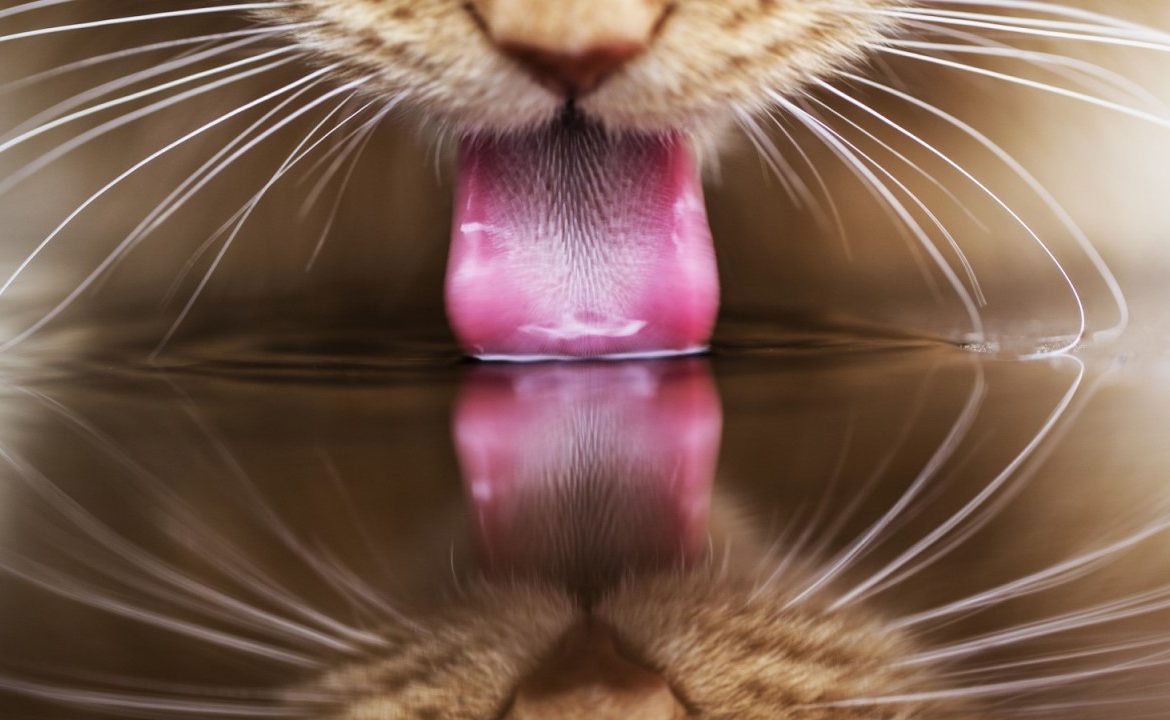
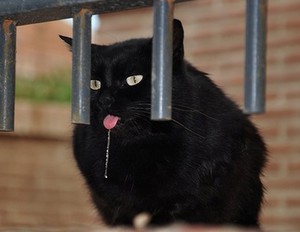
Excessive salivation in cats is most often a reason to take your pet to the veterinarian, as this behavior can be a symptom of a serious disorder. Let's explore what exactly can cause excessive salivation in cats.
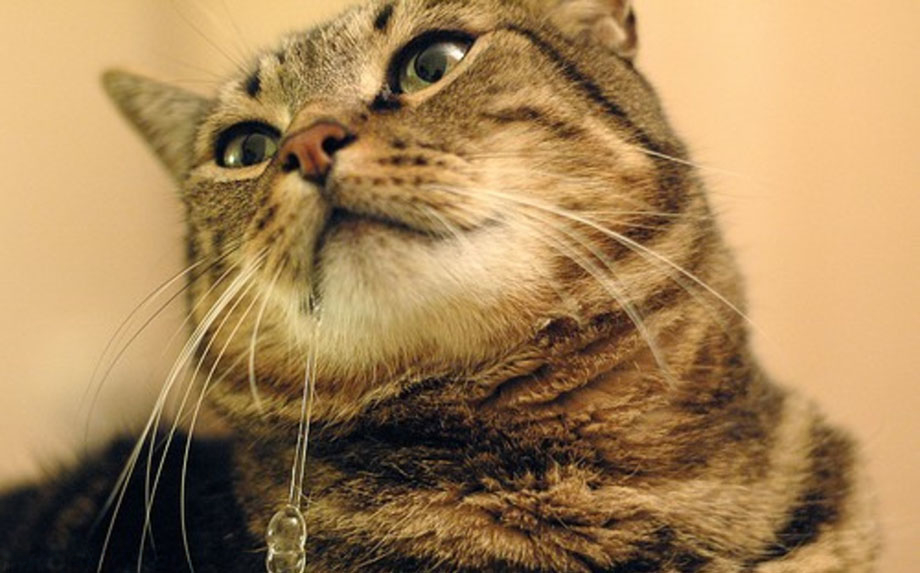
Hair has accumulated in the stomach
A pet's self-care can lead to excessive salivation if a large amount of hair accumulates in the stomach. This most often occurs in the spring or fall during shedding season. Also, animals with long hair are prone to this problem. While grooming, a cat can produce a lot of saliva, which can also push hair into the esophagus, eventually leading to the formation of a large bolus in the pet's gastrointestinal tract. To vomit it, the cat needs a large amount of saliva.
To prevent hairballs from forming in the gastrointestinal tract, the animal should be given a special paste or lozenges that prevent hairballs from accumulating in the gastrointestinal tract.
Manifestation of allergies
Excessive salivation can occur during an allergic reaction, the most common cause of which is a change in food. If a new food triggers an allergy, in addition to excessive salivation, you may notice other signs of illness: watery eyes, general weakness, nausea, and vomiting. In this case, it's necessary to stop feeding the new food, return to the usual feeding schedule, and in the most severe cases, take the cat to the vet.
Poisoning
This often happens to animals that go outside. Poisoning can be caused by found food scraps or even caught and eaten rodents, as these carry a variety of diseases. Additional signs of food poisoning include nausea and vomiting. If you notice any of these symptoms in your cat, take them to the veterinarian as soon as possible.
More serious reasons
Among the dangerous diseases whose symptoms may include excessive salivation, the following are worth highlighting:
- various infections;
- liver and gastrointestinal tract diseases (usually accompanied by bad breath, diarrhea or constipation);
- oral diseases (inflammation of the salivary glands or gums, dental problems);
- Rabies (in this case, the cat will exhibit increased aggression and photophobia). Since this disease is easily transmitted to humans, it is necessary to take your pet to the vet as soon as possible.
If you notice your cat drooling, pay attention to any other warning signs that indicate a serious condition. If the unpleasant symptoms don't subside within 2-3 days, take your cat to the vet without hesitation.