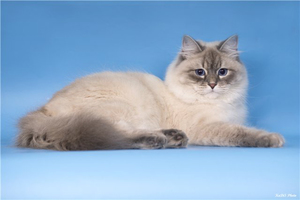
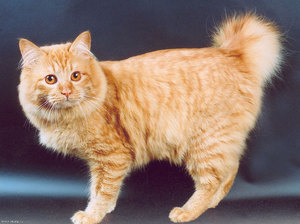
For centuries, cats of various breeds were considered sacred and carefully protected by monks and ancient orders. One such breed is the Mekong Bobtail. These incredibly beautiful cats, with their small, rabbit-like tails, have earned the love and admiration of many cat lovers. Their unusual behavior, varied coat colors, friendliness, and originality—all these qualities have made them one of the most popular and sought-after breeds among true cat lovers.
Content
Description and standard of the breed, historical background
Today, Thailand is officially recognized as the birthplace of the Mekong, Mekong Bobtail, or Thai Bobtail. The breed is considered a variety of Siamese cat. However, they could also be found in ancient China, Laos, and Burma. Various legends circulate about their origins, and even today it is impossible to say with certainty that the breed was artificially developed. It is generally accepted that bobtails are the result of crossing different Siamese cats, and the tail is a genetic trait.
Legend has it that several centuries ago, Mekong cats were used to protect Thai princesses and temples. Monks allowed them to reside directly in sacred buildings, believing that no thief could steal valuables and smuggle them past the short-tailed cat. Until the 19th century, the Thais carefully protected the breed, forbidding its export. But after some time, they began gifting the animals to foreign diplomats as a sign of friendship and favor.
The first owner of a bobtail in Russia was Tsar NicholasAfter this, they began to be actively bred in neighboring countries. Official recognition of the breed and the description of the standard only occurred in 2004. It was during this time that Mekong sheep began to participate in various competitions and gain popularity among professionals and amateurs.
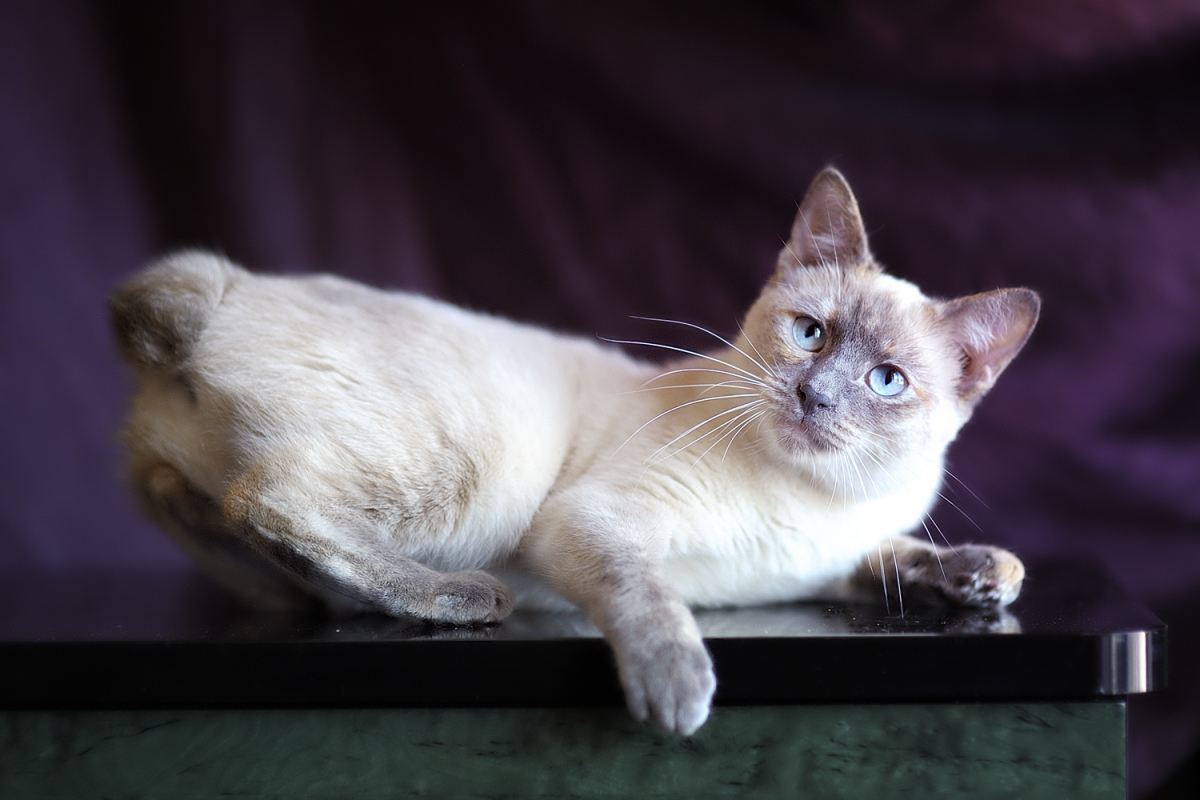
Female cats are always smaller and lighter than male cats.
The breed standard today includes the following animal characteristics:
- The animal's size is almost identical to other domestic cats. Its weight ranges from 3–4 kg, with females always weighing slightly less.
- The bobtail's head is small in proportion to its body, somewhat flattened at the top, with smooth contours, an oval muzzle, and a very expressive chin. The ears are standard, set well apart, erect, and have rounded tips.
- The Thai Bobtail's eyes are very expressive, blue, beautiful, and quite large. The lower eyelid is particularly distinctive, appearing more rounded than the upper.
- The body is strong, compact, and graceful, yet well-muscled, with a slightly rounded back toward the tail. A distinctive feature of the Mekong is the inability to retract the claws on its hind legs.
- Each animal's tail is unique. According to the standard, its length when extended cannot exceed a quarter of the body's length. It consists of several vertebrae, is almost always curled, and is often hidden by the fur on the body.
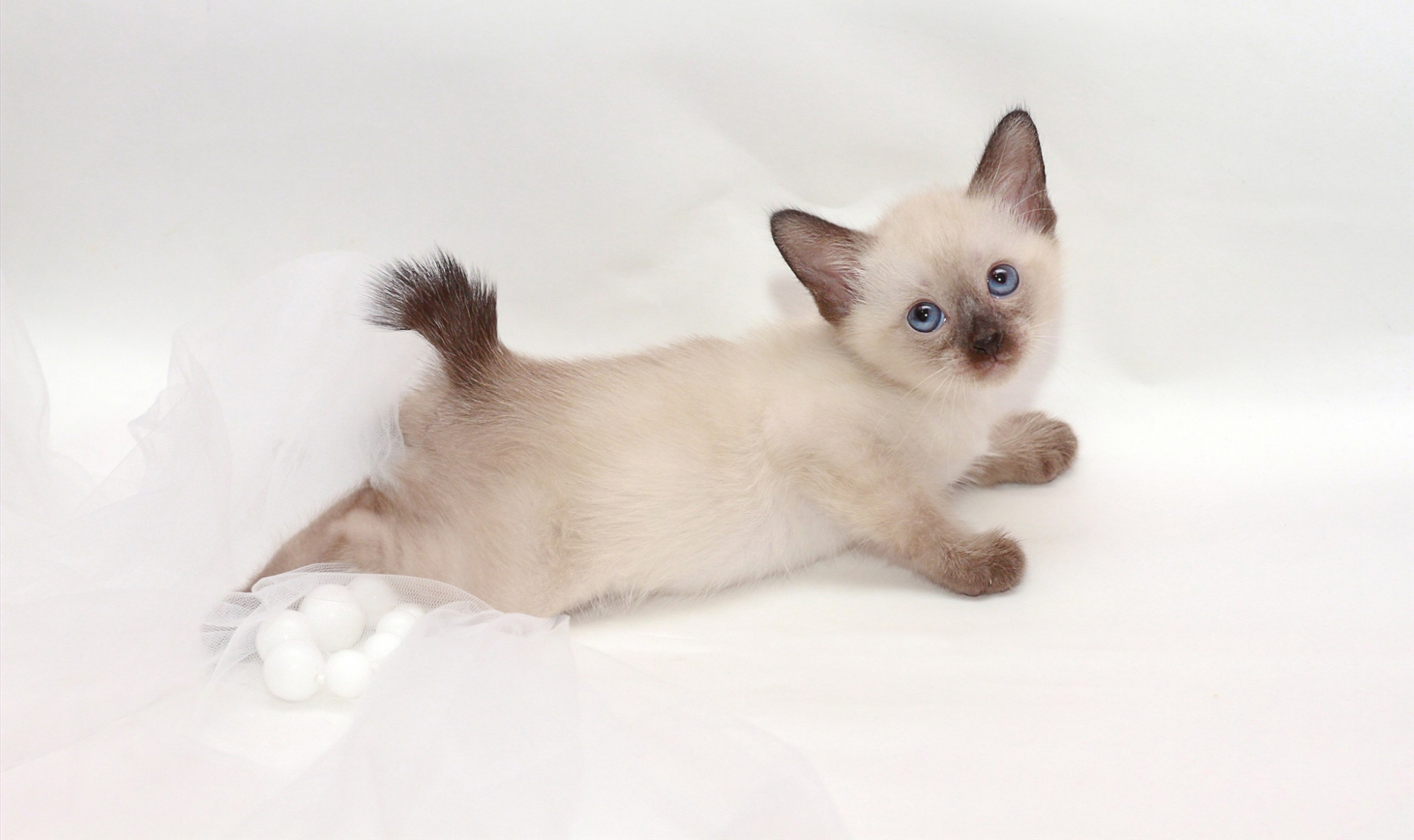
The animal's fur is soft, smooth, and dense, with almost no undercoat. The skin is elastic throughout the body, without wrinkles. Coloration varies. The classic color is called seal point or Siamese, when the muzzle, paws, and tail are darker, often brown, and the body is cream-colored.
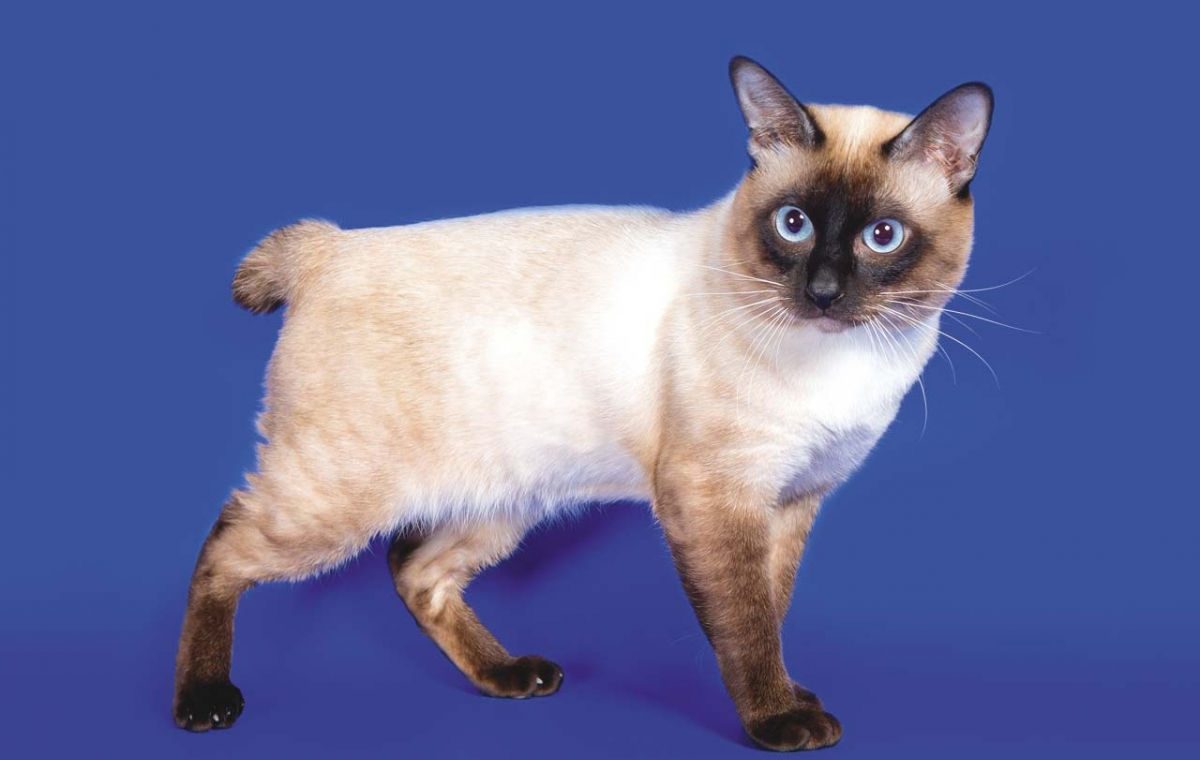
The classic and most common color of the Mekong is exactly similar to the color of the Siamese cat.
There are several other popular colors permitted by the standard:
- red point - the rarest, animals have red paws and muzzles, and a peach-colored body;
- Turtle point - cats of tortoiseshell color;
- blue point - animals with a silver body, bluish or pinkish paws, and muzzle;
- Chocolate point is a popular color; cats have a snow-white body, chocolate paws and faces;
- Tabby point is an unusual coloring, animals necessarily have a black letter "M" on their forehead, striped paws and muzzles.
The last three varieties were bred relatively recently.
White spots are not allowed in the coat, cats should not have a noticeable undercoat, or completely round eyes. This is considered a breed fault.
Character
The Mekong bobtail's distinctive feature is its dog-like character, which is why some breeders have nicknamed the animals "catdogs."They are very friendly, enjoy the company of their owner and other family members, and can walk on a leash, fetch slippers, and chase a ball. They are noted to be active during the day and prefer to play, especially in the park, where they happily chase a stick.
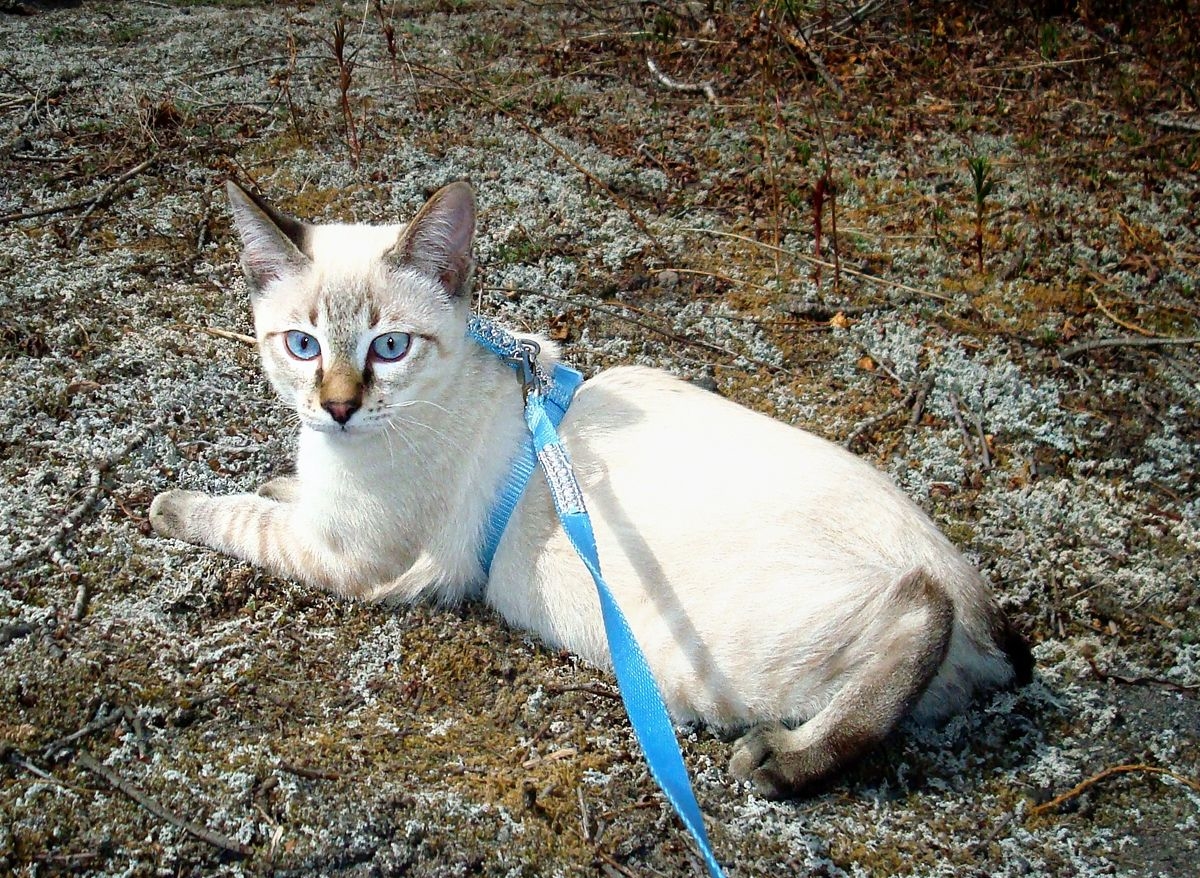
The animal willingly walks on a leash, like a dog.
They get along very well with dogs and other animals. They tolerate children well and are not aggressive when children try to play with them, hug them, or pick them up. They are patient, loyal, and docile, quickly learn commands, and respect established boundaries.
A remarkable trait of bobtails is their ability to protect their owners and homes. They can follow their owners everywhere, never get lost, are resilient, and tolerate long journeys well.
Pros and cons of the breed
Mekongs have become so popular and sought after because they possess numerous advantages over other breeds. The main ones are:
- friendliness and activity;
- patience and devotion;
- ease of education;
- attractive exterior;
- endurance, sociability;
- unpretentiousness;
- ease of care;
- long life expectancy.
Among the disadvantages is the high cost of kittens, which starts at 12,000 rubles. Not everyone can afford such a pet. Furthermore, they are quite vocal and demanding, and are overly active, which can be problematic. To maintain a cat's health, it is necessary to carefully select food and create a proper diet.
Care and maintenance
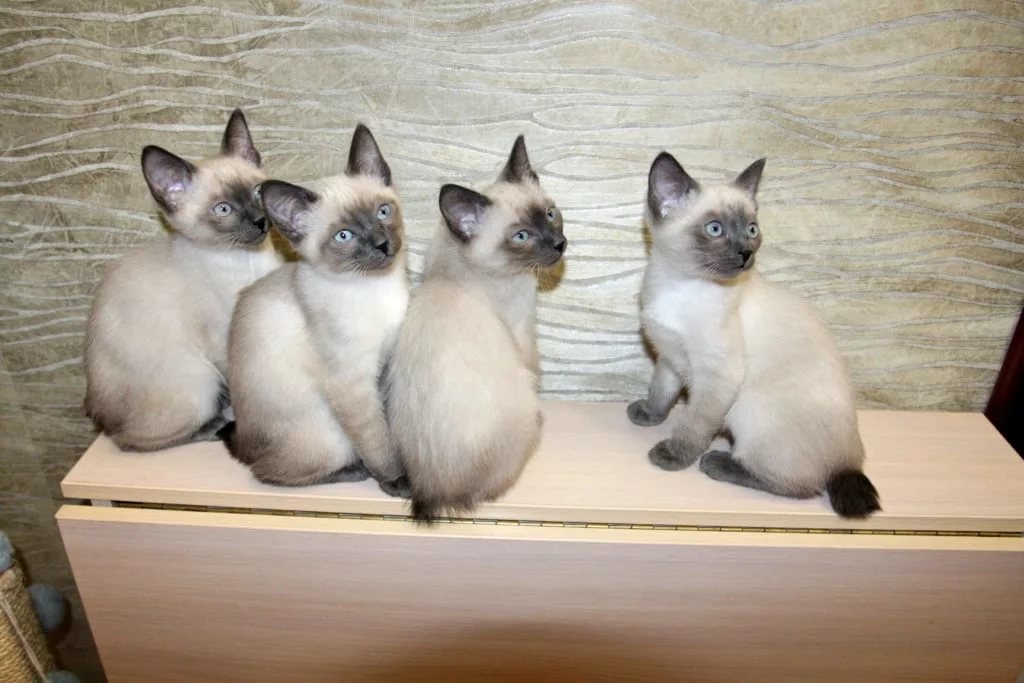
If you have no experience in caring for and raising cats, it is better to consult with a specialist who will explain all the nuances
To maintain your pet's activity and health, it is necessary to follow certain rules when caring for, maintaining, and feeding it.
What to feed
Despite cats' unpretentiousness in food, it is recommended to carefully select products and plan their diet wisely. This will help eliminate the risk of digestive upset and other problems. The following foods are essential:
- fresh vegetables in small quantities;
- stewed or boiled vegetables;
- rice, wheat, buckwheat, oatmeal porridge;
- lean poultry (up to 60% of the total diet);
- liver and other offal;
- fermented milk products in small quantities.
Boiled sea fish and chicken eggs should be fed to your pet no more than once a week. It's best not to give milk to adult cats. As they age, they partially or completely lose the ability to digest milk.
Feed your cat only balanced, premium-quality food that contains all the necessary vitamins and minerals. Dry or wet food is acceptable.
Bobtails should always have access to clean water. They have a hard time with thirst.
Grooming
Like other felines, Mekongs groom themselves well and regularly, cleaning their fur and paws. However, if kept in an apartment, this should be given special attention. It is recommended to bathe your pet occasionally, but no more than once a month, using specialized shampoos. If your pet doesn't tolerate bathing well, you can simply wipe it with cat wipes.
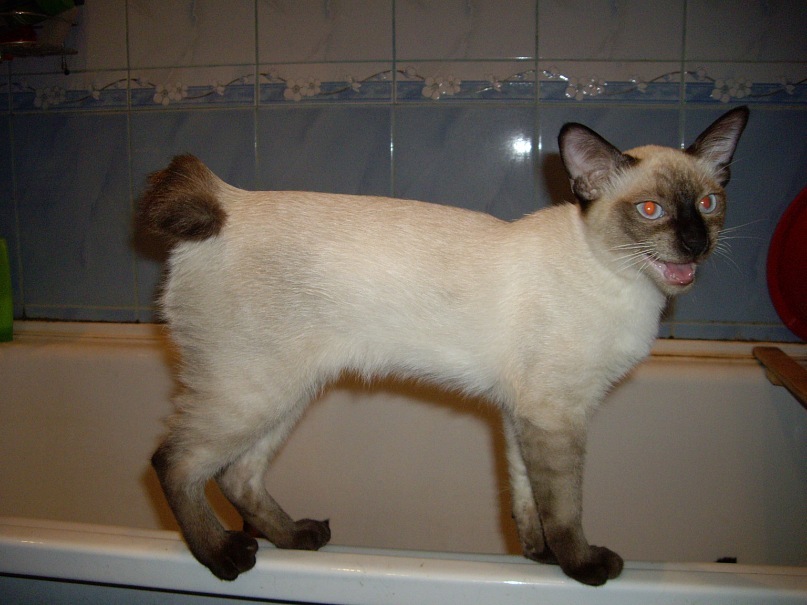
Mekongs do not tolerate water treatments well
If the ears become dirty, clean them with cotton swabs soaked in water. The cat's eyes should be washed on their own; if they become sore, a damp cotton pad can be used. It is necessary to brush the teeth twice a week using a special toothpaste.
Brushing your pet with a high-quality brush is a must during shedding. Additionally, trim their nails as they grow, being very careful not to cut the quick.
Education and training
When a kitten arrives at a new home, you should immediately note the rules that it will follow. Training must be firm and persistent. Aggression, yelling, or forceful training are prohibited. Mekongs are very curious and will often explore new territory. This is the best time to show the animal where its presence is unwelcome.
Cats of this breed are easy to train. If desired, teaching a Mekong to fetch slippers is not difficult. Training should be regular, and rewards should be given for correctly performing commands. Results will be noticeable after some time. Some owners have successfully taught a Mekong to pick up scattered toys and other items.
Diseases and treatment
The Mekong Bobtail is a generally healthy cat, rarely suffering from any illnesses. However, without proper care and feeding, some health problems may develop.
Table: Mekong River diseases and treatments
| Disease | Treatment |
| Helminthiasis, or parasitic infestation (worm infestation), is more common in pets that regularly go outside. The disease is characterized by decreased appetite, weight loss, dull coat, weakness, lethargy, vomiting, and loose stools. | Treatment is performed by a veterinarian after examining the cat. The most commonly used anthelmintic medications are Drontal, Pratel, and Prazicid suspension. These medications are given with food or directly. A repeat dose is recommended after 10 days. |
| Gingivitis is an inflammatory gum disease that develops as a result of poor dental care. It is accompanied by swelling, redness, and soreness. The cat refuses to eat, becomes apathetic, and sometimes restless. | In the initial stages, regular brushing with a soft toothbrush and toothpaste is sufficient. In severe cases, topical anti-inflammatory agents such as Metragil, Zubastik, and Dentavedin are used. |
| Gastritis is an inflammation of the stomach lining that develops as a result of improper feeding. It is characterized by intense thirst, vomiting, loose stools, loss of appetite, and lethargy. | To relieve symptoms, the same medications are used as for humans. Most often, veterinarians prescribe Almagel to reduce acidity and Omeprazole to prevent the negative effects of hydrochloric acid on the mucous membranes. A diet consisting of cooked, mashed foods is strongly recommended. |
| Conjunctivitis is an inflammatory disease of the inner surface of the eyelids. It is accompanied by lacrimation and severe eye irritation. | For pain relief, Novocaine and Dexamethasone drops are prescribed. Special eye drops for animals include Ciprovet, Iris, and Bars. These drops are instilled into the eyes over several days. |
Regular care, proper diet, walks, and regular veterinary checkups can help reduce the likelihood of developing any given disease.
Average life expectancy
Experts say Mekong gorillas can live from 18 to 25 years, depending on their living conditions, owner's attitude, and the quality of care. Sometimes, a pet doesn't even reach 18 years of age, especially if it develops a serious illness.
Late detection of the disease leads to its transition to a chronic stage, which significantly reduces life expectancy.
Breeding
It is recommended to study all the nuances of mating in order to avoid making mistakes that will affect the appearance and health of the offspring.
Animal breeding is carried out by hobby breeders and catteries in many countries around the world. If desired, you can get a pair of cats and expect to have offspring.
Knitting
Animals selected for mating meet the international standard approved in 2004. They must be at least one year old. A female cat should not be bred during her first heat, as the offspring will be weak and the mother's health will deteriorate.
There are no complications when animals live together. After successful mating, kittens will be born within 2 months. It is not recommended to breed a female cat with the same male cat multiple times in a row. This will affect the kittens' appearance and stamina. If the animals in the household are of the same sex, you can arrange a meeting with another breeder 5-7 days after the female cat's heat cycle begins. For mating, provide the animals with a room and leave them alone.
Caring for offspring
After the birth of kittens, of which there can be from 4 to 6 in one litter, all responsibility for them falls on the cat. Humans are required to do nothing except provide a place for the animals and keep it clean. The mother only feeds the babies, watches over them, and the father trains and raises them.
The female cat watches the male cat closely, and if necessary, scolds him for poor performance. Kittens are born completely uniform in color, with their coloring becoming apparent only at three months.
What to call it
Standard cat names like Vaska or Murka are completely unsuitable for the Mekong Bobtail. Its noble appearance and unusual behavior compel a more original name.
Depending on the color and other characteristics, the owner chooses a name for his kitten.
Names for boys
The most common nicknames for boys are: Michael, Seraphim, Thomas, Gustav, Charles, Max, Dollar, Jersey.
When choosing, you should focus on the animal’s character.
Nicknames for girls
Choosing a name for a female cat is somewhat easier; she'll suggest her favorite option herself. The most popular nicknames today are: Princess, Gerda, Bastinda, Natalina, Kokka, Leia, and Marisa.
You should try to call the animal by the name you like, see the reaction and make a final choice.
The Mekong Bobtail is a unique cat, distinguished by its friendliness and devotion. It makes a good pet for single people and large families with small children.