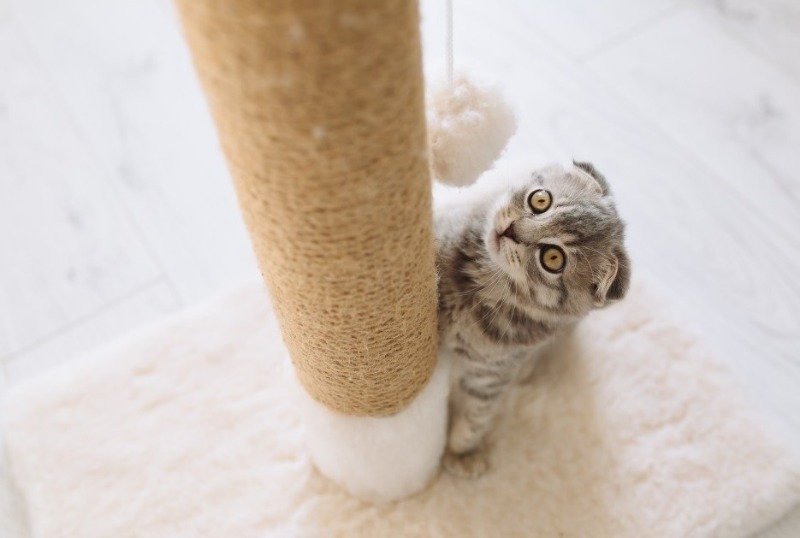
Cats need to sharpen their claws naturally. This removes dead skin cells and also marks their territory with a special secretion. However, this process can damage wallpaper, furniture, carpets, and shoes. There are proven methods for quickly acclimating a cat to a scratching post.
How to train a kitten to use a scratching post
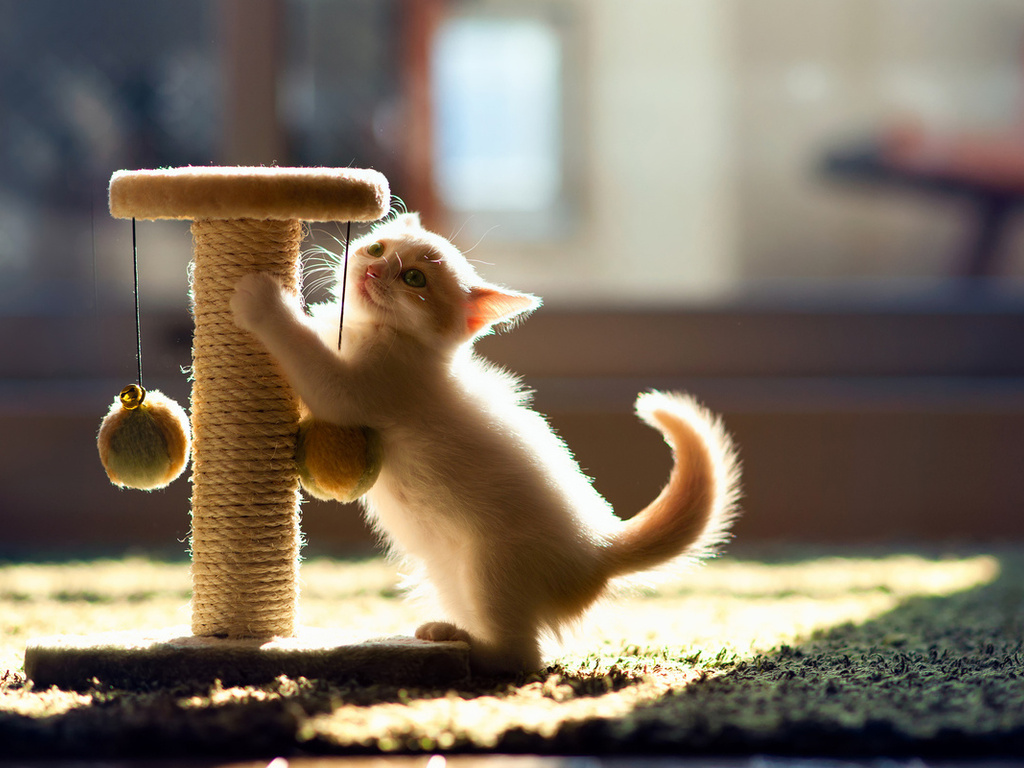
To quickly accustom your kitten to a scratching post, you need to spend as much time with it as possible, involving it in playing with the accessory.
Don't expect your little one to understand the purpose of a scratching post on the very first day. Patience is essential. You can't yell at your pet, let alone hit it.
The main ways to train a kitten to use a scratching post:
- It's best to start with a game. Take a feather or a bow on a string and move it around the scratching post so the kitten's claws catch on the surface. Play with your pet several times a day.
- If you must leave your pet alone, you can hang a toy or ball from the structure. The kitten will become interested and involuntarily begin sharpening its claws.
- It's best to initially place the scratching post near where the baby sleeps. Cats usually sharpen their claws immediately after waking.
When you see that your pet has started using the accessory, be sure to praise it and give it a treat.
If he starts sharpening other objects, say, "No." A kitten might not understand the meaning of words, but he's very sensitive to tone of voice. You can clap your hands or hit the floor with a slipper.
It's best to buy a scratching post when your pet is born. Typically, puppies are introduced to the scratching post when they're one month old.
What to do if the cat is an adult
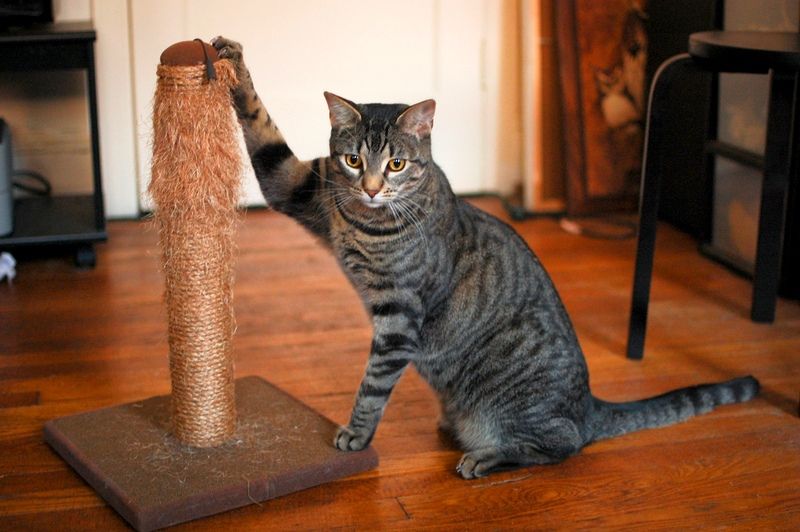
An adult cat should also not be hit or seriously intimidated if it sharpens its claws in the wrong place.
Veterinarians disagree on which is easier to train—a kitten or an adult cat. On the one hand, an adult cat already has established habits that are difficult to change, but on the other, they have more life experience, so they'll understand what's required of them more quickly.
Methods of training:
- It's best to start getting to know the accessory with a game.
- You can run your cat's paws across the surface of the scratching post. The cat will extend its claws and recognize the object as a scratching surface.
- It's best to first place the accessory near the cat's scratching spots. Then, gradually move the item to the desired corner.
What tools can be used?
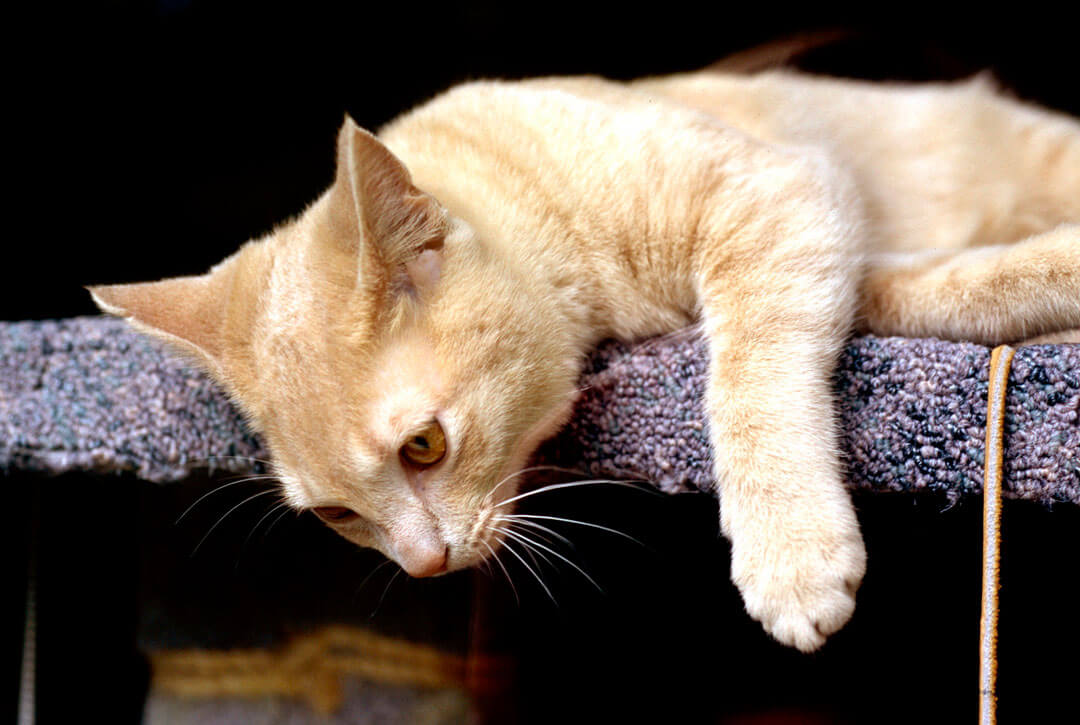
Don't overdo it with valerian when training your cat to use a scratching post, otherwise your cat may become ill.
Take some valerian root and apply a few drops to the surface of the structure. You can also attach some sprigs of catnip (available at pet stores). These scents will attract the animal.
Essential oils of lemon, orange, and grapefruit have a repellent effect. Just 2-3 drops of juice per glass of water is enough. Spray this solution on the areas your pet is picking at. Cats dislike black pepper, curry, and skin powder. As soon as your pet experiences discomfort, it's time to direct their attention to the scratching post.
It's impossible to say exactly how long it will take to accustom your pet to the accessory. It all depends on the individual characteristics of the animal. Most often, it takes several days.