There are animals whose names have gone down in history. Among them are the pets of Russian emperors. As a rule, the royal entourage had a great many animals. But among them were favorites, to whom the great autocrats were especially attached.
Peter I
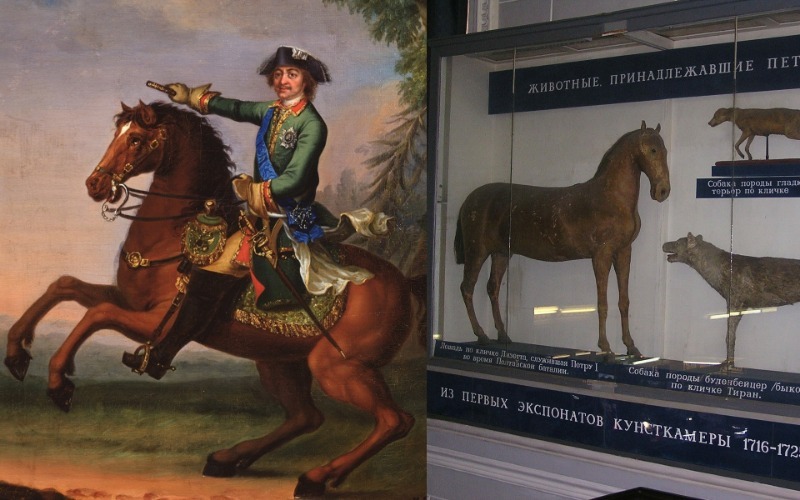
Many paintings and equestrian statues depict the great emperor riding a beautiful horse. This is one of the royal favorites, Lisette.
After negotiations in Riga, Peter I was returning to Moscow. On the way, he encountered merchants bringing a young brown horse for sale. She was so beautiful that the emperor immediately fell in love with her and bought her on the spot. He named her Lisette in memory of his favorite, whom he had met in Saxony. Although named after a woman, the stallion had a masculine character. He was very strong and resilient, brave, intelligent, and agile.
Lisette was infinitely devoted to Peter and obeyed no one but the Tsar, accepting food only from his hand. He also frequently escaped from the stable and ran around the camp in search of his master. The horse served in many military campaigns and served the Tsar during the Northern War. When the Swedes opened fire on Peter during the Battle of Poltava, Lisette instantly darted to the side, thereby saving his life.
When his faithful friend died, the Tsar ordered that a stuffed figure be made of him for the Kunstkamera, and a memorial column stands at the burial site of his remains.
Peter the Great also had a furry pet cat, Vaska. The Tsar brought him back from a trip to Holland. According to other sources, Vasily was originally from Vologda.
Vaska lived in the royal chambers and was never denied anything. He was loved and petted by all the courtiers. But the cat didn't become a spoiled slob; he diligently caught mice in the palace. Seeing his success, the king issued a decree ordering his subjects to keep cats to guard their barns.
Little is known about Vaska, but it is certain that it was this fluffy creature that first started the fascination with cats among nobles, and then it spread throughout Russia.
Catherine II
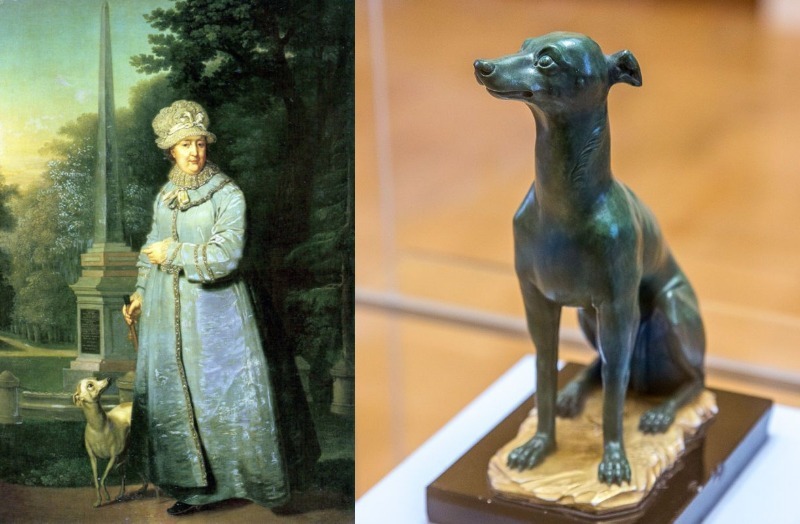
The Empress loved dogs. She was especially fond of Italian greyhounds—graceful, affectionate, and loyal animals.
Two Italian greyhounds were given to Catherine by an English doctor who came to Russia to administer the first smallpox vaccinations. These dogs became the founders of a vast dynasty, whose descendants soon settled in the families of every member of the royal court. Many lived in the palace, but the empress's favorite was Zemira, named after the heroine of a then-fashionable opera.
The Italian Greyhound was always at her mistress's side, accompanying her on walks and trips. The queen hired a special page to care for the dogs. Her bedroom contained a cradle in which her beloved dog slept. Beautiful costumes, adorned with jewels, were sewn for Zemira.
When she died, Catherine locked herself in her room for several days, mourning her friend. A small pyramid was built in Catherine Park, at the foot of which her beloved Italian greyhound was buried.
Alexander II
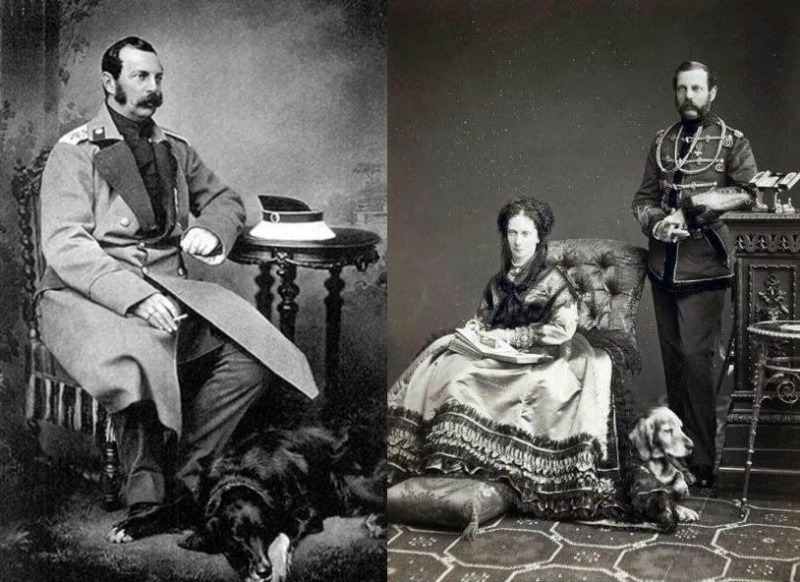
Alexander Nikolaevich grew up surrounded by dogs from childhood, so it’s no surprise that he developed a love for these animals.
He was given a black Irish setter, Milord, while traveling in Poland. The dog wasn't purebred, but the Tsar didn't mind; he saw only virtues in Milord: devotion and love for his master.
Alexander loved walking around the city, and the setter was his constant companion. Milord soon became "the emperor's mark"—even those who didn't know the Tsar by sight recognized him by his dog, and everyone knew him. Receiving a descendant from Milord as a gift was considered a great royal favor. One of these, a dog named Dora, lived with Leo Tolstoy and was a favorite of the entire family.
When the dog saw his owner mortally wounded by terrorists, he lost the use of his legs. After the Tsar's death, Milord was taken to Italy, where he died and was buried under a marble slab with a touching memorial inscription.
Nicholas II
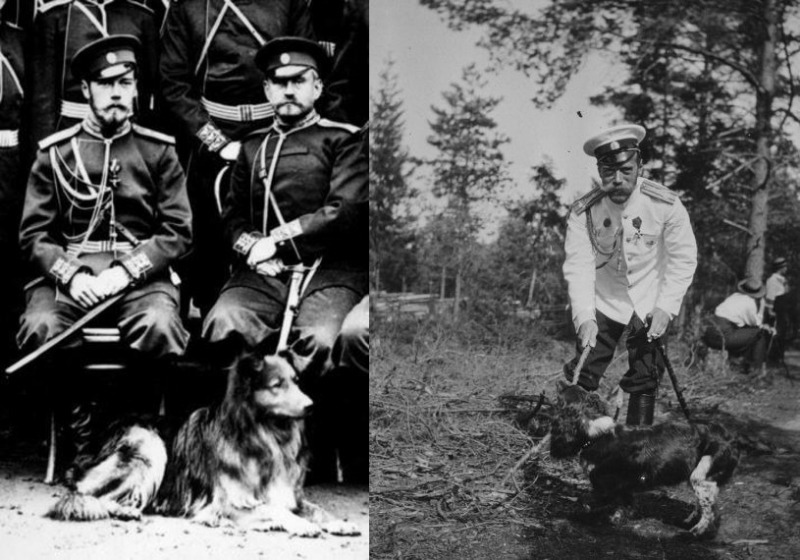
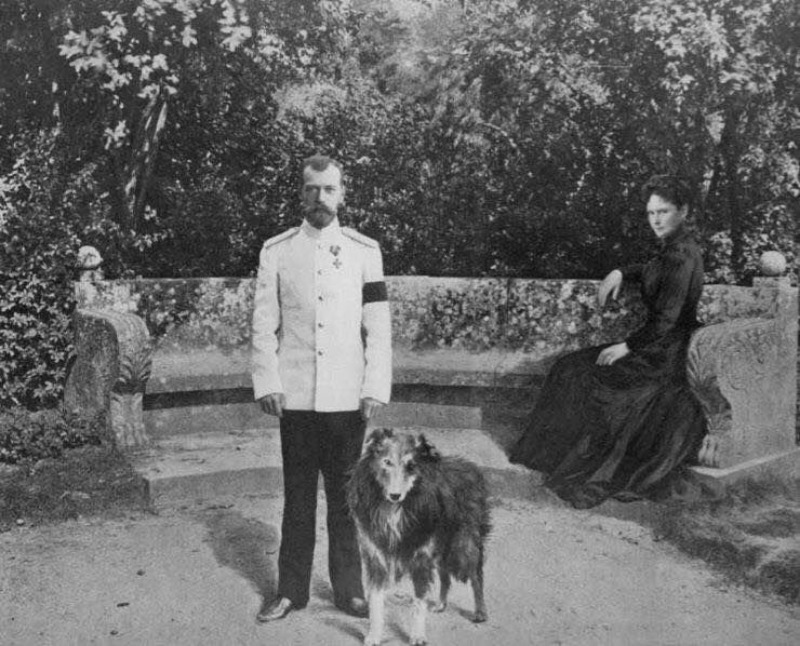
Nikolai Alexandrovich also loved dogs. His first dog was a collie named Voron. His father gave it to the 17-year-old heir.
Raven accompanied the Tsarevich on all his walks, even during his round-the-world voyage. Nicholas wrote to his father to report on the dog's condition, complaining that those around him were spoiling and overfeeding Raven, making him look like a barrel.
The dog lived with the emperor for 5 years, and after his death was buried in the cemetery where all the animals that lived in the royal family rested.
Nikolai really missed his pet, and after two months he was given a new collie dog, similar to Voron, named Iman.
He also stayed by his owner's side constantly. The dog was very active and curious, so he often got into trouble: once he fell into an ice hole, another time he cut his paws while skating. Nikolai was always there to rescue his friend when he got into trouble. When Iman grew up, they found him a "bride"—also a collie—and now Nikolai was accompanied on walks by a "shaggy couple."
In 1902, the dog died suddenly of a heart defect. The Tsar grieved greatly for his beloved pet and tried not to become so attached to animals again.
Alexander III
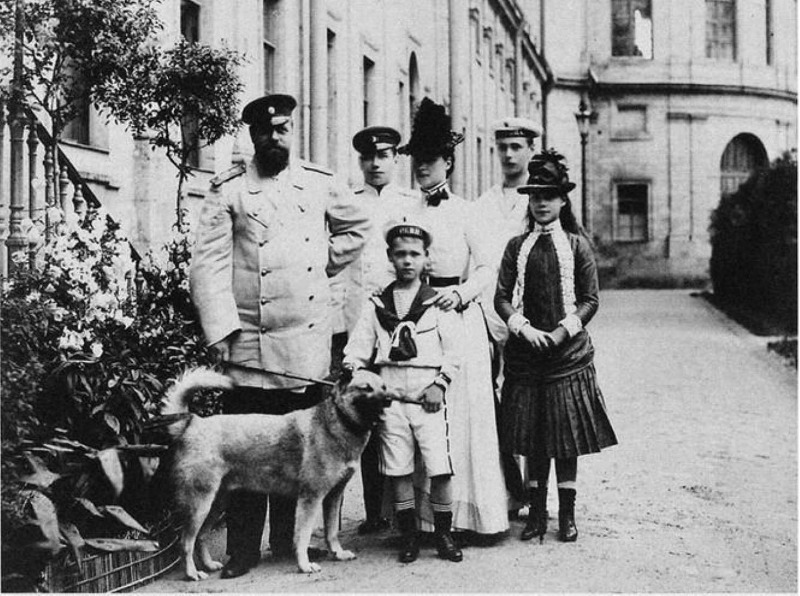
The Tsar received a white and tan Laika as a gift from the sailors of the cruiser Africa. The dog was found in the port of Petropavlovsk-Kamchatsky, hence its name, Kamchatka.
Laika became a favorite not only of the Tsar but of his entire family. Kamchatka was by his side on all trips, voyages, and hunts. She even spent the night in the Tsar's bedroom.
In 1888, the royal family was involved in a train accident. Miraculously, everyone survived, only Alexander sustained a leg injury. But poor Kamchatka, lying at the Tsar's feet, perished.
The dog was buried in Gatchina, beneath the windows of the royal chambers. The Tsar mourned her death deeply. Several years later, he said that Kamchatka was his only selfless friend.
All these animals made history alongside their owners. They loved their owners with all their hearts, brought them joy, supported them in difficult times, and were devoted to them until their last breath.