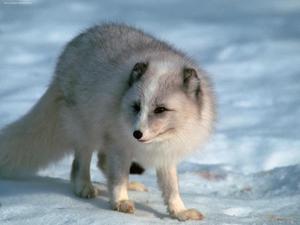
 The Arctic fox is a typical representative of the Arctic and Subarctic fauna. Its range is quite extensive, including the Kola and Scandinavian Peninsulas, Novaya Zemlya, Svalbard, Greenland, North America and polar Eurasia, the Canadian Archipelago, and the islands of the Arctic Ocean. In winter, in search of food, the Arctic fox can travel thousands of kilometers south, reaching as far as the southern Baikal region, southern Finland, the lower reaches of the Amur River, and many northern taiga regions.
Content
Description and photo of the Arctic fox
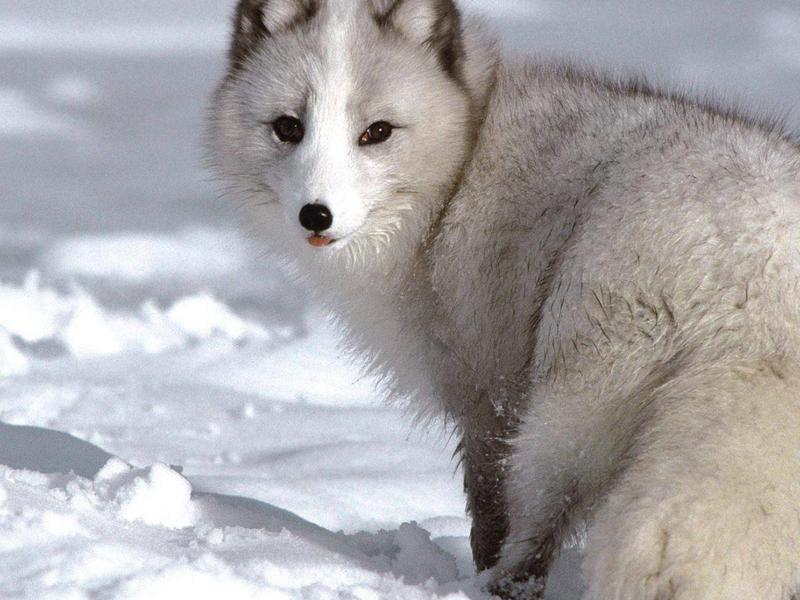
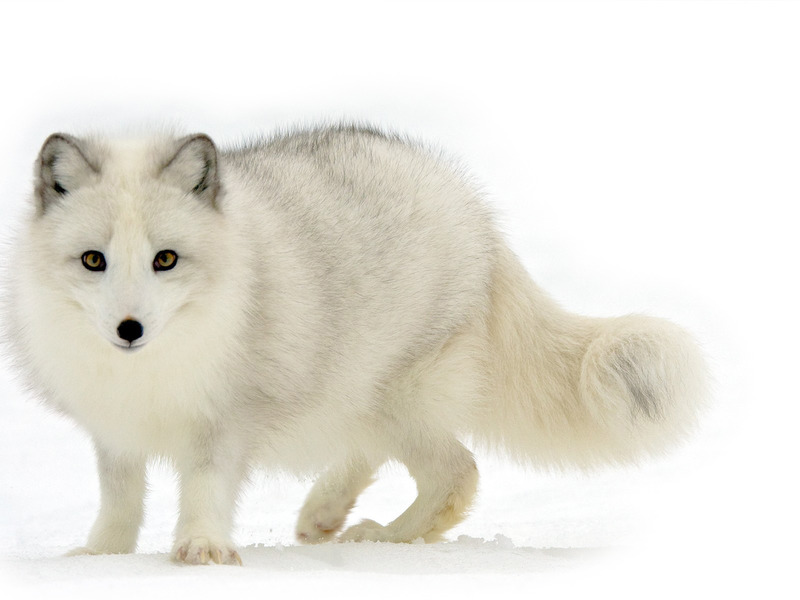
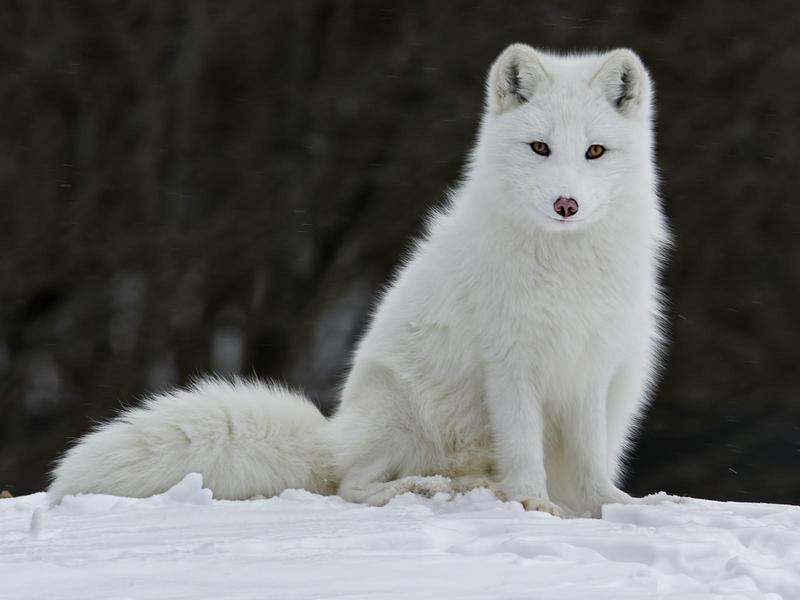
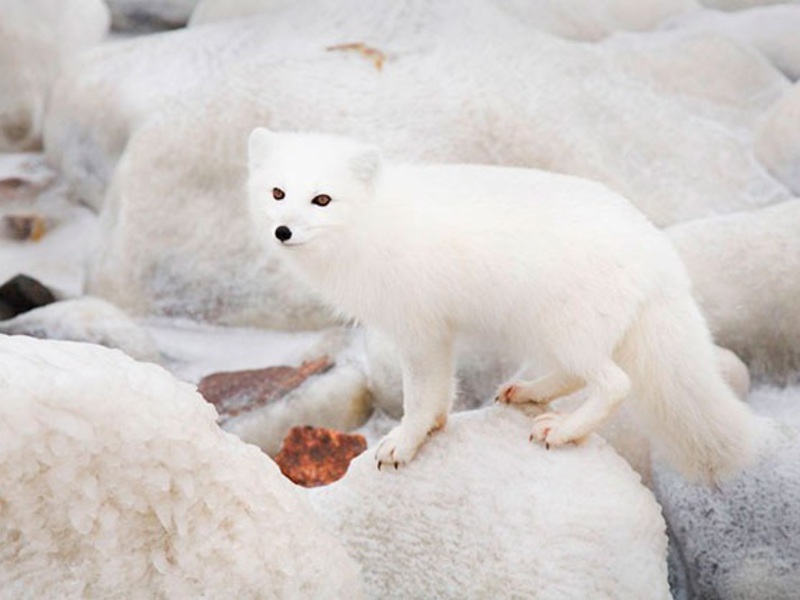
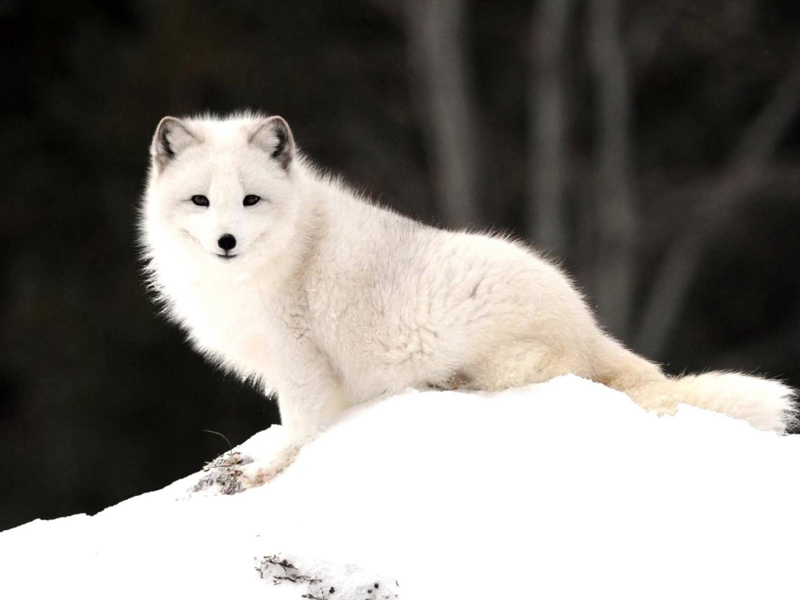
Despite the fact that the Arctic fox is the smallest representative of the canine family, it is quite a hardy and strong animal, capable of withstanding temperatures down to -50°C. The arctic fox looks like a fox, but has some distinctive features: coloring, short legs, a shortened muzzle, and a heavy body.
- The tail is fluffy, up to 32 cm long;
- ears are rounded, small;
- luxurious fur coat;
- color is bluish, white or yellowish-gray;
- the muzzle is short;
- body length 45-70 cm;
- height - up to 30 cm;
- average weight is about 3.6 kg, in rare cases it can reach 10 kg;
- legs are short, body is squat;
- has sensitive hearing and an excellent sense of smell.
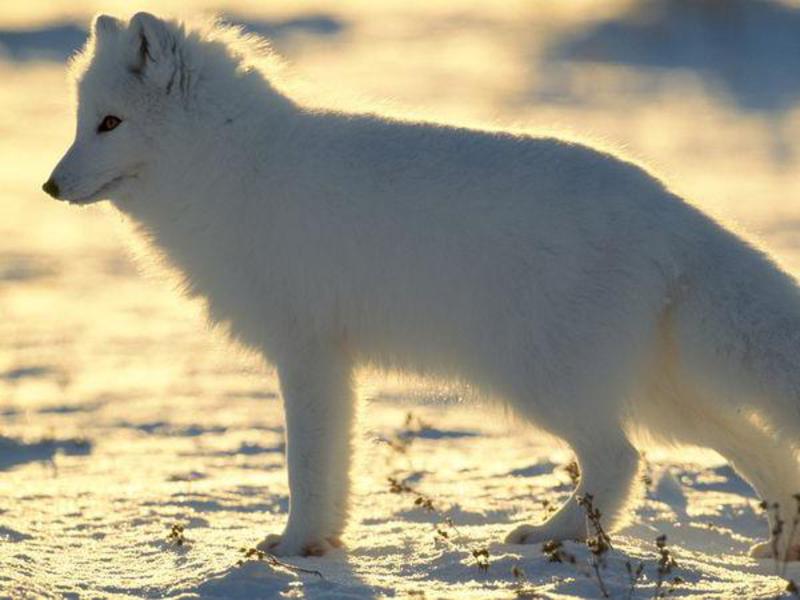
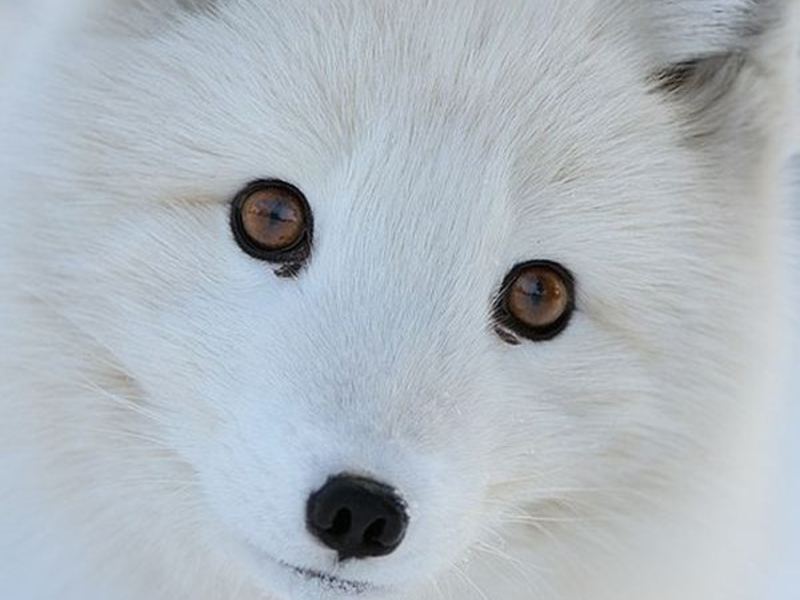
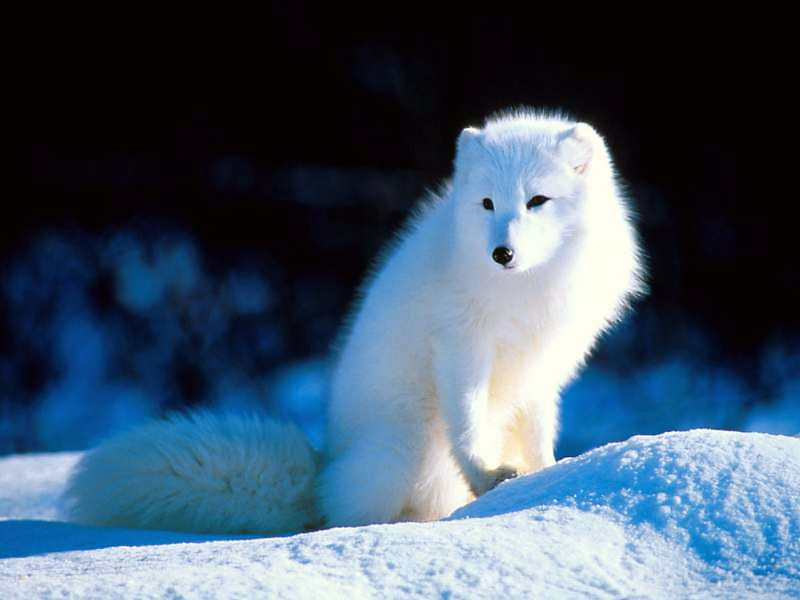
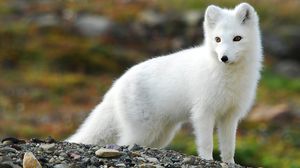
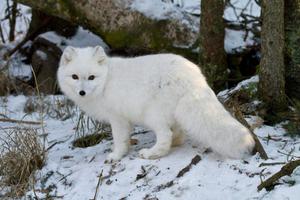
The Arctic fox is the only representative of the tundra fauna that has the ability change color depending on the seasonDuring the warmer months, the arctic fox wears an unattractive dark brown coat (on its sides and back), with a dirty white underbelly. However, in winter, these little sly creatures transform into a more luxurious, fluffy coat of dazzling white with a black button on its nose.
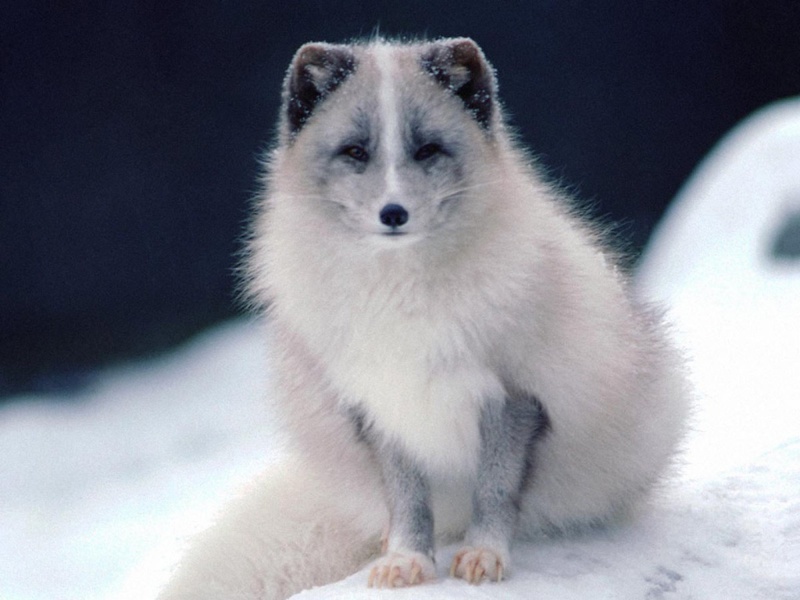
In some areas (the Kuril Islands, Kildin), so-called "blue" arctic foxes with a gray-blue, brown, or light coffee-colored tint are often seen. The term "blue" arctic fox likely refers to the rarity of this species and does not imply a specific coloration.
Reproduction
Arctic foxes usually begin their mating season in March (sometimes in April). The heat cycle lasts only a week. Gestation lasts about two months. During this period individuals are divided into pairsIn some populations, unions of three animals have even been observed. Males begin to flirt with their chosen females by bringing them a bone, a snowball, or a stick in their teeth. Among themselves, males engage in duels for the right to possess a particular female.
Food and behavior, where the arctic fox lives
 This small predator prefers to lead a sedentary life with its family. However, the harsh Arctic climate dictates its own rules.
In the spring, before mating season begins, the animal searches for a suitable birthing site for its future offspring. A sandy hill is usually used as a den. In conditions of permafrost and permafrost, such a hill is the easiest place to nest. dig a secure and dry holeHowever, such sandy embankments are quite rare in the tundra, so animals have to find a comfortable spot among the rocks or in crevices in the rocks.
The predator digs its burrows on rocky slopes. After the hard layer, soft soil follows, and the animal digs deeper until it reaches permafrost. Here, the furry fox makes a den, from which it digs other tunnels in various directions. The result is a complex labyrinth with multiple exits. This is where the small predator settles with its entire family, which consists of females from the previous litter, newborn cubs, and the parents themselves. In rare cases, two or three families can live simultaneously in a single underground system.
As a rule, the offspring appears in May-June The number of puppies is determined by the female's weight, age, and diet. Mature animals give birth to an average of 8-9 puppies. If food is plentiful, a litter can contain up to 20 pups. However, if times are difficult and hungry, the female will give birth to no more than 5-6 puppies. The puppies are born blind and helpless, and their eyes open only after two weeks.
Blue fox cubs are born with brown fur, while white fox cubs have smoky fur. The cubs nurse for 8-10 weeks and begin to emerge from the den at 3-4 weeks. Both parents participate in feeding and raising the young.
The cubs grow quite quickly and, after just six months, are as big as their parents. And with the arrival of spring, they themselves become capable of reproduction. Arctic foxes live for about 10 years.
The arctic fox is capable dig holes in deep snow, thus escaping from inclement weather. The animal can survive in its snow "house" for several days, awaiting improved weather conditions.
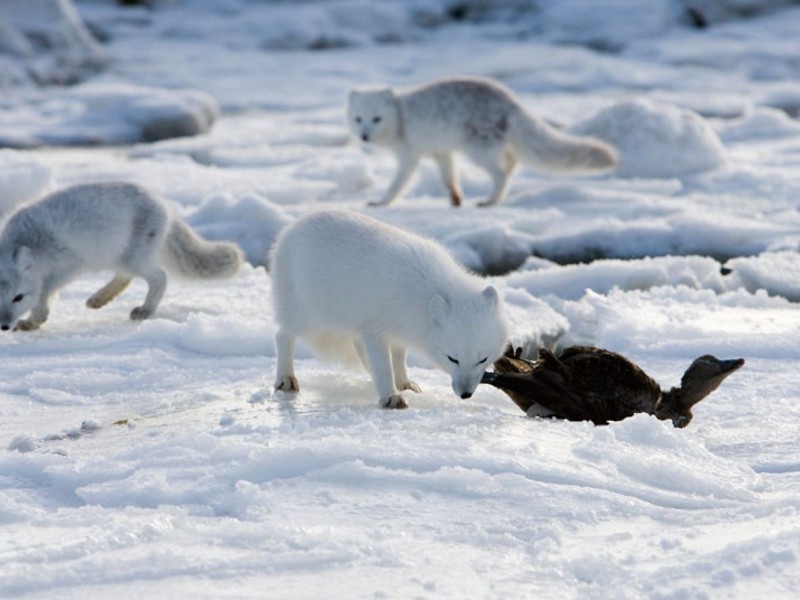
 The Arctic fox is perfectly adapted to life in the harsh Arctic conditions. It feeds on both animal and plant matter. Whenever possible, this furry predator hunts fish and can also feed on birds, small rodents, and carrion. At the same time, it also enjoys various grasses, cloudberries, blueberries, and seaweed. Its favorite food is seaweed, which it stores for future use under favorable conditions.
In winter, arctic foxes settle alone and gather only around the carcass of an animal (usually a deer) they find. In winter, carrion is the main food source for arctic foxes. Since food is quite difficult to obtain during this period, the arctic fox is forced to migrate in search of a better life.
Some furry predators head south, traveling thousands of kilometers to the taiga regions, where, unlike the hungry tundra, food is plentiful. However, danger also lurks here—they can perish, if not from starvation, then from larger predators, which are abundant in the taiga. Wolverines, foxes, and wolves prey on arctic foxes. In the spring, the furry predators return to their homeland, to their underground system, where their seasonal life cycle is repeated.
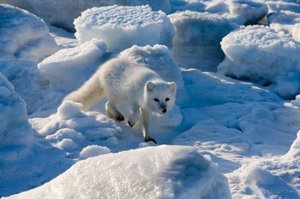
The other part of the polar foxes moving towards the Arctic ice zone, to the north. The cunning little animals choose their "home" on ice floes near polar bears, whom they follow relentlessly. Since the "bears" are excellent hunters and catch belugas, narwhals, and seals, the arctic foxes have plenty to eat. The bears, eating the fat and skin of their prey, leave the meat for their "neighbors."
By nature, the arctic fox is a very cautious animal that won't take unnecessary risks. However, arctic foxes are resourceful and persistent, and sometimes even brazen. When confronted by a large predator, this furry creature won't even consider retreating completely, but will simply try to get some distance away, never abandoning the hope of snatching a piece of the prey. However, predators are quite docile towards arctic foxes, so the latter usually manage to feast on the remains of the fox's meal. It's not uncommon to see arctic foxes surrounding a polar bear and its kill, peacefully dining.
In places where arctic foxes are not hunted, the animal feels at ease, can live next to a person and quickly gets used to him, to the point that even takes food from handsSometimes, when hungry, the arctic fox enters houses and barns in search of food, and also steals food from domestic animals.
Health
 Arctic foxes, like foxes, are susceptible to various diseases and act as carriers of helminths and various infections. The most common disease of these furry beauties is Arctic viral encephalitis, which is also known as rabies, distemper, or savagery. An infected animal feels absolutely no fear and can attack larger animals, even its enemies (wolverines, red foxes, etc.), as well as humans. Animals attacked become frenzied. Cases of human infection from the bite of an infected arctic fox are quite rare.
Sometimes these small furry predators develop a disease called self-mutilation. During this condition, the arctic fox begins biting itself and may chew on its own belly, hind limbs, or tail. In severe cases, the disease can be fatal.
Enemies
Besides wolves, arctic foxes are also The following predators can hunt:
- crow;
- owl;
- snowy owl;
- large species of skuas and gulls;
- white-tailed eagle;
- goshawk;
- golden eagle.
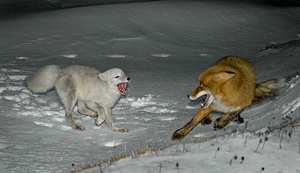 However, the main enemy of the arctic fox is unstable food supplies and hungerIt is for this reason that in years of famine, most arctic foxes do not live to old age.
The Arctic fox's exceptionally warm and beautiful fur has long attracted the attention of hunters. At one time, natives hunted them year-round, even hunting small puppies. As a result, the Arctic fox population has plummeted, and strict regulations have now been introduced: the Arctic fox hunting season is limited to autumn, with only adult animals permitted. Furthermore, active efforts are underway to increase the population of these furry creatures, including by providing supplemental feeding during difficult times.
Since the Arctic fox is quite easy to tame, it began to breed in captivity, which proved much more effective. These animals are not picky eaters and can eat a variety of foods, and they are also very easy to maintain. Currently, new species of arctic foxes have been artificially bred with silver, platinum, marbled, and pearl colors. Compared to fox fur, arctic fox fur has a longer lifespan, retaining its properties and appearance for up to 9-12 years.
Very lush, thick and long fur The animal's fur is ideal for producing luxurious designer items. Arctic foxes are bred and selected in Finland and Norway, which are the world leaders in this field.