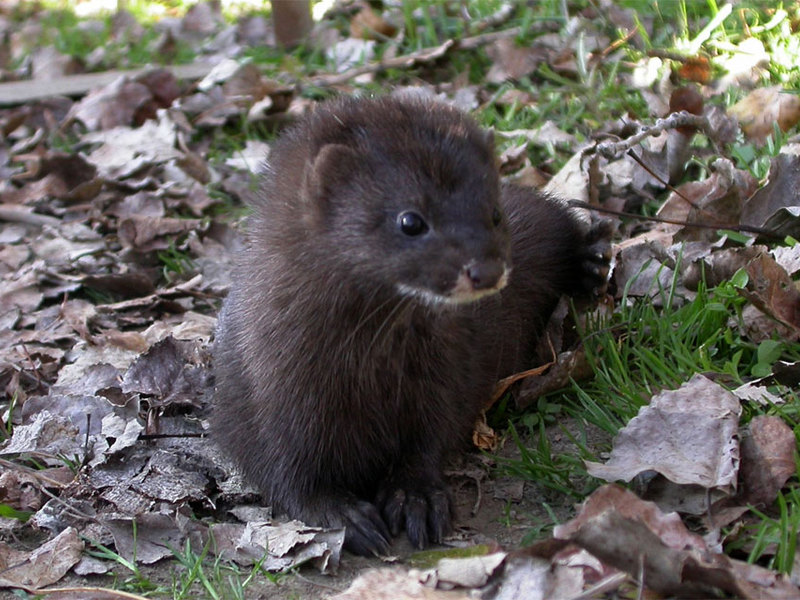
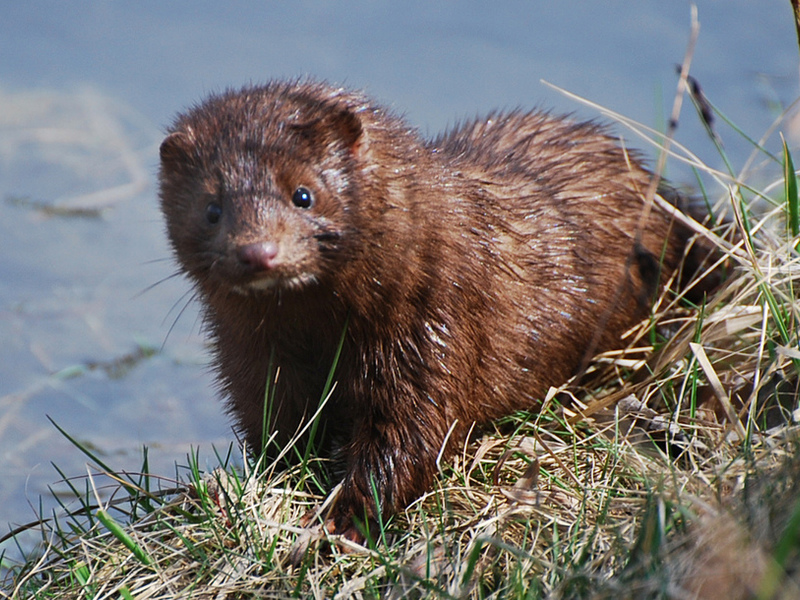
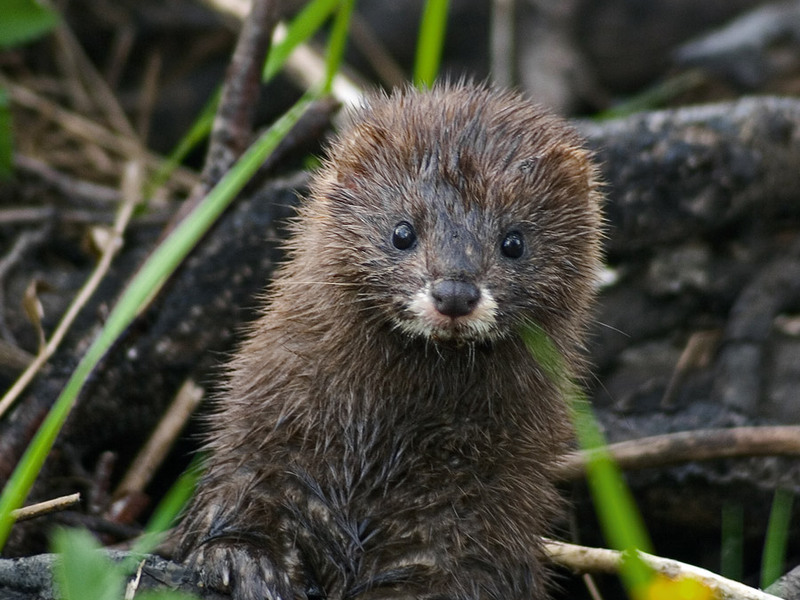
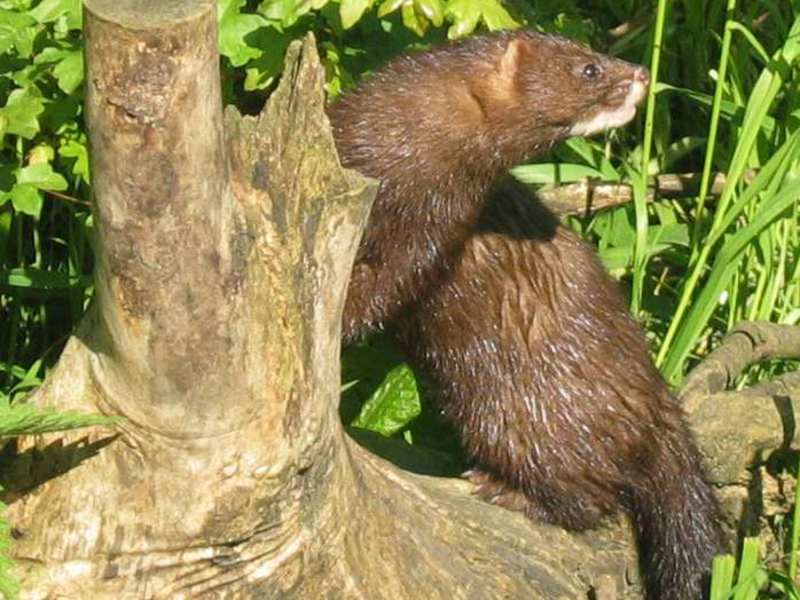
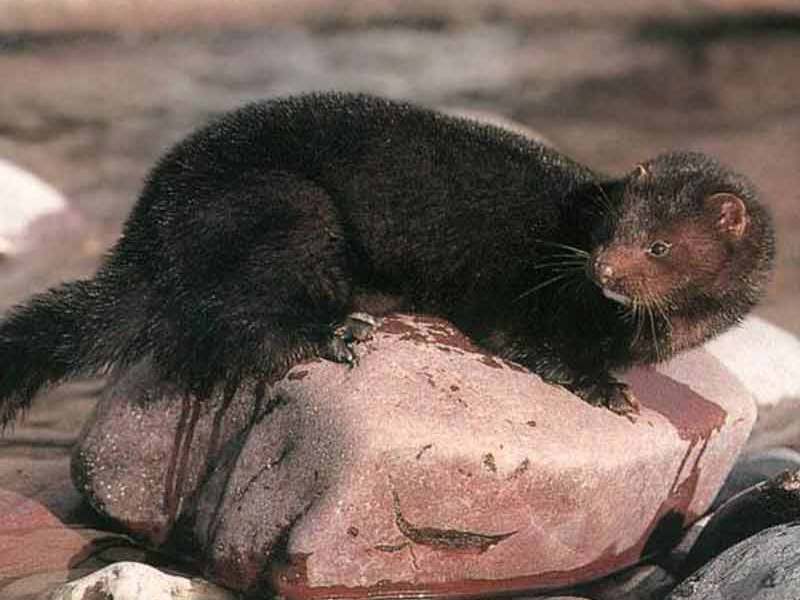
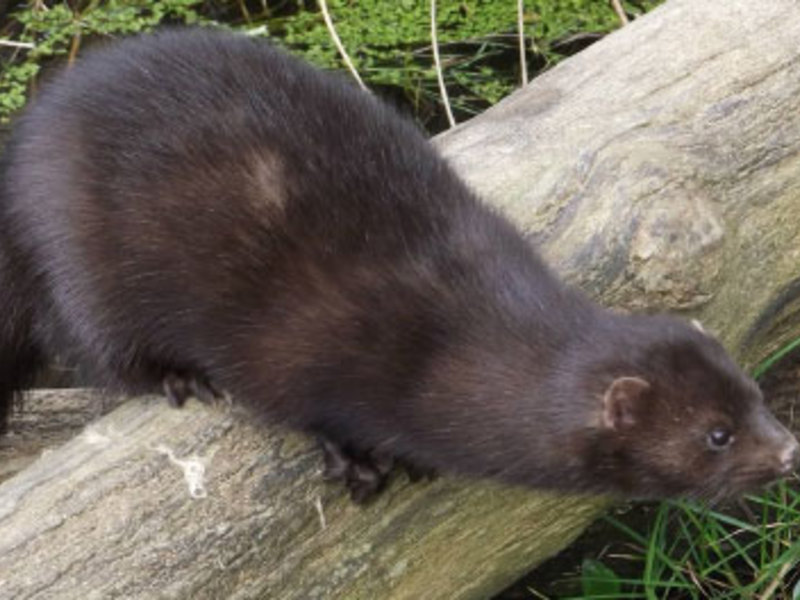
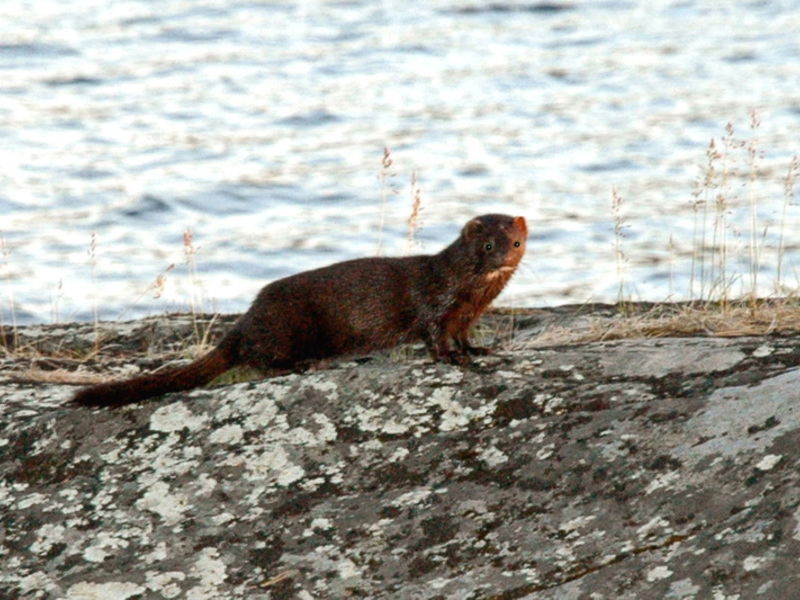
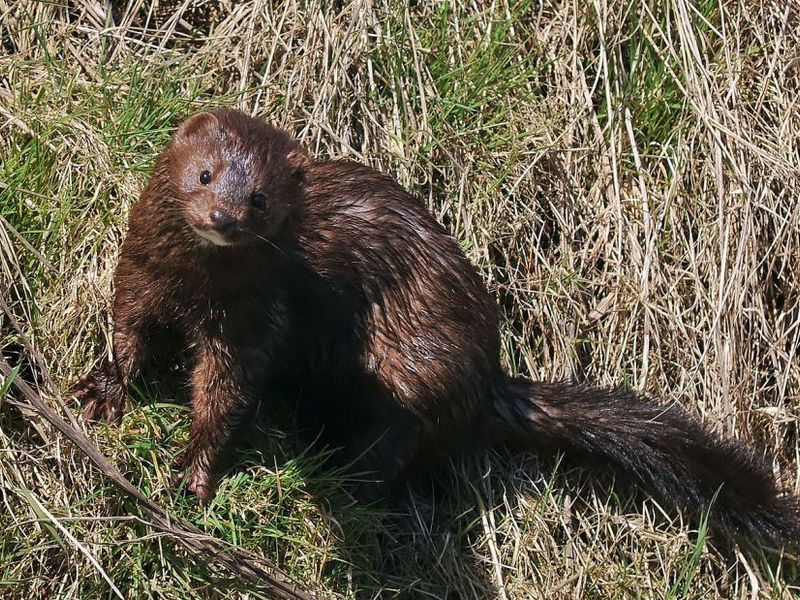
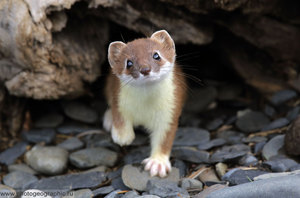
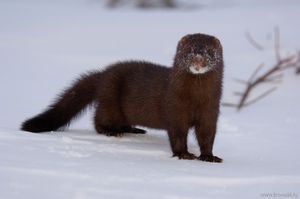
 The mink is a small animal belonging to the mustelid family. It is found across the continents of the planet's Northern Hemisphere. These animals typically inhabit areas near bodies of water. They are burrowing animals, digging burrows for their homes, and in some cases, they may use the abandoned dwellings of other animals.
The burrows are simple: a main room, two exits, and a separate area for a toilet. The animal's main space covered with grass, leaves, feathers and mossThe exits lead to different places: one comes out to the water, and the other is hidden among dense bushes.
The typical habitat of this animal is areas of flowing water with gently sloping banks and bank debris. It inhabits reed beds and various shrubs.
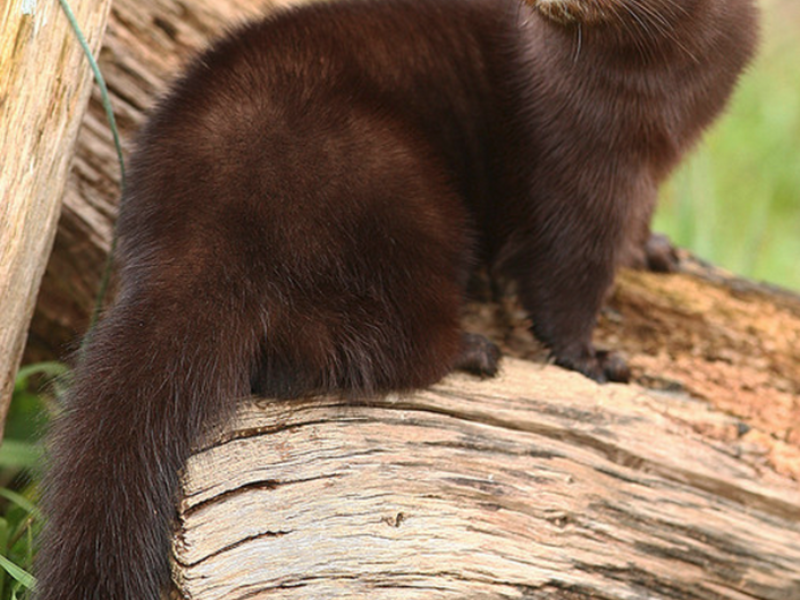
Mink is prized for its thick, shiny fur. It comes in a variety of brownish-brown shades. Recently, specimens with colored fur—white, beige, and even bluish—have been successfully bred in captivity.
Description of the animal, lifestyle, nutrition and reproduction
Mink - predatory animal, eats small animals, fish, and amphibians:
- small rodents;
- frogs;
- birds;
- fish;
- eggs;
- mollusks;
- aquatic insects.
Per day eats about 200 grams of foodAlthough these animals can eat stale meat, they prefer fresh meat. They stockpile food in anticipation of cold weather. They store food in burrows and shallow ponds.
The mink is most active at night. In summer, it searches for prey on land, and in winter, it doesn't disdain ice holes.
Minks typically lead a solitary life. Mating seasons occur in winter and spring. There are several males per female. The males make loud noises and fight.
The gestation period can last up to 75 days. Typically, a litter consists of 3 to 7 pups, all of whom are born blind. They only open their eyes a month after birth.
First month mother feeds its offspring with milk, and after three weeks, the cubs begin to eat solid food. Three months after birth, the young begin to learn to hunt from their mother, and by the fourth month they become completely independent.
Minks reach sexual maturity as early as ten months, and they live up to 10 years.
Classification
There are currently more than 300 species of this animalThe main types are:
- European,
- American,
- Scandinavian,
- Canadian mink.
European mink
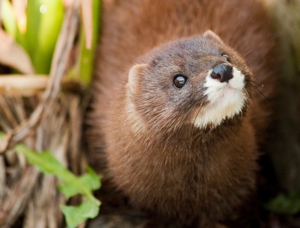 It is this kind listed in the Red BookAccording to one theory, the decline in the European species' population was due to competition with the more powerful American mink. However, it's difficult to confirm this theory.
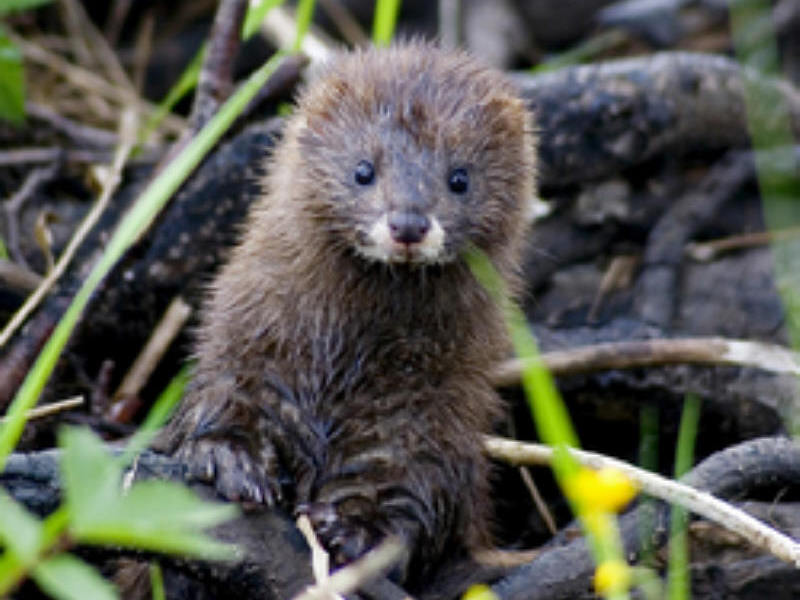
The pelt is covered with short, dense fur of a brownish-red color. European minks are also found that are almost entirely black. Photos of this species show the fur on the upper and lower lips to be white. Sometimes, lighter fur also grows on the chest.
Individuals of this species weigh between 1.2 and 1.8 kilograms. Males measure 34–45 centimeters in body length, while females measure 35–40 centimeters. Their tails are approximately half as long as their bodies.
The paws are small, and there is webbing between the toes. Mink dives and swims easily At the very bottom of a body of water, it can hold its breath for almost three minutes. While swimming, the animal's body stays dry thanks to the air trapped in its fur.
Nowadays, the population of this species is declining. In Russia, animals of this species are predominantly found in the European part of the country. They are also found in the Caucasus and the Urals.
American mink
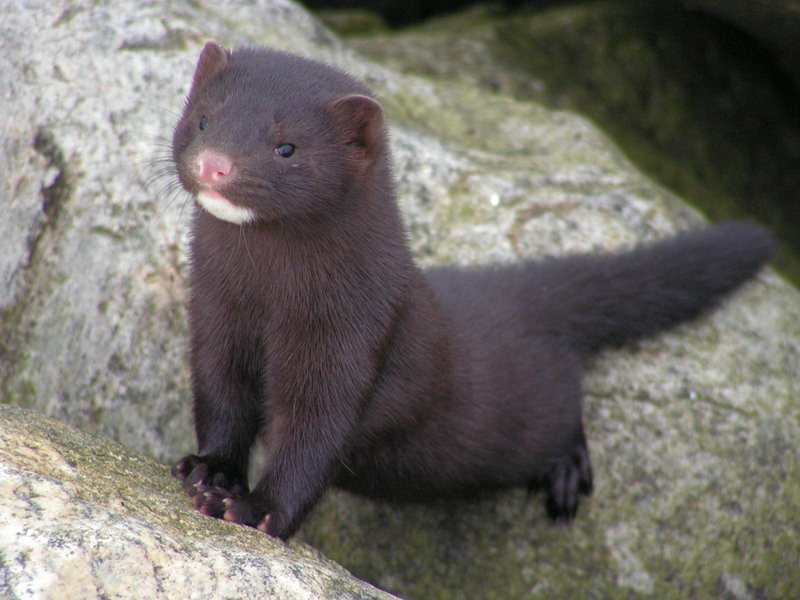
This species was introduced to Europe around the middle of the last century. Of all the species, the largest is the American mink. Photos of this species clearly show that its distinguishing feature is white fur only on the lower lip.
The weight of one individual reaches 2 kilograms, and the maximum body length is 54 centimeters.
The habits of the American mink are similar to those described above. Furthermore, as the European mink population declines, the American mink is successfully occupying territory.
Scandinavian mink
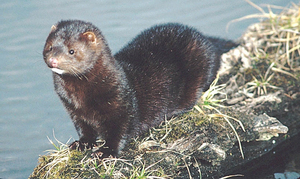 The most common species. It originated from an American species introduced to Europe in the mid-20th century, which subsequently acclimatized and mutated.
Individuals are distinguished by their elongated bodies. Females (up to 45 centimeters in length) are slightly smaller than males, whose bodies reach 55 centimeters.
In the modern world, it is this species that provides the majority of fur supplies. The fur of these animals has bright brown colorIt is distinguished by its dense underfur. This species was often used for experiments in breeding individuals with unusual coloring.
Canadian mink
The habits and behavior of this species are similar to other members of the mustelid family. Canadian minks most often feed on fish, often much larger than themselves.
It differs from other species in its low-pile fur. The skin of this animal resembles velvet. Currently, the fur of this animal is the most expensive and exquisite.