 The animal kingdom is vast and diverse. Nature has given us the opportunity to live alongside a wide variety of species. One of its most striking representatives is the ermine. It is renowned for its valuable fur and fearlessness. What kind of animal is it, what does it eat, and what does it look like?
Description and photo of the ermine
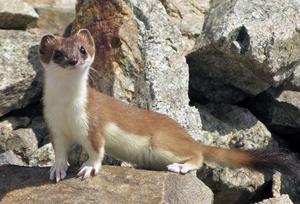
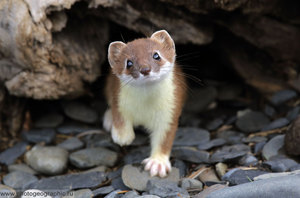
This small fur-bearing animal is renowned for its valuable fur and belongs to the mustelid family. It has the typical marten appearance, with an elongated body and short limbs. It has a long neck and a triangular head with sly eyes and small, rounded ears.
- The body length can be from 16 to 35 cm.
- Tail length 7–11 cm.
- The weight reaches up to 260 grams.
- Life expectancy is 2–6 years.
Despite its small size, this animal is very strong. It is a predator, aggressive and fearless. Looking at the photo, it seems quite cute, but this is deceptive. When threatened, the stoat is capable of attacking even a person. Its short limbs have sharp, tenacious claws. Its paws are webbed, which facilitates movement in snowy terrain.
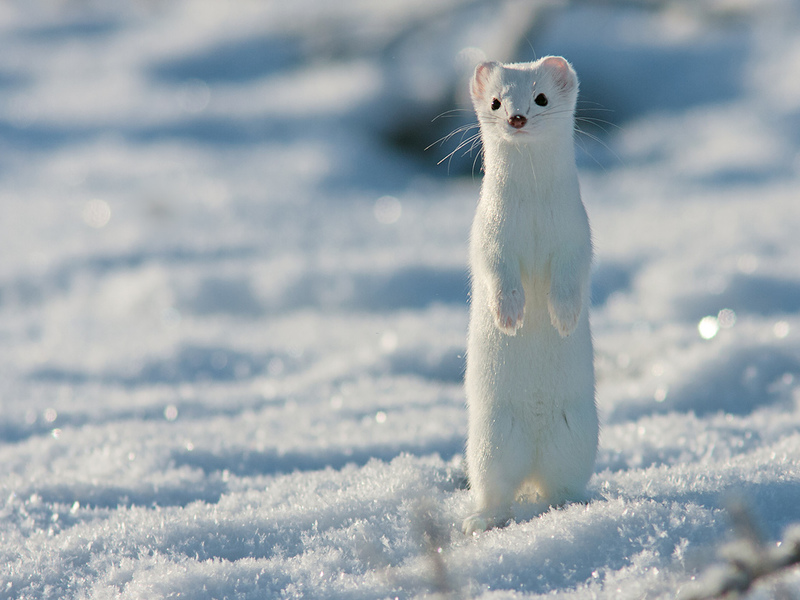
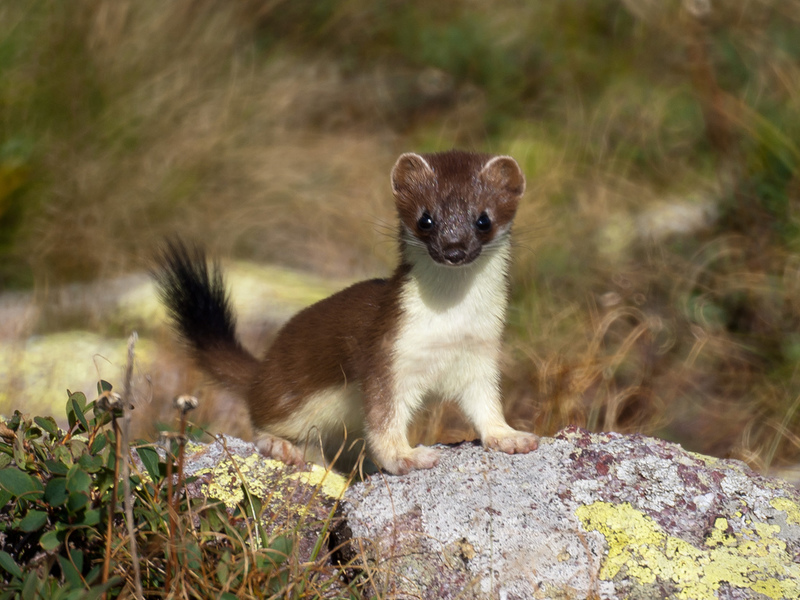
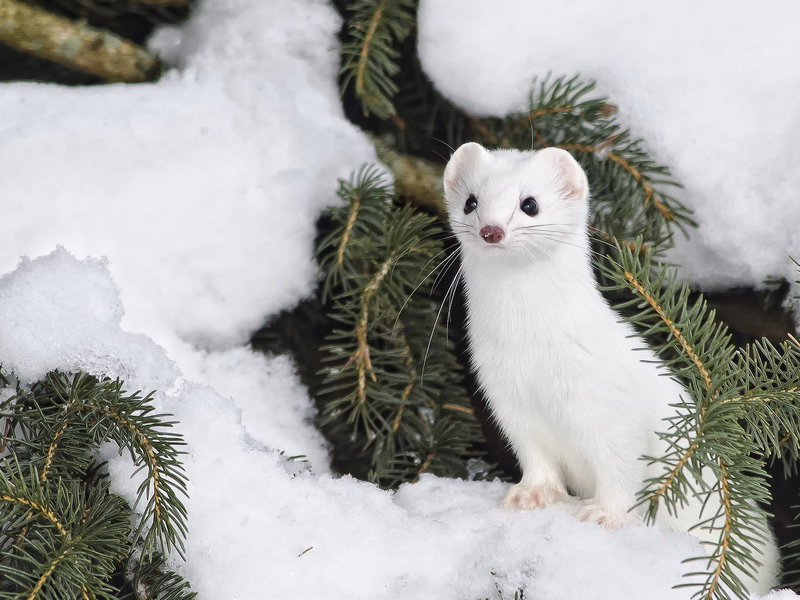
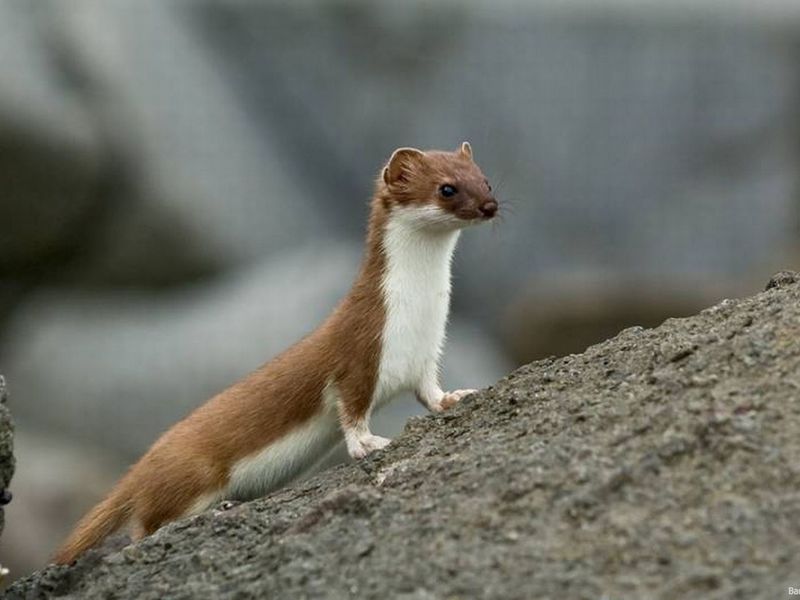
In winter, ermine fur acquires an amazing snow-white colorWith the onset of warmer weather, its fur turns reddish on its back and yellowish on its belly. The tip of the ermine's tail remains black at any time of year. Its fur becomes especially valuable in cold weather, when it turns white. For this reason, they were ruthlessly hunted to obtain their valuable fur and sell it profitably.
Stoats were introduced to New Zealand to control the country's large rabbit population. The animals were unsuited to New Zealand's climate and began to prey on other animals, including the rarest, such as the kiwi. This rare bird is on the verge of extinction. A the stoats began to hunt them, therefore they were included in the list of natural pests of this state.
Habitat, what does the animal eat?
The stoat is found in North America and in the arctic, subarctic, and temperate zones of Europe. It is most common in forest-steppe, taiga, and tundra regions. The animal prefers habitats where its main food source—small rodents—is found. Stoats typically nest near bodies of water:
- rivers;
- streams;
- forest lakes;
- coastal meadows;
- thickets of reeds and bushes.
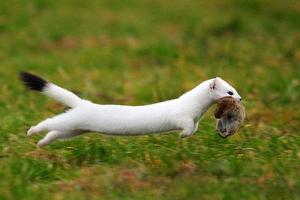
Stoats avoid open spaces, preferring a solitary lifestyle. They are highly intelligent but never develop a strong attachment to a home. If there is no good hunting near their habitat, they will leave in search of another location. These animals are excellent swimmers and climbers, and are active at dusk and at night. During the day they are less active and are unpretentious in their choice of shelter.They use the burrows of dead rodents for shelter. They maintain home ranges of up to 10–20 hectares. During the mating season, males and females meet for mating. The mating season occurs once a year from February to early June. At other times, males and females live separately.
The animal is agile and highly mobile, but its movements are somewhat restless. When hunting, stoats travel up to 15 km, and in winter, up to 3 km, in search of food. When pursued by larger, more dangerous animals, stoats climb trees and remain hidden until the danger has passed. They prefer to live primarily in tree roots or rocks, resting in hay and under logs.
The ermine's diet consists mainly of small rodents.Unlike other species of the mustelid family, they can hunt not only small but also larger rodents;
- hamsters;
- chipmunks;
- water vole;
- birds;
- amphibious lizards;
- insects.
The stoat can attack animals larger than itself, such as rabbits or hares. If food is unavailable, it can enter people's homes and consume stored fish or meat, as well as scavenge on scraps. When food is plentiful, the stoat stores prey. The animal attacks its prey using different strategies, depending on the species. For example: hunting rodents, it navigates by smell. If it's insects, it listens to sounds, and when hunting fish, it relies on its sight.
Since the female is smaller, she always enters other burrows in search of prey. She enters the burrow, retrieves the prey, and, if necessary, settles in to live.
Valuable fur
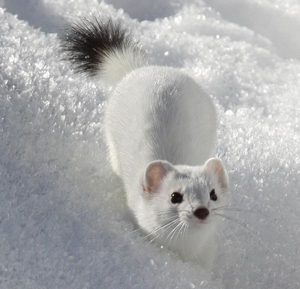
Animals cannot live in captivity; they do not tolerate a lack of freedom of movement well. When captured for zoos, they react poorly, are reluctant to reproduce, and quickly die in captivity.
Ermine fur has always been highly prized by humans. The photo clearly shows the beauty of this little animal's fur, but Even the best photo cannot truly convey the beauty and value of an animal's fur coat..
Ermines have always been trapped for their valuable fur. Their fur becomes especially beautiful and valuable in winter, fetching exorbitant prices. Despite their beauty, ermine coats are short-lived. They wear out quickly, the fur is sensitive to friction, and requires extreme care when worn. Only the very wealthy can afford ermine fur garments, as their prices are astronomical. Due to overhunting and habitat destruction, their numbers have been declining significantly in recent years.