 The sable (Martes zibellina) is a beautiful predator with valuable fur. It is closely related to the pine marten, closely resembling it in appearance and sharing some similar habits. Its pelt is highly prized. Its lifespan in the wild is no more than 8 years.
Based on habitat, fur color and thickness, the following subspecies are distinguished:
- Sayan;
- West Siberian;
- Sakhalin;
- Barguzinsky;
- Yeniseian;
- Kamchatka sable.
The appearance of a sable
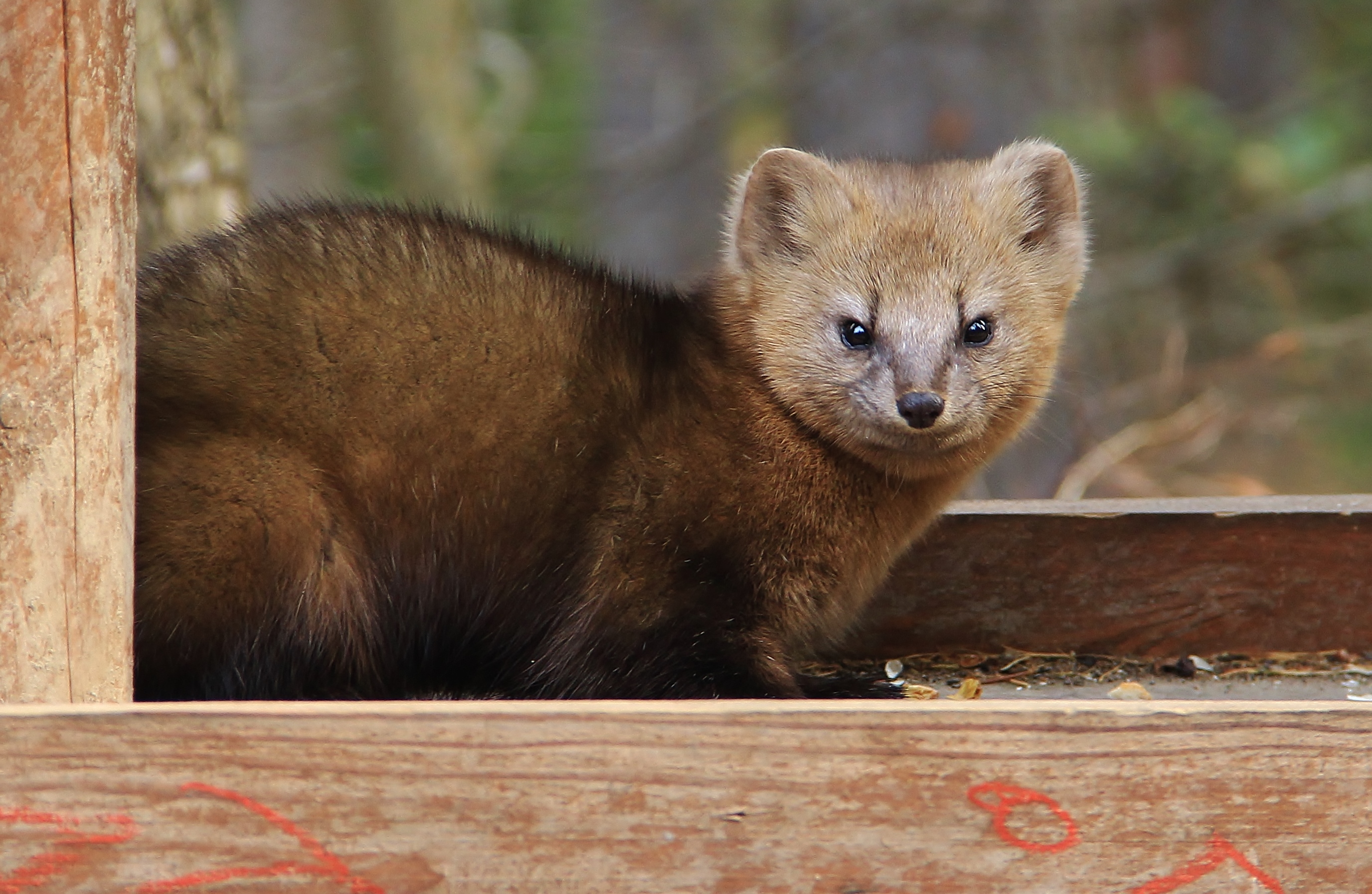
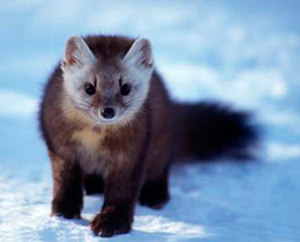
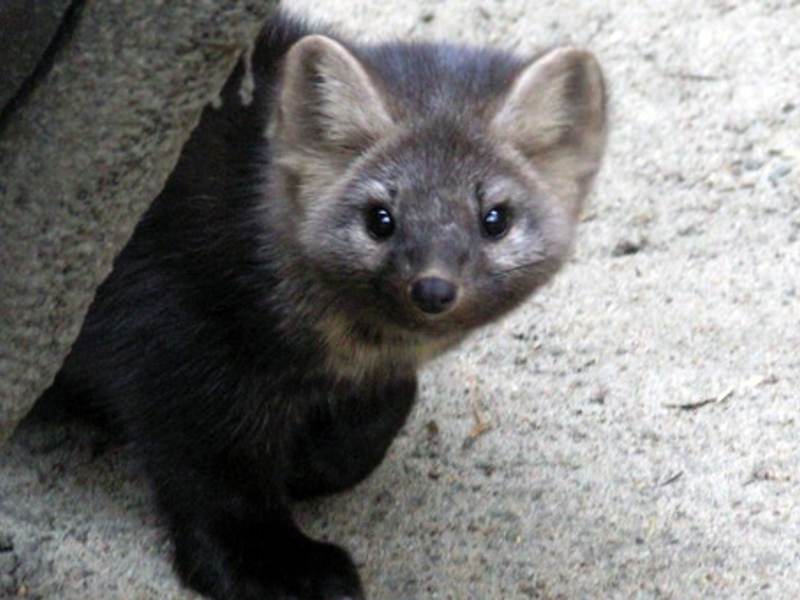
The sable belongs to the mustelid family, but it is not the largest representative of the mammal class. The body length of an adult animal reaches 60 cm.Females are always slightly smaller than males. Males weigh no more than 2 kg. Their heads are wedge-shaped and visually large. Their muzzles are pointed, and their ears are triangular, large, and have a wide base.
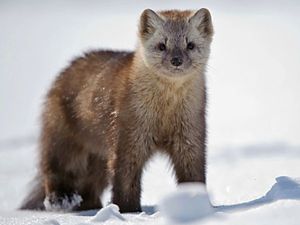
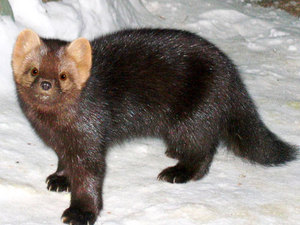 The animal's paws are soft, giving it a slightly arched back. They are wide and densely covered with fur. In winter, even the paw pads and claws are covered with fur.The fur of an animal is always fluffy, soft, thick, and the color of the fur is uniform.The body is dark brown, the paws and tail are slightly darker, and the fur on the head is lighter than on the body.
In cold weather, the fur takes on a darker color, and in warm weather, it becomes lighter. There is no distinct spot in the throat area. If it is present, it is only faintly visible. Has a keen sense of smell and hearing, which allows it to hide from enemies and hunt successfully. However, its vision is not very sharp.
The photo clearly shows what an adult sable looks like.
Animal habitat
The sable can be found from the Ural Mountains to the Pacific Ocean. Its habitat includes the entire Russian Far East and Siberia.
Sable can also be found in other countries:
- Korea.
- Mongolia.
- Northern China.
 Japan (Hokkaido Island).
 Japan (Hokkaido Island).
Intensive fishing has resulted in such a limited range. The sable's habitat is less than half of the world's territory., where it was widespread in the last century.
The animal lives in the coniferous taiga. Very he likes fir, cedar, spruceIn this taiga there is usually a lot of soil covered with moss, littered with windfalls, and quite damp.
Sable may still live:
- In deciduous forests on the East Siberian plateau.
- Among the kurums, if it lives in the mountainous regions adjacent to the taiga.
Kurums are rocky placers overgrown with bushes.
What does a sable eat?
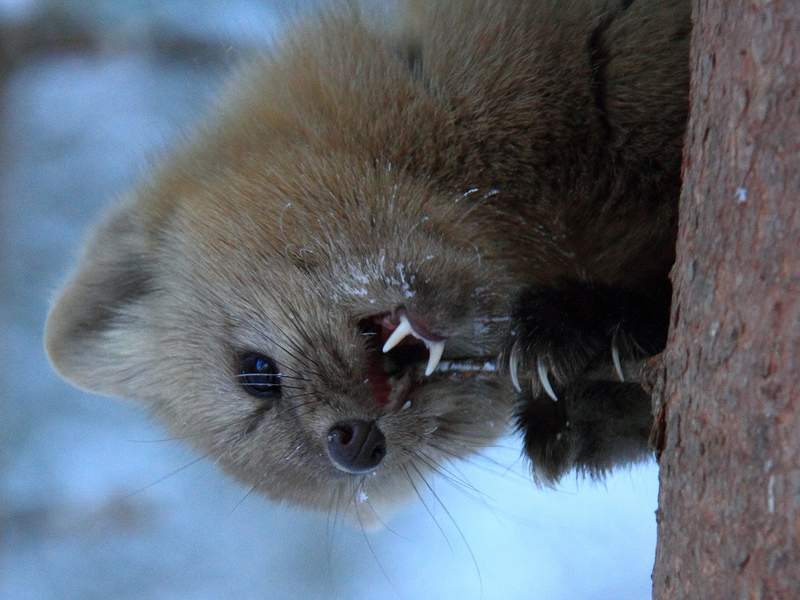

The sable is a predatory mammal. It prefers to eat:
- mouse-like rodents;
- chipmunks;
- moles;
- shrews;
- birds (sparrows, partridges, black grouse).
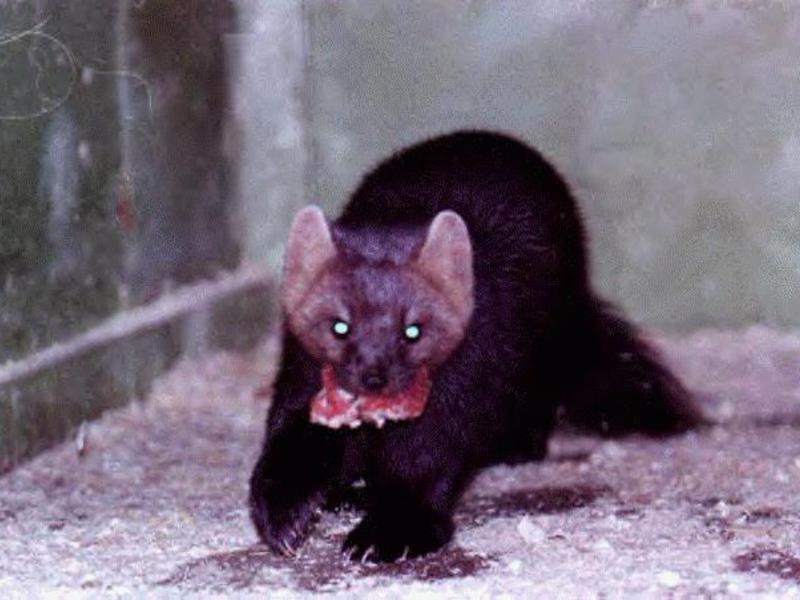
The animals can eat squirrels. Adult males like to feed on hares.
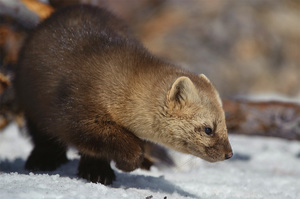 The photo shows a sable hunting for prey.
Depending on the time of year This animal's food may include the carrion of a large animal.In summer, it usually waits for passing fish to spawn if it lives near a large river.
Of plant foods, this animal prefers:
- pine nuts;
- lingonberries and rowan berries;
- Wild bee honey is a special delicacy.
Interestingly, he prefers not to collect nuts himself, but simply steals the supplies made by voles, squirrels, nut nutcrackers and chipmunks.
Natural enemies of the sable
Animals and birds don't hunt this animal for food. However, ermines and Siberian weasels do compete with the sable during hunting. hunt mouse-like rodentsWhen encountering one of these enemies, the sable is even capable of abandoning its prey in order to destroy its enemy when the latter switches its attention to food.
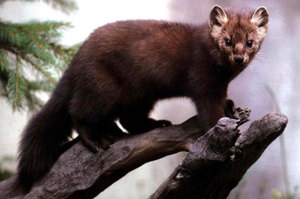 Those at risk include older animals that have lost their agility and speed, as well as young animals. They can be preyed upon by any predator that is much larger than them. Furthermore, sables can be attacked by hawks and owls from the airOn land, they are threatened by lynxes and bears. But their main enemy is humans, who hunt them for their beautiful and expensive fur.
Wild animal behavior
The animal can hunt at any time of day. It prefers to move along the ground. It rarely climbs trees, and only jumps into the water in extreme cases. He can run over 3 km per day.The length of its journey increases significantly in winter. In search of food, it is forced to lead a nomadic lifestyle. In summer, it reduces its journeys because there is a greater chance of encountering a large animal.
The animal's tracks in the snow are clearly visible in the photo.
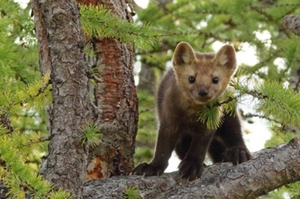 The sable selects a territory for itself where it hunts for a long period of time. If there is enough food there, then the animal will build a burrow for itself and trample paths from its home to the hunting groundsAround large killed animals, he builds temporary burrows, narrowing his range from the burrow to the feeding area.
In winter, this wild animal can move under a layer of snow. It can remain hidden for up to a week, tunneling through the thick snow.
The animal can make nests for itself in hollows and under the roots of large trees, in rocky placers.
Reproduction
For all mammals in the mustelid family, mating occurs during the warm season (June–July). The young are born in the spring. Pregnancy duration: up to 300 daysThe female prepares a nesting cavity for her offspring. She lines the nest with moss, grass, hay, and the hair of previously killed rodents.
The animals are born small (up to 30 cm in length), deaf and blind. One litter contains from 1 to 7 puppies. After a month, the sable cubs begin to hear, and a little later, they can see. In the second month of life, the babies begin to eat meat. The young begin their independent life in the summer, when the female's next rut begins.
Methods of hunting sable
Hunters set traps for this animal, but they can also hunt with Laika dogs. The dogs simply drive the animal up a tree, where the hunter shoots it. But If the animal hides in the thicket, it will be impossible to find it.Then nets are set and the animal is driven out using a probe.
Domestication of sable and restoration of population numbers
This animal is quite easy to tame. It closely resembles a cat when kept indoors and quickly becomes accustomed to household members. In captivity, the animal can live up to 18 years.To preserve these mammals, they are bred in nature reserves and then reintroduced into forested areas. Hunting in these areas is prohibited for a certain period of time.
The location for releasing a sable depends on the availability of food, nesting sites, predators, and competitors for food.
Breeding sables in captivity
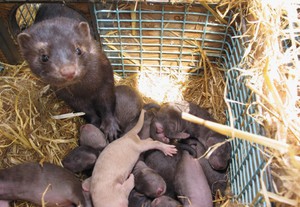 It is very difficult to breed sable in captivity. This the animal is very active, and it requires a large area to live. The cage should be equipped with a secure bolt, and the windows should be covered with wire mesh. This animal is very smart and will open the lock without difficulty.
To create comfortable living conditions, you can put plastic toys in the cage, the animal loves to playWhen breeding sables in enclosures, the female will show aggression towards the male after mating, and the animals are immediately separated.