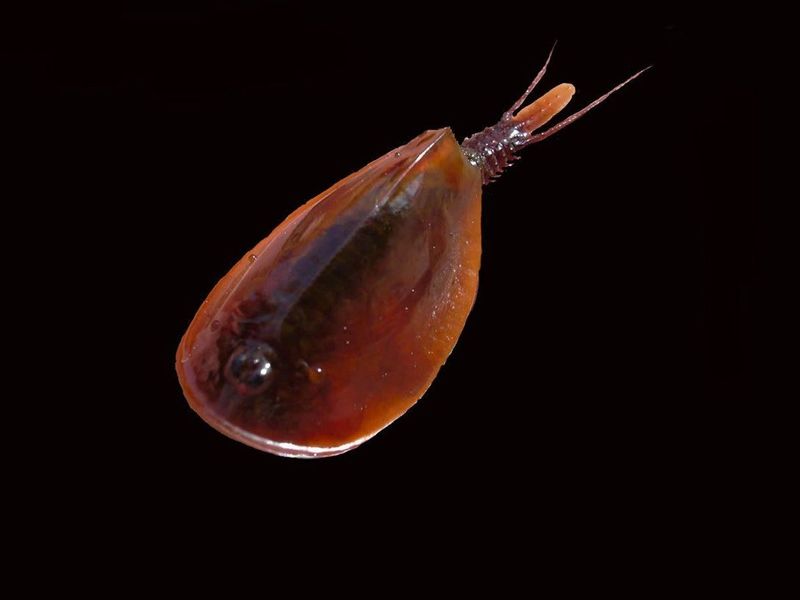
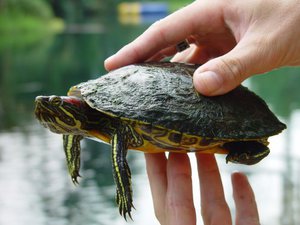
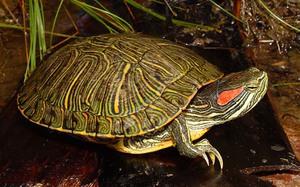
Paleontologists are reconstructing the appearance of animals that lived on our planet 65 million years ago, during the time of dinosaurs. Some ancient animals have survived to the present day. They have changed little and adapted to the changing climate and habitat.
Ants
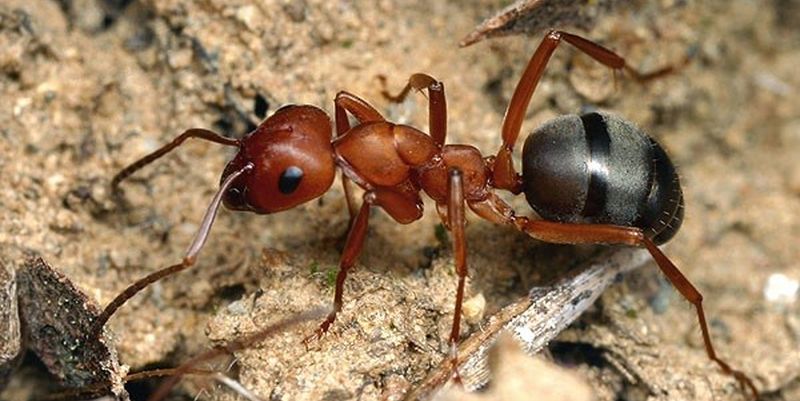
It is believed that ants evolved from wasps 130 million years ago. This is supported by the discovery in 1967 of a transitional form of ants in Mesozoic deposits, combining characteristics of both insects.
The ant adapted remarkably well to changing conditions. While its population comprised approximately 1% of the total insect population during the Cretaceous, by the Tertiary this figure had already reached 40%. These insects remained unchanged for 100 million years, when their evolution ended.
Ants appeared in the Southern Hemisphere before it split into two parts. Scientists reached this conclusion by comparing data showing that all ant species share the same gene mutations. In 1931, a "dinosaur ant" was discovered in Australia—a species of fossil insect that has remained virtually unchanged in appearance for millions of years.
Platypuses
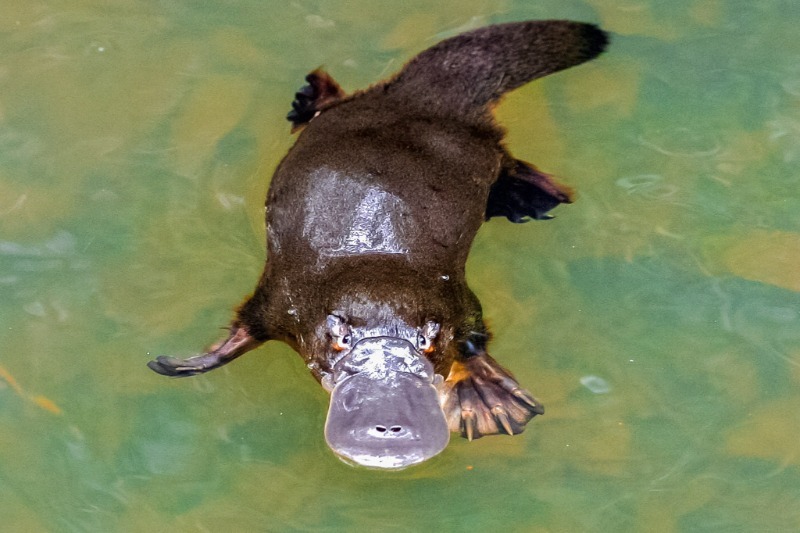
It may seem strange, but the platypus shares a number of characteristics with reptiles, including its locomotion and the shape of its eggs. Like reptiles, it is one of the most ancient animals in the modern world, dating back approximately 110 million years. When scientists first encountered this mysterious aquatic creature, they struggled to classify it, but upon discovering mammary glands, the question of its identity was resolved.
The platypus's ancestor migrated to Australia from South America when both continents were part of Gondwana. Initially, the platypus was a small, rodent-like animal with a beak. Unlike its modern relative, it possessed teeth as an adult and led a semi-aquatic lifestyle. Its modern species arose approximately 4.5 million years ago. The oldest platypus fossil discovered is only 100,000 years old.
Turtles
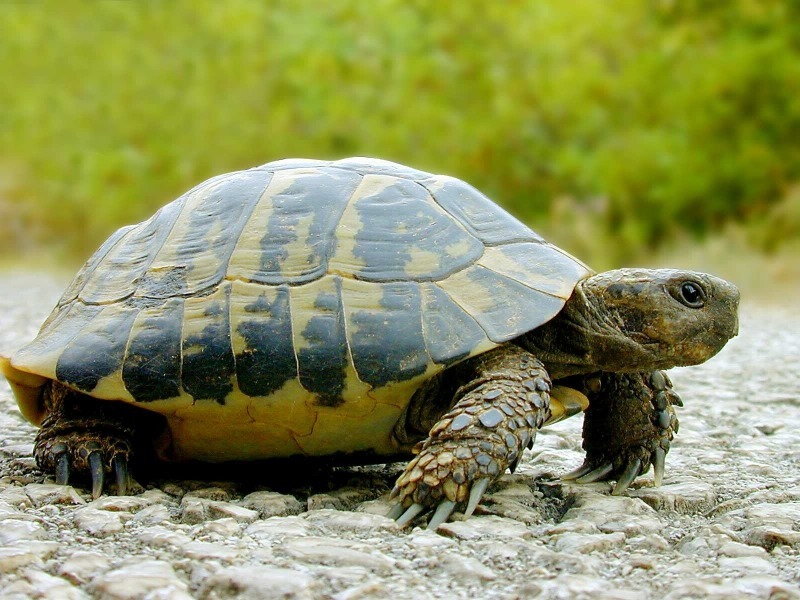
Several species of turtles have existed on Earth since the time of the dinosaurs, such as the leatherback turtle. This species is common in all tropical seas and has flipper-like limbs and a dorsal shell made of hundreds of small plates. This turtle can reach 2 meters in length and weigh around 600 kg. Its population is rapidly declining.
Another species of prehistoric turtle is the alligator snapping turtle, found in the waters of the southeastern United States. It belongs to the snapping turtle family, which has survived to the present day virtually unchanged. This ancient turtle has a centuries-long fossil record, and can weigh up to 180 kg, making it one of the largest freshwater turtles in the world.
Fossil remains of turtles have been traced back 220 million years, and more than 300 species of these ancient animals, whose predecessors were cotylosaurs, remain today.
Crocodiles
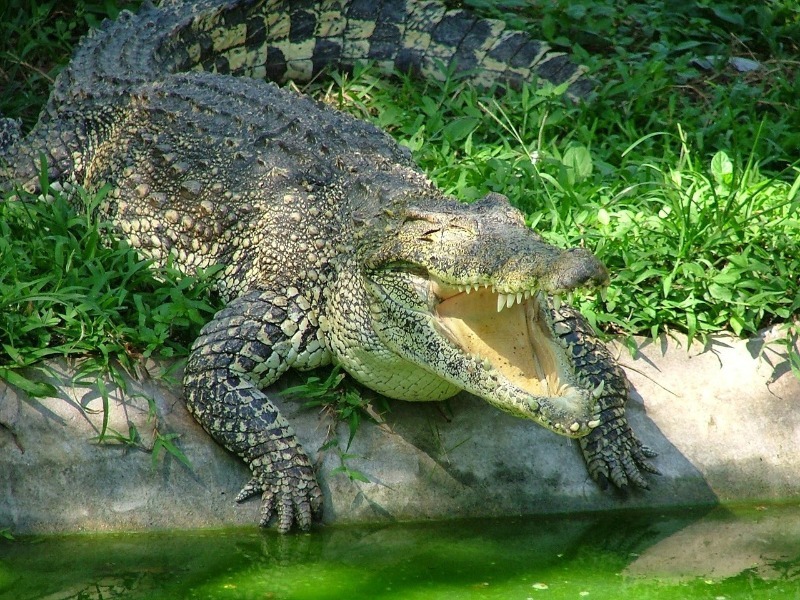
They are some of the most ancient animals on the planet, living for over 200 million years and looking almost identical to their prehistoric ancestors.
Crocodiles primarily inhabit freshwater, but are occasionally found in the sea. An adult Nile crocodile can reach up to 6 meters in length and weigh around 1 ton. Its appearance has remained unchanged for more than 60 million years.
The crocodile is the only surviving representative of the subclass of archosaurs—ancient lizards. Over the course of their evolution, crocodiles have slightly decreased in size. For example, one of the ancestors of the modern crocodile, Deinosuchus, was about 15 meters long and hunted large dinosaurs.
The crocodile's survival is largely due to its habitat—fresh tropical and subtropical waters, which have also remained virtually unaffected by climate change for millions of years. Today, the crocodile is one of the most adaptable animals in the animal kingdom.
Sharks
The ancestors of modern sharks inhabited the ocean as far back as 350 million years ago. Their fossil remains, particularly their teeth, are astonishing in size. This prehistoric shark reached 13 meters in length, and its mouth contained teeth weighing 350 grams and 15 cm long. The mouth of such a monster could have accommodated a full-sized adult human.
The structure of sharks has changed little during evolution. Megalodon, the most famous ancestor of modern sharks, was also the most fearsome and invulnerable predator approximately 23 million years ago. Megalodon weighed 40-60 tons, had incredibly sharp teeth 18 cm long, and even hunted whales.
This shark inhabited every ocean in the world; its remains are found practically everywhere, sometimes even 1,000 km from shore. Throughout evolution, sharks have exhibited an astonishing diversity of forms, from the smallest species, no more than 30 cm in length, to enormous ones, reaching 16 meters.