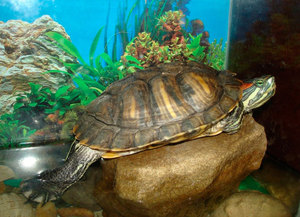
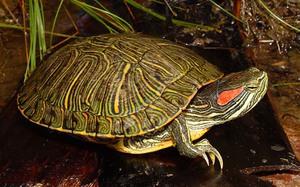
 The red-eared turtle (also known as the yellow-bellied turtle) is one of the most popular pets. Many owners of these wonderful reptiles consider breeding them. The reasons for this are varied: some want to increase their number of pets by raising them themselves from birth to adulthood rather than buying them.
Some people are thinking about selling their grown turtles, while others plan to give them as gifts to friends and acquaintances. While the motives vary widely, the mistakes people often make are the same. To avoid them, you need to know a few key things (these are the bare minimum):
- What conditions should be created for turtle breeding?
- How to determine their gender
- How turtles mate in captivity
- What to do with eggs. Egg incubator.
- How to care for newborn turtles and what to feed them.
If A man decided to breed turtles, it's safe to assume he already knows the basics: how to set up an aquaterrarium, what to feed your pets, how often to change the water, etc. If anyone still has doubts about how well-organized the "living space" for their beloved reptiles is, and doesn't want to reread a huge amount of material, it's easy to find short but informative videos online about how everything should be set up.
It's important to understand that the conditions necessary for turtle survival and growth may not be sufficient for their reproduction. What should be considered to ensure success?
Necessary nuances
Males reach sexual maturity earlier. Around the fifth year of life, while for females it's around the sixth year. Many either don't know this difference or forget about it. Naturally, in this case, nothing works.
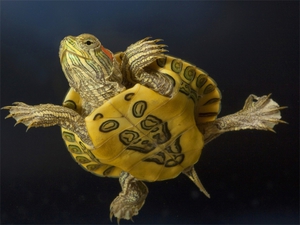
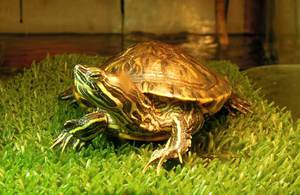 If there are several turtles, it is better when there is one male for every several femalesThis will help avoid conflicts between the "boys" and possible injuries. It's not possible to determine the sex of a reptile until it's a year old. Males are smaller in size, but have larger claws and tails. The lower shell also helps determine the sex—in males, it has a very noticeable "dent."
For mating It is recommended to place the female and male in a separate aquarium.It should be filled with clean, settled water. Temperature is crucial – it should be warmer than the water in the "main" aquaterrarium. Changing the water and increasing its temperature is an important additional incentive for red-eared sliders to mate.
In order for turtles to mate, water is essential., but the male may get carried away and prevent the female from surfacing. Therefore, the depth in this "special" aquarium should be shallow, about 10-12 centimeters.
Before mating interesting "mating games" are taking placeThe male swims near the female, periodically tickling her face with his claws and bumping her shell with the front edge of his shell. You can find videos on YouTube of how red-eared turtles "play" each other.
Sexual intercourse lasts on average 7-15 minutes. If the reptiles don't pay attention to each other after being moved to a separate aquarium, they should be separated for a couple of days.
It is better to separate a pregnant female from the male, as he may unwittingly injure her.
Caring for the clutch and newborns
Red-eared turtles lay eggs in sand or soilIt's best not to leave the nest unattended: leaving everything as is makes it more difficult to monitor its development and increases the risk of losing all the eggs. They could be accidentally damaged by the turtles themselves, or mold could develop on the eggs.
It is best to transfer the eggs to an incubator.This must be done extremely carefully, taking care not to damage them or even turn them. Some experts recommend marking the top of the eggs with a marker to make it easier to check their position.
 The temperature in the incubator is set between 21–30 degreesTemperature fluctuations are unacceptable, so the incubator should not be placed in a location that does not allow:
- exposure to direct sunlight
- drafts
The development of the embryo lasts from two months to six months.After the hatchlings hatch, they should be separated from the adult turtles. If placing them in a separate aquaterrarium is not possible, at a minimum, they should be given a separate area within the main one. To ensure normal growth and development, periodically allow the young turtles to bask under UV lamps.
The ideal food for newborn red-eared sliders is raw, lean fish. To ensure a balanced diet, periodically feed them specially formulated food for newborn turtles.
Resume
Without following these rules it will be impossible to obtain offspring These remarkable reptiles are a rare breeding ground for these wonderful reptiles. It's important to understand that, like any other animal, red-eared sliders reproduce less efficiently in captivity than in the wild. Success requires considerable effort and the creation of the turtles' most comfortable environment.