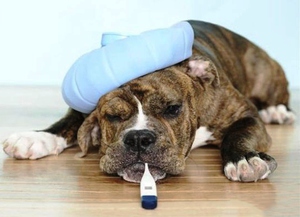
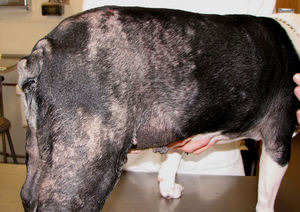
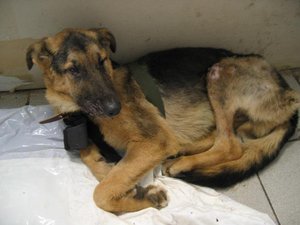
 Canine distemper (Carré's disease) is one of the most dangerous diseases. It is caused by a virus that can enter an animal's body in several ways. Adult dogs have a better chance of recovery, while puppies usually die.
A dog that has recovered from distemper remains immune to this disease for almost its entire life.
Content
The main causes of canine distemper, treatment and prevention
The virus that causes the disease belongs to the group of paramyxoviruses.
Dogs become infected through the respiratory or digestive system. Once the virus enters the body, it spreads rapidly through the bloodstream, affecting almost all internal organs and tissues.
How is the disease transmitted?
An infected dog transmits the dangerous virus through mucus secretions from the eyes, urine, feces, and saliva. The infectious agent can also be found in dead epithelial cells of the skin.
Based on this, we can determine the following sources of infection:
- premises for keeping: booths, enclosures;
- bedding, feeders;
- Sick animals. In addition to pets, these may include foxes, minks, jackals, wolves, hyenas, and ferrets.
In addition, the virus can be brought into the home by the person themselves, on clothes and shoes.
How does distemper manifest itself in dogs?
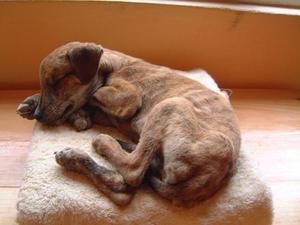 Signs of distemper in dogs do not appear immediately, but only several days after infection. Once in the animal's body, the virus begins to actively multiply, and the first signs of the disease appear within 5-7 days. In some cases, the incubation period can be shortened to two days or, conversely, extended to three weeks.
Canine distemper cannot be considered a seasonal disease, as the pathogen can survive even at temperatures as low as -24°C. However, the main peak occurs in spring and autumn.
Although the dog appears completely healthy throughout the incubation period, it already poses a danger to its fellow dogs as it is a carrier of the infection. Even a fully recovered animal can still carry distemper for several weeks after successful treatment.
Those at risk include:
- puppies aged 1-12 months;
- weakened dogs that do not receive proper nutrition;
- stray animals.
Puppies that were fed milk from a mother who had previously had Carré's disease for up to two months usually have their own immunity, so the risk of their infection is minimized.
Canine distemper can be divided into several types, which are determined by the area of the body most affected. These can be the following forms of the disease:
- cutaneous;
- pulmonary;
- nervous;
- intestinal.
It should be noted that none of the listed types occurs in pure form.
The symptoms of canine distemper may vary depending on the predominant form of the disease, but if even one of them appears, the owner should be wary and take measures to cure the animal as soon as possible.
Forms of the disease
Nervous distemper
The dog's body temperature rises sharply, it becomes constantly thirsty, irritable, and aggressive. Muscle spasms, convulsions, and nervous tics are observed. If left untreated, lameness may develop, resulting in paralysis of the limbs.
In the final stages of the disease, the dog suffers from epileptic seizures, is no longer able to rise on its own, and respiratory paralysis begins, which ultimately leads to cardiac arrest and death.
Pulmonary type
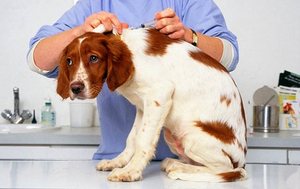 The animal constantly demands water and refuses to eat. The body temperature is elevated, and the tonsils are inflamed. As the disease progresses, the respiratory system is affected, and the animal becomes weaker. A few days after the first signs appear, the pet appears ill, is practically unable to get up, and coughs constantly. Bowel upset, vomiting, and profuse purulent discharge from the eyes and nose are observed.
Intestinal form
This type is characterized by symptoms such as diarrhea (foul-smelling, yellow stool), vomiting, and high fever. The dog is completely indifferent to food but experiences constant thirst (sometimes drinking to the point of vomiting). Spots appear on the teeth, a white coating appears on the tongue, and loss of consciousness may also occur.
Cutaneous type
This form of distemper is mild. Abscesses and rashes appear on exposed areas of the animal's skin, as well as in the nose, muzzle, ears, and paw pads. After some time, the abscesses begin to burst, forming small ulcers that eventually become crusted. When the crusts begin to crack, bacteria enter the wounds, causing inflammation, and the animal experiences pain when moving. If these signs are not addressed promptly, the dog begins to weaken, and discharge from the eyes and nose occurs.
With any form of distemper, the disease can manifest itself in the following ways:
- Atypical. Characterized by the absence of persistent symptoms.
- Chronic - the symptoms of the disease are minor and their manifestations can last for several months.
- Acute - symptoms are pronounced.
- Hyperacute. The animal refuses food, and its body temperature rises sharply. The dog falls into a coma and dies within 2-3 days.
- Fulminant. Characterized by sudden death, without any visible symptoms.
All of the above symptoms of any form of the disease are not characteristic of the animal's normal condition, therefore, early detection of the disease and timely treatment provide a greater chance of a successful recovery.
The appearance of paralysis, paresis, and epileptic seizures is considered an extremely unfavorable prognosis, and in almost 90% of cases the sick animal dies.
Dogs that have recovered from distemper often suffer from disabilities. They develop mental disorders, and their vision, sense of smell, and hearing may be impaired.
How to treat canine distemper at home
There is no specific medication for the treatment of Carré's disease, but there are medications that, when used in combination, can significantly alleviate the animal's condition, mitigate the symptoms of the disease, and help the dog overcome the disease.
The therapy consists of in the appointment of injections of the following medications:
 Diphenhydramine 2% 1 ml;
- Uropine 39% 2 ml;
- isotonic sodium chloride 7 ml;
- glucose 39% 4 ml;
- ascorbic acid 7% 4 ml;
- calcium gluconate 15% 2 ml.
 Diphenhydramine 2% 1 ml;
All these drugs are used daily or every other day, 10 times, intravenously.
If the nervous system is affected, therapy becomes difficult and the dog is additionally given sodium barbital or a 2.5% solution of aminazine is administered intramuscularly.
And for preventive purposes cardiac drugs are prescribed (sulfocamphocaine, co-carboxyl).
Damage to the central nervous system is the most dangerous symptom and requires complex therapy, which is determined by the individual clinical manifestations of the disease.
The causative agent can be affected by the use of etiotropic therapy. Since antibodies from animals that have already recovered from the disease produce the most powerful therapeutic effect, they are often used to produce serum.
Among the Russian medications used in veterinary practice, Narvak and Biocenter are noteworthy, while their foreign equivalents include Biovet and Merial. Dogs weighing up to 5 kg receive 2 ml of serum, while those over 5 kg receive 5 ml. If necessary, the procedure is repeated after 24 hours at the same dosage.
However, the introduction of serum is not a panacea and gives results only at the initial stage of the disease.
During illness, it's important to maintain the dog's immune system at a healthy level. This is achieved by using immunostimulants containing interferon, which has a suppressive effect on the pathogen.
It's also necessary to compensate for the dog's calcium and B vitamin deficiencies. This is done through the use of appropriate medications.
Equally important is taking antibiotics to reduce body temperature. The type of medication is determined by the symptoms of the disease.
If the dog has a cough, it is necessary to use expectorants (bromhexine, mucaltin, etc.) in order to removal of phlegm from the lungsThe use of anti-inflammatory drugs is mandatory!
Various ointments and drops containing anti-inflammatory and antimicrobial agents are used to treat the eyes. It's also important to regularly drain any pus and flush your pet's eyes. A 1% boric acid solution or strong black tea can be used for this purpose.
From all of the above, it follows that treating canine distemper at home is only possible after consulting a veterinarian and depends on your ability to administer injections.
Disease prevention
Considering that canine distemper is very difficult to treat and poses an extreme danger, it is better to prevent the disease through timely vaccination.
Vaccinations against the disease The bobs are done repeatedly throughout the pet's life:
- The first vaccination is carried out when the puppy reaches three months of age. It is very important that the puppy does not have contact with other dogs for 2-4 weeks after vaccination.
- The second one is 6 months;
- the rest - at the same time every year.
 The first vaccination is carried out when the puppy reaches three months of age. It is very important that the puppy does not have contact with other dogs for 2-4 weeks after vaccination.
Vaccination can only be carried out on healthy animals, after first clearing their body of fleas and worms.
Vaccines (both foreign and domestic) should only be purchased from specialized clinics. These are primarily medications that provide immunity against certain common diseases (Tetradog, Nobivac, etc.).
After the first vaccination, side effects may occur in the form of a temporary (1-2 days) deterioration in the pet’s health.
In addition to the basic treatment prescribed by a specialist, you can add the following herbal decoctions:
- In order to prevent pathologies of the nervous system, it is possible to use motherwort decoction as a sedative.
- To reduce intoxication, you can use a decoction of St. John's wort or chamomile.
 In addition to all this, the owner's constant care and a properly formulated diet must be added.
A pet's health is the owner's responsibility. Give your dog the attention it deserves, monitor its behavior and appearance, and take it for walks often. However, be sure to keep it away from sick animals. Then, in gratitude for all your care, a happy and healthy pet will become a loyal and reliable companion to you and your family.