 Most of us are the owners of furry, purring, whiskered, striped, and affectionate creatures that make us just a little bit happier. And, like all living creatures, they are susceptible to various illnesses, which, unfortunately, owners know little about.
We've all experienced that feeling of a small abrasion that keeps us awake at night. As you can see, our pets often experience all the "joys" of this condition, too.
But if you seek prompt medical attention, any unpleasant consequences can be avoided. We'll explain the symptoms of this disease, discuss treatment options, and help you keep your pets healthy.
Causes of stomatitis in cats
 Often, poor cat care and owner inattention are the causes of this unpleasant disease. To prevent such illnesses in cats, regular veterinary visits are necessary.
If for some reason this cannot be done, it is necessary maintain oral hygiene, brush their teeth, monitor their diet, and periodically, through a physical examination, identify the symptoms of this unpleasant and quite painful disease. Let's look at its primary causes. They can be divided into four categories.
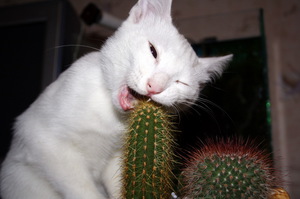
- Mechanical (various injuries to the oral cavity - damage from sharp objects, such as fish or tubular bones, sticks, as well as when changing teeth).
- Thermal (too hot or, conversely, cold food).
- Chemicals (household chemicals, products used for washing the cat, or even medications that cause severe irritation of the mucous membrane).
- Biological (imbalance of microflora in the oral cavity, resulting in damage to the mucous membrane).
It is important to take into account that with age, stomatitis in cats can be consequence of caries or tartar deposits. In any case, self-medication and buying random medications at the pharmacy is not recommended; this can lead to complications and additional costs.
There are also a number of "secondary symptoms" that are a little more complex and take longer to identify.
- Lack of vitamins (in particular, vitamin C, PP and the protein tryptophan).
- Hormonal imbalance in the animal's body, metabolic disorder.
- Diseases of the kidneys, liver and other organs.
- Various allergic reactions.
- Gastroenteritis, diabetes mellitus.
- Various infectious diseases (distemper, parvovirus, panleukopenia).
Symptoms of gangrenous stomatitis in cats
Stomatitis in cats often manifests itself with the following symptoms:
 One of the most noticeable is an unpleasant odor from the mouth, this is explained by the decomposition of saliva, exfoliated epithelium and mucus;
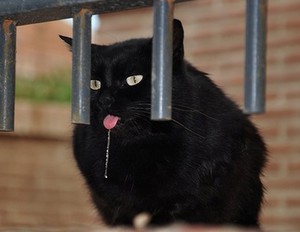
- salivation;
- an increase in general body temperature;
- thirst;
- caution in eating food or refusing to eat at all;
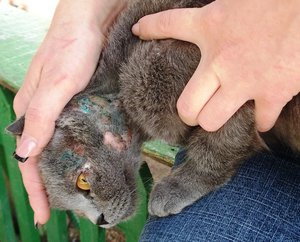
- redness, swelling of the mucous membrane and the appearance of a gray coating on it.
 One of the most noticeable is an unpleasant odor from the mouth, this is explained by the decomposition of saliva, exfoliated epithelium and mucus;
Features of ulcerative stomatitis
Often, if not detected promptly, catarrhal stomatitis in cats can quickly develop into ulcerative stomatitis. Small, red ulcers appear on the affected pet's gums.
Over time, they increase in size and cause severe problems for the cat in the form of pain, tooth loss, bleeding gums, and the inability to eat.
The cat's thirst also increases, and the putrid odor from the mouth becomes stronger due to the proliferation of various bacteria, fungi and viruses.
Drooling helps ease the pet's suffering a little, but urgent treatment is needed With the help of special medications prescribed by a specialist. The next stage of stomatitis is even more severe and dangerous for the pet.
Gangrenous stomatitis
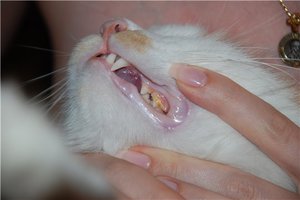 With this inflammation, bacteria that quickly spread through the bloodstream throughout the body lead to tissue death in internal organs.
The cat's general condition gradually worsens, weight loss occursThe cat becomes practically immobile. One of the most dangerous types of stomatitis is gangrenous. Here are its symptoms:
- The smell from the cat's mouth becomes simply unbearable.
- The lymph nodes become enlarged.
- The salivation does not stop.
- The general body temperature is elevated.
If you notice these symptoms Take your cat to the vet immediately, otherwise, the consequences in the form of sepsis will lead to the inevitable death of your pet!
Treatment of gangrenous stomatitis
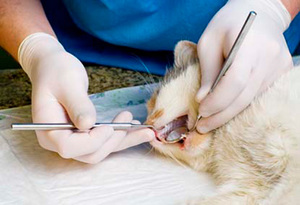
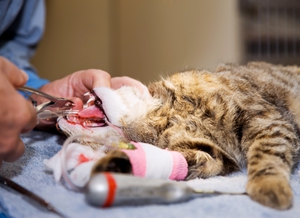 Treating stomatitis in cats requires a comprehensive approach. Thorough disinfection of the cat's mouth with a 3% hydrogen peroxide solution or a 1% baking soda solution is recommended. This should be done several times a day, after each meal.
Ulcerative stomatitis can be treated at home with Lugol's solution mixed with glycerin or methylene blue. Ointments prescribed by a doctor may also be used. If necessary, antiviral and antifungal drugsEven if the underlying cause is not bacteria, antibiotics are still necessary.
Vitamins are also essential for cats, but they can't completely cure stomatitis. However, seeing a good specialist gives a better chance of recovery. With proper, timely, and consistent treatment, your cat will return home sooner and enjoy life.
While catarrhal and ulcerative types of stomatitis can be treated with medication, gangrenous stomatitis requires surgical interventionIn such an advanced form, bacteria may affect other organs.
In this case, even surgical intervention doesn't guarantee the animal will fully recover and return to its normal life. A massive dose of antibiotics, surgeries, and a long recovery period await.
Stomatitis in kittens and its treatment
Kittens are also at risk for the disease. Calcium deficiency, stress, and poor nutrition are just a few of the causes of stomatitis in kittens. A weakened immune system, improper care, and a lack of oral hygiene and preventive examinations can also worsen the condition.
Make sure there is no plaque when changing teeth, do not allow various wounds to appear and give your baby calciumThen he will grow up into a beautiful, adult male cat or a sweet, healthy female cat who will live a long and happy life.
Prevention of stomatitis
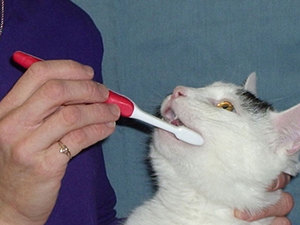 Simple preventative measures taken promptly will save your cat's health, as well as your nerves and finances. Train your pet to brushing teeth from a young age, so as not to frighten him when he grows up.
Special brushes and toothpaste are available at pet stores. Never use human toothpaste to brush your cat's teeth! The fluoride it contains can be harmful to your cat. Pay close attention to your cat's diet, feeding it soft food at a moderate temperature.
Regularly inspect your mouth for any damage. get vaccinatedIf you have several cats, isolate them immediately if one becomes ill! Remember, stomatitis is contagious!
Stomatitis is also dangerous for humans. Wash your hands after every contact and do not let your pet eat from other people's food bowls. However, there are cases where the disease is difficult to detect due to immune system problems or stomach or intestinal issues. Try to detect these in the early stages. Give your cat vitamins and monitor its appearance.