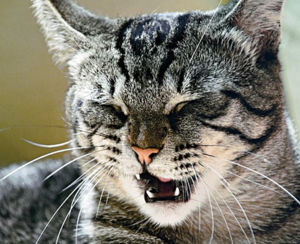
 Cats have a unique physiology that prevents them from catching a cold. Therefore, if your cat has a runny nose, it's a sign of a serious illness that, unlike a runny nose, won't go away on its own. Why is your pet sneezing and having a runny nose, and what should you do if these symptoms appear? Let's try to figure it out.
Why do cats have runny noses?
Nasal discharge in a cat is the body's response to exposure to a virus or bacteriaThe mucus secreted has bactericidal and antiviral properties. Essentially, the animal's body uses mucus production to fight off the infection. It cleanses the cat's nasopharynx, protects it from drying out, and relieves irritation. Any excess is expelled. Depending on the source of the infection, nasal discharge can vary in consistency, intensity, and color. Discharge may be:
 Transparent, liquid, viscous and sticky, cloudy.
- White with a yellowish tint, grey-green.
- Abundant and periodic.
- They can only flow at certain times.
- They can cause sneezing and wheezing, or flow freely.
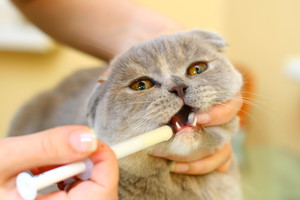 Transparent, liquid, viscous and sticky, cloudy.
Before visiting a veterinarian, a cat owner should memorize all the symptoms they observed. This knowledge will help the specialist make a more accurate diagnosis. It's recommended to note all the details: whether the cat rubs its nose with its paw, how deeply it sleeps, how it eats, whether its mouth is open while sleeping, etc.
The most important thing is not to try to treat your pet yourself. Yes, you may be able to manage the runny nose, but without knowing the cause, you will not get rid of the diseaseTherefore, in any case, you should seek help from a veterinarian.
What can cause a cold in a cat?
We said above that cats, due to their physiological characteristics, can't catch a coldThis means that sneezing and nasal discharge are caused by other factors. These include:
- Poor nutrition. This is one of the main factors influencing the development of rhinitis in cats. Proper feeding is the key to a cat's health. If a cat's diet contains sufficient trace elements and essential vitamins, most illnesses will be avoided.
- Infectious diseases. They undermine the animal's immune system, allowing pathogens to enter the body.
- Poor living conditions. If a cat lives in a room with high humidity and poor heating, its body will experience pathological changes that can trigger a cold. Cats feel comfortable at a temperature of 22⁰ C. At lower temperatures, the cat may start sneezing.
- A cat can become ill from long walks in rainy or snowy weather. High humidity combined with low temperatures can also be detrimental to cats. After such walks, your pet should be thoroughly dried with a terry towel to remove excess moisture.
 Poor nutrition. This is one of the main factors influencing the development of rhinitis in cats. Proper feeding is the key to a cat's health. If a cat's diet contains sufficient trace elements and essential vitamins, most illnesses will be avoided.
Viruses are the most common cause of rhinitis in cats. If your pet not only sneeze and cough, but also develops profuse discharge from their eyes in addition to a runny nose, it's a safe bet that your cat has contracted a virus. You should contact your veterinarian immediately. The problem is that at this point, There are no drugs against most feline viruses.Only a veterinarian can save your pet by properly prescribing supportive therapy. This will help your cat overcome the virus more quickly. The sooner you contact a veterinarian, the better your pet's chances of recovery.
A runny nose in cats can be caused by allergies. Allergies can be triggered by anything: a houseplant, a new shampoo, a type of food, even cat litter. Therefore, even if your pet has never suffered from allergies before, they cannot be ruled out as the underlying cause of a runny nose. Typically, allergic rhinitis in cats is accompanied by profuse tearing and thin, clear nasal discharge. In severe cases of allergies, dermatitis and breathing problems may accompany the runny nose. Treatment for this condition is the most difficult, as it requires identifying the underlying cause and addressing it.
Often the cause of a runny nose in cats is hidden chronic diseases: nephritis, diabetes, heart diseaseIn other words, a runny nose is caused by illnesses not directly related to the respiratory system. The cause is a weakened immune system, which leads to increased susceptibility to various pathogens.
Finally, a runny nose in cats can be caused by parasites. These can include worms and fleas that enter the animal's nose and simply irritate the mucous membrane. However, if owners take good care of their pets and practice preventative care, such parasites are extremely rare.
What are the consequences of a cold in cats?
As with other warm-blooded animals, a cold in cats can have serious consequences. A seemingly mild illness can lead to pneumonia, rheumatoid arthritis, and kidney disease.
If a cat has a runny nose and sneezes, it means one thing – the animal's immunity is reducedTheir body is unable to cope with serious infectious diseases. Any contact with a pathogenic microbe or virus is highly likely to cause serious health problems and lead to the development of severe pathologies. Therefore, it is crucial to begin treating your pet at the first signs of a cold.
How to treat a cold in cats?
Let us repeat once again that the most correct action for a cat owner when symptoms of a runny nose appear is to contact a veterinarian. Without laboratory tests it is impossible to determine the cause disease and prescribe the correct treatment.
- If a cat has a cold caused by poor nutrition or poor living conditions, the underlying causes must first be addressed. Next, the animal's nasal irritation must be addressed. Applying hot sand to the cat can help. This procedure should be done three times a day.
- If your veterinarian diagnoses infectious rhinitis in your cat, gasoline drops can be used for treatment. Use 5 to 10 drops at a time.
- With chronic rhinitis, the skin of the cat's nose becomes irritated and constantly wet. This problem can be addressed with white streptocide powder. Sprinkle it on the affected cat's nose a couple of times a day.
- If your pet is sleeping well, eating well, and in a good mood, but still has mucus discharge from their nose, this could be a sign of nasal irritation. This problem can be addressed by rinsing the nose with a weak solution of dioxidine.
 If a cat has a cold caused by poor nutrition or poor living conditions, the underlying causes must first be addressed. Next, the animal's nasal irritation must be addressed. Applying hot sand to the cat can help. This procedure should be done three times a day.
Otherwise Symptomatic treatment of a runny nose in cats.
Conclusion
Want to keep your pet healthy? Don't forget about preventative measures. Timely vaccinations will, if not eliminate, at least significantly reduce the risk of developing a runny nose. And of course, don't forget about improving the living conditions.
 halazolin
1 comment