 When a cat arrives in the home, it becomes a beloved friend, or at least a full-fledged member of the family. But beyond the moments of joy our pets bring us, we often face difficult responsibilities.
When we see our cat behaving strangely and don't understand why their health has suddenly worsened, we begin to worry about their health. But to avoid panic and begin treatment quickly, it's important to know the symptoms of the most common illnesses affecting cats.
Content
The main signs of illness in cats
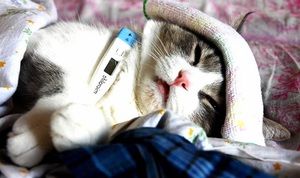 All cat owners know firsthand how fickle their pet's behavior can be. One day, they might be very sleepy, but the next day, they're unrecognizable, running around like crazy.
Moreover, such changes can also occur in nutrition, making it difficult to understand the cause. In some cases, this can be ignored, but sometimes it's worth considering: perhaps the cat there are certain violations in the functioning of the body.
You can determine that your cat has a certain illness by the following symptoms:
- refusal to eat, loss of appetite, weight loss or sudden weight gain;
- lethargic, aggressive, or nervous behavior;
- redness, peeling of the skin;
- presence of bald spots;
- discharge from the eyes, nose;
- high or low temperature;
- the presence of blood clots in the discharge, difficulty urinating or complete cessation of urination;
- diarrhea, vomiting.
If you observe not one, but several of the above-mentioned signs at the same time, then you should not take this calmly, immediately take your pet to the doctorAmong the diseases that cats suffer from, there are some that can pose a threat to their lives.
Therefore, to avoid reaching a critical condition, you should begin taking action at the first sign of deterioration in your pet's condition to ensure effective treatment.
Any animal that lives in the house, especially if it has not been vaccinated, susceptible to various ailmentsTherefore, even before getting a pet, owners should inquire about which viruses and infections can pose a health risk to their cats, as well as which specialist should be consulted.
Veterinarians have now accumulated extensive experience, allowing them to diagnose virtually any disease in cats. We'll focus on the most commonly diagnosed diseases in these pets.
Skin and coat diseases
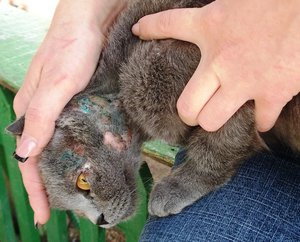
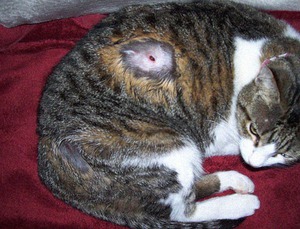 Most often, when a cat starts acting strangely, it's usually attributed to skin and coat problems. At such times, the animal becomes nervous, begins to scratch frequently, lick, and bite its skin, and spots appear on it. spots, rashes and bald spots.
Many feline skin diseases are caused by parasites - fleas, ticks, lice and biting liceCats can contract these insects after a walk, visiting a basement, or contact with rodents and other infected animals.
Cats can also become infected from their owners if they bring these parasites on their shoes or clothing, which can easily transfer to the animal's fur. You can tell if your cat has fleas or lice by the following signs:
- The animal begins to behave restlessly.
- Frequently scratches a certain area of the body.
- There are traces of insect activity on the fur in the form of small black dots.
A sign of the presence of ear mites on the animal's fur is the presence dark brown plaque in the ear area. The animal will begin shaking its head frequently, but it's still a good idea to avoid jumping to conclusions, as only a veterinarian can make an accurate diagnosis.
Urolithiasis
 There are numerous cases of these animals being diagnosed with a condition called urolithiasis. Moreover, this diagnosis is most often made in male cats rather than females. This is due to differences in body structure. The disease is dangerous because it is impossible to predict exactly when an attack will occur.
Your pet may feel fine for a long time, but one day, when it needs to go to the toilet, it will begin to experience unpleasant pain and make whining sounds. One of the symptoms of urolithiasis is presence of blood in urineThis alone is a serious reason to show your animal to a veterinarian.
Otherwise, the lack of therapeutic measures can lead to more serious consequences, sometimes even death. Most often, it contributes to the development of urolithiasis. poor nutrition.
Those most at risk are cats whose owners feed them low-quality food and indulge them in raw fish and meat. These risks also include inadequate clean drinking water, genetic predisposition, low activity, and obesity.
An accurate diagnosis can only be made after examination by a therapistA neurologist treats the disease, prescribing treatment based on test results. Recovery generally occurs with timely implementation of a comprehensive set of measures.
The animal is prescribed a special diet, intake medicinal and homeopathic preparations, lithotripsy. Sometimes, when the animal's life is at risk, surgery to remove the stones may be considered.
Infectious diseases of cats
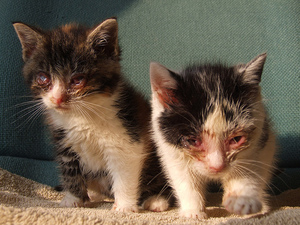 They are usually classified into three main groups depending on the pathogen: viral, fungal and bacterial infections.
Viral diseasesAmong the viral diseases most commonly found in cats, infectious panleukopenia, coronavirus, calicivirus, and rabies are among them. Due to their etiology, viral diseases present with varying symptoms, but most typically involve fever, vomiting, diarrhea, and ulcers.
Animals usually become infected through contact with a sick cat. Treatment is antiviral drugs and serums, the duration of treatment largely depends on the type of disease and the stage of development.
Bacterial diseases
The most common of these are infectious anemia and salmonellosis. An animal suffering from anemia exhibits a high temperature, lethargy, loss of appetite, and pale oral mucosa.
Similar symptoms are also observed with salmonellosis: there is also a high temperature, the kitten refuses to eat, vomiting and runny nose occurTreatment involves prescribing antibiotics, switching the cat to a special diet, and administering homeopathic remedies and hyperimmune serums.
Fungal infections
As these infectious diseases develop, the disease spreads to the animal's external and internal organs. There are many such feline diseases, each differing in the nature of the pathogen: cryptococcosis, candidiasis, histoplasmosis.
To become infected with any of these diseases, it is enough for fungal spores to enter an older cat's body - through a wound, with food, or through breathing.
There are many infectious diseases that are divided into many subtypes, having various symptomsFor this reason, diagnosis and treatment planning should be carried out by an experienced infectious disease specialist.
Eye diseases
If a kitten's eyes start to hurt, it's quite easy to understand; just take a good look at their appearance:
 The eyelids become red and show signs of swelling.
- The lens becomes cloudy.
- The eyeball bulges.
- The pupil dilates, there is no reaction to light.
- Presence of clear or purulent discharge in the eyes.
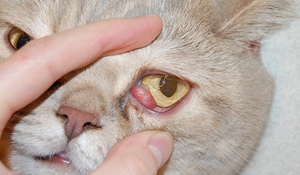 The eyelids become red and show signs of swelling.
The presence of any of these symptoms in an older cat or a young kitten is a serious reason to take it to a veterinarian. This should be an experienced ophthalmologist, who, due to his specialization, can make an accurate diagnosis and prescribe an effective treatment program.
Among the eye diseases in cats, the most frequently detected is glaucoma, conjunctivitis, cataract, inflammation of the wound and cornea. Antibiotics and ointments may be used to treat various pathologies, and sometimes surgery may be considered.
Ear diseases
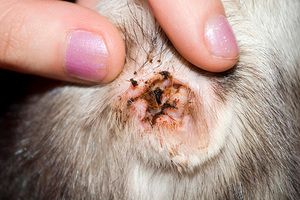 A kitten may be diagnosed with not only ear parasites, but also other equally dangerous ear diseases: otitis, eczema, hematomas.
Among them, the owner should be especially attentive to otitis. This disease manifests itself as an inflammation, in which large quantities of fluid form in the ear canals. sulfur and bloody discharge.
As a result of the disease, the affected area becomes very sensitive, so the cat may become aggressive when trying to touch it. The development of this disease can be triggered by hypothermia, injury, infection and foreign bodies.
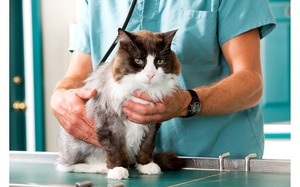
When an older cat first visits the clinic, a veterinary therapist will examine the cat. Depending on the specific illness detected, an appropriate treatment plan will be developed.
Treatment measures for hematomas include surgically cleaning the auricles from blood clots, and for otitis prescribe a course of antibiotics, and in case of eczema, special ointments are prescribed.
Liver disease in cats and advice from veterinarians
This group includes a variety of diseases, the most common of which are hepatitis, liver failure, and lipidosis. You can determine if your British Shorthair kitten has liver disease by the following signs:
- lethargy, lack of appetite;
- vomiting and diarrhea;
- an increase in the size of the liver, felt upon palpation;
- if the disease lasts for a long time - jaundice;
- increase in temperature.
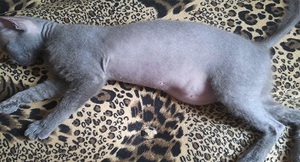 lethargy, lack of appetite;
Such pathologies can be caused by various reasons: poor nutrition, poisoning, drug overdoseVitamin deficiency. To identify the problem, the kitten is examined by a physician or gastroenterologist during the initial examination.
Depending on the type of liver disease, appropriate treatment is prescribed. Typically, therapy involves switching the animal to a diet that includes therapeutic foods, as well as prescribing restorative drugs.
Many people view cats as adorable pets, a joy to spend time with. However, not everyone is concerned that they, like humans, are also susceptible to various diseases. Moreover, the risk is much higher even for British Shorthair kittens than for humans.
If the owner hasn't taken care of vaccinations on time, the likelihood that some illness will soon manifest itself significantly increases. But even here, the owner can keep your pet safe, if he knows by what symptoms one can identify a particular disease.
Usually, identifying the disease at an early stage is sufficient to ensure that the treatment prescribed by a veterinarian will help the kitten recover more quickly. However, attempting to treat the cat yourself can not only worsen the animal's condition but also waste precious time, which in such cases is crucial.