Pets have a profoundly positive impact on people's physical and mental health. Besides boosting their mood and emotional well-being, dogs offer additional exercise. So if going to the gym isn't helping you lose weight, consider getting a dog. We'll explain how caring for a pet can help you burn calories.
Bathing and brushing a dog
Walking with your pet inevitably results in dirty fur and paws. Therefore, you'll need to wash their paws every time you return home. This exercises the arm and shoulder muscles and serves as a good warm-up. Of course, you won't burn many calories; about 50 kcal in 10-20 minutes of this activity.
Depending on the time of year, daily paw washing will take slightly more or less time. Bathing your pet's entire body will consume at least half an hour and about 200 calories. This requires constant bending and standing, which engages the back, abdominal, and leg muscles.
After bathing, your dog needs to be brushed. However, every owner spends at least an hour a week on this procedure, and if your pet has a long-haired coat, it will take even more time. This is an excellent workout for the shoulder girdle and upper limb muscles, as brushing involves repetitive hand movements. A large, tall dog requires additional training for the abdominal and thigh muscles.
Daily walks
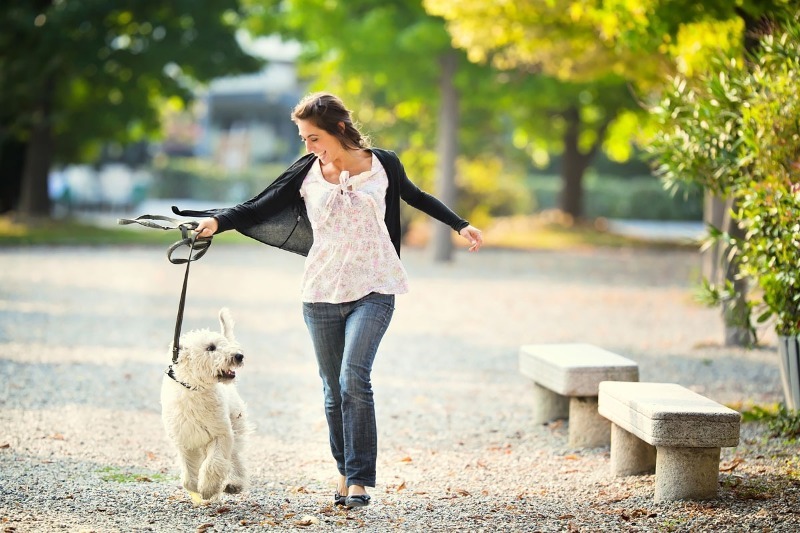
Gym workouts are boring and repetitive. A closed room with the same equipment, lack of fresh air, and lack of variety are not conducive to weight loss. Walking your dog is a different story. It requires daily and regular exercise, as your pet doesn't care about your fatigue or bad weather. Your dog should be walked at least twice a day, which means your owner will be walking alongside you at a brisk pace. You can choose new routes every day, which means you won't suffer from boredom.
Walking primarily engages the muscles of the lower extremities. It also places additional strain on the spine and the rectus abdominis muscles. And the most beneficial thing about walking outdoors is the excellent cardio workout it provides. Walking increases your heart rate, you breathe deeper, and more oxygen reaches your heart. And if you choose a hilly area for your walk, you'll experience a new form of physical activity instead of just walking—terrain paths.
The amount of calories burned during a walk depends directly on your body weight, the length of the walk, and the intensity of your movements. For example, walking a dog at an average pace for an 80 kg person for one hour will burn about 240 kcal. A more intense or longer walk will burn more energy.
Games with a dog
The most variable aspect of dog training is games. Something as simple as throwing a ball or Frisbee trains the shoulder girdle, developing shoulder joint movement and accuracy. Each time the dog brings the ball back, you'll need to bend over, which helps engage the abdominal and lower back muscles. Overall, an active hour-long walk in the fresh air with your dog and their toys will be a complete substitute for a stuffy gym.
If you have an obstacle course nearby, both you and your dog will enjoy spending time together. Your pet will learn a few new commands and have a blast running up and down the slides and obstacles, and you'll burn a few hundred calories running alongside them.
Beyond the simple exercise and calorie burn, a dog also instills discipline and teaches order and a regular routine. Children in a family with a puppy will quickly learn to put things away in the closet, as the pet might chew them. And adults, welcoming a new member into their home and heart, will feel a little happier. After all, a dog in the house brings a flood of positive emotions, making us relive our childhood and appreciate the little things.