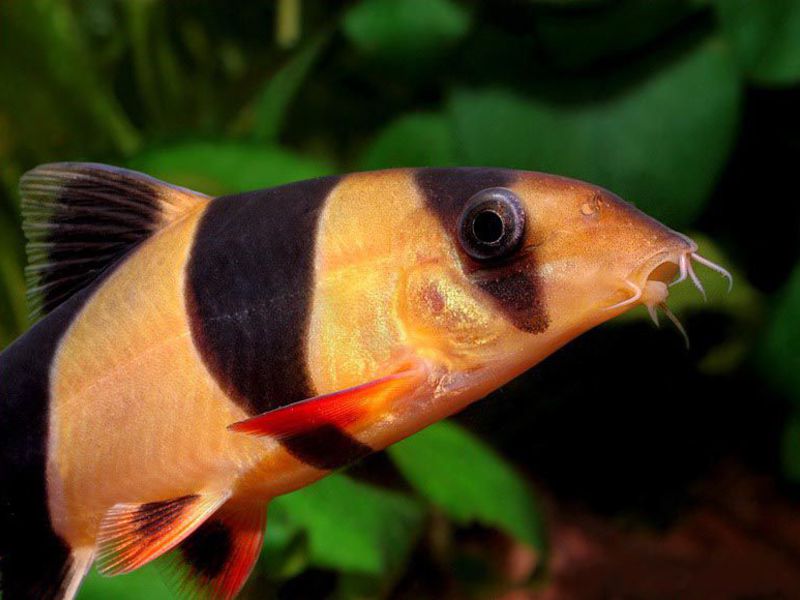
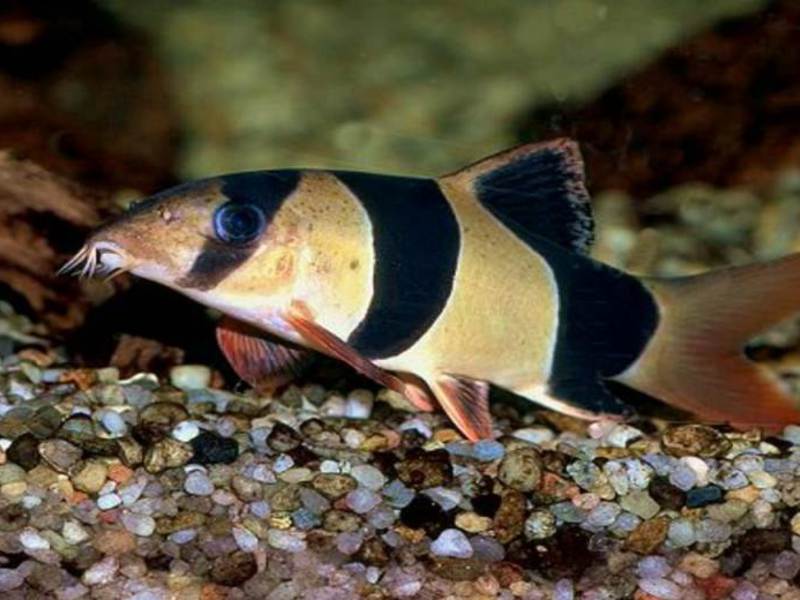
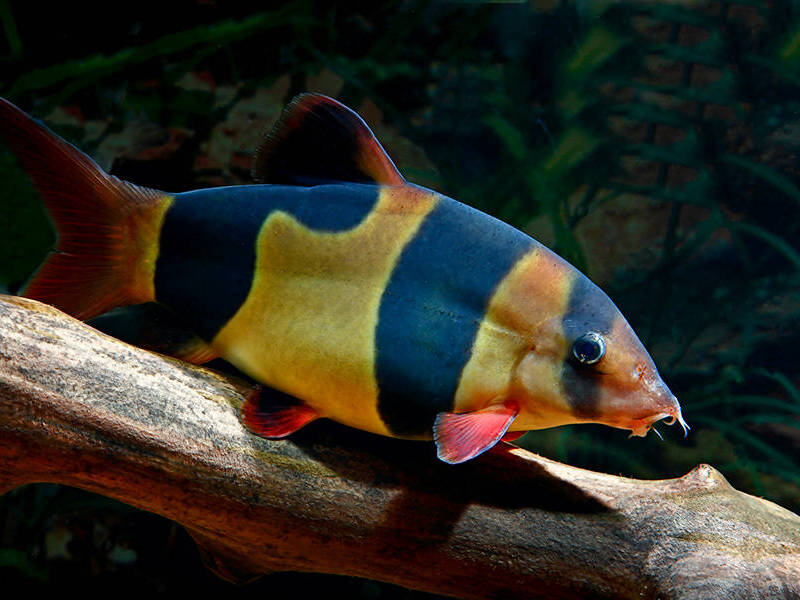
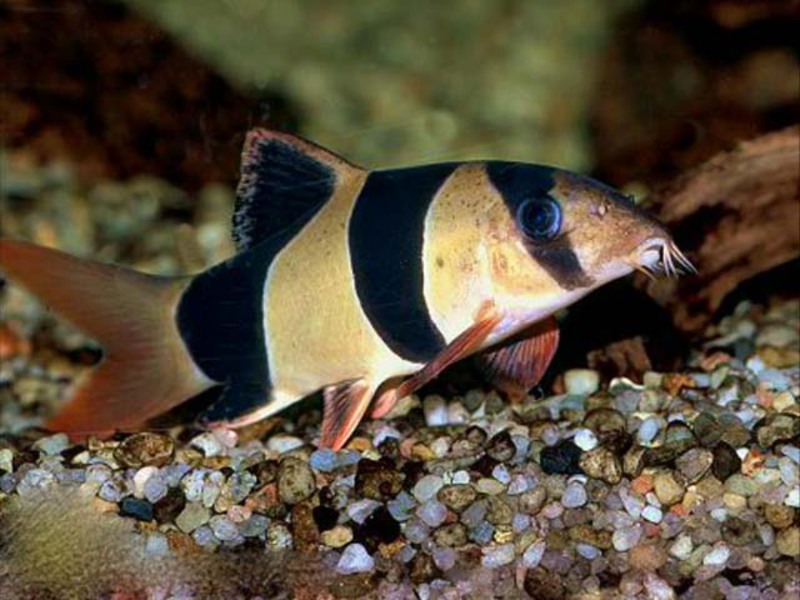
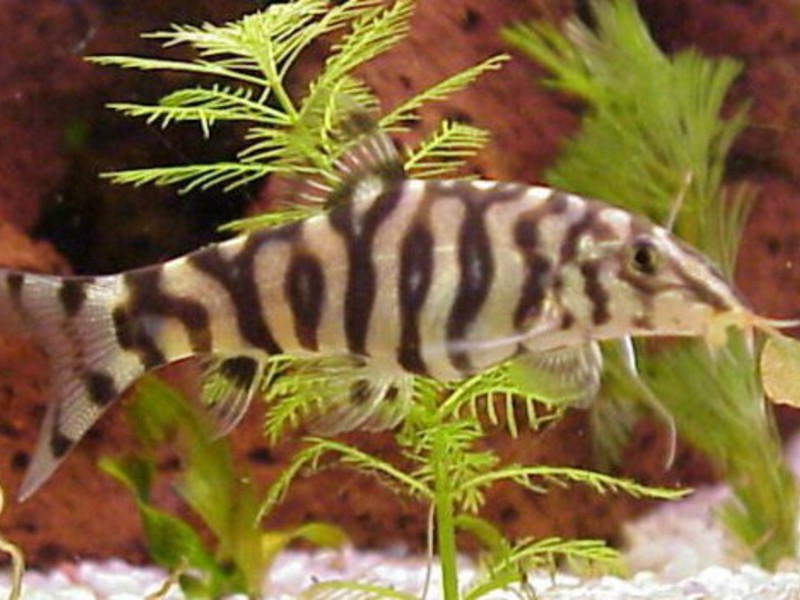
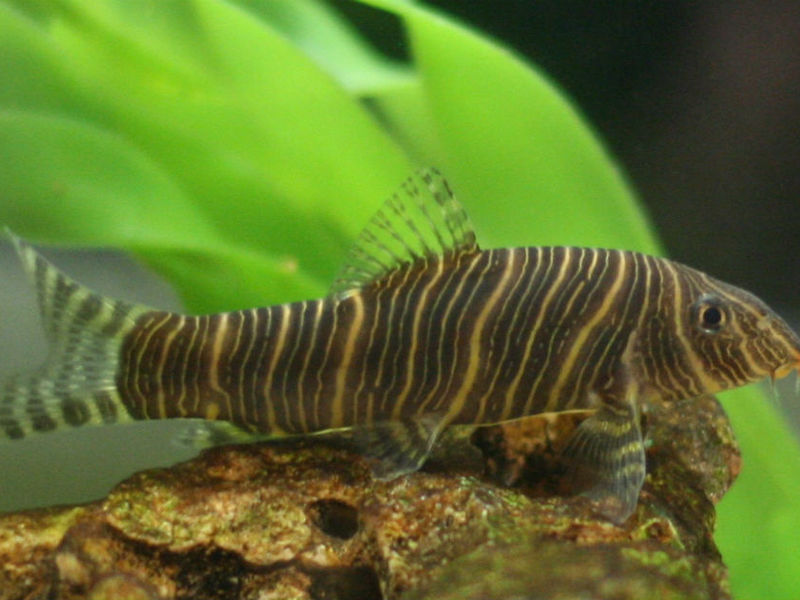
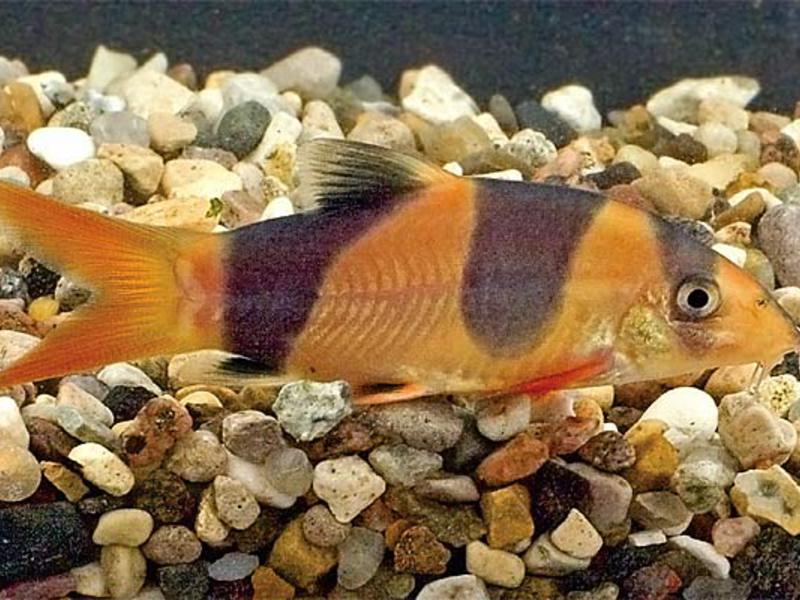
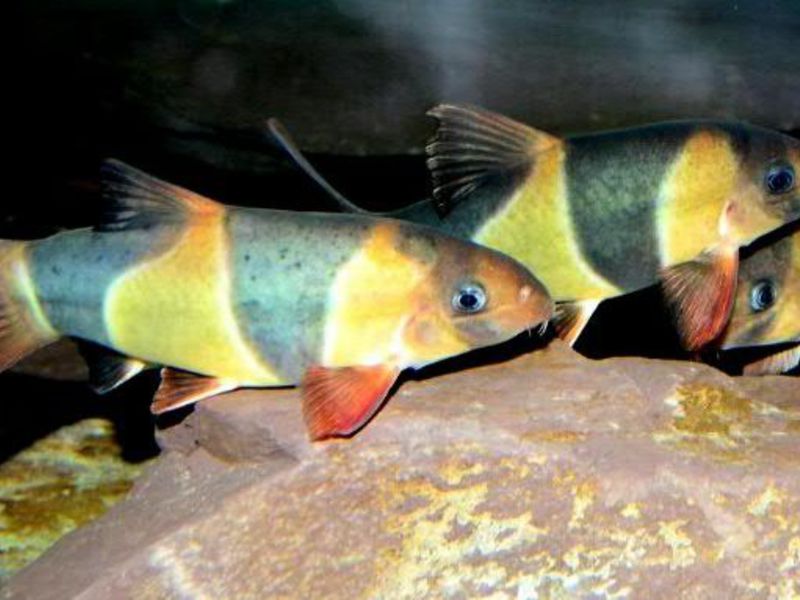
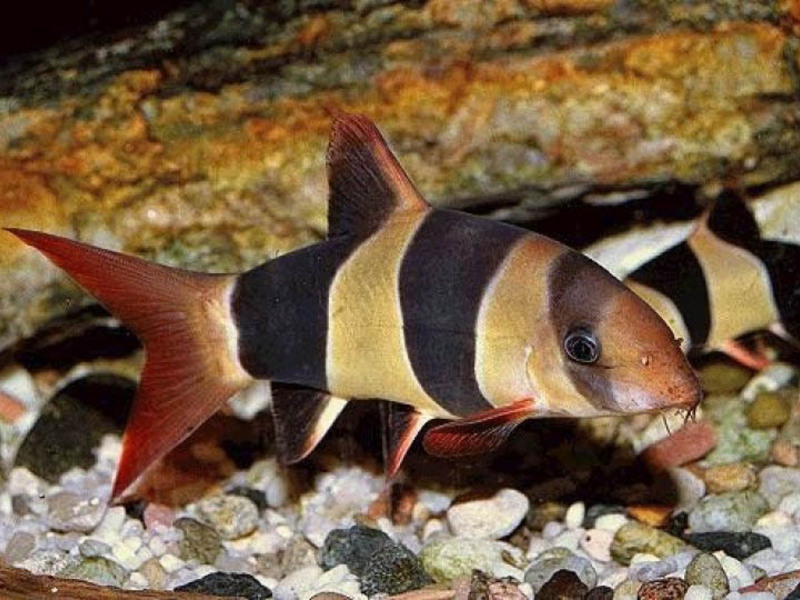
 The botia is an aquarium fish native to Southeast Asia. Fish in the botia family are very colorful. Their colorful colors and peaceful nature are attracting a growing number of aquarium enthusiasts worldwide. In the wild, botia fish reach up to 50 centimeters in length. In aquariums, they don't grow larger than 26 centimeters, due to limited space and the difficulty of maintaining larger specimens.
Description of loaches
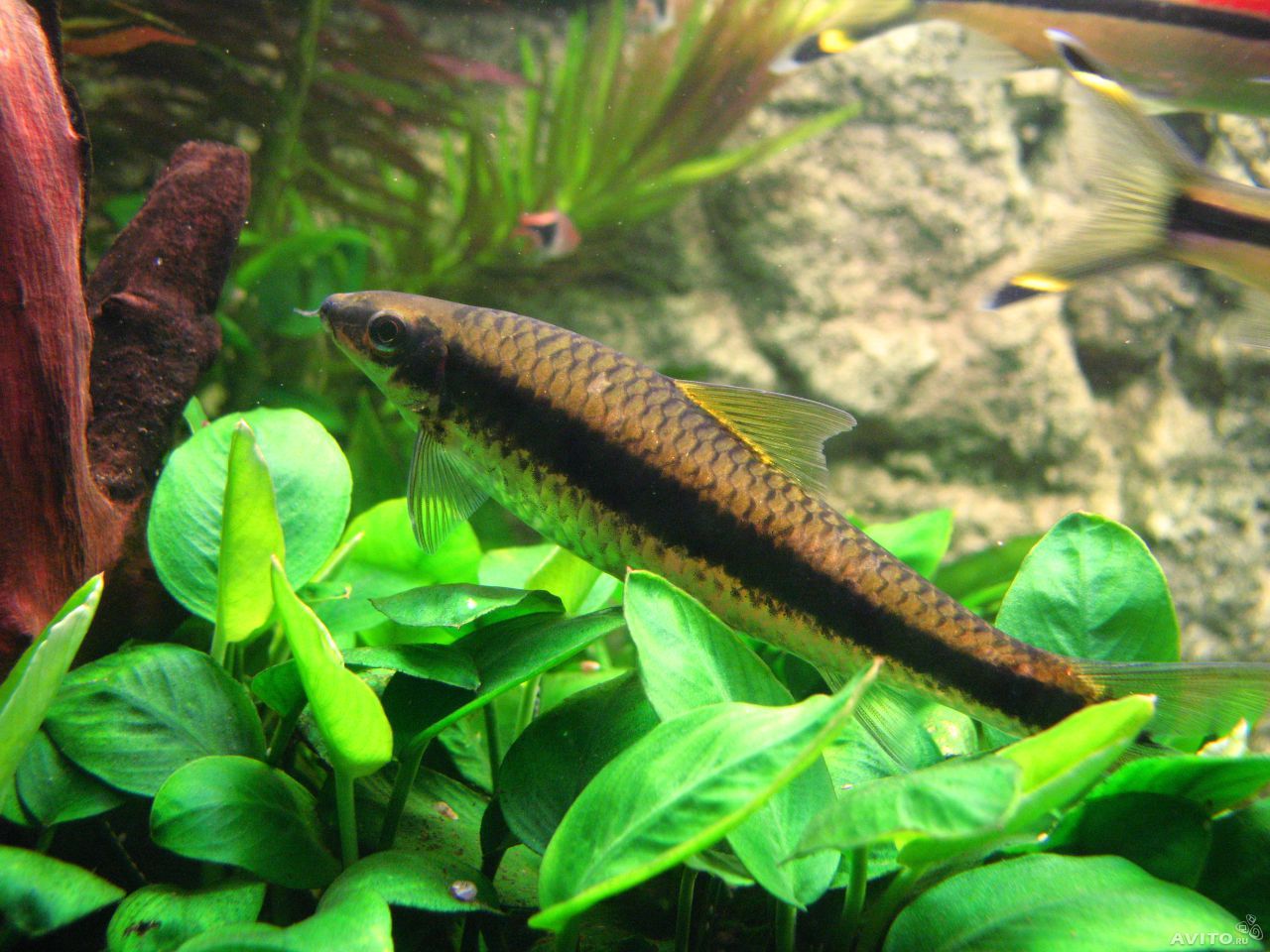
The body is elongated, with three barbels on each side of the head, giving them a resemblance to a miniature catfish. The fish have clearly defined sexual characteristics: females are larger, and males are more vibrantly colored. Botias have lobes just below the eyes. sharp bone spikesWhen at rest, they are hidden, but when threatened, these spines protrude, and the fish can easily inflict stings with these natural weapons. This is why it is not recommended to transport adult specimens in plastic bags, and caution should be exercised when transferring, as the powerful pectoral fins can become entangled in the fish's water, and the stings can be quite painful.
Most botia fish are peaceful and even timid, and are very territorial. It's recommended to purchase specimens around 5 centimeters in size; smaller fry may not thrive in a new environment, no matter how well they're cared for. It's recommended to purchase a botia fish. in a flock of up to 6 specimensAvoid keeping large numbers of these fish in small aquariums, as they can become conflicting with other aquarium inhabitants and even with each other.
Botia fish are generally secretive. They are most often observed in an aquarium in the evening or at night. The aquarium should be stocked with plants, driftwood, pebbles, and other hiding places. These hiding places should have smooth edges and preferably be see-through. Botias are very curious and tend to squeeze into tight spaces, where they can get stuck or injure themselves.
The aquarium substrate must be soft; botias lack scales and have very sensitive antennae. These creatures are bottom dwellers, feeding on fallen food, snails, plants, and algae. Their diet should include various plant supplements and vegetables.
Botias are very sensitive to water quality and temperature:
- intensive filtration and aeration of water is required;
- It is recommended to change one third of the water in the aquarium weekly;
- the temperature should be 24-26 degrees;
- water hardness within 3-15;
- acidity 6.0-7.5.
Breeding fish at home is very difficult; to obtain offspring, hormonal stimulation and careful care are usually used.
Clown loach
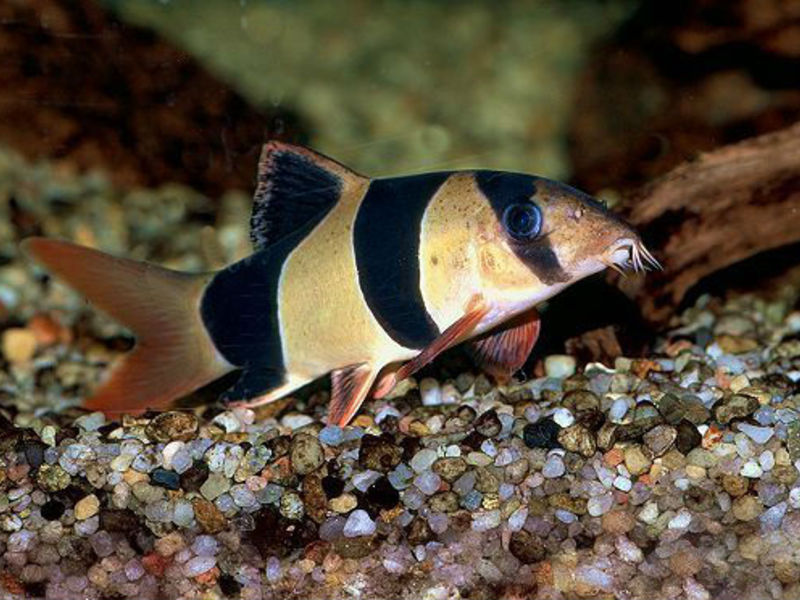
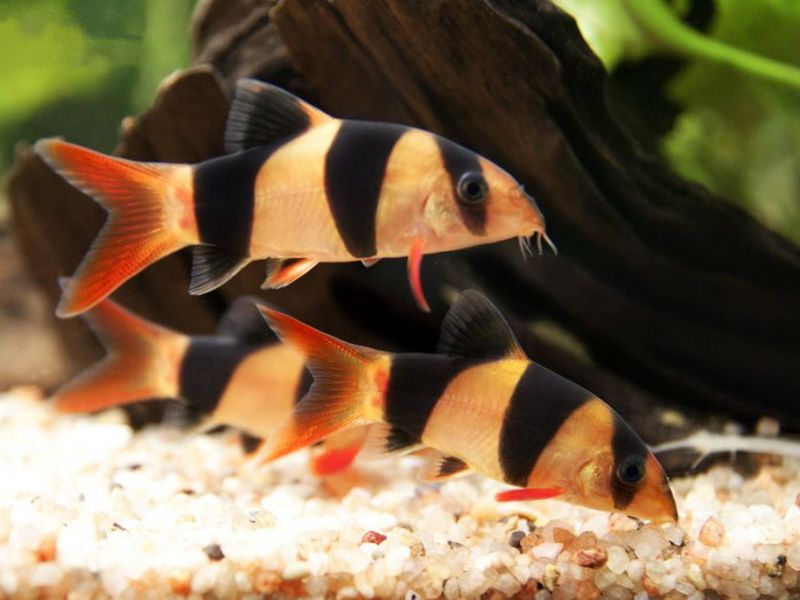
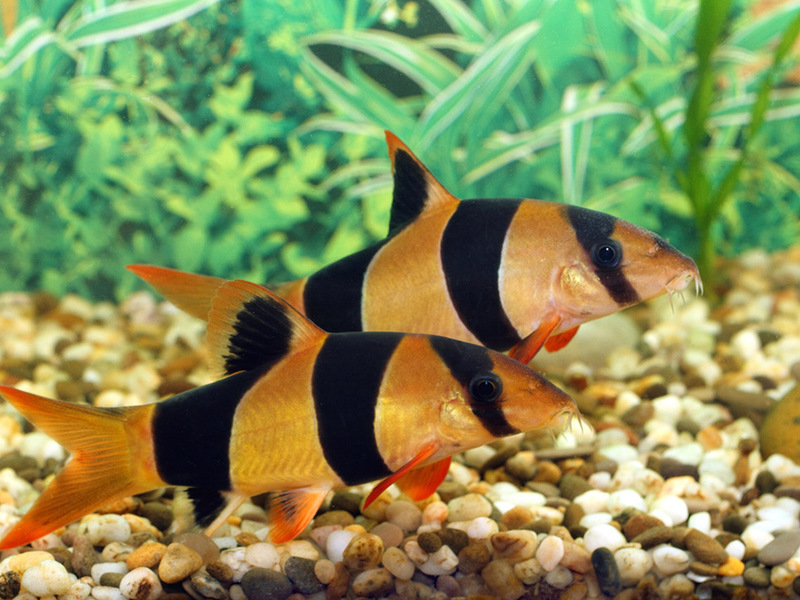
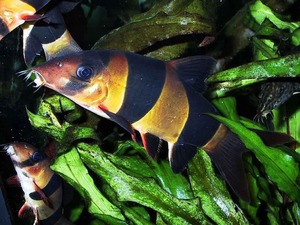
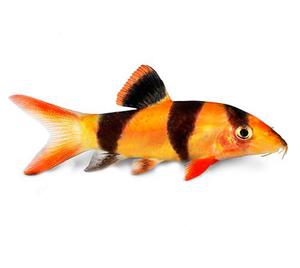 These are the most common representatives of this family in aquariums. These fish have been kept in captivity for over 80 years. The clown loach looks like this. fully lives up to its nameThe bright orange body is crossed vertically by three black stripes. The dorsal fins are typically black, while the lower fins have a reddish tint. These fish have a downward-curved mouth and barbels. In the wild, the clown loach reaches 50 centimeters in length, but in an aquarium, it typically doesn't exceed 25 centimeters. Vibrant colors and beauty are what the clown loach brings to any aquarium. Photos of these creatures are simply dazzling.
Sexual characteristics can only be determined once a fish reaches five years of age; before this point, it is impossible to determine the sex of the fish by its appearance.
There are specific marks under the eyes, spines hidden by a skin sacWhen sensing danger, these spines quickly extend outward with a clicking sound. This effect can be observed when attempting to fish a fish out of an aquarium. Some clown loaches may even have a habit of "clicking" in the evening.
Clown Loach. Care, Compatibility, and Maintenance
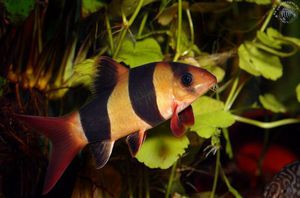 The substrate should be sand or fine gravel. Smooth rocks, pebbles, a few snags, or other hiding places are essential. Since the fish are very curious and will explore every crevice, hiding places should not have sharp edges. It's best to dim the lighting in the aquarium.
The volume of the aquarium should be not less than 400 litersThe water should not only be clean but also well-oxygenated. Half the aquarium water should be changed weekly. Fish do not adapt well to new aquariums; it is advisable to keep the aquarium "mature." The optimal number of fish is 5-6.
Clown loaches are not picky when it comes to feeding. However, it's important to maintain a balance and feed them both meat-based foods (brine shrimp, tubifex, bloodworms, earthworms, and snails) and plant-based foods (cucumber, melon, and zucchini). Clown loaches enjoy browsing aquatic plants if their leaves are soft. If feeding problems occur, the fish's coloring will fade.
Even though the fish are not particularly aggressiveKeeping them with smaller species is not recommended. Veil-finned fish (cichlids, bettas, and guppies) are definitely not suitable tankmates. Cyprinids and loaches make ideal tankmates, but experience shows that if kept alone, a clown loach will eventually become aggressive toward fish of similar size. Therefore, keeping 5-6 fish of this family is recommended.
Clown loach. Diseases
Clown loaches are most vulnerable to what is known as ich, a disease with the following symptoms:
- formation of small ulcers;
- rashes on the body.
Fish with this disease they move little and look sluggishIn general, when purchasing fish, it is advisable to keep them separately for 7 days in a quarantine tank. If any disease is detected, treatment should also be carried out in a separate aquarium.